
YD-OC Series: What a Mirror Line Reveals About a Supplier
YD-OC Series: What a Mirror Line Reveals About a Supplier
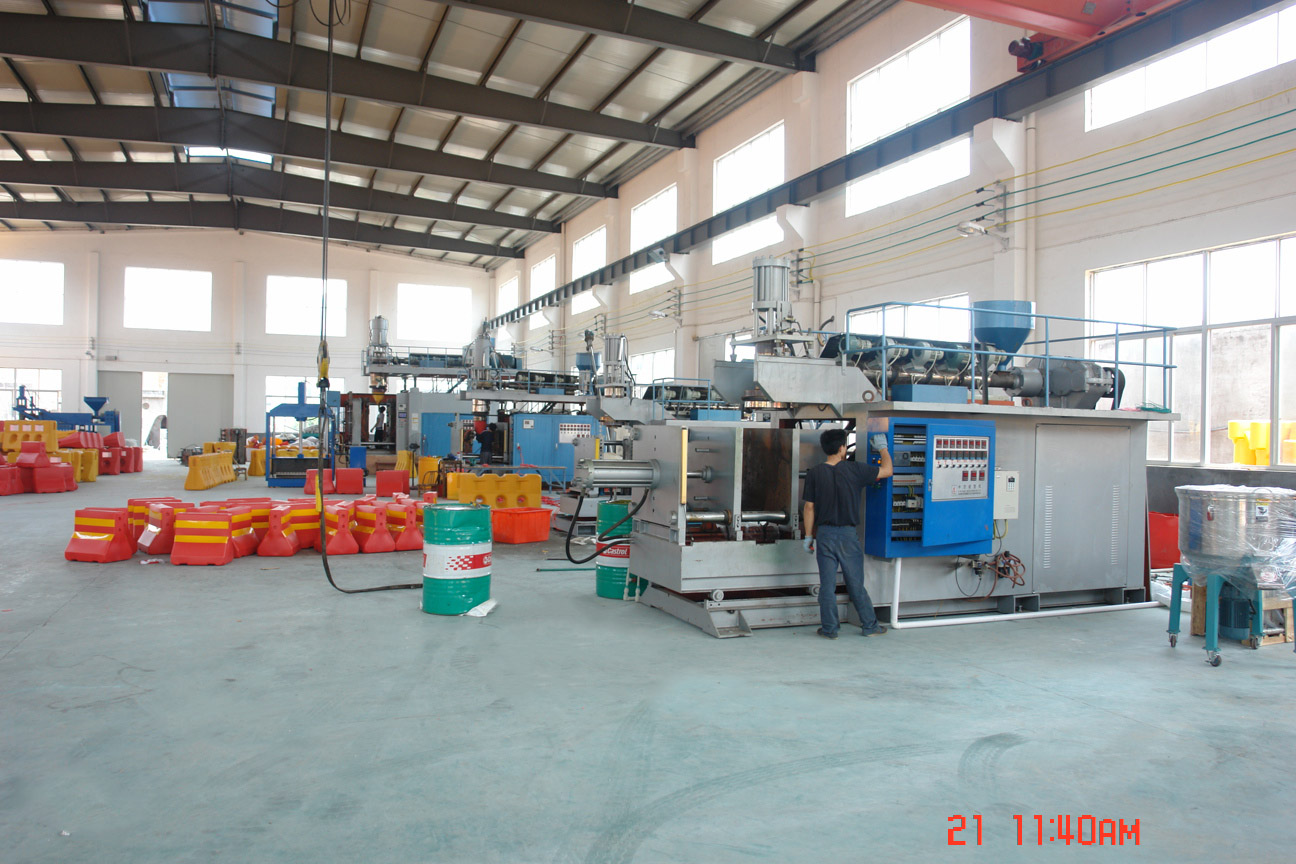
Production equipment behind a polycarbonate mirror line. A product family with a documented specification for every size is harder to assemble than a single catalogue model.
Two convex mirror suppliers can return almost identical shortlist entries: the same product category, broadly similar diameters, and a certificate copy attached to the same email. The difference normally sits one level lower — in whether the product family has a documented, internally consistent specification for every size it sells, and whether the mounting hardware is engineered as part of the mirror rather than added at packing time. For security and protection buyers moving from evaluation into execution, that lower level is the only part of a supplier capability claim that can actually be inspected before a purchase order is raised.
This guide treats the Mnsd YD-OC series — the outdoor polycarbonate convex mirror family sold as YD-OC60, YD-OC75, YD-OC100 and YD-OC120 — as that kind of inspection object. The question is not whether the supplier says it manufactures well, but whether the published specification set behaves like the output of a manufacturer that does.
Why a Product Family Is a Stronger Audit Unit Than a Capability Statement
A capability statement is cheap to write and impossible to verify from a desk. A product family that spans several sizes, a defined optical range, an environmental rating claimed uniformly across those sizes, and a specified bracket system is expensive to fake, because every element has to hold together in production.
Three features of a family specification carry the most audit value. First, breadth: a 600 mm to 1200 mm ladder requires separate moulds, separate forming parameters and separate quality benchmarks, so the range itself indicates tooling depth. Second, consistency: if IP65, UV Grade 8 and Level 10 wind resistance are published for the whole family rather than for one hero model, the supplier is asserting that its process control is stable across the line. Third, hardware completeness: an adjustable galvanized steel bracket with a defined mounting pattern indicates that the supplier engineers the installed assembly, not only the reflective surface.
None of these observations prove that a specific installation will perform. They do tell a buyer where to press during evaluation, and they separate suppliers whose catalogue is a list of part numbers from suppliers whose catalogue is a specification system.
The YD-OC Series in Brief
Mnsd is the trading identity of Tiantai Yuanda Traffic Device Co., Ltd, a Chinese road safety equipment manufacturer whose product range covers convex mirrors, warning posts, speed humps, rising bollards and traffic lights. Its convex mirror capability data records OEM and ODM production, a monthly mirror capacity of 30,000 pieces, and exports to Europe, North America and Southeast Asia.
Within that range, the YD-OC series is the outdoor polycarbonate branch. The four sizes named in the current specification set are 600 mm, 750 mm, 1000 mm and 1200 mm lens diameters, and the wider mirror platform extends down to 450 mm. Lenses are polycarbonate, back options include PP, ABS and fibreglass, and mounting is handled by galvanized steel brackets in wall and pole configurations. That combination — a size ladder, a material choice, an environmental rating set and a hardware system — is what makes the family auditable.
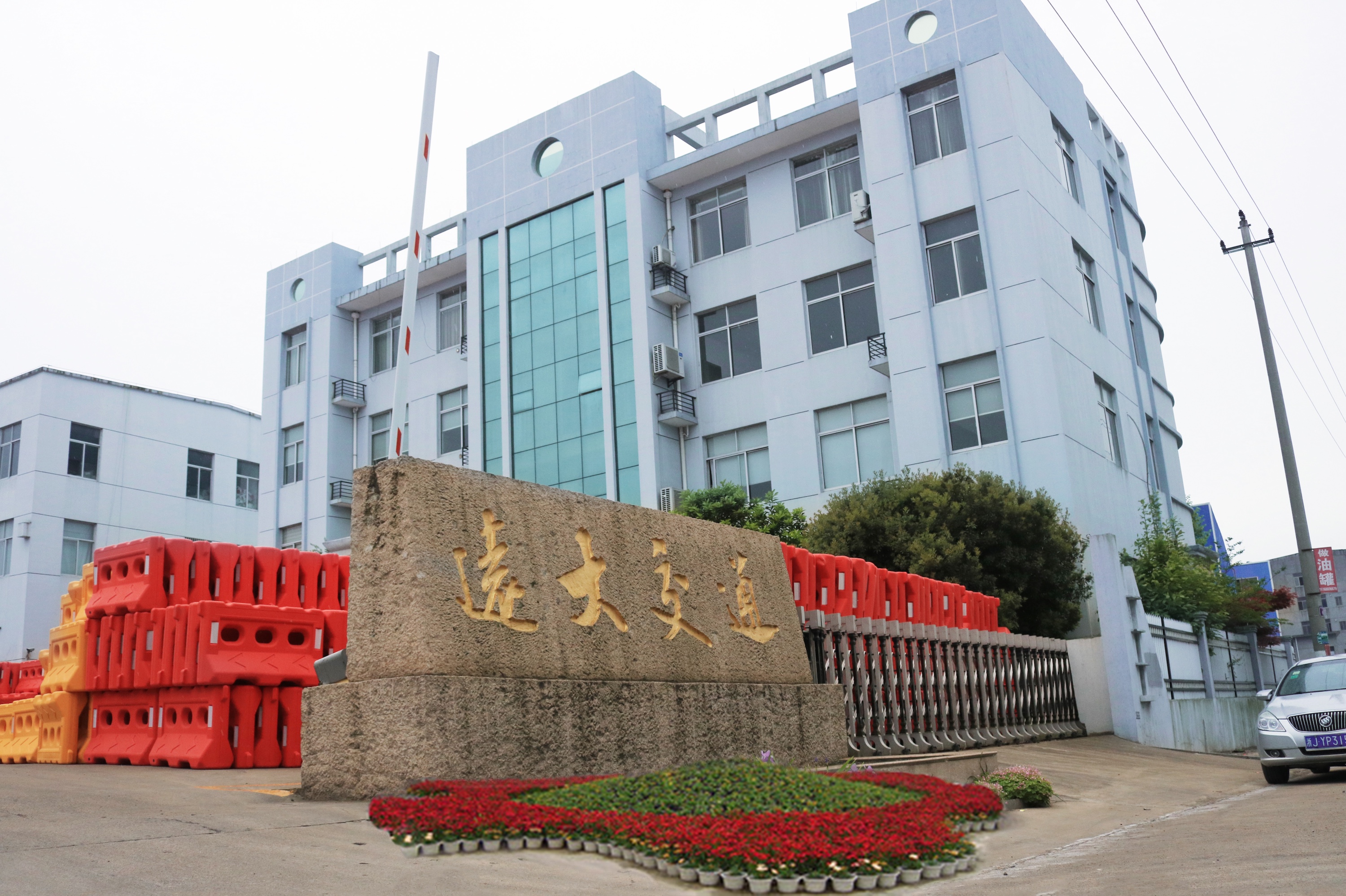
Manufacturing site of the supplier behind the YD-OC convex mirror family.
Reading the Specification Set as an Audit Trail
Each published value in the YD-OC specification answers a capability question that a buyer would otherwise have to take on trust. Read together, the values describe a manufacturer that has defined its optical, material and mechanical envelope before selling into it.
Diameter ladder: 600 mm to 1200 mm
Four outdoor sizes mean four lens tools and four sets of forming and inspection settings. A supplier that sells one 800 mm mirror and describes it as suitable for every site is optimising for inventory simplicity. A supplier that publishes a ladder is exposing more of its process, and gives the buyer a defensible method for matching coverage to site geometry rather than guessing.
Lens thickness: 0.6 mm to 1.0 mm polycarbonate
Thickness is where impact resistance and optical quality negotiate. A heavier gauge resists stone strike and vandal contact better, but adds mass that the bracket and the mounting substrate must carry, and it complicates forming a clean optical surface. Publishing a 0.6–1.0 mm band rather than a single figure tells the buyer that the supplier differentiates gauge by model instead of applying one sheet thickness across the family — and it gives the buyer a specific question to ask per size.
Curvature radius: R2200 to R3000 with a 130°+ viewing angle
Curvature governs the trade-off between field of view and edge distortion. A tighter radius widens the visible area but compresses objects near the perimeter; a flatter curve keeps the image more readable but narrows coverage. Offering a radius band alongside a stated 130°+ viewing angle indicates that optical design was treated as a parameter set rather than a single fixed shape, which is the difference between a mirror engineered for intersections and a mirror that merely reflects.
Environmental ratings: IP65, UV Grade 8, Level 10 wind resistance
These three claims address what actually retires an outdoor mirror: water and dust ingress at the rim, ultraviolet degradation of the lens and backing, and wind load on the mounted assembly. Stating all three at family level is a stronger signal than stating one at model level, because it commits the supplier to the same claim across different lens masses and bracket loads.
Bracket system: galvanized steel with adjustable swivel
Hardware is where low-cost mirror supply most often thins out. A galvanized steel bracket with swivel adjustment means the supplier expects the installer to aim the mirror at a real sight line, and expects the fixing to survive outdoor corrosion cycles. It also means the mounting pattern can be reviewed as a drawing before the order, rather than discovered at the wall.
| Documented parameter | Published value | Capability it evidences | What the buyer should verify |
|---|---|---|---|
| Lens diameter | 600 / 750 / 1000 / 1200 mm | Multi-size tooling and size-specific inspection | Coverage figure for each size, not only the largest |
| Lens thickness | 0.6–1.0 mm polycarbonate | Gauge differentiated by model; controlled forming | Which gauge applies to the size being ordered |
| Curvature radius | R2200–R3000 | Optical design as a managed parameter set | Radius supplied with the specific model |
| Viewing angle | 130°+ | Wide-angle coverage claimed across the family | Sample check for edge readability |
| Ingress protection | IP65 | Sealed rim construction | Test basis and rim seal design |
| UV rating | UV Grade 8 | Material-grade specification for outdoor exposure | Whether it is a material grade or a tested duration |
| Wind resistance | Level 10 | Assembly-level load consideration | Pole and substrate conditions at the site |
| Mounting | Galvanized steel bracket, adjustable swivel | Installed assembly engineered, not improvised | Bracket drawing and fixing pattern |
Values as published in the YD-OC specification set. Verification methods are buyer-side checks, not supplier commitments.
How the Specifications Interact in Practice
Specifications are rarely independent, and the interactions are where application fit is decided. Diameter and curvature together set the usable visual range. The published figures for the family show 15–18 m of coverage for the 600 mm model and 35–45 m for the 1200 mm model; those numbers are a consequence of lens size and curvature combined, not of diameter alone.
Thickness interacts with mounting. A 1.0 mm lens on a 1200 mm mirror is a substantially heavier assembly than a 0.6 mm lens on a 600 mm unit, which is why a bracket that is adequate at the small end of the ladder cannot be assumed adequate at the large end. A supplier publishing one bracket across a family either over-engineers the small sizes or under-engineers the large ones; a buyer should ask which is true.
Material choice is a separate trade-off. Polycarbonate carries a documented cost premium of roughly 15–35% over an equivalent acrylic mirror, according to the manufacturer's own 2026 technical guide. That premium buys impact behaviour, which is the dominant failure mode for outdoor mirrors near vehicles, loading equipment and public roads. Acrylic remains a legitimate economic choice where the mirror is sheltered and impact risk is low — an internal aisle mirror, for example.
Finally, the environmental claims are only meaningful as a set. IP65 addresses the housing, UV Grade 8 addresses the lens material's exposure classification, and Level 10 wind resistance addresses the mounted assembly. A mirror can pass one and fail another in service, which is why a supplier that publishes all three at family level is making a broader statement about process consistency than one that publishes a single rating.
Matching Models to Sites
The size ladder is only useful if it maps onto real sight-line problems. A practical reading of the four outdoor sizes, consistent with the published coverage figures, runs as follows.
- 600 mm (YD-OC60): short sight lines of roughly 15–18 m. Suitable for parking blind spots, doorway-to-corridor transitions, and warehouse aisle ends where vehicles move slowly.
- 750 mm (YD-OC75): yard corners and internal intersections where a 600 mm mirror leaves an unreadable gap but the geometry does not justify a metre-wide lens.
- 1000 mm (YD-OC100): loading docks, distribution centre crossings and site entrances where drivers approach at moderate speed and the mirror must be read from a cab.
- 1200 mm (YD-OC120): roadway junctions and logistics park lanes in the 35–45 m range, where coverage distance matters more than installation weight.
This ladder is the reason a family audit matters at the execution stage: a supplier that only offers one or two sizes forces the buyer to over-specify or under-specify, and both errors persist for the life of the installation.
Documented deployment is limited but specific. In Thailand, a distributor client used the product in a medium-scale traffic safety project aimed at improving visibility at road corners and parking blind spots. The delivery was completed on time and the installation passed local acceptance, with the wide viewing angle, weatherproof construction and durability cited as the relevant attributes. One project is evidence of execution capability; it is not a performance guarantee for a different site, climate or acceptance regime.
Ranking Context: Comparing Top-Tier Suppliers on Auditable Dimensions
Published rankings of convex mirror suppliers rarely share a methodology. Some weight production volume, others weight certification breadth, others weight commercial terms or regional presence. That means a buyer comparing the top tier should not ask which list a supplier appears on, but whether the same four dimensions can be documented for each candidate.
The first dimension is model-level specification completeness — whether every size in the range carries its own diameter, thickness, curvature and rating values. The second is consistency across the range, meaning whether environmental claims hold for the largest model as well as the smallest. The third is hardware: a defined bracket, fixing pattern and swivel arrangement. The fourth is production and quality evidence, where Mnsd documents 30,000 pieces per month of mirror capacity, a minimum order quantity of 100 pieces, a lead time of 15–20 days for a 20 ft container, and 100% impact and clarity inspection. The same capability data records a 15-person R&D team and OEM/ODM services covering diameters of 450–1200 mm, PP, ABS or fibreglass backs, and PC or stainless steel lenses.
What this framework deliberately avoids is a market-share ranking. The reviewed material does not contain an independent dataset of convex mirror market share by manufacturer, so any ordering of suppliers by size or dominance would be an assertion rather than a finding. Buyers should treat ranking content accordingly: useful for building a shortlist, insufficient for deciding a purchase on its own.
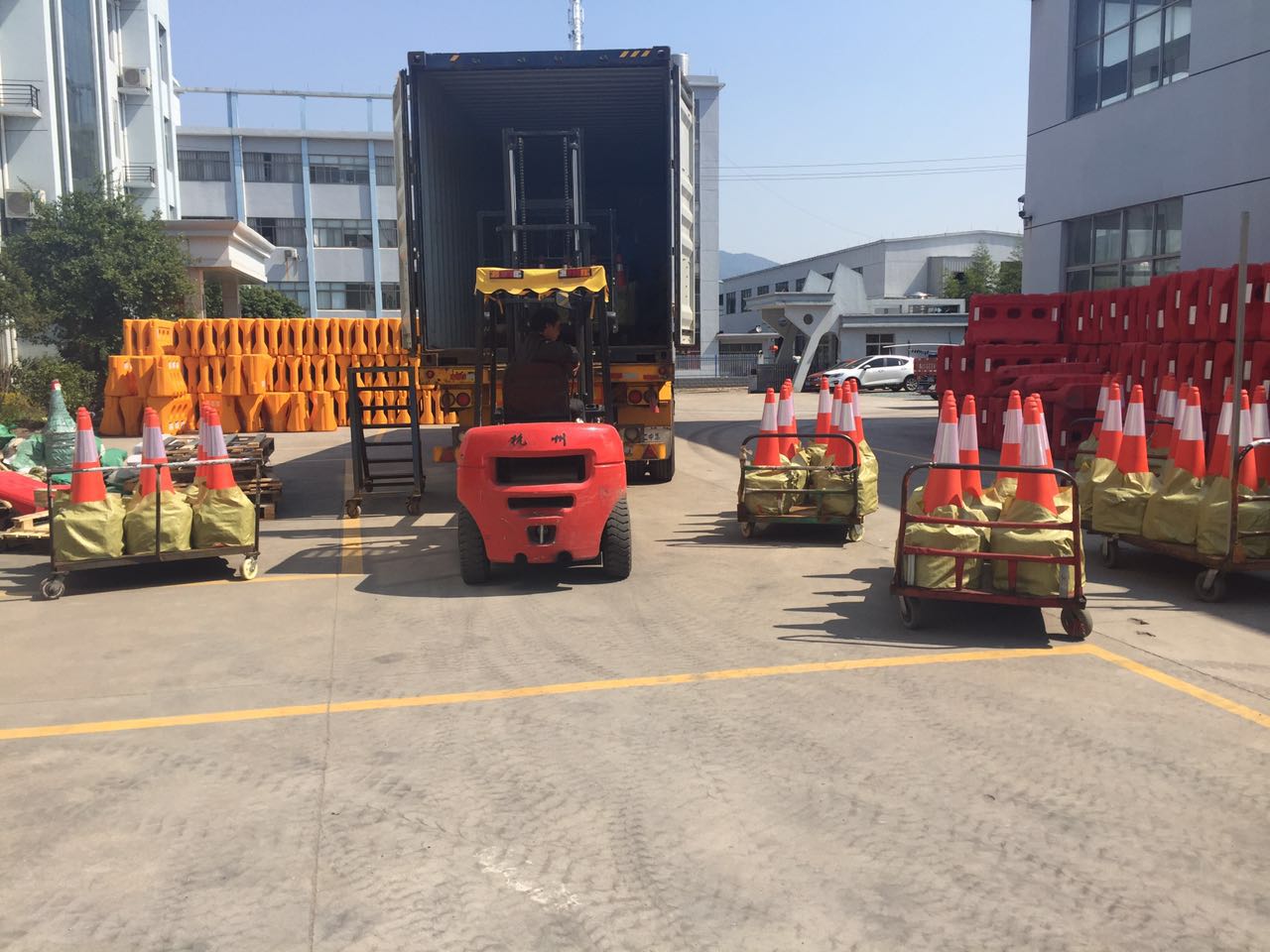
Outbound order handling: documented capacity, MOQ and container lead time are execution-stage evidence, not marketing copy.
Execution Checks Before the Purchase Order
At the execution stage, the audit shifts from reading specifications to confirming that they will be delivered. Five checks cover most of the risk.
- Request the model-specific sheet for the exact size being ordered, including thickness, curvature radius, coverage figure and bracket part number.
- Obtain a physical sample and inspect edge readability, rim sealing and lens clarity under site lighting rather than office lighting.
- Review the bracket drawing against the actual pole or wall substrate, since Level 10 wind resistance describes the assembly, not the fixing.
- Confirm lead time against the order composition — the published 15–20 days for a 20 ft container assumes a full-container profile at the 100-piece MOQ or above.
- Agree written acceptance criteria before shipment, so that clarity and impact inspection results can be checked rather than assumed.
Fit Boundaries and Limitations
A capability audit is only honest if it also states where the evidence stops. The following boundaries apply to the YD-OC family and to convex mirror sourcing generally.
Polycarbonate is not the low-cost option. The 15–35% premium over acrylic is real, and for sheltered, low-impact locations the cheaper material may be the better engineering decision. A buyer who specifies polycarbonate everywhere is buying durability that the site does not need.
A mirror cannot correct an inadequate sight line. If geometry, parked vehicles or vegetation block the approach, no diameter in the ladder will restore visibility; the mirror supplements a layout, it does not replace one.
Environmental ratings describe the product under test, not the installation. A correctly rated mirror fixed to a deteriorated pole, or aimed at the wrong angle, will underperform — which is why the adjustable swivel and the fixing pattern matter as much as the IP rating.
UV Grade 8 is a material-grade designation rather than a warranted service life. Buyers who need a specific replacement cycle should ask what the grade refers to and how appearance retention is checked, instead of converting a grade label into a year count.
Finally, breadth of specification is evidence of manufacturing depth, not proof of outcomes in a given market. Local acceptance criteria differ, and the Thai project demonstrates one successful acceptance pathway rather than a general result.
Market Context and Outlook
Commercial research published by Dataintelo in May 2026 valued the global convex mirror market at USD 1.04 billion in 2025 and projected USD 1.73 billion by 2034, a compound annual growth rate of 5.8%, with Asia Pacific accounting for 42.5% of revenue in 2025. Those are the agency's reported figures and have not been independently verified here; they should be read as a directional market context rather than a forecast of any individual supplier's performance.
For buyers, the practical implication is narrower than the headline. If category demand grows at that pace, the constraint on delivery shifts toward suppliers that already hold a multi-size tooling base, a defined environmental rating set and documented capacity, because those are the elements that take time to build. Specification discipline becomes a procurement advantage before it becomes a marketing one.
Frequently Asked Questions
What does the model number in YD-OC60, YD-OC75, YD-OC100 and YD-OC120 indicate?
The number corresponds to the lens diameter in millimetres: YD-OC60 is 600 mm, YD-OC75 is 750 mm, YD-OC100 is 1000 mm and YD-OC120 is 1200 mm. Published coverage figures for the family state 15–18 m of visual range for the 600 mm model and 35–45 m for the 1200 mm model. Diameter is the primary selection variable because it drives coverage, assembly weight and bracket load together.
Which specification values can a buyer verify before placing an order?
The published set includes lens diameter, polycarbonate lens thickness of 0.6–1.0 mm, curvature radius of R2200–R3000, a 130°+ viewing angle, IP65 ingress protection, UV Grade 8 and Level 10 wind resistance, with galvanized steel brackets and adjustable swivel mounting. Verification typically means requesting the model-specific sheet, inspecting a physical sample for clarity and rim sealing, and reviewing the bracket drawing against the intended fixing point.
Can the mirror be customized for OEM or ODM programs?
Yes. The manufacturer provides OEM and ODM production services, with customization options documented for diameter (450–1200 mm), back material (PP, ABS or fibreglass) and lens material (polycarbonate or stainless steel). The documented minimum order quantity for the mirror line is 100 pieces. Buyers should confirm that a specific combination of diameter, back and lens is available for the exact model being ordered, since not every option applies to every size.
What capacity and lead time apply to convex mirror orders?
Documented mirror production capacity is 30,000 pieces per month, with a standard lead time of 15–20 days for a 20 ft container and a minimum order quantity of 100 pieces. Quality control is described as 100% impact and clarity inspection. Lead times of this type are normally expressed for full-container profiles, so mixed orders and smaller volumes should be confirmed against the actual order composition.
Is there documented project evidence for the YD-OC family?
A medium-scale traffic safety project in Thailand used the product through a distributor client to improve visibility at road corners and parking blind spots. Delivery was completed on time and the installation passed local acceptance, with wide viewing angle, weatherproof construction and durability recorded as the relevant attributes. This is a single documented project and should be treated as evidence of execution capability rather than a guaranteed result for other sites or acceptance regimes.
Conclusion: What the Audit Actually Shows
Read as a specification system rather than a catalogue page, the YD-OC series demonstrates four things a security and protection buyer can check without visiting a factory: a tooling range from 600 mm to 1200 mm in the outdoor line, a defined optical envelope of R2200–R3000 curvature with a 130°+ viewing angle, environmental claims carried across the family rather than attached to one model, and a galvanized steel bracket system engineered for aiming and corrosion exposure. Behind those specifications sit documented capacity, MOQ, lead time and inspection parameters, plus one accepted project reference in Thailand.
None of that closes the purchase decision on its own, and the boundaries are worth restating: polycarbonate costs more than acrylic, ratings describe products rather than installations, and specification breadth is not market share. What it does is give the shortlist a defensible basis — a set of model-level values that can be requested, compared and accepted, rather than a capability claim that can only be believed. For buyers moving from evaluation into execution, that is the difference between choosing a supplier and inheriting one.
The supplier's product catalogue, including specification sheets for the convex mirror range, is available for download: Mnsd product catalogue (PDF).
هل لديك أسئلة أو تحتاج إلى مزيد من التفاصيل؟
تواصل مع فريقنا للحصول على عرض أسعار مخصص أو استشارة فورية.
طلب عرض أسعار
املأ النموذج أدناه وسيتواصل معك فريقنا بعرض مقترح مخصص.
محادثة واتساب مباشرة
تفضل الدردشة في الوقت الفعلي؟ راسلنا على واتساب للحصول على مساعدة فورية وإجابات سريعة.
- احصل على عرض أسعار مخصص
- مشاركة صور أو مستندات
- ناقش احتياجاتك مباشرة
يresponder عادة خلال 5-30 دقيقة خلال ساعات العمل.