
YD-WP45 and YD-WPS75: Choosing a Warning Post on Spec
YD-WP45 and YD-WPS75: Choosing a Warning Post on Spec
Specifying a flexible warning post rarely turns on price alone. Between Mnsd's YD-WP45 and YD-WPS75, the decision turns on five checks a buyer can run before placing an order: physical footprint, reflective performance, temperature resilience, recovery behaviour after impact, and the base or fixing method the site can actually accept. This comparison sets the two published specifications beside each other, explains what each design is suited to in road, parking lot and construction-site safety plans, and marks the point where the published data stops and a document request has to begin.
Why these two posts are not interchangeable grades of one product
The category context is large but imprecise. MarketsandMarkets estimates the global road safety market at USD 7.62 billion in 2026, a figure that spans hardware, software and services rather than warning posts alone; the trade and research sources used for this comparison do not publish a separate figure for flexible delineator posts. For a buyer, the practical consequence is that category-level growth says very little about which post belongs on a given site. That decision is still made at the level of geometry, surface and environment.
The two models sit in the same product family but answer different site conditions. The YD-WP45 is a 450 mm post on a 200 x 80 mm base. The YD-WPS75 is listed at 750 x 80 x 200 mm, with a HIP / Class 1 reflective grade, self-recovery and 360-degree flexibility, and a base arrangement that includes expansion bolt fixing with three or four holes, a ring top, and either a recycled rubber or an integrated plastic base. Read together, those figures describe a low-profile guide and a taller, directionally forgiving post that can be either anchored or free-standing.
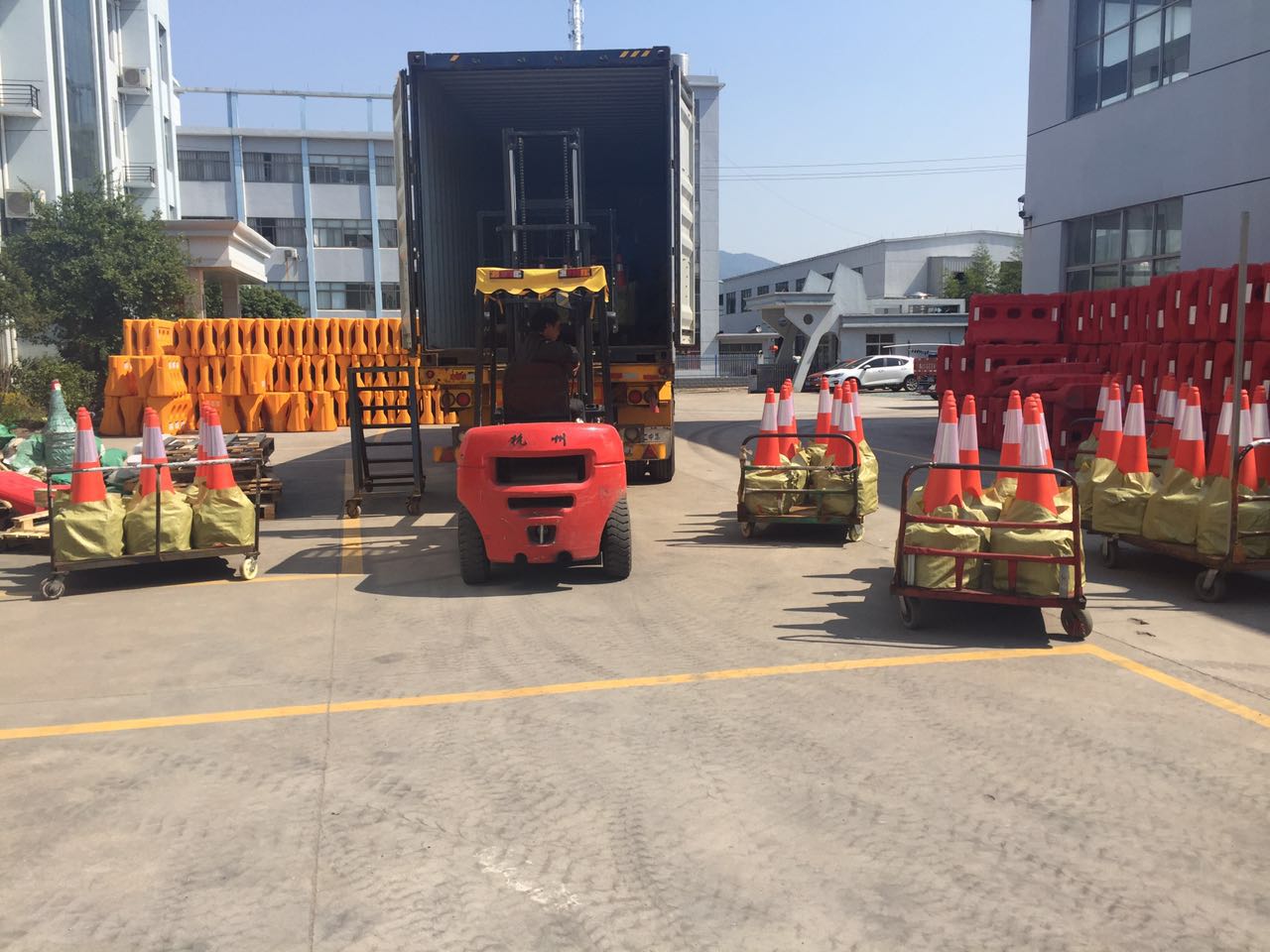
Both are produced by Mnsd, the brand of Tiantai Yuanda Traffic Device Co., Ltd, a road safety equipment manufacturer based in Tiantai, Zhejiang, China, whose range also covers traffic cones, convex mirrors, speed bumps, rising bollards and traffic lights. The manufacturer states more than 15 years of production experience, offers OEM and ODM customization, and supplies importers, distributors, contractors and infrastructure project suppliers across Asia, the Middle East, Europe and South America. None of that settles the comparison; it only defines who is making the claim.
The published specifications, side by side
| Specification | YD-WP45 | YD-WPS75 |
|---|---|---|
| Listed size | Height 450 mm; base 200 x 80 mm | Dimensions 750 x 80 x 200 mm |
| Reflective performance | 200+ m visibility distance | 200+ m visibility distance; HIP / Class 1 reflective grade |
| Temperature range | -40 C to +70 C | Not stated in the specification used for this comparison |
| Material behaviour | 15.0 MPa tensile strength; 400% elongation | Self-recovery; 360-degree flexibility |
| Base and fixing | Base 200 x 80 mm | Expansion bolt fixing with 3 or 4 holes; ring top; recycled rubber or integrated plastic base option |
The values above are the manufacturer's published specifications. Test methods, dimensional tolerances and the specific reflective sheeting behind the Class 1 grade are not stated in the material used here, and they are the first items to request from the supplier.
Check 1: physical footprint and where the post can stand
The first constraint on any post is the space it occupies, both above ground and at the base. YD-WP45 stands 450 mm high and carries a base of 200 x 80 mm. YD-WPS75 is listed at 750 x 80 x 200 mm. The taller post places its reflective face further above the running surface, which is the reason a 750 mm unit is normally considered where delineation has to clear a kerb, low planting or standing water at the pavement edge. The compact base of the 450 mm post leaves more of a narrow shoulder, aisle or painted bay free.
Footprint also decides what can pass the post. A 750 mm element sits inside the swept path of overhanging vehicle bodies, mirrors and tail lifts, and inside the working width of sweepers, trimmers and snow-clearing equipment. On a tight parking deck or a service lane, that exposure translates into more contacts and more replacements, however well the post recovers. Buyers should measure the installation envelope, base plus clear space, against the actual surface before fixing height, and should check whether the local maintenance regime reaches the post at all: a delineation line nobody cleans loses reflective performance regardless of grade.
Check 2: reflective performance and what 200+ m does and does not mean
Both models are listed with a visibility distance of 200+ m. Only the YD-WPS75 also carries a stated reflective grade, HIP / Class 1. That asymmetry matters at tender stage, because a visibility distance and a reflective class are different kinds of claim.
A distance figure describes an outcome: light from a vehicle's headlamps returns from the reflective surface and is seen at a stated distance. The summary used here does not state the observation conditions, including headlamp type, observation angle, sheeting product and weather, so the 200+ m figure should be read as a comparable headline across both models rather than as a compliance result. A reflective class is a product classification attached to the sheeting, and it can be evidenced by a certificate naming that sheeting and the standard it was tested to. Where a specification names a class, only a classed product with documentation answers it, which is one reason the YD-WPS75 lists its grade explicitly. Where a specification names an outcome instead, both models need evidence produced under the test method the specification quotes.
Jurisdiction adds a second layer. Distributor catalogues in the United States reference MUTCD-related criteria for delineator colour, height, stability and visibility, and note that state and local requirements may add conditions; catalogue-level references of that kind are a screening aid, not an approval for a specific product. In Europe, EN 13422:2019 is the CEN standard covering portable traffic cones and cylinders, and whether it applies to a particular post design is a question for the road authority rather than for the supplier alone. Neither point changes what Mnsd publishes; both change the documents a buyer should hold before delivery.
Check 3: temperature resilience and the thermal failure mode
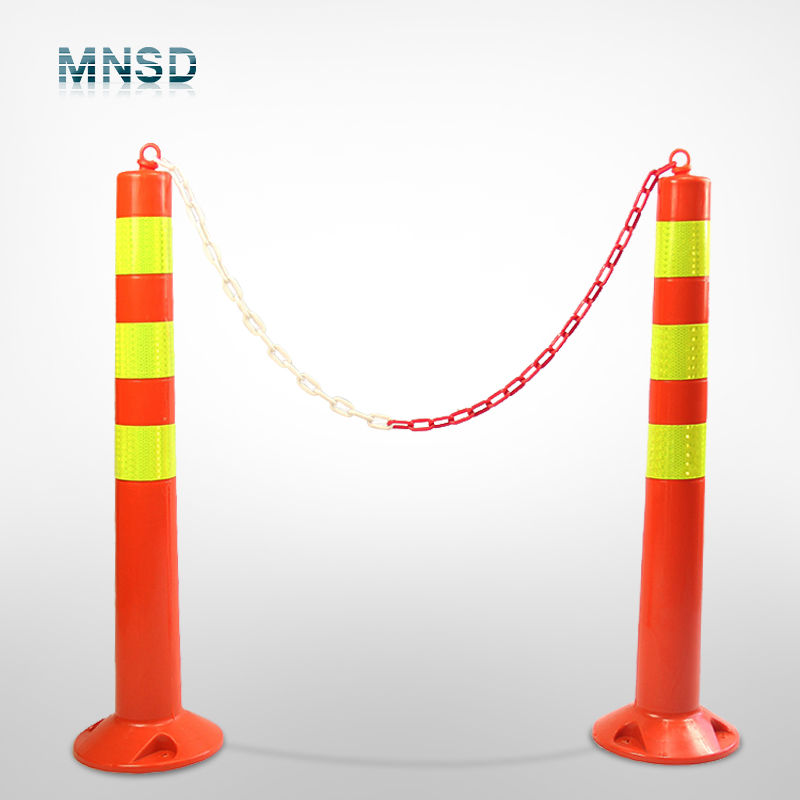
Temperature is where the two specifications diverge most clearly. The YD-WP45 is listed for -40 C to +70 C. The specification summary used for this comparison does not state a temperature range for the YD-WPS75, so buyers in hot or cold markets should request it directly rather than assume it inherits the other model's envelope.
Heat is the more common failure route for flexible posts. Thermal distortion, meaning a post that sags or takes a permanent lean in sustained high temperature, is a recognised failure mode, and Mnsd's own risk documentation for warning posts names it, describing wall-thickness optimisation as the control measure for high-temperature climates. That is a design response rather than a test result, and it applies to the model it was written for.
Site temperature is not air temperature. Dark asphalt in direct sun runs hotter than the surrounding air, and a post fixed at the edge of a paved surface sits in that environment for its whole service life. A stated range should therefore be read against the surface the post stands on, with margin taken from the hottest weeks of the year rather than the annual average. At the cold end, flexibility is the property at risk: the -40 C figure on the YD-WP45 is the only cold-end figure in this comparison, and cold-market buyers should put the same question to the YD-WPS75.
Check 4: flexibility, recovery and why the two figures cannot be ranked
The two models describe impact behaviour in different vocabularies, and that difference is easy to miss in a side-by-side table.
The YD-WP45 is specified with a tensile strength of 15.0 MPa and an elongation of 400%. These are material properties. Tensile strength describes the stress at which the material fails when pulled; elongation describes how far it stretches before that point is reached. A high elongation figure is the signature of a ductile, stretchable compound rather than a brittle one, which is what allows a flexible PU post to bend and return instead of cracking. The summary does not state the test method or specimen geometry behind either figure, so a buyer who intends to rely on them should ask for the test report and not only the number.
The YD-WPS75 is specified behaviourally, as self-recovery with 360-degree flexibility. That is a statement about the assembled post: it is designed to be struck from any direction and to come back upright. It is not a material measurement and cannot be converted into one.
The practical rule is that these two figures should not be ranked against each other. Four hundred per cent elongation and 360-degree flexibility answer different questions, one about the compound and one about the finished product. Where a buyer needs a like-for-like comparison, the route is to request the same impact or rebound test on both models, on the same equipment, and to compare those results instead. As background, a supplier technical comparison published in 2026 describes PU delineator posts as returning to their original state after repeated impacts; that is a supplier statement and it does not substitute for a report on either model in this article.
Check 5: base, fixing and the installation decision
The YD-WPS75 is the more configurable of the two at the base. It is listed with expansion bolt fixing using three or four holes, a ring top, and a choice between a recycled rubber base and an integrated plastic base. Those are not cosmetic variants: they are two installation families under one model designation, and the purchase order should state which one is required. A bolted post and a free-standing post behave differently in service, are inspected differently and are replaced differently.
Expansion bolt fixing ties the post to a surface that can accept an anchor, typically a paved or concrete substrate where drilling is permitted and fixings can be inspected. That suits delineation lines that will stay in place for a season or longer and removes the need for ballast around the base. It also places the anchor in the load path: when a bolted post is struck, the fixing takes part of the force, so post-impact inspection should cover the base and anchor, not only the upright.
The recycled rubber or integrated plastic base options allow a free-standing arrangement, which is the practical answer where drilling is prohibited or unwelcome, including leased decks, waterproof membranes, bridge decks, temporary haul routes and any layout that will be moved. The trade-off is that a free-standing post depends on its base staying where it was placed, so the maintenance routine needs a check that bases have not been displaced.
The YD-WP45 is specified with a 200 x 80 mm base, and the fixing method for a given installation should be confirmed with the supplier against the actual surface. Because that base is the more compact of the two, the substrate and the securing method carry a larger share of the stability question, and that is a point to settle in writing before delivery rather than on site.
Matching each post to road, parking lot and construction plans
The same two posts map onto road, parking lot and construction applications in different ways, and the mapping follows from the checks above rather than from a preference for one model.
Roads and highway approaches
Where delineation must be legible above a kerb, low vegetation or water at the pavement edge, the 750 mm YD-WPS75 places reflective material higher and, with bolted fixing, holds its position through a long layout. Its HIP / Class 1 grade is the figure a class-based specification can be checked against, subject to the road authority's own acceptance criteria. The 450 mm YD-WP45 keeps the reflective element lower and the footprint smaller, which suits positions where a taller element would sit in the swept path of vehicles or where the shoulder is narrow. Neither choice overrides the road owner: delineator colour, height, stability and visibility are set by that authority, and state or local rules may add conditions beyond a national reference.
Parking lots and garages
Inside a deck or a tight aisle, the constraints are clearances, low ceilings and a landlord who may not permit drilling. The YD-WP45's 450 mm height and compact base fit that envelope, and warning posts belong in parking applications alongside traffic cones, speed humps and convex mirrors in the same safety plan. The YD-WPS75 is the option where a taller cue is wanted at entrances, ramp approaches or one-way transitions and the surface will accept an anchor. Because the same model can arrive with a bolted or a free-standing base, the bay-level maintenance regime should state which one is expected; a free-standing base that migrates is a delineation failure even when the post itself is undamaged.
Construction sites and temporary layouts
Temporary works change weekly, and relocation is the dominant requirement. A free-standing arrangement is easier to move and does not leave anchors in a surface that will later be resurfaced or handed over; bolted fixing fits only where the layout is fixed for the duration and the site controls drilling. Both models recover rather than shatter on contact, the YD-WPS75 by a stated self-recovery and 360-degree flexibility, the YD-WP45 through a high-elongation PU compound. That matters where plant and delivery vehicles pass close to the delineation line, but recovery does not remove the need to inspect and replace units after repeated hits.
Where the comparison stops: functional and evidential limits
Two boundaries should be stated plainly, because both are easy to lose in a comparison table.
The first is function. A flexible warning post is a visual guide and a light physical cue. It deflects; it does not contain. Where a plan needs to stop or physically redirect a vehicle, a post is the wrong device and a barrier or guardrail is the right one. Mnsd's own product comparison positions warning posts as a lower-cost alternative to guardrails and barriers, and that positioning concerns cost and function, not equivalence in containment. A comparison of that kind is also the manufacturer's own, and should be tested against the project's replacement and labour assumptions rather than accepted as a project-level saving. Warning posts also need no power and, once installed, are described as almost maintenance-free, with upkeep limited to cleaning and replacing damaged units.
The second is evidence. None of the figures in this article are third-party test results. They are published specifications: height, base dimensions, visibility distance, temperature range, tensile strength, elongation, reflective grade and fixing options. That is enough to shortlist and to write a specification, and not enough to certify a product for a road authority's network. The gap between the two is closed with documents requested before the order rather than after the first failure.
A verification checklist before the order
- Reflective sheeting documentation for the YD-WP45. The published summary gives a visibility distance but no class; ask for the sheeting product and its certificate if the tender names a class.
- Temperature range for the YD-WPS75. Request the figure for the market where the posts will be installed, and compare it with surface rather than air temperatures.
- Tensile and elongation test reports. Ask for the method and specimen details behind the 15.0 MPa and 400% figures, not the values alone.
- Base drawing and fixing schedule. Confirm whether the YD-WPS75 is supplied with three or four bolt holes, with a recycled rubber base or an integrated plastic base, and confirm the intended fixing for the YD-WP45 on the actual substrate.
- Road-owner acceptance documents. Where MUTCD, MASH or NCHRP references appear in a catalogue, treat them as screening criteria and obtain the product-specific acceptance record the authority requires.
- Customs classification. Plastic delineator posts are classified in trade data under HS 3926.90, with 3926.90.9880 cited for the United States and 3926.90.97 for global and China trade flows; confirm the code with a customs broker before costing the shipment.
Market context and a conditional outlook
The road safety market that frames this decision is reported at USD 7.62 billion for 2026, but the published figures do not isolate warning posts from the wider hardware category, and no verified segment size, price benchmark or rebound-cycle dataset for flexible posts appears in the sources used here. Buyers should therefore treat category growth as background rather than as a reason to move on specification.
Two developments are reasonable to expect, given how procurement documents are already written. First, as tenders begin to name sheeting classes and demand test reports rather than product descriptions, the differentiator between two flexible warning posts will shift from material labels towards documentation quality. Second, where replacement labour is the larger cost in a site's maintenance budget, recovery behaviour after impact will carry more weight than purchase price in the specification. Both are interpretations of how requirements are written today, not forecasts of demand, and neither changes what the YD-WP45 or the YD-WPS75 currently publishes.
Frequently asked questions
What is the main practical difference between the YD-WP45 and the YD-WPS75?
The YD-WP45 is a 450 mm post on a 200 x 80 mm base, specified with a 15.0 MPa tensile strength, 400% elongation and a -40 C to +70 C range. The YD-WPS75 is listed at 750 x 80 x 200 mm with a HIP / Class 1 reflective grade, self-recovery, 360-degree flexibility, expansion bolt fixing with three or four holes, a ring top, and either a recycled rubber or an integrated plastic base. In short, one is a compact low-profile guide, the other a taller post that can be anchored or free-standing.
Both models show 200+ m visibility. Does that make them equivalent at night?
No. A visibility distance is an outcome figure and, in the specification used here, it is not accompanied by the observation conditions that produced it, such as headlamp type, observation angle, sheeting product or weather. The YD-WPS75 additionally states a reflective grade (HIP / Class 1), which is a verifiable product classification; the YD-WP45 summary gives distance without a grade. The two should be treated as different levels of evidence rather than as identical performance claims.
Which base should a construction site specify?
It depends on whether the site permits drilling and how often the layout moves. The YD-WPS75 offers expansion bolt fixing with three or four holes for surfaces that accept an anchor, and recycled rubber or integrated plastic base options for free-standing use where drilling is prohibited or the delineation line will be relocated. The YD-WP45's 200 x 80 mm base should be matched to the substrate and securing method with the supplier before ordering.
Can 400% elongation be compared directly with 360-degree flexibility?
Not directly. Elongation is a measured material property describing how far the compound stretches before failure, while 360-degree flexibility is a behavioural statement about the assembled post returning upright after impact from any direction. They answer different questions. A like-for-like comparison requires the same impact or rebound test performed on both models under the same conditions.
What documents should accompany a warning post order?
The documents that make the specification verifiable: the reflective sheeting class certificate where a grade is claimed, the stated temperature range for the specific model, the tensile and elongation test report with method details, a base drawing with the bolt-hole pattern, and any road-owner approval the project's authority requires. Product literature on its own is a description, not a test record.
A general product brochure covering Mnsd's road safety range, including warning posts and delineators, can be downloaded here: Mnsd product brochure (PDF). Company information is available at www.mnsdtraffic.com.
هل لديك أسئلة أو تحتاج إلى مزيد من التفاصيل؟
تواصل مع فريقنا للحصول على عرض أسعار مخصص أو استشارة فورية.
طلب عرض أسعار
املأ النموذج أدناه وسيتواصل معك فريقنا بعرض مقترح مخصص.
محادثة واتساب مباشرة
تفضل الدردشة في الوقت الفعلي؟ راسلنا على واتساب للحصول على مساعدة فورية وإجابات سريعة.
- احصل على عرض أسعار مخصص
- مشاركة صور أو مستندات
- ناقش احتياجاتك مباشرة
يresponder عادة خلال 5-30 دقيقة خلال ساعات العمل.