
YD-WP45 vs YD-WPS75 Warning Posts: A Buyer Decision Matrix
YD-WP45 vs YD-WPS75 Warning Posts: A Buyer Decision Matrix
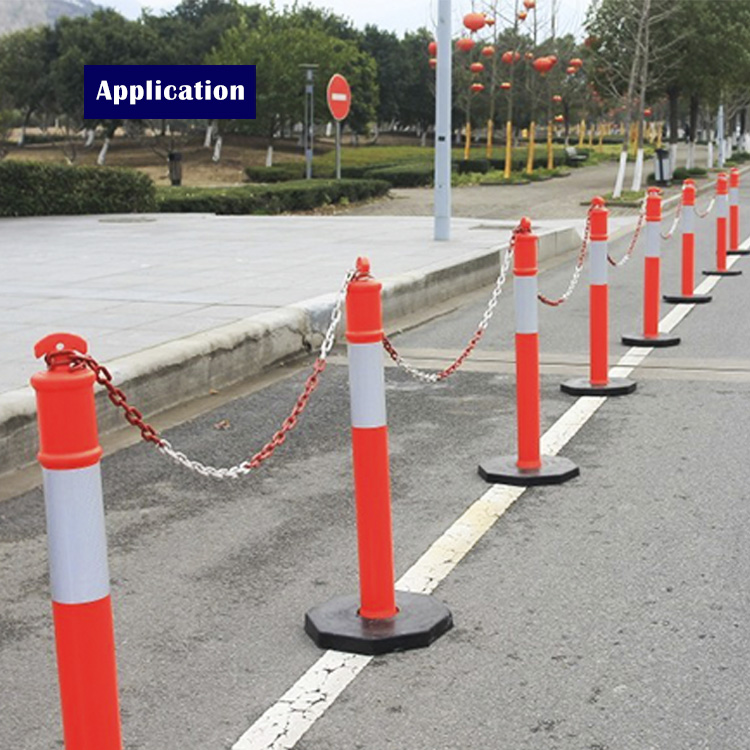
A flexible warning post is usually bought on a single promise: a vehicle strikes the post, the post bends, and the post returns to vertical. The purchasing decision is considerably harder than that promise. Height, base dimensions, reflective grade and fixing method decide whether a post performs for years on a given site or becomes a recurring maintenance line item within months. This matrix compares two PU models from Mnsd — the 450 mm YD-WP45 and the 750 mm YD-WPS75 — against the site conditions that normally decide the order.
What a Warning Post Actually Does on Site
A warning post — also sold as a delineator post, spring post, flexible bollard or traffic delineator column — is a vertical marker placed at road edges, lane separations, parking bay boundaries and work-zone perimeters to show drivers where the drivable surface ends and where a hazard begins. Suppliers such as Pexco describe flexible roadside delineator posts as impact-resistant plastic posts that warn drivers of a change in roadway alignment and help them track the roadway.
The engineering objective is therefore twofold. The post must be visible early enough for a driver to react, and it must survive being struck without transferring that impact into a rigid failure. Mnsd, the brand used by Tiantai Yuanda Traffic Device Co., Ltd, a road safety equipment manufacturer based in Tiantai, Zhejiang, China, builds its warning post range around polyurethane bodies with rubber-based configurations, alongside traffic cones, speed humps, convex mirrors and rising bollards for global export markets.
Buyers evaluating models such as the YD-WP45 and YD-WPS75 are not choosing between good and bad products. They are choosing between two different specifications, and the correct choice is determined by traffic speed, available footprint, installation substrate and whether the site needs a chained guide line.
Why Height and Base Geometry Decide the Specification
Two physical dimensions drive most of the specification logic, and neither can be corrected after delivery.
The first is height. Height determines the vertical angle at which a driver first registers the post against background clutter. A 450 mm post reads clearly from a short distance in a car park; a 750 mm post reads clearly from a much greater distance on a traffic lane. Specifying a short post on a fast approach rarely fails in the first week — it fails when a driver notices the delineation line too late, which is exactly the outcome the post was purchased to prevent.
The second is the base. Base dimensions determine the footprint the post occupies inside the marking, the stability the post has against wind and vehicle-induced air movement, and — most importantly for contractors — the installation method. A base that is bolted to the pavement cannot be relocated without leaving holes. A compact base that sits within a painted bay suits retrofit parking work. Base geometry and fixing method are also the two items most frequently omitted from a purchase order, which is why they appear repeatedly in this matrix.
The Two Models at a Glance
| Parameter | YD-WP45 | YD-WPS75 |
|---|---|---|
| Nominal height | 450 mm | 750 mm |
| Body material | PU (polyurethane) | PU (polyurethane), 80 mm body diameter |
| Base dimensions | 200 × 80 mm | 200 mm base footprint |
| Hardness | 80–85 Shore A | Confirm at RFQ |
| Tensile strength | 15.0 MPa | 15.0 MPa |
| Impact behaviour | 360° flexible impact resistance, self-recovery | 360° flexible impact resistance, self-recovery |
| Temperature resistance | -40 °C to +70 °C | -40 °C to +70 °C |
| Reflective grade | Confirm at RFQ | HIP / Class 1 |
| Stated visibility distance | Confirm at RFQ | 200+ m |
| Top feature | Not specified | Ring top for chain attachment |
| Fixing method | Confirm at RFQ | Expansion-bolt fixing |
Specifications above are model-level figures supplied for these two products. Items marked “confirm at RFQ” are not published for the model and should be fixed in writing before a bulk order is placed.
YD-WP45: The 450 mm Post for Parking Bays and Low-Speed Lanes
The YD-WP45 is a 450 mm PU warning post built on a 200 × 80 mm base, with a stated body hardness of 80–85 Shore A. Its working environment is the low-speed site: car park bays, retail forecourts, depot yards, warehouse aisles, internal service roads and boundary marking where vehicles manoeuvre at walking pace to roughly urban-site speed.
Three characteristics make this the practical fit. The reduced height sits closer to the driver's line of sight in a confined space, so the post is registered while the driver is already looking at the bay rather than scanning the horizon. The compact 200 × 80 mm base can be positioned inside or immediately beside a painted marking without dominating the bay. And the 80–85 Shore A hardness gives the body enough stiffness to stand upright through wind and vehicle wash without becoming rigid — the post still deflects and recovers when a bumper or mirror makes contact.
The trade-off is straightforward. A 450 mm post is a poor choice where the approach speed is high enough that the driver needs advance warning measured in hundreds of metres. On a traffic lane with fast approach, the YD-WP45 is visually late; the YD-WPS75 exists for that reason.
YD-WPS75: The 750 mm Post for Traffic Lanes and Chained Work Zones
The YD-WPS75 is a 750 mm PU warning post with an 80 mm body diameter and a 200 mm base, specified with HIP / Class 1 reflective sheeting, a stated visibility distance above 200 m, a ring top for chain attachment, and expansion-bolt fixing.
Every one of those features answers a site condition that the shorter model cannot address. The 750 mm height lifts the reflective band into the sight line of drivers approaching at speed, which is the core requirement on public road edges, temporary lane shifts, junction approaches and work-zone perimeters. HIP / Class 1 sheeting and the stated 200+ m visibility distance extend the recognition range so the delineation line is readable before the driver commits to a lane position.
The ring top is a functional detail rather than an accessory. It allows a chain or connecting element to run between posts, producing a continuous visual guide line for pedestrians or a physical cue for vehicle exclusion in work zones. The design intent is a marked corridor, not a series of isolated posts.
The expansion-bolt fixing is the decisive constraint for contractors. An anchored post stays where it is installed, holds alignment through repeated impact and wind load, and does not drift out of the marking — but it requires a drillable substrate, correct bolt selection and a site visit that a free-standing or ballast-based post does not.
Reading the Material Data: 80–85 Shore A, 15.0 MPa and 360° Recovery
Published material figures only help if they are translated into site behaviour. For these two posts, four numbers do most of the work.
Hardness: 80–85 Shore A
Shore A measures resistance to indentation. A body in the 80–85 Shore A band is firm for a flexible post: it holds a vertical attitude against wind and passing-vehicle airflow, and it does not sag into a permanent lean after a glancing hit. Softer compounds deflect more readily but tend to flop at speed. The practical reading for a buyer is that the YD-WP45 is tuned for consistent upright presentation in sheltered and low-speed environments rather than for maximum softness on impact.
Tensile strength: 15.0 MPa
Tensile strength describes how much pulling force the material tolerates before it tears. On a warning post, the stress points are the base-to-body junction and — on the YD-WPS75 — the ring top where a chain transfers load into the post. A 15.0 MPa figure indicates a body that resists tearing at those junctions rather than one that splits after a chain pull or a hard strike.
Impact behaviour: 360° flexible impact resistance and self-recovery
Both models are rated for 360° flexible impact resistance with self-recovery, meaning the post is designed to deflect from impacts arriving from any direction and return to an upright position. Third-party technical commentary on PU delineators describes the same behaviour — PU warning posts are designed to return to their original state after being impacted thousands of times. This recovery property, rather than initial price, is what determines replacement frequency on a high-impact site.
Temperature resistance: -40 °C to +70 °C
The stated -40 °C to +70 °C range covers the air-temperature band of most cold-climate and hot-climate export markets, which matters because polyurethane stiffens in cold and softens in sustained heat. Buyers deploying to desert or high-altitude markets should confirm the range against recorded site temperatures rather than average regional figures.
Verification of these claims should not rely on a datasheet alone. Mnsd's stated quality control for this product line includes a compression and rebound test performed more than 1,000 times, and buyers are entitled to request the test reference as part of pre-shipment acceptance.
Reflective Grade and Visibility: What HIP / Class 1 and 200+ m Really Mean
Reflectivity is the specification most often accepted verbally and verified least often. On the YD-WPS75, the HIP / Class 1 grade and the stated 200+ m visibility distance are the two figures that justify the taller, more heavily specified post.
Both should be read as performance under favourable conditions: clean sheeting, dry surface, correct headlamp geometry and a dark background. Visibility distance falls in rain, fog, spray and low sun, and it falls quickly when the sheeting is coated with road film. On sites where the reflective band is exposed to heavy dust or mud spray, cleaning frequency becomes a maintenance commitment that belongs in the specification, not in an operations note written after delivery.
Colour and sheeting selection also interact with local practice. Mnsd offers customization of post height, colour in orange, yellow or green, and reflective tape brand, with 3M or Grade A options listed. Buyers working to a road-owner drawing should confirm the required colour and sheeting class before the tape is cut, because tape brand is one of the few elements that cannot be corrected after production.
Installation Constraints That Change Total Cost
The two models impose different installation obligations, and this is where a like-for-like price comparison usually breaks down.
- Anchored fixing (YD-WPS75). Expansion-bolt fixing requires a drillable substrate, correct hole depth, correct bolt grade and controlled torque. It delivers the most stable alignment and the longest service life on a fixed lane edge, but it adds labour, tooling and a substrate survey to the project cost — and it leaves holes if the layout is later changed.
- Chain attachment (YD-WPS75). A ring top transfers chain tension into the post body and the anchor. The chain, connectors and anchors should be specified together; a chain rated far above the post, or an anchor rated far below it, simply moves the failure point.
- Footprint and fixing on the YD-WP45. The 200 × 80 mm base is compact, which suits bay-level installation, but the fixing method for this model is not published alongside the dimensions. Buyers should confirm at RFQ whether the post is supplied for surface fixing or with a base option, because the answer determines whether a bay retrofit can be completed without drilling.
- Relocation. Sites that need periodic re-layout — event venues, seasonal parking, temporary works — should weigh relocation cost explicitly. Weighted or ballast-base delineator designs exist in the market precisely to avoid drilling; a buyer who specifies an anchored post and later needs to move it has bought the wrong fixing method, not the wrong post.
Decision Matrix: Matching Site Conditions to the Right Model
| Site condition | YD-WP45 (450 mm) | YD-WPS75 (750 mm) |
|---|---|---|
| Car park bays and parking guidance | Primary fit — compact 200 × 80 mm base, low-profile height | Oversized for bay-level marking |
| Depot yards, warehouse aisles, internal service roads | Primary fit at low speed | Usable where extra height is required |
| Public road edge and temporary lane shifts | Generally too short for early recognition | Primary fit — HIP / Class 1, 200+ m stated visibility |
| Work zone needing a chained guide line | No ring top specified | Primary fit — ring top for chain attachment |
| Installation on concrete or asphalt | Confirm fixing method at RFQ | Expansion-bolt fixing specified |
| Frequent re-layout, drilling not permitted | Confirm base option before ordering | Anchored fixing conflicts with this requirement |
| Wind-exposed or vehicle-wash locations | 80–85 Shore A holds upright shape | 80 mm PU body, 15.0 MPa tensile strength |
| Cold-climate or hot-climate deployment | -40 °C to +70 °C | -40 °C to +70 °C |
Where Flexible PU Warning Posts Stop Being the Right Answer
A credible specification includes the boundary conditions, and flexible warning posts have clear ones.
They are delineators, not barriers. A PU warning post marks an edge or a hazard; it does not stop a vehicle. Sites requiring physical containment need a barrier, a bollard system rated for vehicle impact, or a combination of both. Specifying a flexible post where a barrier is required is a scope error, not a product failure.
Reflective performance degrades. The stated 200+ m visibility distance on the YD-WPS75 is not a permanent property. Surface contamination and abrasion reduce retroreflection, and the post will underperform if cleaning is not scheduled. Buyers should plan replacement of the sheeting or the post as part of lifecycle cost.
Anchored installation is inflexible. The expansion-bolt fixing that gives the YD-WPS75 its stability also makes relocation expensive. If the layout may change within the service life, the anchoring decision deserves re-examination before the order.
PU carries a unit-cost premium. Polyurethane typically costs more per unit than PE alternatives. The premium is recovered only where impact frequency is high enough that replacement volume falls. On a low-impact, low-traffic site with no strike history, a cheaper material may be the rational choice — and a supplier that says so is easier to trust on the sites where PU is genuinely justified.
Compliance is jurisdiction-specific. Catalogue references to MUTCD-, MASH- or NTPEP-linked criteria are not the same as product-specific approval, and distributor catalogues note that state and local requirements can add conditions beyond a general standard. In Europe, EN 13422:2019, published by CEN/TC 226, addresses portable traffic cones and cylinders; whether its scope applies to a particular flexible post should be confirmed with the road owner rather than assumed. The burden of confirming the applicable requirement sits with the buyer and the specifying engineer.
Market Context: Where Warning Post Spend Is Heading
Road safety hardware remains a large and comparatively stable category. MarketsandMarkets values the global road safety market at USD 7.62 billion in 2026, with hardware accounting for roughly 75.3% of that total. The figure covers road safety hardware and solutions broadly rather than warning posts alone, but the composition carries a useful procurement signal: most spending still goes into physical roadside equipment, so specification quality — not software or analytics — is where most project risk sits.
Within that hardware envelope, the sourcing conversation has shifted in high-impact environments. Buyers who once specified the cheapest post that met a drawing are increasingly asking how many impacts a post survives and how quickly it returns to vertical, because replacement labour and lane-closure time now cost more than the post. That shift favours PU constructions with documented recovery behaviour, and it explains why a 750 mm anchored model with a higher reflective grade can be the cheaper option over a multi-year programme even at a higher unit price.
Two practical notes for import planning. Plastic delineator posts are commonly classified under HS 3926.90 for customs purposes, so tariff treatment should be confirmed against the destination schedule before landed cost is finalised. And where a project is split across several delivery phases, the reflective grade and fixing hardware should be frozen at the first order — mixing specifications across phases is a common source of site disputes.
Manufacturing and Order Parameters Behind These Two Models
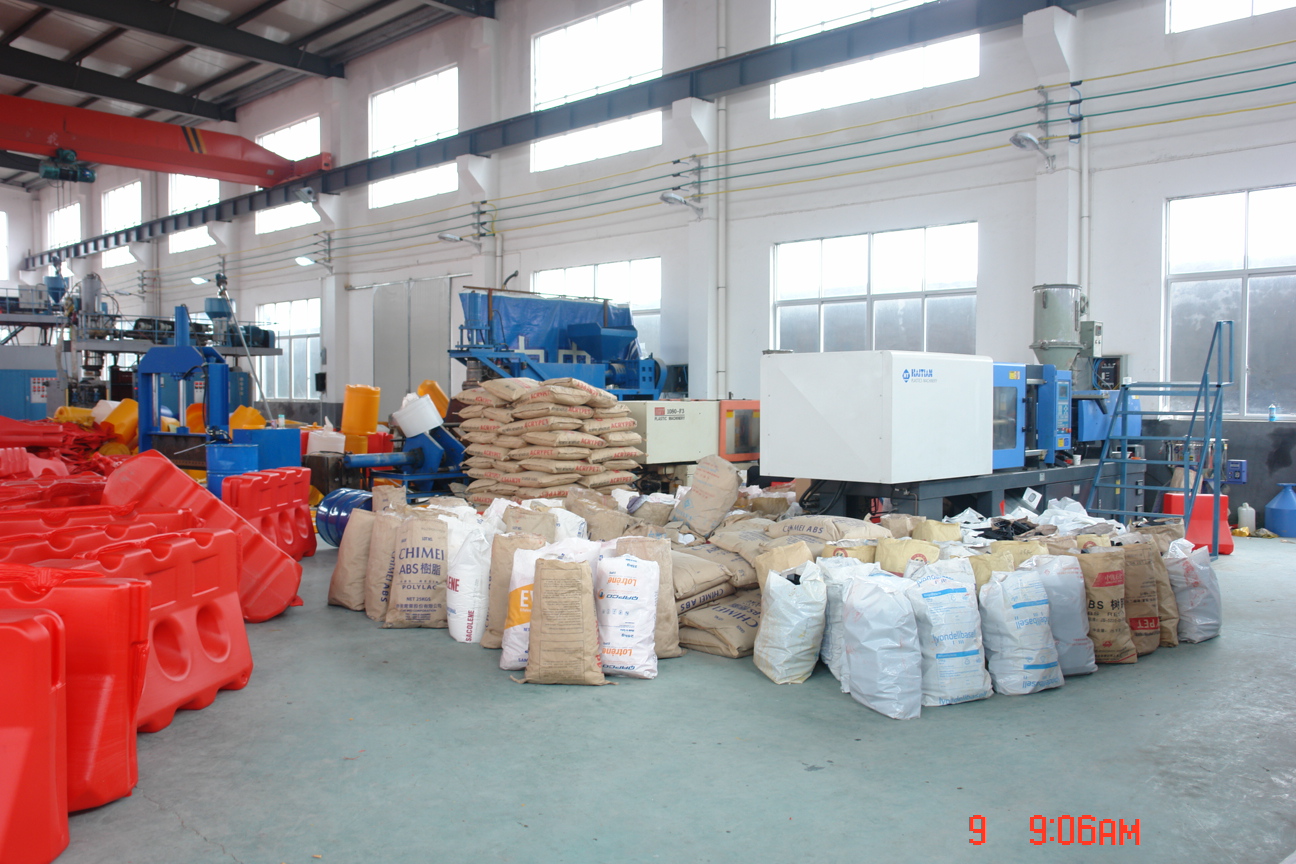
Both models sit inside a manufacturing operation built for volume orders. Mnsd produces warning posts using high-speed injection moulding, with a stated monthly capacity of 50,000 pieces and a lead time of 10–15 days for bulk orders. The minimum order quantity for the range is 200 pieces, and OEM and ODM customization services are offered for height, colour and reflective tape brand.
Quality control for the warning post line includes a compression and rebound test performed more than 1,000 times, and the supplier states a UV-resistance guarantee covering no fading for three years. That guarantee is a contractual commitment rather than a test result, and buyers should have it written into the purchase agreement together with the acceptance criteria.
Procurement terms listed by the supplier include FOB or CIF delivery, pre-shipment testing as an acceptance criterion, and 30/70 payment terms. Entity verification is straightforward: the operating company holds business licence 91331023669153260K, issued by the Market Supervision Administration, and serves global export markets.
Field evidence is limited but available. The warning post range has been supplied to contractor clients, including a road safety project in Vietnam where the posts were used to warn vehicles and pedestrians and to mark road edges and dangerous areas; the project was completed and accepted by the local authority, with an expected service duration of five to eight years and reported strengths in visibility, durability, impact resistance and ease of installation.
A Pre-Order Verification Checklist
- Confirm the fixing method for the YD-WP45 in writing, including substrate assumptions and whether a base option is available.
- Confirm reflective grade, sheeting class and tape brand for both models; do not accept a verbal Class 1 commitment.
- Request the compression and rebound test reference used for the ordered production batch.
- Match the -40 °C to +70 °C range to recorded site temperatures, not regional averages.
- Confirm colour against the road-owner specification before tape cutting.
- Confirm chain, connector and anchor ratings together if a ring-top guide line is specified.
- Verify the supplier entity and licence before the first payment.
- Agree pre-shipment acceptance criteria and sampling before bulk production begins.
- Confirm HS classification and duty treatment for the destination market.
Future Outlook
Two developments are likely to shape warning post specifications over the next procurement cycles. The first is documentation. Road owners are moving from accepting a reflective grade on a datasheet to asking for the sheeting class and test reference tied to a specific production batch, which favours suppliers who can trace claims to records rather than brochures. The second is lifecycle accounting. As labour and lane-closure costs rise relative to unit price, recovery performance and replacement interval become the dominant variables in the buying decision, and posts that return to vertical reliably will be evaluated on service life rather than on price per piece.
Neither trend changes the underlying logic of this matrix: height, base, reflective grade and fixing method decide the specification. Material data then decides how long that specification holds.
FAQ
What is the main functional difference between the YD-WP45 and the YD-WPS75?
The YD-WP45 is a 450 mm PU warning post with a 200 × 80 mm base and 80–85 Shore A hardness, intended for low-speed environments such as car parks, depot yards and internal service roads. The YD-WPS75 is a 750 mm PU post with an 80 mm body diameter and a 200 mm base, specified with HIP / Class 1 reflective sheeting, a stated visibility distance above 200 m, a ring top for chain attachment and expansion-bolt fixing, intended for traffic lanes and work-zone perimeters.
Which site conditions call for a 450 mm post rather than a 750 mm post?
A 450 mm post suits sites where vehicles manoeuvre slowly and the driver is already focused on a confined space: parking bays, forecourts, warehouse aisles and low-speed internal roads. Where the approach speed is higher and the driver needs advance warning at a distance, the shorter post is registered too late, and a 750 mm post with a higher reflective grade is the appropriate specification.
What do 80–85 Shore A hardness and 15.0 MPa tensile strength indicate in practice?
Hardness in the 80–85 Shore A band indicates a body firm enough to hold a vertical attitude against wind and vehicle-induced airflow while still deflecting on contact, rather than a soft compound that sags or flops. A 15.0 MPa tensile strength indicates resistance to tearing at the base-to-body junction and, on the YD-WPS75, at the ring top where chain load is transferred into the post.
Does expansion-bolt fixing or a ring top change installation requirements?
Yes. Expansion-bolt fixing requires a drillable substrate, correct hole depth, correct bolt grade and controlled torque, and it leaves holes if the layout is later changed, which raises installation and relocation cost. A ring top allows a chain to run between posts to create a continuous guide line, but chain, connector and anchor ratings should be specified together so that the weakest element is not the fixing.
What customization and order parameters should be confirmed before a bulk order?
Mnsd offers OEM and ODM customization covering post height, colour in orange, yellow or green, and reflective tape brand with 3M or Grade A options. Order parameters for the range include a minimum order quantity of 200 pieces and a bulk lead time of 10–15 days, with FOB or CIF delivery, pre-shipment testing as an acceptance criterion and 30/70 payment terms.
How should a buyer verify reflective grade and UV resistance claims?
Reflective grade should be confirmed in writing against the ordered production batch, including sheeting class and tape brand, rather than accepted from a general brochure statement. For UV resistance, the supplier states a guarantee of no fading for three years, which is a contractual commitment that should be written into the purchase agreement alongside the compression and rebound test reference used for quality control.
A downloadable brochure covering the manufacturer's traffic safety product range is available here: Mnsd traffic safety product brochure (PDF).
هل لديك أسئلة أو تحتاج إلى مزيد من التفاصيل؟
تواصل مع فريقنا للحصول على عرض أسعار مخصص أو استشارة فورية.
طلب عرض أسعار
املأ النموذج أدناه وسيتواصل معك فريقنا بعرض مقترح مخصص.
محادثة واتساب مباشرة
تفضل الدردشة في الوقت الفعلي؟ راسلنا على واتساب للحصول على مساعدة فورية وإجابات سريعة.
- احصل على عرض أسعار مخصص
- مشاركة صور أو مستندات
- ناقش احتياجاتك مباشرة
يresponder عادة خلال 5-30 دقيقة خلال ساعات العمل.