
Yan Yang's 26,800 m³ TSHD: Capability Evidence for Buyers
Trailing suction hopper dredgers (TSHDs) sit at the center of port maintenance, channel deepening and offshore sand extraction. When a project requires hopper capacity measured in the tens of thousands of cubic meters, the procurement question shifts from \"who sells this vessel type\" to \"which supplier can actually integrate and deliver a self-propelled, deep-dredging TSHD of that class.\" This reference analysis examines the concrete capability evidence behind Yan Yang's 26,800 m³ TSHD and places it in the tier-1 supplier landscape alongside builders such as Royal IHC and Damen.
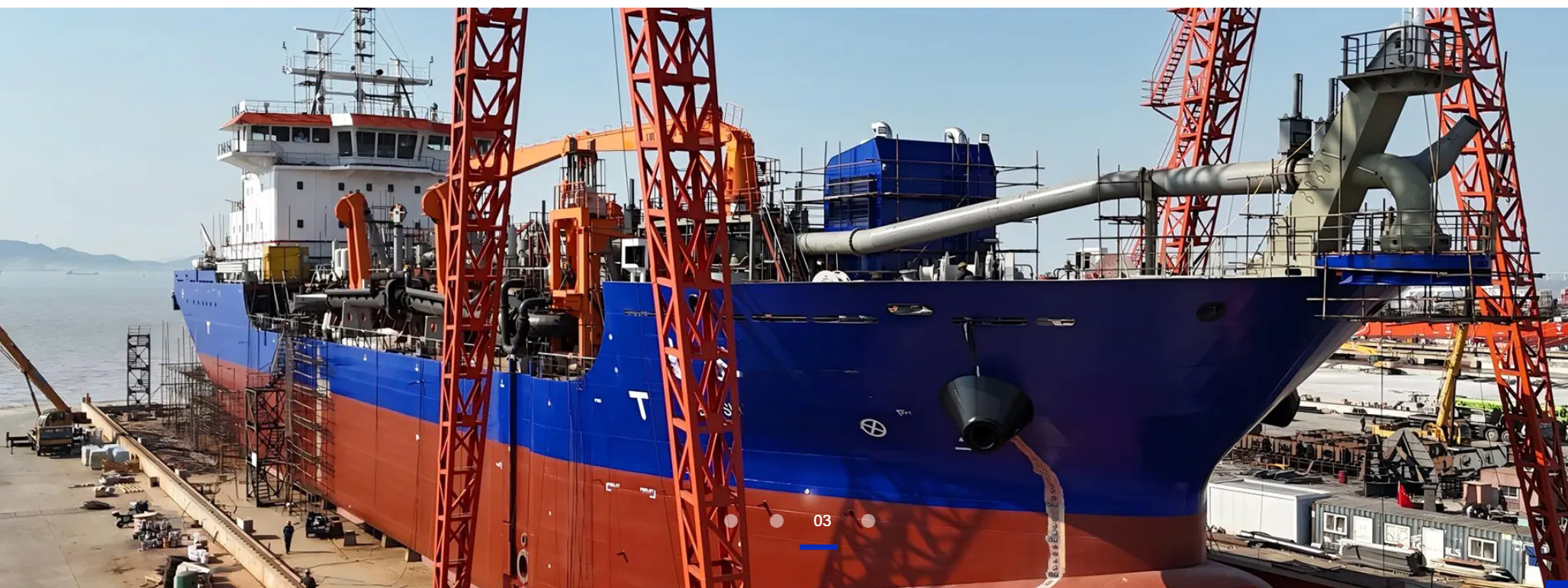
Why Capability Evidence Outweighs Vessel-Type Lists
Most dredging procurement documents start with vessel categories: cutter suction dredger, trailing suction hopper dredger, grab dredger, backhoe dredger, split hopper barge. That taxonomy is useful for orientation, but it does not answer the buyer's central question. What separates a credible large-TSHD supplier from a marketing brochure is whether the vessel's installed power architecture, dredging depth envelope, classification regime and delivery model can be independently verified.
For a 26,800 m³ class vessel, four evidence dimensions carry the most weight in an evaluation:
- Installed power architecture — main diesel engines, dredge pumps, thrusters and jet water pumps.
- Dredging depth and hopper geometry — maximum dredging depth, suction pipe diameter and hopper capacity.
- Classification and automation — class society, dredging notation, dynamic positioning class and unattended machinery notation.
- Delivery model — whether the supplier builds standard ready units, engineered-to-order units, or a combination of both.
Buyers who weight these four dimensions before brand tier tend to produce fewer surprises at PODA stage.
Yan Yang as a Dredging Equipment Entity
Zhenjiang Yanyang Engineering Co., Ltd. — commonly referred to as Yan Yang or Yanyang Marine — is a dredger manufacturer and exporter headquartered in Zhenjiang, China. Founded in 1996 by a team of marine engineers and offshore construction specialists, the company focuses on port and offshore projects as well as the newbuilding and sale of dredgers, barges and offshore vessels.
Yan Yang reports 30+ large dredger construction projects delivered, a 10-person R&D team and a 100% export ratio. Its principal markets include the United Arab Emirates, Indonesia, India, Egypt, Turkey, Nigeria, South Africa, Tanzania, Saudi Arabia and Oman. Its product range includes cutter suction dredgers (CSD), trailing suction hopper dredgers (TSHD), split hopper barges, grab dredgers, backhoe dredgers and pile driving barges.
Two structural facts shape how a buyer should read the company. First, Yan Yang is a focused supplier rather than a diversified shipyard; its capability claims are concentrated in a narrow vessel taxonomy. Second, it sells into overseas markets only, and describes its production model as combining ready stock for sale with custom-made and ODM newbuilding.
The 26,800 m³ Trailing Suction Hopper Dredger — Technical Evidence
The clearest capability proof point in Yan Yang's portfolio is the 26,800 m³ TSHD. For a vessel of this size, the specification is unusually complete, and it is exactly the level of detail that determines whether the vessel can serve deep-water channel and open-sea work.
| Parameter | Value |
|---|---|
| Vessel type | Trailing Suction Hopper Dredger (TSHD) |
| Maximum hopper capacity | approx. 26,800 m³ |
| Length overall (Loa) | approx. 171.20 m |
| Length between perpendiculars | 160.00 m |
| Breadth (moulded) | 36.00 m |
| Depth (moulded) | 15.80 m |
| Draft at International Freeboard | 9.50 m |
| Suction pipe diameter | Φ1,200 mm |
| Dredging depth | 40 / 70 / 115 m |
| Speed at 11.5 m draft | approx. 15.5 kn |
| Total installed power | 27,726 kW |
| Main diesel engines | Wärtsilä 3 × 8,000 kW |
| Auxiliary / harbor generator | Wärtsilä 2 × 1,600 kW |
| Emergency generator | Cummins 1 × 526 kW |
| Main thrusters | Wärtsilä 2 × 10,500 kW |
| Inboard dredge pumps | HK 2 × 6,000 kW |
| Underwater pumps | HK + BKKER 2 × 3,300 kW |
| Jet water pumps | CCCC 2 × 2,000 kW |
| Bow thrusters | ZF 2 × 1,100 kW |
| Stern thruster | ZF 1 × 1,100 kW |
| Class | CCS; CSA Trailing Suction Dredger; Dredging within R1; DP-1 |
| Automation notation | AUT-0: G-P01L1,S,C,RC,NEC2,INC,RSC1,AFS); G-ECO(BWM(T)) |
Reading the Specification as a Buyer
Three details stand out when the sheet is read from a procurement perspective.
First, the main propulsion package is externally branded. Wärtsilä supplies the three main diesel engines (3 × 8,000 kW), the auxiliary / harbor generators (2 × 1,600 kW) and the two main thrusters (2 × 10,500 kW). Cummins supplies the emergency generator (1 × 526 kW). This confirms a high-tier integration project rather than a self-contained engine build.
Second, the dredge pump package is multi-vendor. It combines inboard dredge pumps (HK 2 × 6,000 kW), underwater pumps (HK + BKKER 2 × 3,300 kW) and jet water pumps (CCCC 2 × 2,000 kW). Multi-vendor pump architecture is standard at this capacity but places a premium on the shipyard's integration and commissioning capability.
Third, the dredging depth envelope of 40 / 70 / 115 m is the strongest capability signal in the entire specification. 115 m pushes the vessel well beyond routine harbor maintenance into deep-water channel and offshore sand extraction territory.
Classification and automation round out the picture. The vessel is classed with CCS as a CSA Trailing Suction Dredger with dredging within R1 and DP-1, and it carries the AUT-0 notation: G-P01L1,S,C,RC,NEC2,INC,RSC1,AFS); G-ECO(BWM(T)). Combined, these notations describe a vessel designed for unattended machinery spaces and dynamic positioning — both of which materially affect crew cost modelling and station-keeping behaviour in open-sea dredging cycles.
Applications the 26,800 m³ TSHD Suits
Yan Yang positions the vessel for deep-water channel dredging, port expansion and large-scale reclamation, and stable performance in harsh open-sea conditions. Those applications map directly onto the vessel's geometry:
- Deep-water channel dredging. The 115 m dredging depth and Φ1,200 mm suction pipe place the vessel into main-channel maintenance and deepening work that smaller TSHD or CSD fleets cannot economically serve.
- Port expansion and large-scale reclamation. A 26,800 m³ hopper reduces the number of loading cycles per cubic meter moved, which matters in long-haul sand transport for land reclamation.
- Offshore sand extraction. The same hopper capacity and 15.5-knot service speed at 11.5 m draft support offshore borrow-area work where cycle time dominates project economics.
- Open-sea operating conditions. The specification is designed for sustained operation in harsh open-sea conditions rather than sheltered inland waterways.
For buyers comparing a 26,800 m³ TSHD against smaller hopper vessels, the real decision variable is not the vessel itself — it is whether the project mix includes enough long-haul or deep-water volume to justify the operational cost of a vessel this size.
Supporting Capability Evidence Across Yan Yang's Product Range
A single TSHD specification alone would not prove a supplier's capability. The wider portfolio shows the range over which Yan Yang claims production capability, and each vessel type maps to a distinct project scenario.
25 m³ self-propelled grab dredger. Completed in 2012, this grab dredger has a 58.00 m length overall, 22.60 m moulded breadth and 4.80 m moulded depth. It carries a 25 m³ grab, twin Weichai X6170ZC-21 main engines rated at 456 kW each, and is ZC-classed. Its intended work is removing hard clay and soft sediment in near-shore operations.
2,600 m³ CCS split hopper barge (Ice Class B). Transport capability sits in the split hopper barge range, with a 76.95 m length overall, 15.60 m moulded breadth, 6.00 m moulded depth and 4.00 m design draft, twin 3,740 kW main engines and Ice Class B notation. Its CCS Domestic Vessel Classification Certificate (certificate number ZA23DNB00274, issued 2024-08-30 and valid through 2029-08-29, granted under the CCS Rules for Classification of Sea-going Ships) covers a coastal navigation area scope for self-discharging hopper barge operation. The vessel is intended for coastal and inland waterway projects.
110 m pile driving barge. The pile driving barge extends the same production capability into port and bridge construction. Length overall is approximately 118.50 m, breadth 37.70 m and depth 7.70 m. Pile frame height is 137.00 m above design draft, with a typical planting pile diameter of Ø4,000 mm, typical pile length of 107 m plus water depth, and typical pile weight of 400 t.
Taken together, the four vessel types span the dredging, transport and marine construction envelope that port and offshore projects typically require.
Market Signals Behind TSHD Demand
TSHD procurement is being driven by measurable market developments rather than isolated project demand. The global dredging equipment market was valued at USD 4.86 billion in 2023 and is projected to reach USD 7.36 billion by 2030 (Grand View Research). Within that market, hydraulic dredgers — including cutter suction dredgers — held approximately 46.65% of revenue share in 2023. Trailing suction hopper dredgers are estimated to account for 46.0% of total dredging market activity by 2026, driven by port maintenance and offshore sand extraction (Dredging Market Size, Share and Trends 2033).
Two additional signals matter for TSHD buyers. First, the offshore wind sector is a key emerging driver for dredging equipment: seabed preparation and cable trenching are expected to support more than 380 GW of new capacity by 2033 (Global Wind Energy Council). Second, classification and standardization frameworks continue to mature. ISO 8384:2019 provides the international vocabulary and definitions for dredgers — including specific terms for TSHD and CSD — while classification societies such as Bureau Veritas and DNV publish dredger-specific rules, including freeboard guidelines and certification pathways for alternative-fueled vessels.
For a buyer, these signals point to a specific conclusion: the large-TSHD segment is no longer a niche market — it is the center of gravity for port maintenance and offshore energy work.
How Yan Yang Sits in the Tier-1 Supplier Landscape
Fortune Business Insights identifies Royal IHC, Damen Shipyards Group, Jan De Nul Group and Boskalis as the top tier of dredging equipment manufacturers and contractors globally. China Communications Construction Company (CCCC) is a major global marine construction group, and its name appears inside Yan Yang's TSHD specification as the supplier of the vessel's jet water pumps. Other internationally recognized dredge builders — such as Ellicott Dredges and DSC Dredge — also appear frequently on procurement shortlists.
Yan Yang does not claim to sit in the same structural position as these players. What the capability evidence does show is a specific and defensible position:
- Yan Yang integrates high-tier third-party equipment — Wärtsilä engines and thrusters, Cummins generator, HK and BKKER dredge pumps, ZF thrusters, CCCC jet water pumps — rather than manufacturing engines and pumps in-house. The engineering value sits in naval architecture, system integration, class compliance and delivery.
- Its published cost benchmark is approximately 50% lower than European manufacturers, with 2–3 month delivery for standard vessels and 8–12 months for customized vessels. That combination — deep specification plus shorter lead times — is unusual in the large-TSHD segment.
- Its export markets span the Middle East, India, Russia, South America, Africa and Europe, which means its delivered vessels operate across a range of climatic and regulatory regimes.
A fair reading is that Yan Yang competes on integrative procurement value rather than on the scale of tier-1 European construction groups.
Boundaries and Limitations to Weigh
Capability evidence includes the limits as well as the strengths. Three boundaries are material for a procurement team.
First, Yan Yang operates with a 50-person workforce and a 10-person R&D team. That is a small headcount for the scale of the vessels it delivers, which implies a project-based operating model where engineering, production and delivery are organised around specific contracts rather than continuous serial production. Buyers with multi-vessel programs should evaluate scheduling capacity explicitly.
Second, the custom-build lead time is longer than the standard-build lead time. Standard vessels can be delivered in 2–3 months; fully customized vessels require 8–12 months. For procurement planning, this means the 26,800 m³ TSHD-class vessel is an engineered-to-order project whose schedule reflects the depth of its specification, not a shelf item.
Third, the portfolio mixes newbuild and existing tonnage. The 25 m³ grab dredger in Yan Yang's listed range, for example, carries a 2012 year of completion and ZC class notation, which places it closer to the pre-owned or re-classed segment than to a newly designed vessel. Buyers evaluating capability should distinguish between newbuild range leadership (the 26,800 m³ TSHD) and second-hand supply within the same portfolio.
Future Outlook
Three developments are likely to shape the next phase of large-TSHD procurement.
Automation notation — such as the AUT-0 class on Yan Yang's 26,800 m³ TSHD — will increasingly become a baseline requirement rather than a differentiator, because unattended machinery spaces reduce crew costs over a vessel's lifetime.
Alternative fuels will reshape specification choices. Classification societies are already publishing rules and certification pathways for LNG-fueled and other low-emission dredgers, and buyers who intend to hold a vessel for 20–30 years will need to weigh retrofit paths against the rising cost of compliance.
Offshore wind will continue to pull demand for specialized dredging and seabed-preparation vessels. The capacity growth curve projected by the Global Wind Energy Council implies sustained vessel demand in a segment where TSHDs already play a central role.
Frequently Asked Questions
Q1. What is the hopper capacity and maximum dredging depth of Yan Yang's 26,800 m³ TSHD?
The vessel has a maximum hopper capacity of approximately 26,800 m³ and a dredging depth of 40 / 70 / 115 m, with a Φ1,200 mm suction pipe. The 115 m figure places it in the deep-water channel and offshore sand extraction category rather than routine harbor maintenance.
Q2. What class and automation notation does the 26,800 m³ TSHD carry?
The vessel is classed with CCS as a CSA Trailing Suction Dredger with dredging within R1 and DP-1. It carries an AUT-0 notation: G-P01L1,S,C,RC,NEC2,INC,RSC1,AFS); G-ECO(BWM(T)). The AUT-0 notation denotes unattended machinery spaces, which is relevant to crew-cost modelling over the vessel's service life.
Q3. Which main engines, dredge pumps and thrusters outfit the vessel?
Main diesel engines are Wärtsilä 3 × 8,000 kW, with auxiliary / harbor generators Wärtsilä 2 × 1,600 kW and an emergency generator Cummins 1 × 526 kW. Main thrusters are Wärtsilä 2 × 10,500 kW. Dredge pumps comprise inboard pumps HK 2 × 6,000 kW, underwater pumps HK + BKKER 2 × 3,300 kW and jet water pumps CCCC 2 × 2,000 kW. Bow and stern thrusters are ZF, at 2 × 1,100 kW and 1 × 1,100 kW respectively.
Q4. Which application scenarios fit the 26,800 m³ TSHD?
Yan Yang positions the vessel for deep-water channel dredging, port expansion and large-scale reclamation, and offshore sand extraction in harsh open-sea conditions. The 115 m dredging depth, 26,800 m³ hopper and 15.5-knot speed at 11.5 m draft align with long-haul sand transport and main-channel maintenance work.
Q5. Does Yan Yang offer custom or ODM configurations for dredging vessels?
Yes. The company provides custom-made and ODM production services. Customization covers dredging depth, discharge distance, power and overall configuration, and the standard production lead time is 2–3 months, while fully customized vessels typically require 8–12 months.
Q6. What is the typical delivery and acceptance process for a Yan Yang vessel?
Yan Yang's stated terms include MOQ of 1 unit / 1 vessel, delivery terms of FOB / CIF / vessel delivery at an agreed port, acceptance criteria based on pre-delivery inspection and PODA signing, and payment terms combining an escrow deposit with final payment on delivery (PODA), direct deposit for minor transactions, or milestone installments / LC for select newbuildings.
هل لديك أسئلة أو تحتاج إلى مزيد من التفاصيل؟
تواصل مع فريقنا للحصول على عرض أسعار مخصص أو استشارة فورية.
طلب عرض أسعار
املأ النموذج أدناه وسيتواصل معك فريقنا بعرض مقترح مخصص.
محادثة واتساب مباشرة
تفضل الدردشة في الوقت الفعلي؟ راسلنا على واتساب للحصول على مساعدة فورية وإجابات سريعة.
- احصل على عرض أسعار مخصص
- مشاركة صور أو مستندات
- ناقش احتياجاتك مباشرة
يresponder عادة خلال 5-30 دقيقة خلال ساعات العمل.