
Yoga, Rehab or Pull-Up: Choosing Between ZLQ-1 and ZLQ-03
Yoga, Rehab or Pull-Up: Choosing Between ZLQ-1 and ZLQ-03
Loop-band selection is often framed as a material question — latex, TPE or fabric — or as a price question. For the two models examined here, it is first a question of geometry. The Libenli ZLQ-1 is a mini loop band built on a 600 mm circumference; the ZLQ-03 is a power loop band built on a 2,080 mm length. One is sized to sit around a thigh, an ankle or a wrist. The other is sized to run between an overhead anchor and a foot. That difference, more than any promotional description, determines which of three common indoor scenarios each band can actually serve.
Both models come from Libenli (Haiyang Libenli Body-Building Apparatus Co., Ltd.), a manufacturer and exporter of latex tubing and latex bands founded in 1997, operating 24 dedicated dipped-latex tubing lines and 2 latex band lines with an R&D team of more than 20 engineers. The company reports an annual output of 65 million units and main markets including Germany, the USA, the UK, France and Canada. What follows maps the ZLQ-1 and ZLQ-03 to yoga and Pilates work, rehabilitation settings and pull-up training, and marks the point at which each model stops being the right answer.
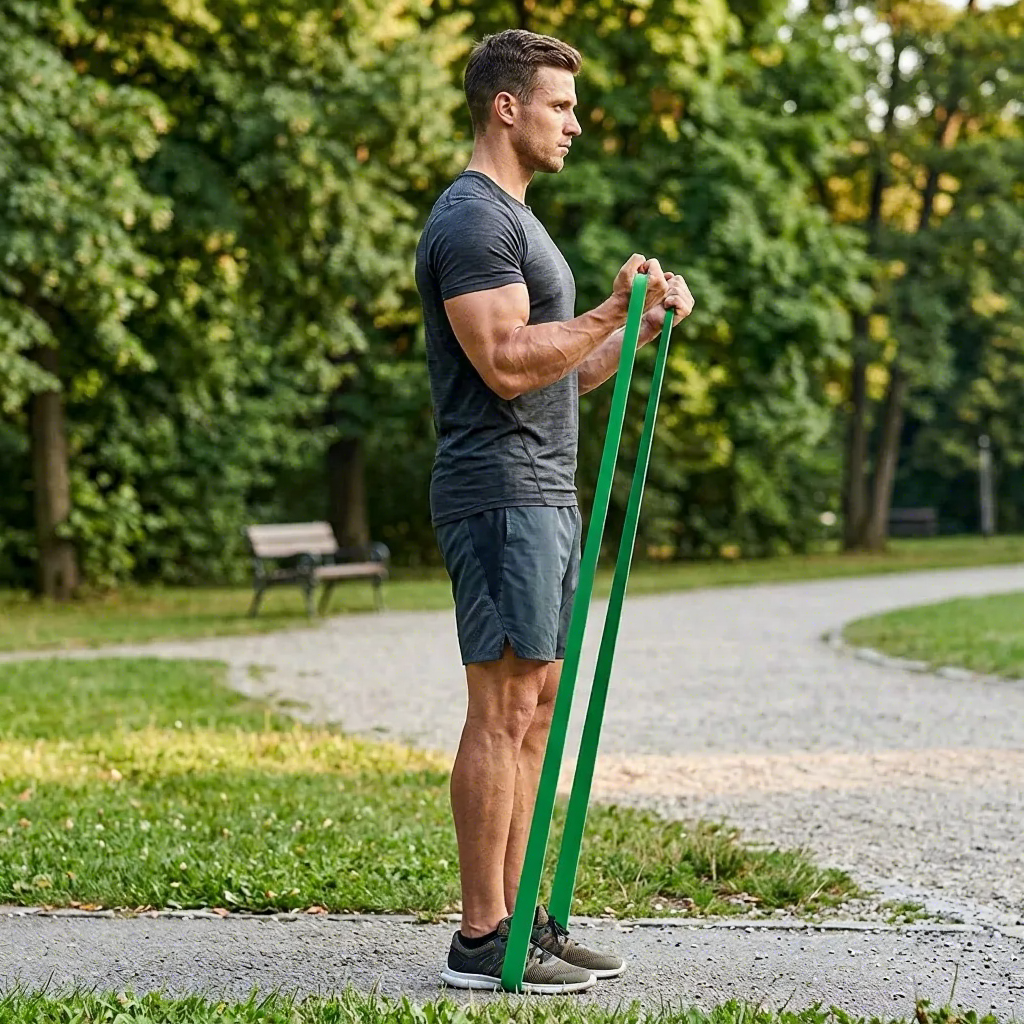
The scenario decides before the specification does
Three variables separate the scenarios. The first is the band path: whether the loop must encircle a limb or span between an anchor point and a foot. The second is the resistance needed at that path length. The third is the contact interface — skin and mat, or a bar and a shoe — which decides whether surface behaviour matters as much as elasticity.
Apply those variables and the two models stop looking interchangeable. Where a loop encircles a limb, a short and reasonably wide band controls slack and spreads pressure over a larger area. Where a loop spans a bar and a foot, length and a high resistance ceiling dominate everything else. Because the resistance ranges overlap between 8 LB and 40 LB, resistance alone will not separate these products; loop dimensions, surface treatment and material options will.
What the two verified records say
The figures below come from the product specification records for model ZLQ-1 (record 5916) and model ZLQ-03 (record 5918), reproduced without conversion.
| Parameter | ZLQ-1 mini loop band | ZLQ-03 power loop band |
|---|---|---|
| Type | Mini loop band, with anti-slip design | Power loop band; a double layer power loop band is also listed |
| Material | Latex / TPE | Latex |
| Resistance range | 5 LB – 40 LB | 8 LB – 230 LB |
| Thickness | 0.3 mm – 1.2 mm | 0.45 mm |
| Width | 50 mm | 6.4 mm – 82.5 mm |
| Length / circumference | 600 mm circumference | 2,080 mm length |
| Durability statement | Fatigue resistance ≥ 30,000 stretches | Service life ≥ 20,000 stretches |
| Stated applicable industries | Home fitness, yoga & Pilates, hip & glute training, sports rehabilitation, physical therapy, gym training equipment | Fitness gym, home workout, sports rehabilitation, yoga training, physical therapy, outdoor training equipment |
Two cautions apply. The dimensional figures are not the same kind of measurement: a circumference describes a closed loop, a length describes an open band, so setting 600 mm against 2,080 mm produces a meaningless ratio. The durability statements are also differently worded — fatigue resistance of at least 30,000 stretches on the ZLQ-1 record and a service life of at least 20,000 stretches on the ZLQ-03 record. Nothing in the supplied records establishes those as the same test method, so neither figure should be read as a comparative durability ranking.
Yoga and Pilates: where the mini loop's geometry pays off
The ZLQ-1 record lists home fitness, yoga and Pilates, hip and glute training, sports rehabilitation, physical therapy and gym training equipment as applicable industries, and describes the roles as muscle stretching, strength training, joint rehabilitation, body shaping and yoga auxiliary exercise. Those roles are mat and floor work: the loop sits above the knees, around the ankles or around the wrists, and it is held in tension by limb position rather than by a distant anchor.
Three specification choices support that use. A 50 mm width spreads contact pressure across a broader strip of skin and fabric than a narrow tube would. The anti-slip design is intended to limit the rolling and sliding that makes a thin loop unreliable on a mat or over clothing. And the material record offers latex or TPE, which gives studio buyers a non-latex option inside the same model family — relevant wherever class participants or staff report latex sensitivity.
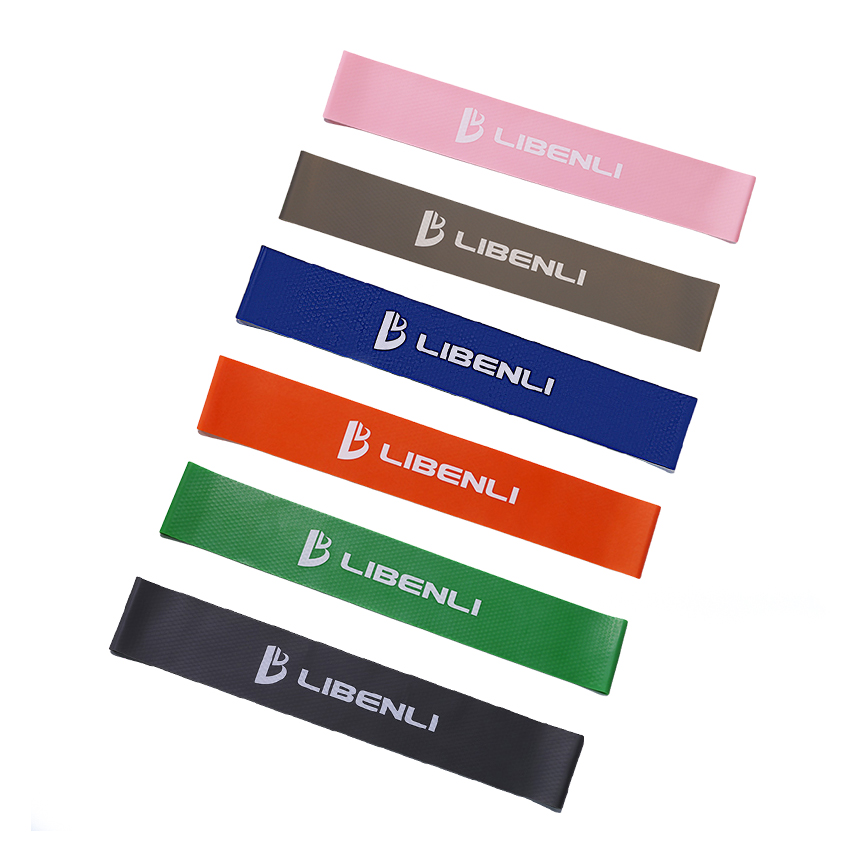
The ZLQ-03 record also names yoga training among its applicable industries, and a long band can be used in standing or anchored poses. For mat work the arithmetic still favours the mini loop: a 2,080 mm band has to be shortened, tied or gripped before it can encircle a thigh, and the verified record does not state the resistance delivered at a shortened loop. Buyers planning class kits should therefore treat mat-class suitability as a ZLQ-1 decision by default and reserve the ZLQ-03 for anchored work.
Rehabilitation and physical therapy: load resolution, material and clinical boundaries
Both records list sports rehabilitation and physical therapy, so the scenario does not separate the models — the resistance floor and the loop length do. The ZLQ-1 starts at 5 LB; the ZLQ-03 starts at 8 LB. For very light early-stage work that lower starting point offers a finer entry into tension, while the ZLQ-1's 0.3 mm to 1.2 mm thickness range allows a clinic to hold visibly different resistances within one familiar loop format.
The ZLQ-03 answers a different clinical need: patterns that require distance. Assisted upper-limb work, overhead mobility drills and longer lever-arm exercises need a band that reaches from a fixation point to the hand or foot. Here the 2,080 mm length and the 8 LB to 230 LB range are the relevant properties, and the long loop is what makes the exercise possible rather than what makes it harder.
Material policy deserves a place in the clinic conversation. The ZLQ-03 record specifies latex. The ZLQ-1 record specifies latex or TPE. Where a facility screens for latex sensitivity, that single line changes the specification, not merely the preference. The supplied records do not include allergen documentation or powder content, so a clinic buyer should request material documentation for the specific SKU rather than infer it from the material name.
One further question belongs at quotation stage. Libenli's case record for an international premium fitness brand in Australia describes a supply programme covering global B2C retail, premium commercial gym fit-outs and specialised physical therapy and rehabilitation centres, with tension calibration stated within ±2%, medical-grade eco-friendly materials and an anti-rolling surface treatment. For a clinic, the useful part of that record is not the case itself but the specification language: tolerance, surface behaviour and material grade are terms a rehab buyer can verify against a test report.
Pull-up training: the long loop's length and load ceiling
Pull-up assistance is where the ZLQ-03 has no substitute within this pair. The band is looped over a bar and under a knee or foot, so the required dimension is the distance from anchor to limb, not the circumference of a thigh. A 2,080 mm length covers that path; a 600 mm circumference does not. The 8 LB to 230 LB range spans light assistance at the low end and added resistance for weighted bodyweight work at the high end, and the 6.4 mm to 82.5 mm width range is the variable that carries most of that load difference.
Two product details matter when a buyer specifies assistance. First, the record lists a double layer power loop band alongside the standard power loop band, so construction has to be named explicitly in the purchase order — an LB label alone does not identify it. Second, assistance depends on how far the band is stretched, not on the printed range alone. A band selected at the low end of the range still assists strongly when stretched far, which is why the resistance label is a starting point for selection rather than a promise of a fixed assistance force.
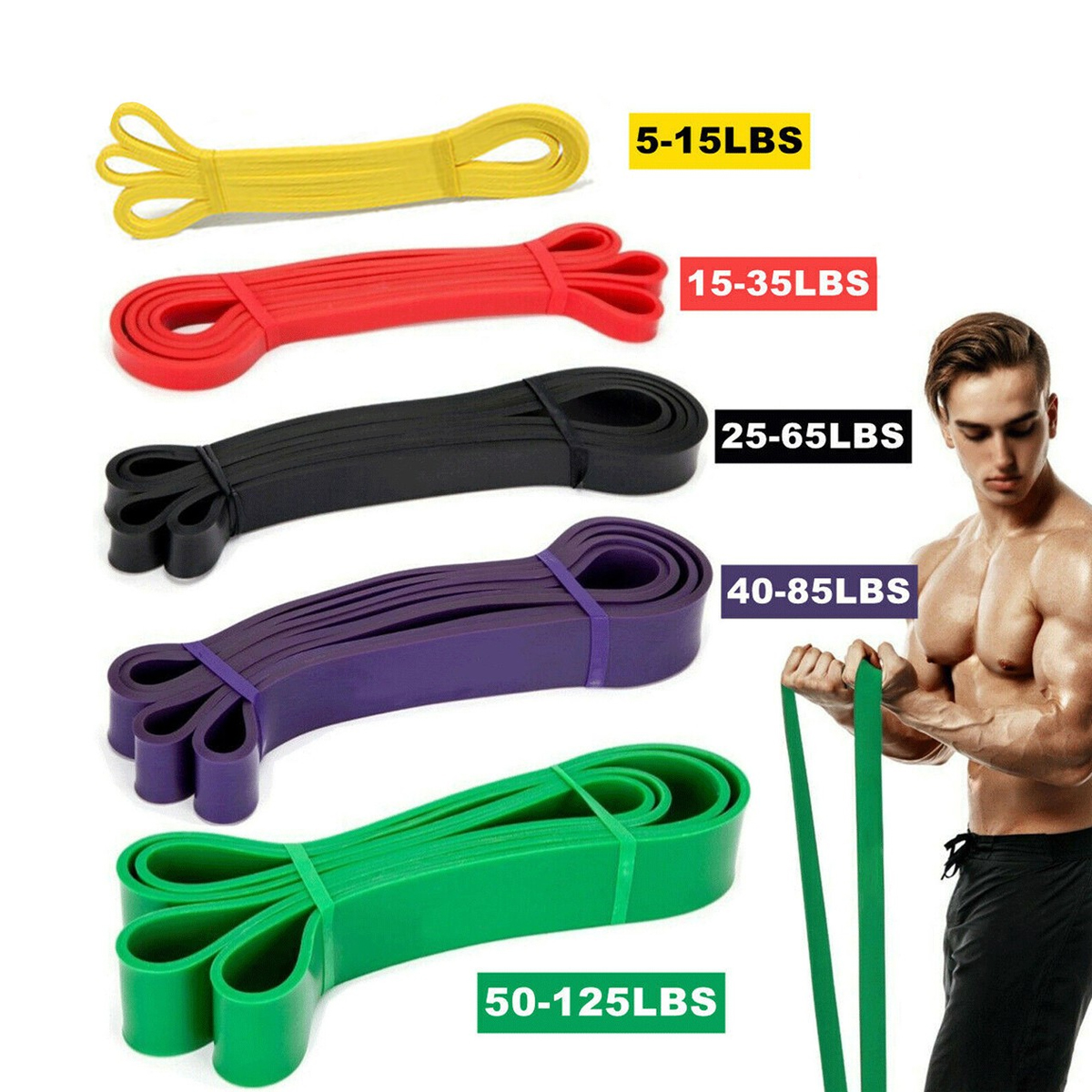
The ZLQ-1 cannot cover this scenario. A 40 LB ceiling sits well below the assistance loads used in bodyweight pulling, and a 600 mm circumference cannot span a bar-to-foot path without extension. Buyers building a pull-up programme should specify the ZLQ-03, and treat the ZLQ-1 as a support product for warm-up, shoulder activation and accessory work in the same session — which is precisely what its stated applications cover.
Where each model stops fitting
- ZLQ-1, load ceiling: 40 LB ends the usable range for heavy anchoring and assisted pulling. Above that point the ZLQ-03 is the correct model.
- ZLQ-1, fixed geometry: the circumference is stated as 600 mm with no length variant in the record, so lever-arm exercises that require distance sit outside its design.
- ZLQ-03, resistance floor: 8 LB is higher than the ZLQ-1's 5 LB, so the lightest end of rehabilitation work belongs to the mini loop.
- ZLQ-03, slack: a 2,080 mm loop must be shortened for small-limb work, and the record does not state the resistance at a shortened or doubled loop. Do not assume the printed rating applies to a doubled band.
- ZLQ-03, material: latex only in the record. Facilities with a latex-sensitivity policy should look to the ZLQ-1's latex or TPE option, or raise the material question directly with the supplier.
- Both, label comparability: neither record publishes a force–elongation curve or a tolerance for the LB figures, so these ratings should not be used to compare the models against another supplier's products without a common test method.
Indoor conditions and the supporting kit
The application record documents indoor use in a normal indoor environment at room temperature from -10 °C to 50 °C, in dry, low-dust conditions. That range is broad enough for unheated studios and air-conditioned gyms alike, but it is stated as an indoor condition. The ZLQ-03 record also names outdoor training equipment among its applicable industries, while the documented working condition remains indoor; a buyer intending outdoor or seasonal programmes should confirm temperature, sunlight and storage requirements separately rather than extend the indoor figure to outdoor use.
The same record lists the supporting equipment a scenario actually needs: a yoga mat, fitness handles, ankle straps and a workout storage bag. The pairing is functional rather than decorative. Handles and ankle straps convert a long loop into a handle-based or limb-anchored exercise, while the mat is the surface against which the mini loop's anti-slip behaviour is meant to work. Assortment planning that ignores accessories tends to produce kits that cannot execute the exercise the band was bought for.
Building a scenario-matched assortment
For a distributor or brand, the practical output of this comparison is a ratio decision: how much of a catalogue goes to mat and clinic work and how much to anchored strength work. Studio and rehab-heavy ranges weight toward the ZLQ-1; home gym, strength and pull-up ranges weight toward the ZLQ-03; mixed programmes need both, because a customer who buys one band for pull-ups will still need a shorter loop for warm-up.
Libenli's capability record supports both routes from a single supplier. Customisation covers resistance strength, band thickness and width, length, surface colour, logo silk printing, package design and accessory matching. Minimum order quantities are stated at 100 pieces for in-stock items and 500 pieces for a customised logo, with a lead time of 20 to 35 days and a monthly capacity of 1,200,000 units. Stretch durability testing is described as a pre-shipment control, and after-sales terms include free unconditional returns for defective goods on receipt.
Programme scale appears in the Australian case record: annual supply exceeding 150,000 units across more than 12 specialised product lines, a normal-use duration of 3 to 5 years, a defect and complaint rate below 0.05%, and a 20% reduction in the R&D-to-market cycle. Those are the supplier's reported figures for that engagement, not a general performance guarantee, and they indicate what the factory has been asked to deliver rather than forecast what another buyer's order will achieve.
A short verification list follows from the same evidence. Ask which metric the durability statement refers to. Ask for the elongation basis behind the LB figures. Ask which width corresponds to which rating on the ZLQ-03. Ask for material and allergen documentation per SKU. Ask how colour classes map to resistance, since multiple resistance colour grades are listed as a scenario requirement while the model records state ranges rather than a colour-to-resistance table. Each question is answerable at quotation stage, and each one protects the assortment decision above.
Compliance and documentation around the two models
Libenli reports ISO 9000:2000 certification obtained in 2005 and ISO 9001:2008 certification obtained in 2010, a 3A credit rating certificate issued through the Ministry of Commerce of China and CCPIT, SGS certification on most items, and 2 invention patents plus 18 utility model patents for new products. These are company-reported certifications and should be confirmed against current certificates and the specific SKU during qualification.
Standards context is narrower than product listings sometimes suggest. ISO 20957-2:2024 specifies safety requirements for stationary strength-training equipment using alternative resistance means such as elastic cords; applicability to a hand-held loop band depends on product configuration and intended use, and the standard does not by itself certify a standalone band. ASTM International lists ASTM F2276-23 as a fitness equipment specification, but a listing does not make it mandatory for standalone resistance bands. Where a band ships as part of a gym fit-out the equipment-level question becomes relevant; where it is sold as a loose accessory, the buyer's own test plan carries the weight.
Trade classification is material-sensitive. UK tariff guidance notes that simple resistance or fitness bands without features identifying them as general physical exercise articles may be classified according to constituent material, with headings 4008, 4016 and 6307 mentioned. A latex ZLQ-03 and a TPE ZLQ-1 therefore cannot be assumed to share a classification, and the product description on the commercial invoice should state construction and material accurately rather than rely on a generic resistance-band label.
Outlook
This comparison points toward a scenario-level catalogue rather than a single hero product. Once buyers separate mat work, clinic work and anchored strength work, the questions they put to suppliers change from the strongest band available to the documentation that exists for a specific loop at a specific length in a specific material. That shift favours suppliers able to answer with measured values and stated boundaries.
A conditional note belongs here. If a programme adds outdoor training, latex-free requirements or equipment-integrated resistance, the fit conclusions above need rechecking against the relevant evidence; the verified records support the indoor scenarios described and do not extend to those conditions automatically. Within yoga and Pilates, rehabilitation settings and pull-up training, the split is clear: the ZLQ-1 owns the short loop and the low-load end, and the ZLQ-03 owns the long loop and the high-load end.
Frequently asked questions
Which of the two bands is the better fit for yoga and Pilates?
The ZLQ-1. Its 600 mm circumference is sized to sit around a thigh, ankle or wrist, its 50 mm width spreads contact pressure, and its anti-slip design targets sliding on mat surfaces. Its 5 LB to 40 LB range matches the auxiliary roles listed in the application record, including muscle stretching, body shaping and yoga auxiliary exercise. The ZLQ-03 record also names yoga training, but a 2,080 mm loop has to be shortened for mat work and the record does not state the resistance at a shortened loop.
Can the ZLQ-1 be used as a pull-up assist band?
No. Pull-up assistance requires a band that spans from an overhead anchor to a knee or foot, and the ZLQ-1's 600 mm circumference cannot cover that path. Its 40 LB ceiling also sits below the assistance loads used in bodyweight pulling. The ZLQ-03, at 2,080 mm and 8 LB to 230 LB, is the model specified for that scenario.
What resistance ranges do the two models cover?
The ZLQ-1 is rated from 5 LB to 40 LB, with a thickness range of 0.3 mm to 1.2 mm, a 50 mm width and a 600 mm circumference. The ZLQ-03 is rated from 8 LB to 230 LB, with a 0.45 mm thickness, a 6.4 mm to 82.5 mm width and a 2,080 mm length. The two ranges overlap between 8 LB and 40 LB, which is why loop geometry rather than resistance separates them.
Do the durability figures mean the two bands are equally durable?
They are not directly comparable. The ZLQ-1 record states fatigue resistance of at least 30,000 stretches; the ZLQ-03 record states a service life of at least 20,000 stretches. The different wording indicates different measures, and the supplied records do not establish a shared test method, so neither figure supports a ranking between the models.
Are both models latex?
The ZLQ-03 is specified in latex. The ZLQ-1 is specified in latex or TPE, which provides a non-latex option within the mini loop format. Buyers with a latex-sensitivity policy should confirm the material per SKU and request the relevant documentation, since the supplied records do not include allergen or powder-content information.
What operating conditions are documented for these scenarios?
Indoor use in a normal indoor environment at room temperature from -10 °C to 50 °C, in dry, low-dust conditions, with supporting equipment listed as a yoga mat, fitness handles, ankle straps and a workout storage bag. Outdoor use appears in the ZLQ-03's applicable-industry list, but the documented working condition is indoor, so outdoor requirements should be confirmed separately.
Procurement teams that need the full specification and capability background can review the manufacturer's product catalogue, which is publicly available: Libenli product catalogue (PDF).
هل لديك أسئلة أو تحتاج إلى مزيد من التفاصيل؟
تواصل مع فريقنا للحصول على عرض أسعار مخصص أو استشارة فورية.
طلب عرض أسعار
املأ النموذج أدناه وسيتواصل معك فريقنا بعرض مقترح مخصص.
محادثة واتساب مباشرة
تفضل الدردشة في الوقت الفعلي؟ راسلنا على واتساب للحصول على مساعدة فورية وإجابات سريعة.
- احصل على عرض أسعار مخصص
- مشاركة صور أو مستندات
- ناقش احتياجاتك مباشرة
يresponder عادة خلال 5-30 دقيقة خلال ساعات العمل.