
Yogurt Cup vs. Paint Bucket IML: Choosing the Right Material and Finish
Yogurt Cup vs. Paint Bucket IML: Choosing the Right Material and Finish
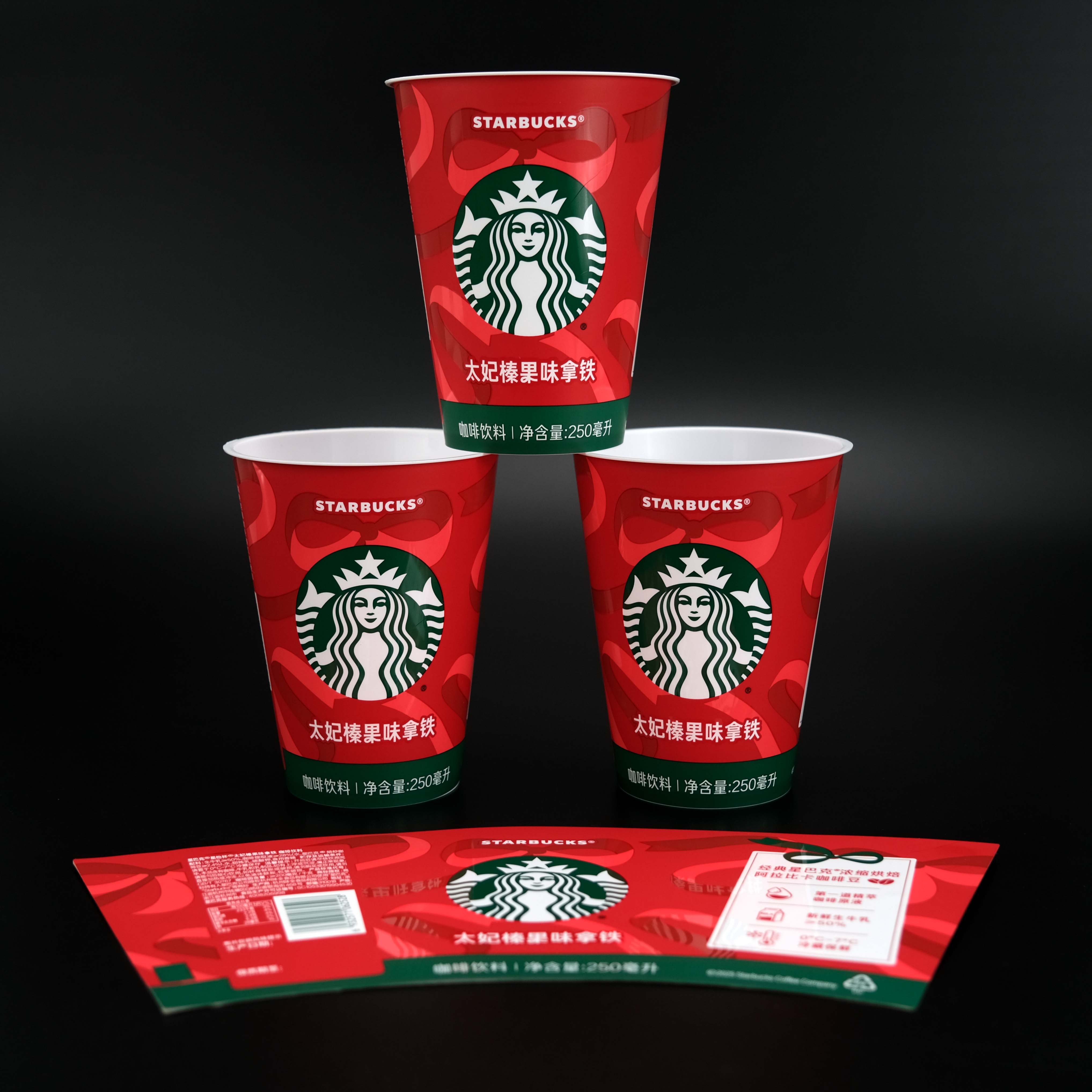
In-mold labeling (IML) is one production method asked to perform two very different jobs. On a yogurt cup, the label becomes part of a food-contact package that will be filled, chilled, shipped and consumed within a short shelf life. On a paint bucket, the same technology sits on an industrial pail that may be stacked, handled roughly, exposed to solvent splashes and stored for years. Both are IML. The material specification, ink system, temperature window and surface finish behind them are not interchangeable.
For packaging engineers and procurement teams, the practical question is not “which IML is better,” but “which IML configuration does this container actually require.” That question is answered by the application — the filling process, the distribution chain, the compliance category and the visual job the label has to do — rather than by a general preference for glossy or matte.
The Two Problems IML Has to Solve
A food-contact application has special requirements, including food contact safety (FDA/GB compliance) and non-toxic materials. In a yogurt cup or ice cream container, the label is not a decorative add-on applied after filling; it is bonded into the container wall during molding and therefore becomes part of the packaging surface the consumer sees and touches. Any specification for that scenario has to answer a compliance question first and a design question second: does the film, ink and adhesive-free bond meet the applicable food-contact framework, and can that be documented?
An industrial paint bucket answers a different first question. The container is filled with a chemical product, stacked on pallets, moved by forklift and stored in conditions the brand does not fully control. Industry reporting in 2025 notes that IML technology is increasingly used in 20-liter paint pails because the in-mold bond forms a permanent bond that resists solvent spills and moisture. In that scenario, chemical resistance, abrasion behaviour and edge integrity matter more than migration testing, because the label is not intended to contact food.
The overlap between the two is real but partial. Both scenarios rely on the same printing platform, the same film thickness range and the same in-mold bonding mechanism. What changes is the compliance envelope, the finish strategy and the durability expectation.
Application Requirements Decide the Specification
The most common specification error in IML projects is starting from the film and working backwards. A more reliable sequence runs the other way: define the container and filling process, define the distribution and storage conditions, define the compliance category, and only then select film construction, ink, thickness and finish.
Four inputs drive almost every downstream decision:
1. Contact category. Food-contact, daily chemical or industrial. This determines which compliance documentation is required and whether a food-grade low-migration ink system must be used.
2. Thermal exposure. Hot filling, ambient storage or cold chain. This defines the temperature window the label must survive without lifting, warping or losing print integrity.
3. Mechanical and chemical exposure. Retail handling, stacking, solvent contact and cleaning. This drives film thickness and surface finish selection.
4. Decoration intent. Shelf differentiation, brand consistency across a container family, or functional identification with minimal visual noise.
When these four are fixed, the material and finish choices usually narrow to a small number of valid options, and the remaining decisions become commercial rather than technical.
Technical Basis: Material, Ink, Temperature and Finish
Material selection: PP, PE and film construction
Polypropylene is the dominant material base for IML. Grand View Research reported that PP accounted for 47.2% of the IML material segment in 2023, attributing that position to its recyclability and compatibility with plastic containers. The ZY-IML series from YZY reflects the same logic: film materials include virgin PP, PE, PET and multi-layer composite laminates, with food-grade virgin resin available for contact applications.
The working principle is compatibility. The label film and the container resin are bonded during injection molding, so matching or closely related polymer systems support consistent adhesion. Film thickness across the range runs from 30 μm to 100 μm and is customizable, which allows a project to be tuned to the container wall thickness, the molder’s tooling and the durability the finished pack is expected to deliver.
The operating window: -20 °C to 120 °C
The ZY-IML series is specified for an operating temperature range of -20 °C to 120 °C, described as suitable for both cold chain distribution and hot filling. That window covers chilled dairy, frozen desserts and hot-filled beverage or sauce applications on the cold-to-hot axis, and it is wide enough that most standard yogurt and ice cream projects sit comfortably inside it.
Two performance parameters are commonly used alongside the temperature range when a specification is reviewed. Adhesion strength is rated at ≥5N, with no peeling during injection molding, and tensile strength is rated at ≥20MPa. Scratch resistance is measured at 4H on the pencil hardness test, and the film is described as resistant to weak acids, alkalis and common detergents.
Surface finish: gloss, matte and textured options
Surface finish is where food and industrial IML projects visually separate. The available finishes across the range are glossy, matte, orange peel, holographic and custom texture, applied to film types that include complex white gloss film, complex transparent gloss film, standard gloss film, matte laminated film and holographic film.
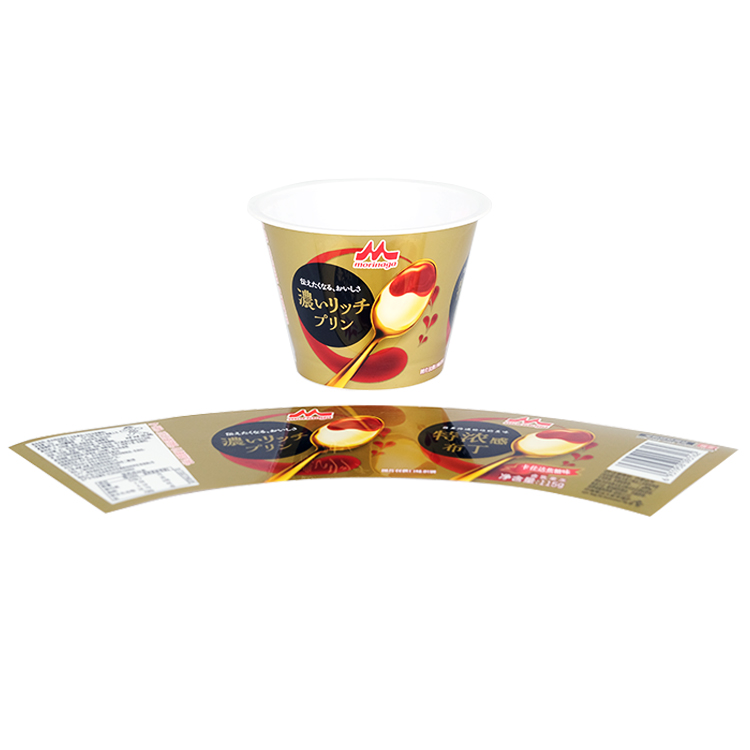
A glossy finish produces high reflectivity and stronger colour saturation, which is generally desirable on a small dairy cup competing for attention in a chilled display. A matte finish reduces glare across large flat surfaces, which becomes more relevant as container size increases. Orange peel and custom textures add a tactile, non-reflective surface that also changes how light scatters across the panel.
Printing capability is shared across both application families. ZY-IML uses high-precision rotogravure printing with up to 8 colours, a printing precision of ±0.1 mm and a maximum printing width of 1200 mm. Ink type for food-contact work is a food-grade low-migration water-based ink.
Yogurt Cup IML vs Paint Bucket IML: Side-by-Side
The table below sets the two scenarios against the same specification decisions. It is intended as a comparison framework, not as a fixed recipe — actual values depend on the container, the molder and the compliance route selected.
| Specification decision | Yogurt cup IML (food-contact, chilled dairy) | Paint bucket IML (industrial container) |
|---|---|---|
| Primary risk to control | Food contact safety and migration; compliance documentation | Solvent contact, abrasion, moisture and long storage |
| Contact category | Food contact — FDA 21 CFR, EU 10/2011 migration test, BRCGS, ISO22000, QS | Industrial — no food-contact claim required |
| Film material | Food-grade virgin PP, PE, PET or multi-layer composite | PP or PE film matched to pail resin |
| Film thickness | 30 μm to 100 μm, customizable | 30 μm to 100 μm, customizable |
| Ink system | Food-grade low-migration water-based ink | Printed on the same rotogravure platform |
| Typical finish | Glossy for shelf impact; matte or holographic for premium positioning | Matte or orange peel where scuff appearance matters; gloss where branding dominates |
| Rated adhesion | ≥5N, no peeling during injection molding | ≥5N, no peeling during injection molding |
| Chemical resistance | Resistant to weak acids, alkalis and common detergents | Same film chemistry specified against solvent and moisture exposure in service |
| Temperature exposure | Within the -20 °C to 120 °C window, covering cold chain and hot filling | Ambient and warehouse conditions, plus molding temperature |
| Print specification | Up to 8 colours, ±0.1 mm precision, food-grade ink | Up to 8 colours, ±0.1 mm precision, up to 1200 mm print width |
The most useful takeaway from the comparison is where the two columns are identical. Film thickness range, adhesion rating, printing precision and colour count are shared capabilities. What separates the projects is the compliance envelope, the ink choice and the finish strategy — and those are exactly the areas where a specification cannot be copied from one project to another.
How the ZY-IML Series Covers Both Scenarios
YZY (Zhejiang Zhongyu Technology Co., Ltd.) is an in-mold labeling manufacturer based in Wenzhou, Zhejiang, China, founded in 2009 and operating a 20,000 m² facility with 250 employees and a stated annual output of 200,000,000. The company produces in-mold labels along with sealing films, embossed sheet sealing lids and POF films, with 30% of output exported and markets described as worldwide.
The ZY-IML series is positioned as a single platform with three application grades — food, daily chemical and industrial — and container types that explicitly include yogurt cup IML and paint bucket IML alongside bubble tea cup, ice cream container, plastic bottle, lubricant bucket and cosmetic container applications. That structure is deliberate: the same printing and film infrastructure supports all three grades, while the compliance documentation, ink system and finish selection change by grade. The company states that it holds QS, ISO and BRC management system certifications and that its ZY-IML films meet FDA 21 CFR, BRCGS Packaging Materials, ISO22000 and QS requirements, with migration testing against EU 10/2011. It also reports 48 accumulated patents and maintains an in-house R&D team and laboratory.
On the supply side, the capability unit supporting both scenarios lists OEM/ODM production with customization across size, shape, colour, printing design and material. Stated monthly capacity is 350,000,000 pcs per month, with a lead time of 15–20 days after sample confirmation and an MOQ of 2000 ㎡. Quality control is described as 100% visual inspection plus random laboratory testing for FDA/GB compliance, with export markets covering the EU, US, Middle East and Southeast Asia.
A representative case from the dairy side of the portfolio involves an international food and beverage and dairy brand working through an injection factory. The project supplied custom food-grade IML labels for cold beverage and yogurt cups across high-volume mass production over a one-year duration, with distribution recorded across markets including Algeria, Egypt, India, Iran, Pakistan, the Philippines, Saudi Arabia, Thailand, Turkey, Taiwan, the United States, Uzbekistan, Vietnam and South Africa. Reported outcomes were 0 quality complaints, a 100% on-time delivery rate and 100% compliance, with food-grade safety and custom special effects (cold, heat and laser) cited as highlights. Read as a specification reference rather than a promotional claim, the case shows what a cold-chain dairy IML program is expected to demonstrate: compliance continuity, print consistency at volume and delivery reliability.
Market Signals Behind Scenario-Specific IML Demand
Demand for IML continues to grow, and the growth is concentrated in the two application families compared here. Grand View Research valued the global in-mold labels market at USD 2.31 billion in 2023 and projected it to reach USD 3.14 billion by 2030, a CAGR of 4.6%.
Food and beverage applications accounted for the largest IML revenue share at over 41.3% in 2023, with specific growth noted in yogurt cups and ice cream containers. Industrial applications follow a separate driver, driven by container decoration on paint and lubricant pails where the label must survive chemical exposure rather than food-contact scrutiny.
Regionally, Dataintelo reported that Asia-Pacific led the IML market with a 42.8% revenue share in 2025, supported by growth in the dairy and paint industries in China and India. Future Market Insights projected the global in-mould label film market — the upstream material layer — to grow from USD 1.3 billion in 2025 to USD 1.7 billion by 2035. On the process side, Grand View Research reported that injection molding accounted for over 57.1% of the IML market in 2023, confirming that the dominant production route remains the one both yogurt cups and paint pails use.
One caveat is worth carrying into any procurement analysis: published market size estimates for IML vary meaningfully by source. Some figures count only the label value, while others include the total value of the decorated container, and the basis is not always stated. Buyers using market data to size a category or justify a project should check the scope definition rather than comparing headline numbers directly.
Regulatory pressure reinforces the split between the two scenarios. EU Regulation (EC) No 1935/2004 sets the framework for food contact materials and requires that IML labels used in food packaging ensure safety and prevent chemical migration into food. No equivalent food-contact obligation applies to an industrial paint pail, which is why the documentation burden differs so sharply between the two columns of the comparison table above.
IML vs Traditional Decoration — and Where Its Limits Are
Against pressure-sensitive labels, shrink sleeves and direct printing, IML’s main structural advantage is that the label becomes part of the container. There is no separate adhesive layer, no sleeve that can shift during transport, and no secondary decoration step after molding. For a food-contact yogurt cup, that matters because the decorated surface is the same surface the consumer handles. For a paint bucket, it matters because the decoration sits inside a bonded film rather than on an applied adhesive that can lift at the edges after solvent contact.
The ZY-IML specification also carries durability characteristics that traditional label formats do not always match: adhesion rated at ≥5N with no peeling during injection molding, tensile strength ≥20MPa, 4H scratch resistance and resistance to weak acids, alkalis and common detergents. The finishing range — glossy, matte, orange peel, holographic and custom texture — is broader than most applied-label formats offer within a single material system.
Those advantages come with boundaries, and buyers should test their project against them before committing:
Volume threshold. The stated MOQ is 2000 ㎡. IML involves printing cylinders, film preparation and molding trials, so it is not an economical route for very short runs or one-off packaging tests.
Lead time. The stated lead time is 15–20 days after sample confirmation, which means the sample approval cycle sits outside that window. Projects with compressed launch dates need to plan the validation stage separately.
Thickness range. Film thickness is bounded at 30 μm to 100 μm. Requirements outside that band — whether thinner or heavier — fall outside the standard customization range.
Temperature boundary. The rated operating window is -20 °C to 120 °C. Applications that expose the label to conditions outside that range require dedicated validation rather than an assumption that the standard specification will hold.
Process dependency. IML performance depends on the molder’s tooling, the container resin and the molding parameters, not on the label alone. A film that performs well in one molder’s cell is not automatically validated in another.
For projects outside these boundaries, a conventional label format may be the more practical route — the honest position is that IML is the right choice for specific volume, process and durability profiles, not a universal upgrade.
Future Outlook
Three developments are likely to shape scenario-specific IML selection over the next several years.
First, the material base is consolidating around polypropylene, which held 47.2% of the IML material segment in 2023 and benefits from recyclability and compatibility with plastic containers. As container recycling requirements tighten in major markets, film constructions that align with the container resin are easier to defend in packaging reviews than mixed-material alternatives.
Second, the compliance layer is becoming a specification field rather than an afterthought. With EU Regulation (EC) No 1935/2004 providing the framework and migration testing against EU 10/2011 forming the practical evidence, food-contact IML projects increasingly need a documented declaration for the specific film and ink combination rather than a general certificate for the product family.
Third, application-specific differentiation is widening. Food and beverage already represents over 41.3% of IML revenue, while industrial applications are expanding on the strength of durable decoration on pails and buckets. That widening gap between a compliance-led food specification and a durability-led industrial specification is exactly why material and finish decisions should be re-examined per project rather than carried over from the previous one.
FAQ
Can the same IML film construction be used for both a yogurt cup and a paint bucket?
Not as a single universal specification. Both scenarios can use PP-based film from the ZY-IML range within the 30 μm to 100 μm thickness band, and both rely on adhesion rated at ≥5N with no peeling during injection molding. The difference is the compliance envelope and the ink system: a food-contact cup requires documentation against FDA 21 CFR, EU 10/2011 migration testing, BRCGS, ISO22000 and QS, and a food-grade low-migration water-based ink, while an industrial paint pail is specified against chemical and mechanical exposure and does not require food-contact documentation.
Which is more suitable for a chilled yogurt cup — PP or PE IML film?
Polypropylene is the most widely used IML material base. Grand View Research reported that PP accounted for 47.2% of the IML material segment in 2023, driven by recyclability and compatibility with plastic containers. The ZY-IML range also includes PE, PET and multi-layer composite films, with food-grade virgin resin options. Material choice is normally made by matching the label film to the container resin and to the molder’s injection process, because the bond is formed during molding rather than by a separate adhesive.
What temperature range should an IML label tolerate for hot filling and cold chain?
The ZY-IML series is rated from -20 °C to 120 °C, a range described as suitable for both cold chain distribution and hot filling. That covers chilled yogurt cups, frozen ice cream containers and hot-filled applications within the same material family. If a project’s process or storage conditions fall outside that window, the rated range should be treated as a boundary condition requiring separate validation rather than an assumption.
Which surface finish is appropriate for a paint bucket IML?
Available finishes across the range are glossy, matte, orange peel, holographic and custom texture, applied to film types including complex white gloss film, complex transparent gloss film, standard gloss film, matte laminated film and holographic film. On a large industrial pail, a matte or orange peel surface reduces glare and reflection across the panel, which is relevant when the container is stacked in pallets or displayed under warehouse lighting. A glossy or holographic finish increases reflectivity and is selected when brand visibility on a retail or showroom shelf is the primary objective.
What compliance evidence should a buyer request for food-grade IML?
The ZY-IML series is stated to meet FDA 21 CFR, BRCGS Packaging Materials, ISO22000 and QS, with migration testing against EU 10/2011, which sits under the EU food contact materials framework established by Regulation (EC) No 1935/2004. In practice, a buyer should request the declaration applicable to the specific film and ink combination used in the project, migration test results for that combination, and confirmation that the ink is a food-grade low-migration water-based type. A general certificate for the product family is less useful than documentation tied to the actual construction.
Reference material: the ZY-IML product brochure, including film types, finishes and parameter tables, is available for download at cdn.socialarks.com/sbsp/24774/common/2026/0514/6a04a935252bf.pdf.
Sources referenced in this article: Grand View Research (in-mold labels market analysis), Dataintelo (regional IML share), Future Market Insights (in-mould label film market), European Commission (EU Regulation (EC) No 1935/2004), and company data from Zhejiang Zhongyu Technology Co., Ltd. Third-party application observations on industrial pail decoration reflect industry reporting and are cited as such.