
Yogurt Cup vs. Paint Bucket IML: Matching ZY-IML Grade to Injection Molding Scenarios
In-mold labeling is not one specification. A label that performs correctly on a thin-wall polypropylene yogurt cup and a label that survives handling on a printed paint pail share the same manufacturing principle — a pre-printed film is placed into the mold and fused into the part during injection — but they rarely share a film grade, an ink system or a compliance file.
For buyers at the evaluation stage, that difference is the whole decision. Selecting an IML supplier is comparatively simple; selecting the correct grade for a specific molded container is where approvals succeed or fail. This reference maps the ZY-IML Series — the in-mold label range produced by YZY (Zhejiang Zhongyu Technology Co., Ltd.), a Chinese IML manufacturer founded in 2009 — to common injection-molding packaging scenarios: yogurt and dairy cups, paint buckets, daily chemical containers and general industrial packaging. It explains how PP, PE and PET films and food, daily chemical or industrial grades are matched to each end use, which specifications carry the most weight in each case, and where the material stops being the right answer.
Why a Single IML Grade Cannot Serve Both Containers
Three variables separate a food cup from a paint bucket, and each one changes the label specification.
Contact regime. A yogurt cup places the printed film in direct contact with a moist, acidic dairy product that is stored cold. A paint bucket places the label against a container wall in a filling environment dominated by alkalinity, pigments and, in some cases, solvent-borne products. The first requires a food-contact declaration and migration testing; the second requires resistance to chemical attack and mechanical abrasion.
Polymer match. Technical descriptions of the process state that IML labels are usually made from the same polymer family as the molded component, most commonly polypropylene. A film that bonds reliably to a PP cup may behave differently on a PE pail, and a multi-layer construction behaves differently again. Material matching is therefore a scenario decision, not a catalogue default.
Decoration duty. A 100 ml cup carries a brand graphic at high registration accuracy across a small surface; a 20-litre pail carries a large-format label that must resist scuffing during stacking and transport. Both are print jobs, but they are not the same print job.
The ZY-IML Series in Brief
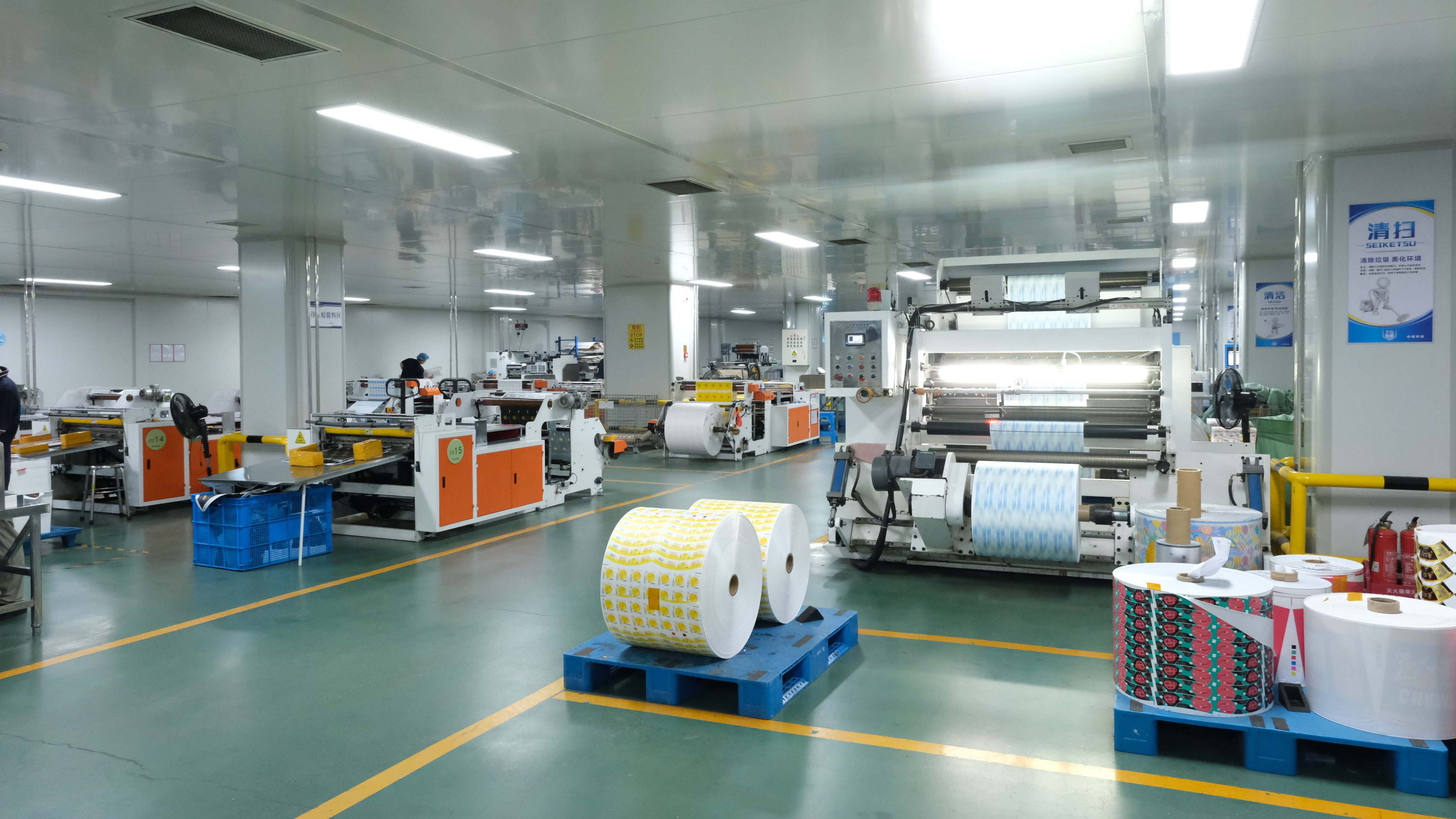
The ZY-IML Series is the in-mold label product line of YZY (Zhejiang Zhongyu Technology Co., Ltd.), an IML producer based in Wenzhou, Zhejiang, China, operating a 20,000 m² facility with 250 employees, a 10-person R&D team and 48 accumulated patents. The company reports a monthly capacity of 350,000,000 pieces and supplies through OEM/ODM arrangements with customization across size, shape, color, printing design and material.
The series is offered in five commercial variants that map onto the scenarios discussed here: Food Grade IML Label, Daily Chemical IML Label, Industrial IML Label, Yogurt Cup IML and Paint Bucket IML. The grade names are commercial groupings, not different base chemistries; the underlying film, ink and documentation package is what changes between them.
Technical Baseline Shared by Every Grade
Before any scenario is discussed, buyers should establish which specifications are common to the whole series. These values define the envelope inside which grade matching happens.
| Parameter | ZY-IML Series specification | Why it matters in scenario matching |
|---|---|---|
| Film thickness | 30 μm – 100 μm, customizable | Small cups trend thin; large pails need stiffness for handling |
| Film material | Virgin PP / PE / PET / multi-layer composite; food-grade available | Must follow the molded container resin |
| Printing method | High-precision rotogravure, up to 8 colors, ±0.1 mm | Registration tolerance drives brand-graphic feasibility |
| Maximum printing width | 1,200 mm, customizable | Determines whether large pail graphics fit one pass |
| Ink type | Food-grade low-migration water-based ink | The decisive variable for direct food contact |
| Adhesion strength | ≥5 N, no peeling during injection molding | Prevents label lift at rims, corners and deep draws |
| Operating temperature | -20 °C to 120 °C | Covers cold chain and hot filling, not higher-temperature processes |
| Tensile strength | ≥20 MPa | Supports web handling on high-speed lines |
| Scratch resistance | 4H (pencil hardness test) | Protects print through stacking and transport |
| Chemical resistance | Weak acids, alkalis and common detergents | Defines the boundary for paint and daily chemical fills |
| Molding compatibility | High-speed injection, no warping, no label fall-off | Affects cycle stability in the molder, not only the label |
| Compliance | FDA 21 CFR, BRCGS Packaging Materials, ISO22000, QS; migration test to EU 10/2011 | Only relevant to food-contact scenarios, but decisive there |
| Surface finishes | Glossy, matte, orange peel, holographic, custom texture; complex white gloss, complex transparent gloss, standard gloss, matte laminated, holographic film types | Finish choice is a shelf and category decision |
Scenario Ranking: Which Application Carries the Heaviest Specification Burden
Buyers frequently ask which application is “hardest”. The useful answer is a ranking by specification burden, judged on four criteria stated in advance: regulatory documentation exposure, chemical exposure of the printed film, thermal cycle severity, and mechanical/print durability. On those criteria, the order below is consistent for the ZY-IML Series.
| Rank | Scenario | Dominant burden | Matching grade |
|---|---|---|---|
| 1 | Yogurt and dairy cups | Food-contact documentation and migration control, plus cold-chain adhesion | Food Grade IML Label / Yogurt Cup IML |
| 2 | Daily chemical containers | Detergent and surfactant exposure, print appearance on shelf | Daily Chemical IML Label |
| 3 | Paint buckets | Alkali and pigment exposure, large-format abrasion and stacking | Industrial IML Label / Paint Bucket IML |
| 4 | General industrial packaging | Mechanical durability only; no contact or chemical requirement | Industrial IML Label |
The ranking is deliberately not a price ranking. Food-contact grades carry documentation and testing overhead that industrial grades do not, while paint bucket labels often use heavier film and wider print formats. A buyer moving from one column to another should expect the specification, the validation file and the sampling plan to change together.
Yogurt Cup IML: Food-Grade Film, Low-Migration Ink, Cold-Chain Adhesion
A yogurt cup is the most demanding of the four scenarios because three requirements converge on a small, thin-walled part.
Material. Food-contact work uses virgin resin rather than recycled stock, in PP, PE or PET, with the film family matched to the cup resin. The ZY-IML food-grade option is built on virgin PP/PE/PET or multi-layer composite film at 30 μm to 100 μm.
Ink. The series uses food-grade low-migration water-based ink, and the migration test is stated to meet EU 10/2011 food-contact material standards. For a dairy cup, ink chemistry matters as much as the film, because the printed surface sits inside the food-contact envelope of the package.
Thermal duty. The -20 °C to 120 °C operating range covers cold-chain distribution and hot filling. A yogurt cup lives at the cold end of that range; the same film is specified where a hot-fill step is present.
Adhesion and print. Adhesion of ≥5 N with no peeling during injection molding matters most at the cup rim and on deep-drawn sidewalls, where the film is stretched against the mold. Rotogravure registration of ±0.1 mm and up to eight colors keep brand graphics and mandatory copy inside tolerance on a small print area, and 4H pencil hardness protects the print through cup stacking and case packing.
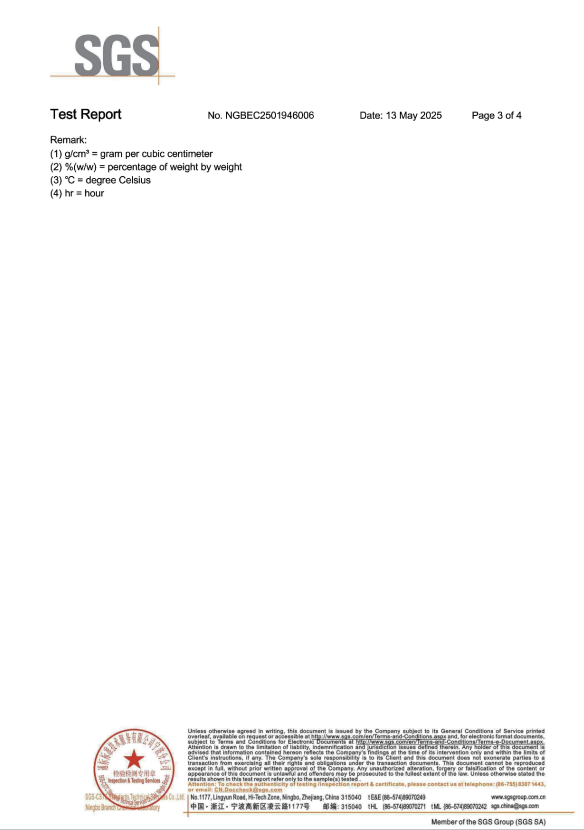
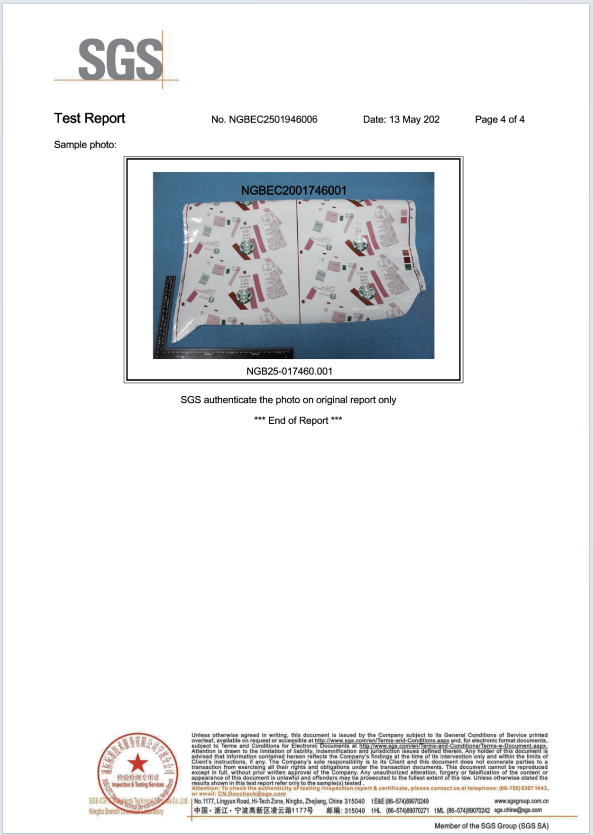
Documentation for the food grade is stated as FDA 21 CFR, BRCGS Packaging Materials, ISO22000 and QS, with the SGS report NGBEC2501946006 issued on 13 May 2025 under FDA 21 CFR 177.1520 for food-contact packaging materials. In practice, buyers should confirm that the report references the specific film construction being quoted, since a food-contact declaration applies to the tested article, not to every item in a product family.
Production evidence for this scenario is documented: custom food-grade IML labels for cold beverage and yogurt cups have been supplied to international F&B and dairy brand clients across 14 countries, including the United States, Algeria, Egypt and India, with reported outcomes of zero quality complaints, a 100% on-time delivery rate and 100% compliance. YZY also reports long-term cooperation with Starbucks, Nestlé and Uni-President.
Paint Bucket IML: Chemical Resistance, Film Thickness and Large-Format Print
The paint bucket inverts the priorities. There is no food-contact file to defend; instead the label must survive an aggressive container environment and a large, exposed print surface.
Chemical exposure. The series is stated as resistant to weak acids, alkalis and common detergents. That covers the alkalinity typical of water-based decorative paints and the detergency of cleaning operations. It is a defined boundary, not a universal claim: fills based on aggressive solvents sit outside the stated resistance profile and require application-specific validation before the grade is approved.
Film and format. Large pails use heavier film within the 30 μm to 100 μm range so the label holds shape across a wide, slightly curved wall, and the 1,200 mm maximum printing width allows large graphics in a single pass. PE film is matched where the bucket resin is PE, and PP where the bucket is PP.
Mechanical duty. Pails are stacked, rolled and handled with gloves. 4H pencil hardness and ≥5 N adhesion address the two failure modes that matter here: print scuffing in the distribution chain and edge lifting after molding of a thick section.
Processing window. The -20 °C to 120 °C range comfortably covers injection molding of a thick pail and ambient filling. It does not extend to post-fill processes above 120 °C, and the label should not be specified as if it does.
Daily Chemical Packaging: The Middle Case
Detergent, shampoo and household chemical containers sit between the two extremes. They are not food-contact articles, but they are exposed to surfactants, fragrance oils and repeated handling, and they compete on shelf appearance. The Daily Chemical IML Label grade therefore leans on chemical resistance to weak alkalis and common detergents, print richness up to eight colors, and finish options such as matte, orange peel or holographic that differentiate a bottle or tub on shelf. Bottles, containers, trays and lids are all documented IML application formats, and the same film can be matched to PP or PE bottle resins.
Matching Film, Grade and Ink: A Five-Step Buyer Sequence
The sequence below converts the scenario ranking into a procurement workflow. It is written for evaluation-stage buyers who already know the container and need to fix the label specification.
- Identify the molded resin. Confirm whether the cup, pail or bottle is PP, PE or PET, then request film in the same polymer family. Multi-layer composite is the alternative where a single-resin film cannot meet the print or stiffness requirement.
- Classify the contact regime. Direct food contact, indirect contact or non-contact. Only the first triggers the full food-grade package: virgin resin, low-migration water-based ink, FDA 21 CFR and EU 10/2011 migration evidence.
- Define thermal and chemical duty. Place the fill and distribution profile inside or outside the -20 °C to 120 °C window, and check the fill against the stated resistance to weak acids, alkalis and common detergents. Anything outside that profile is a validation item, not an assumption.
- Select finish and print specification. Choose from glossy, matte, orange peel, holographic or custom texture, and confirm that the artwork fits within ±0.1 mm registration and 1,200 mm print width at the intended label size.
- Validate before committing. Run a molding trial against ≥5 N adhesion, 4H scratch resistance and the temperature range, then release production. The stated MOQ is 2,000 ㎡ with a lead time of 15–20 days after sample confirmation.
| Grade | Typical end use | Film and ink focus | Specifications to verify |
|---|---|---|---|
| Food Grade / Yogurt Cup IML | Yogurt, dairy and cold beverage cups | Virgin PP/PE/PET, food-grade low-migration water-based ink | FDA 21 CFR, EU 10/2011 migration, BRCGS, ISO22000, QS, ≥5 N adhesion, -20 °C |
| Daily Chemical IML | Detergent, household and personal care containers, bottles, lids | PP/PE film, up to 8-color rotogravure, decorative finishes | Alkali and detergent resistance, 4H scratch, finish consistency |
| Industrial / Paint Bucket IML | Paint pails, industrial buckets and containers | Heavier PP/PE film, large-format print up to 1,200 mm | Chemical resistance boundary, ≥5 N adhesion on thick sections, 4H scratch, stack durability |
What IML Cannot Do: Boundaries Worth Knowing Before Specification
In-mold labeling replaces a separate labeling step and produces decoration that is fused into the container rather than applied to it. That advantage has costs, and buyers should enter the specification with them visible.
Temperature ceiling. The stated range ends at 120 °C. Retort or sterilisation processes that exceed that temperature fall outside the declared envelope and should not be assumed covered.
Chemical boundary. Resistance is stated for weak acids, alkalis and common detergents. Aggressive solvent-borne fills — some solvent-based paints and industrial chemicals — require application-specific validation of both ink and film.
Volume and changeover economics. With a 2,000 ㎡ minimum order quantity and 15–20 days lead time after sample confirmation, IML suits repeat, forecastable programmes. Artwork changes on a rotogravure job involve new cylinders, so frequent SKU rotation carries more friction than with digitally printed pressure-sensitive labels.
Tooling dependency. The label enters the mold before injection, so the molding cell must support reliable label placement and the mold must be set up for it. Existing molds without label handling cannot be converted by changing the label alone.
The honest comparison with pressure-sensitive or sleeve decoration is therefore not “better or worse” but “different constraint set”: IML integrates decoration into the part and removes a post-mold step, and in exchange it asks for volume, mold preparation and up-front specification discipline.
Market Trend: Grade-Specific Demand and a Tightening Compliance Layer
Two directional signals are relevant to grade matching, and both point toward more granular specifications rather than a single generic “food grade” claim.
Material concentration on PP. Commercial research places polypropylene at a 56.9% share of the in-mold label market in 2025, and injection molding has been reported as the leading production process segment with roughly 57% of revenue in 2023. These are publisher-defined estimates, and published market sizes differ materially between research houses, so they should be read as directional context rather than as a planning figure.
Regulatory attention on food-contact chemistry. The U.S. FDA updated its Inventory of Effective Food Contact Substance Notifications on 31 May 2026 and announced that FCNs for 35 PFAS substances are no longer effective. For food-contact packaging, the practical effect is closer scrutiny of what sits in inks, coatings and film constructions — which favours suppliers who can document low-migration ink systems rather than describe them.
Together these signals explain why buyers increasingly ask for grade-to-scenario evidence: a food-contact file for the cup line, a chemical-resistance statement for the pail line, and a print specification for both.
Future Outlook
The direction of travel is toward fewer and better-documented specifications rather than more grades. Three developments are likely to shape evaluation over the next few years: closer alignment between label film and container resin so that decoration does not compromise end-of-life handling; broader use of low-migration water-based ink as the default rather than an upgrade; and more scenario-specific test files, where a supplier proves adhesion, temperature and chemical performance against a named application instead of a family-level claim. For buyers, the practical consequence is straightforward: the grade question and the evidence question are becoming the same question.
Frequently Asked Questions
Which ZY-IML grade applies to a yogurt cup?
The Food Grade IML Label and Yogurt Cup IML variants apply. Both are specified with virgin PP/PE/PET or multi-layer composite film, food-grade low-migration water-based ink, an operating range of -20 °C to 120 °C, ≥5 N adhesion and 4H scratch resistance, and they are supported by FDA 21 CFR, BRCGS Packaging Materials, ISO22000 and QS documentation together with migration testing to EU 10/2011.
Can the same IML film be used on a yogurt cup and a paint bucket?
Not as a single specification. The base series shares a 30–100 μm thickness range and a -20 °C to 120 °C operating window, but the grade, film family and ink system differ: food-contact work requires virgin resin and low-migration ink with a food-contact file, while a paint bucket requires a film matched to the bucket resin with demonstrated resistance to weak acids, alkalis and common detergents. Buyers should treat these as separate approvals even when one supplier produces both.
What film material should be matched to a PP injection-molded container?
Technical descriptions of in-mold labeling state that the label film is usually made from the same polymer family as the molded component, most commonly polypropylene. For a PP cup, PP film is the normal starting point within the ZY-IML Series; PE is used where the container resin is PE, and PET or multi-layer composite is used where a different print or stiffness profile is required.
Which specifications should be verified before approving an IML sample?
Four checks cover most of the risk: adhesion of at least 5 N with no peeling during injection molding, scratch resistance of 4H by pencil hardness test, performance inside the -20 °C to 120 °C range at both the fill temperature and the distribution temperature, and — for food contact — migration evidence to EU 10/2011 together with an FDA 21 CFR reference on the test report. Tensile strength of ≥20 MPa is relevant where the film runs on high-speed lines.
What compliance documents should a food-grade IML supplier provide?
For the ZY-IML Series the stated set is FDA 21 CFR, BRCGS Packaging Materials, ISO22000 and QS, supported by an SGS food-contact test report (NGBEC2501946006, issued 13 May 2025, scoped to FDA 21 CFR 177.1520 for food-contact packaging materials) and migration testing to EU 10/2011. Buyers should confirm that the documentation names the film construction actually being purchased.
What are the order quantity and lead time for custom printed IML?
The stated minimum order quantity is 2,000 ㎡ and the lead time is 15–20 days after sample confirmation. Customization covers size, shape, color, printing design and material, and quality control combines 100% visual inspection with random laboratory testing against FDA and GB requirements.
A downloadable technical brochure covering the ZY-IML Series, film options and specifications is available here: ZY-IML Series brochure (PDF).
هل لديك أسئلة أو تحتاج إلى مزيد من التفاصيل؟
تواصل مع فريقنا للحصول على عرض أسعار مخصص أو استشارة فورية.
طلب عرض أسعار
املأ النموذج أدناه وسيتواصل معك فريقنا بعرض مقترح مخصص.
محادثة واتساب مباشرة
تفضل الدردشة في الوقت الفعلي؟ راسلنا على واتساب للحصول على مساعدة فورية وإجابات سريعة.
- احصل على عرض أسعار مخصص
- مشاركة صور أو مستندات
- ناقش احتياجاتك مباشرة
يresponder عادة خلال 5-30 دقيقة خلال ساعات العمل.