
ZIO Food Ingredients: An Industry Reference Profile
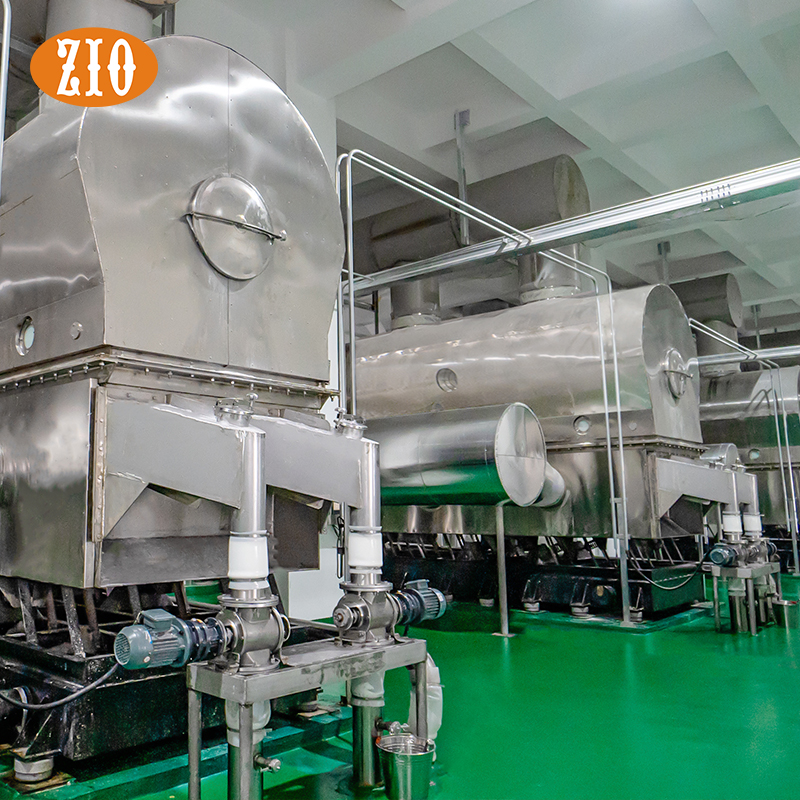
Industrial food ingredient production is a formulation and documentation discipline as much as a manufacturing one. Image: automated production line environment.
Food ingredient sourcing rarely fails at the moment of purchase. It fails later — in a beverage batch that drifts in acidity between lots, a sauce that will not hold viscosity, a premix whose flavour does not survive a customer's freezing equipment, or a shipment delayed because a certificate is missing. For buyers in the awareness and research stage of a sourcing decision, the useful question is therefore not “who sells this ingredient” but “which supplier structure reduces the number of things that can go wrong between formulation and delivery.”
This profile examines Guangzhou ZIO Chemical Co., Ltd., which trades and manufactures under the ZIO Food Ingredients identity, as an industry case. It is written as a reference document for importers, distributors, food and beverage manufacturers, private-label brand owners and food-service operators who are building a shortlist and need to understand what the company actually is, what it supplies, where its operational strengths sit, and where its boundaries are.
What ZIO Food Ingredients Is
Guangzhou ZIO Chemical Co., Ltd. is a food ingredient and premix powder supplier founded in 2005 and based in Huangpu District, Guangzhou, Guangdong, China. The company operates two core business areas: a food ingredients line covering acidity regulators, sweeteners, thickeners, stabilisers, emulsifiers, preservatives, antioxidants and nutritional ingredients, and a premix powder line covering ice cream powder, milk tea powder, beverage powder, ice pop and crushed ice premix, cake, waffle, dorayaki and egg roll premixes, jelly powder, pudding powder and sauce powder.
That dual structure is the defining fact about the business. ZIO is not a single-category commodity producer, and it is not purely a formulator. It sits between the two: a supplier that sells individual food-grade ingredients and also sells the pre-blended, application-ready systems that manufacturers and food-service operators use to shorten their own production steps.
Its stated operating profile includes a 5,000 m² facility, approximately 100 employees, an R&D team of 15 engineers, and an annual output figure of 10,000,000 units as recorded in its company documentation. Exports account for roughly 80% of business, with stated markets in Africa, Asia and South America, and distribution to more than 120 countries and regions including Europe and Oceania.
The Sourcing Problem This Structure Addresses
A mid-sized beverage, dairy, bakery or frozen dessert operation typically purchases between ten and forty functional ingredients. Each one arrives with its own specification sheet, its own minimum order, its own lead time and its own documentation set. The cumulative administrative load is often larger than the cost of the materials. In markets where technical staffing is thin — a common situation for growing manufacturers in parts of Africa, Southeast Asia and Latin America — the real constraint is not ingredient availability but the ability to specify, test and document each input consistently.
Two industry shifts make that constraint sharper. First, dry premix formats have become a practical route for smaller producers to reach consistent output without a full formulation department, because the blending work and much of the sensory calibration move upstream to the supplier. Second, documentation expectations have tightened across export markets, so a supplier that can supply a Certificate of Analysis, commercial invoice, packing list and bill of lading as a routine package removes friction that a cheaper but less organised counterpart creates later.
The opportunity for an integrated supplier is to absorb both the material and the formulation burden. The risk is equally real: buyers who consolidate too much into one supplier give up flexibility and become dependent on that supplier's specification discipline. Both sides of that trade-off are examined below.
Company Strength: What the Operating Profile Shows
Read as evidence rather than as marketing, the profile points to four capabilities that matter to a procurement team.
- Continuity. A company founded in 2005 and still operating the same two business lines has survived at least two full commodity price cycles in citric acid, sugar alcohols and dairy-linked ingredients. Longevity is not proof of quality, but it is evidence of commercial durability in a sector where small traders frequently exit.
- Formulation capability. A 15-engineer R&D team is modest in absolute terms but is not a trading-desk operation. It is consistent with the stated ability to run OEM, ODM and customised formulation development from concept and sample testing through to mass production.
- Export orientation. An 80% export ratio means the company's operating rhythm — documentation, packaging for sea freight, lead-time management — is built around international buyers rather than domestic wholesale. For an importer, that usually means fewer first-shipment surprises.
- Category breadth with application anchoring. The portfolio is wide, but it is organised around identifiable applications: beverages, dairy, bakery, confectionery, sauces, meat processing, frozen desserts and food service. Breadth without application logic is a red flag; breadth organised by use case is a sourcing convenience.
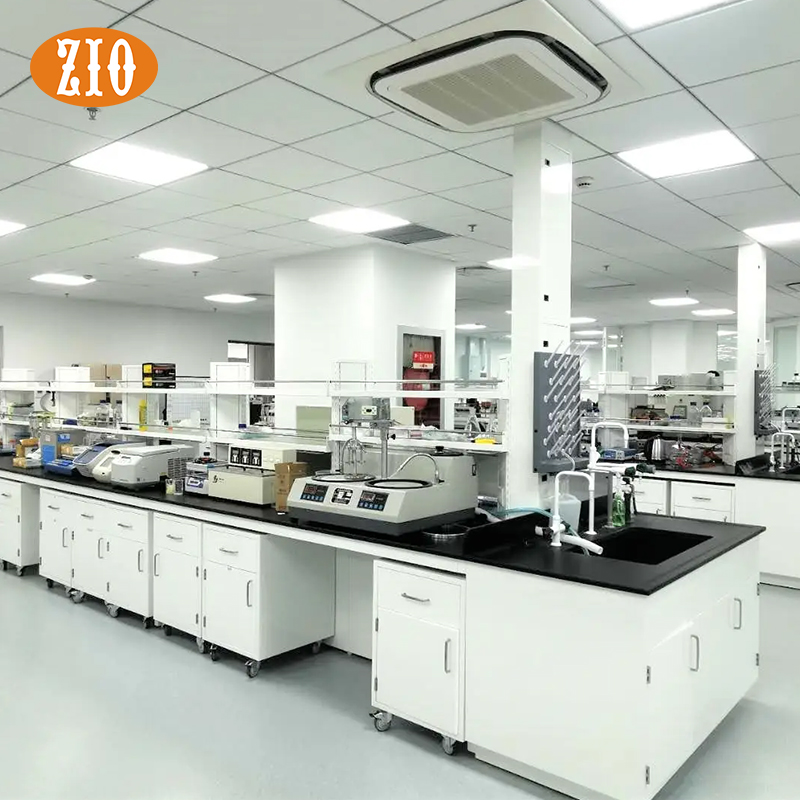
Formulation and sample testing sit between ingredient supply and premix development. Image: R&D laboratory environment.
Core Competitiveness: Two Product Architectures, One Supply Relationship
The ingredient layer
The ingredient portfolio covers the functional categories that recur in almost every formulation. The table below summarises representative products and the technical identifiers a buyer would normally request before qualification. Values shown reflect typical commercial material and are illustrative of the category; the binding figures are always those on the supplier's current technical data sheet and Certificate of Analysis for the specific shipment.
| Product | Functional role | Representative technical reference | Typical application anchor |
|---|---|---|---|
| Citric Acid Monohydrate | Acidity regulator / acidulant | Food grade; purity typically ≥99.5%; CAS 5949-29-1; C6H8O7·H2O | Carbonated and fruit beverages, powdered drinks, confectionery, jams, sauces, desserts |
| Potassium Sorbate | Preservative | Food grade; purity commonly ≥99.0%; CAS 590-00-1; C6H7KO2 | Beverages, sauces, bakery, dairy-related foods, jams, jellies, syrups |
| Sodium Benzoate | Preservative | Food grade; purity commonly ≥99.0%; CAS 532-32-1; C7H5NaO2 | Acidic beverages, juice drinks, sauces, jams, syrups, pickled foods |
| Erythritol | Sugar alcohol sweetener / bulking agent | Food grade; purity commonly ≥99.5%; CAS 149-32-6; C4H10O4 | Reduced-sugar beverages, bakery, confectionery, dessert mixes, tabletop sweeteners |
| Menthol Crystal | Cooling flavour ingredient | Food/flavour grade; menthol C10H20O; CAS depends on isomer (e.g. L-menthol 2216-51-5) | Confectionery, chewing gum, mint candy, beverage flavouring, oral-care where grade permits |
| Cocoa Powder | Flavour, colour, body | Food grade; specification defined by cocoa content, fat content, colour, pH, moisture, particle size | Bakery, biscuits, chocolate products, cocoa beverages, ice cream, desserts, beverage premixes |
The premix layer
The premix line is where the commercial logic becomes clearer. Ice cream powder, milk tea powder, beverage powder, ice pop powder, jelly powder, pudding powder and sauce powder are not commodity ingredients; they are formulated systems in which the tea strength, creaminess, sweetness, solubility, texture and processing behaviour are set in advance. ZIO documents these as customisable across flavour direction, sweetness level, particle size and packaging (1 kg, 5 kg, 20 kg, 25 kg or bespoke), which is the practical signature of a formulation-led rather than a resale-led operation.
The strategic value to a buyer is that one relationship can cover both layers: individual ingredients for in-house formulation, and pre-blended systems for lines where the buyer does not want to blend. That combination is relatively uncommon among suppliers of this size, most of whom occupy one side or the other.
Technical Explanation: Why Premix Changes the Buyer's Cost Structure
The economics of a premix are frequently misunderstood as a simple mark-up on ingredients. In practice, three cost lines move.
Labour and weighing error. A milk tea or ice cream operation that weighs six to ten components per batch introduces a weighing step, a reconciliation step and a human error path into every shift. A pre-blended powder collapses those into a single dispensing action. For chains with multiple outlets, this also reduces the variance between stores, which is often the harder problem to solve than the formulation itself.
Batch-to-batch consistency. Consistency in a finished beverage or frozen dessert depends on how tightly the input is specified. A pre-blended base with a fixed specification narrows the input variation, which in turn narrows output variation. This is why premix adoption tends to correlate with franchise and multi-site models rather than single-outlet operations.
Working capital and storage. A dry premix replaces several raw material stocks with one SKU. That reduces warehouse footprint and inventory complexity, though it raises dependence on a single supplier's delivery reliability — a trade-off addressed later in this profile.
Where the technical logic does not transfer automatically is in process fit. A premix developed for a soft-serve machine will not behave identically in a hard-pack freezer or a continuous industrial line. The formulation has to be matched to the equipment, the water quality and the serving format. ZIO's stated process — discussion of target market, equipment, preparation method, serving format and sensory profile before specification confirmation — reflects that requirement, and buyers should test the specification against their own equipment rather than assuming transferability.
Application and Use Cases
The documented application footprint spans food ingredient supply, premix application and food manufacturing under batch, continuous and commercial production modes, with matching requirements for food-grade materials, stable quality, customised formulation, customised packaging and COA documentation.
Practical use cases visible in the portfolio include:
- Beverage manufacturing and beverage chains — acidity regulation with citric acid, sweetener systems with erythritol or aspartame, preservation support with potassium sorbate or sodium benzoate, and complete milk tea or beverage powders for outlets that prefer standardised preparation.
- Frozen dessert and ice cream operations — ice cream powder and ice pop premix as a standardised base for soft-serve, hard ice cream and frozen dessert concepts, with flavour variants including vanilla, strawberry, matcha, mango and chocolate.
- Bakery and dessert production — cocoa powder, cake and waffle premixes, jelly and pudding powders, and egg roll or dorayaki premixes for producers expanding a product range without building formulation capacity.
- Sauces, dressings and processed foods — sauce powder systems alongside xanthan gum and other hydrocolloids for viscosity and stability, with preservative options for shelf-life management.
- Confectionery and flavour applications — citric acid for tartness, menthol crystals for cooling profiles, and cocoa powder for colour and flavour.
- Distributors and private-label brands — multi-category supply, private-label packaging and OEM/ODM development for parties building their own brand rather than manufacturing themselves.
Geographically, the stated market mix — Africa, Asia and South America as primary, with Europe and Oceania also served — is consistent with an export-led supplier positioned on application support and packaging flexibility rather than on commodity price leadership.
Where ZIO Sits in the Industry
An honest positioning places ZIO in the mid-size, export-oriented, application-capable segment of the food ingredient supply market. It is not a global commodity producer of citric acid or xanthan gum with upstream fermentation assets described in its profile, and buyers seeking the lowest per-tonne price on a single high-volume commodity should expect to benchmark it against dedicated producers. Nor is it a narrow specialist in one functional category.
Its differentiation is structural rather than scale-based: two product layers under one relationship, formulation support across both, private-label and OEM/ODM capability, and a documented export workflow. For a distributor assembling a multi-category portfolio, or a manufacturer that needs both ingredients and a ready base, that combination reduces the number of supplier qualifications required. For a buyer whose only requirement is one commodity at maximum volume, the same combination adds little.
Comparison with Traditional Sourcing Models
| Decision criterion | Multi-supplier, single-ingredient sourcing | Integrated ingredient + premix supply |
|---|---|---|
| Formulation workload | Buyer develops and validates every blend internally | Supplier develops the blend; buyer validates fit to its own process |
| Batch consistency | Depends on buyer's weighing and mixing control | Shifted upstream to a fixed premix specification |
| Documentation load | One specification and COA set per supplier | Consolidated documentation package per shipment |
| Formulation flexibility | High — every component adjustable at will | Lower — premix ratios are fixed by specification |
| Cost transparency | Component-level pricing visible | Blended pricing; component costs less visible |
| Supplier dependency | Diversified across several vendors | Concentrated; delivery reliability becomes critical |
| Best fit | Large-volume single-category producers with in-house R&D | Multi-category manufacturers, chains, distributors and private-label brands |
Limitations and Boundaries Buyers Should Confirm
An industry reference is only useful if it states where evidence stops. Four boundaries apply to this profile.
Certification detail is not specified. The company documentation describes quality control across raw materials, production processes and finished goods, and states that COA and specification documents are available. It does not enumerate specific third-party certification schemes. Buyers whose market requires a particular scheme should request the current certificates and confirm scope and validity before qualification rather than inferring them from a supplier profile.
Premix standardisation reduces formulation freedom. A fixed premix specification is efficient, but it constrains a manufacturer that wants to adjust individual components. Buyers with strong in-house formulation capability may find an ingredient-only relationship more appropriate for certain lines.
Preservative performance is formulation-dependent. Potassium sorbate and sodium benzoate support preservation; they do not determine shelf life on their own. Efficacy depends on the food matrix, pH, water activity, processing and packaging, and permitted use levels vary by destination market. Shelf-life validation remains the buyer's responsibility.
Agricultural and form-dependent variation is real. Cocoa powder varies by origin and specification in colour, flavour and composition. Vitamin E and menthol are supplied in multiple forms and isomer profiles, so the CAS number and molecular formula quoted for one form should not be treated as universal identifiers for every commercial grade. Final form, assay, potency, carrier and regulatory status must be confirmed per product.
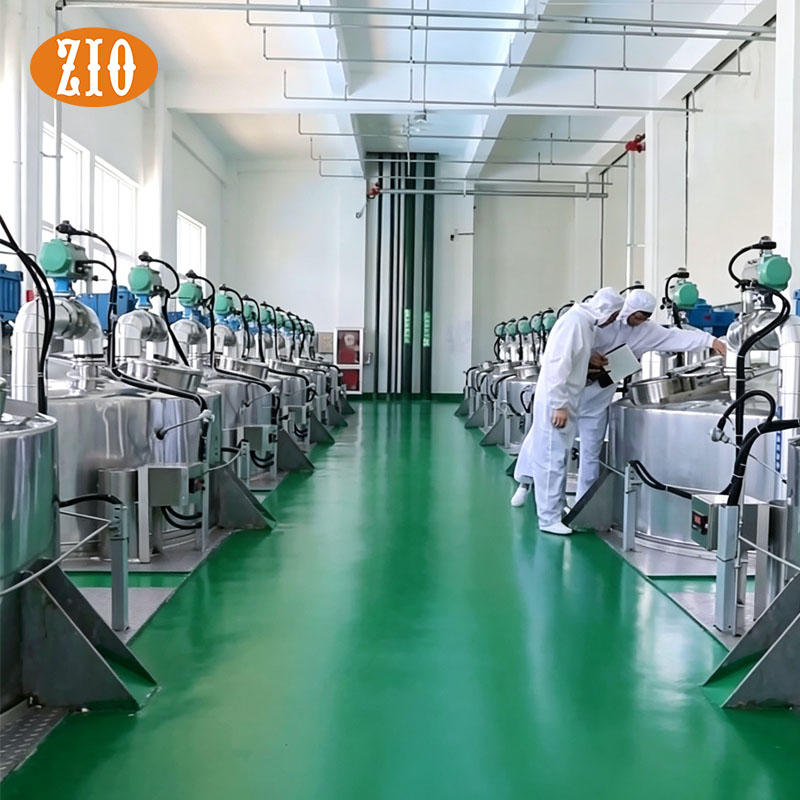
Finished-goods inspection is the point at which specification, COA and shipment documentation must agree. Image: quality inspection.
Procurement Value: What to Verify Before Shortlisting
For buyers at the research stage, the practical output of this profile is a verification list rather than a recommendation.
- Confirm the exact grade, assay, particle size and microbiological limits for the specific product, against the current technical data sheet and COA.
- Confirm that the destination market permits the additive and the intended use level, and obtain the documentation the market requires.
- Request samples and test them on your own equipment and water, particularly for premix systems.
- Clarify minimum order quantity — generally 25 kg or one carton for standard products, with project-specific terms for customised formulations, OEM, ODM and private label.
- Agree packaging format (25 kg bags, cartons or drums, or customised), shipping terms and lead time in writing before order placement.
- Establish who holds responsibility for label compliance, allergen declaration and nutrition data in a private-label project.
ZIO's published commercial terms indicate standard orders shipped in approximately 3–20 days depending on product, quantity, packaging and production schedule, with longer timelines for customised work; shipping support across FOB, CFR, CIF and, where applicable, DDP; and a commonly used payment arrangement of 30% T/T deposit with the balance before shipment. These are stated terms and should be reconfirmed per order.
Market Trend Analysis
Three qualitative trends shape the segment ZIO operates in, and each maps onto a capability described in its profile.
Dry premix adoption in emerging food-service markets. As beverage chains, dessert outlets and convenience food service expand in Africa, Southeast Asia and Latin America, the operational bottleneck shifts from ingredient access to repeatable preparation. Premix formats address that bottleneck directly, which is why application-ready powders rather than raw ingredients tend to lead category growth in those markets.
Sweetener system complexity. Reduced-sugar formulation has moved from a niche request to a standard brief, and it is rarely solved with one ingredient. Compound sweetener systems — combining a bulk sugar alcohol with a high-intensity sweetener to balance sweetness, mouthfeel and cost — are increasingly the working format. Suppliers able to formulate and blend such systems hold an advantage over suppliers selling single sweeteners.
Documentation as a competitive variable. Export buyers increasingly treat COA availability, specification transparency and consistent labelling as baseline requirements rather than differentiators. Suppliers with organised documentation workflows win qualification rounds that less structured competitors lose on paperwork.
What these trends do not establish is any claim about market size, growth rate or supplier ranking. Those figures require attributable third-party data, which is outside the scope of this reference.
Future Outlook
ZIO's stated direction is continued expansion of the ingredient and premix portfolio alongside strengthening of R&D and manufacturing capability. Read against the current profile, the plausible pressure points are predictable: breadth of portfolio requires corresponding depth in specification control, and an 80% export book demands resilience in freight and documentation as much as in production.
For buyers, the practical consequence is that the company is likely to remain a consolidation option rather than a single-commodity price leader. That makes it most relevant to parties who value one relationship across multiple categories, formulation support and private-label capability — and least relevant to parties optimising a single high-volume input on price alone.
A company brochure covering the ingredient and premix portfolio is available for download: ZIO Food Ingredients brochure (PDF). Additional company information is published at zioadditives.com.
FAQ
What food ingredients, food additives and premix powders does ZIO supply?
ZIO supplies food ingredients, food additives and premix powder solutions. The ingredient range includes citric acid, vitamin C, xanthan gum, sweeteners such as erythritol and aspartame, preservatives such as potassium sorbate and sodium benzoate, cocoa powder, CMC and menthol crystals. The premix range includes ice cream powder, milk tea powder, beverage powder, ice pop powder, jelly powder, pudding powder and sauce powders. Customised formulations, OEM/ODM and private-label solutions are also offered.
What is premix powder and how is it used in food production?
Premix powder is a pre-blended mixture of food ingredients and functional additives formulated in specific proportions for a particular application. It combines multiple components into one standardised formulation, so the manufacturer mixes the premix with water or other specified ingredients and processes it according to the application. This simplifies weighing and mixing, reduces formulation complexity and supports batch-to-batch consistency.
What applications are ZIO premix powders suitable for?
ZIO premix powders are designed for applications including ice cream, milk tea, beverages, ice pops, jelly, pudding, bakery products, sauces and dessert products. Customised premix formulations can be developed for specific production processes, product concepts and target markets.
Does ZIO provide OEM, ODM and private label services?
Yes. OEM, ODM and private-label services are available for food ingredients and premix powder products, covering customised formulas, flavours, product specifications, packaging and labelling according to customer requirements. Support can extend from formulation development and sample testing through to mass production and packaging. In an OEM project, production follows the customer's specified product requirements; in an ODM project, the supplier provides formulation and product development input.
What is the minimum order quantity for ZIO food ingredients and premix powders?
The standard minimum order quantity is generally 25 kg or one carton, depending on the product. For customised formulations, OEM, ODM and private-label projects, the minimum order quantity varies according to product, packaging and production requirements, and is confirmed per project.
Can ZIO provide samples for testing before an order is placed?
Yes. Product samples can be provided so that buyers can evaluate quality, application performance and taste before committing to a bulk order. Sample availability and shipping arrangements depend on the specific product and destination, and are usually determined after the product name, application, required quantity and destination country are specified.
What quality and shipping documents can ZIO provide?
Documents are provided according to product and customer requirements. Common documents include a Certificate of Analysis (COA), commercial invoice, packing list and bill of lading. Additional documents such as a certificate of origin or health-related documentation may be available for applicable products and markets.
How long does production and delivery take?
Standard orders are generally arranged for shipment within approximately 3 to 20 days, depending on product, order quantity, packaging requirements and production schedule. Customised OEM, ODM and private-label orders may require additional production time. The exact lead time is confirmed before order placement.
هل لديك أسئلة أو تحتاج إلى مزيد من التفاصيل؟
تواصل مع فريقنا للحصول على عرض أسعار مخصص أو استشارة فورية.
طلب عرض أسعار
املأ النموذج أدناه وسيتواصل معك فريقنا بعرض مقترح مخصص.
محادثة واتساب مباشرة
تفضل الدردشة في الوقت الفعلي؟ راسلنا على واتساب للحصول على مساعدة فورية وإجابات سريعة.
- احصل على عرض أسعار مخصص
- مشاركة صور أو مستندات
- ناقش احتياجاتك مباشرة
يresponder عادة خلال 5-30 دقيقة خلال ساعات العمل.