
Zhejiang Yuli New Material: Tarpaulin Supplier Analysis
HTNXT Industry Reference · Industrial Equipment & Components · Coated Fabrics
Tarpaulin is a material that buyers purchase repeatedly and examine rarely, until a project fails at a seam. That asymmetry is why a coated-fabric purchase decision made purely on visible appearance tends to be renegotiated later, on the buyer's side of the table. Two rolls of PVC tarpaulin can look identical in a sample room and behave very differently after a winter, a summer of ultraviolet exposure, or a week under hydrostatic load.
This article examines ZHEJIANG YULI NEW MATERIAL CO.,LTD, a Chinese manufacturer of high-performance fiber base fabric coating and industrial new materials whose main product is tarpaulin. The purpose is not to restate a company profile, but to convert published capability into procurement judgement: what the company demonstrably operates, where its published specifications fit, and where the material's limits begin.
Who Zhejiang Yuli New Material is
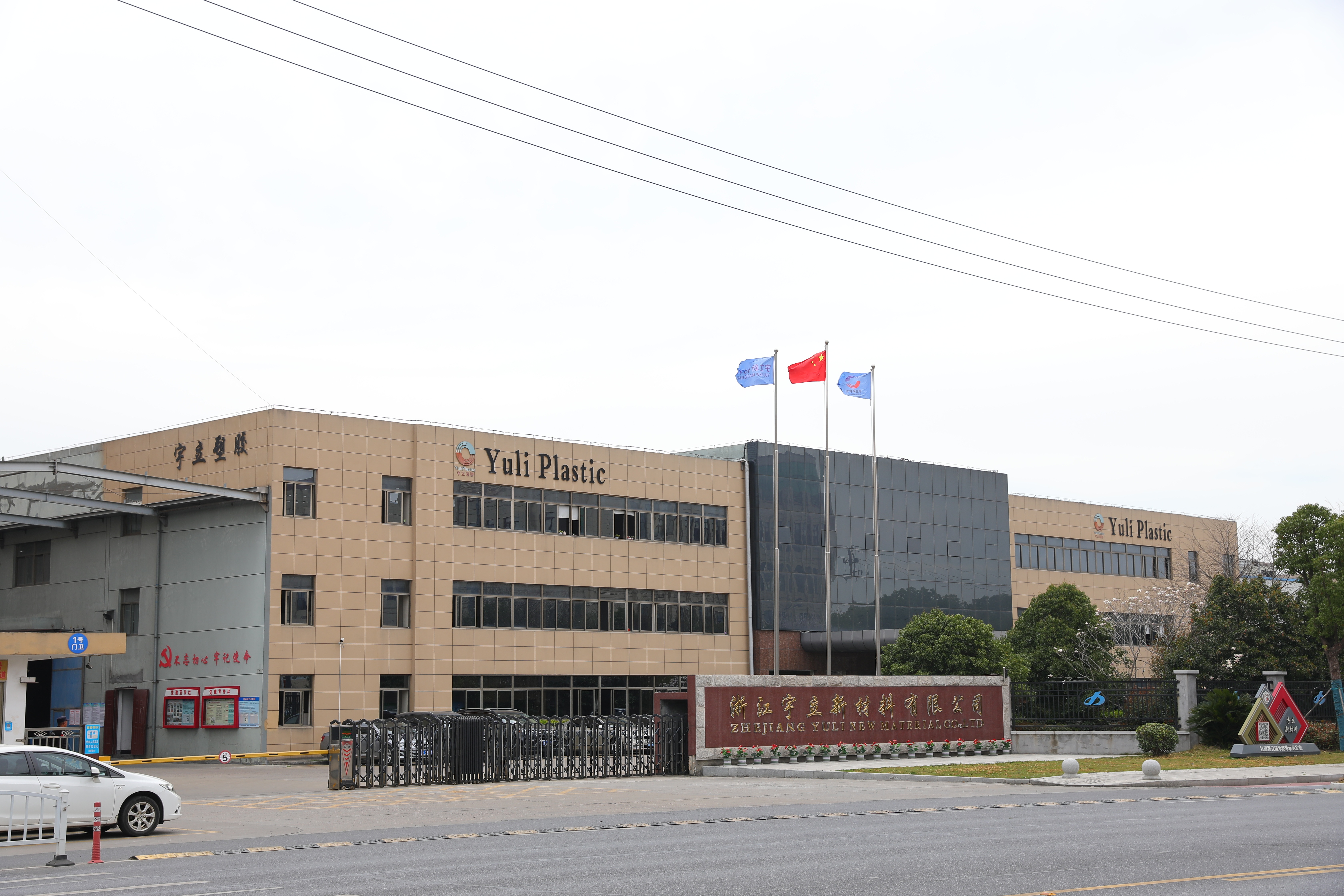
ZHEJIANG YULI NEW MATERIAL CO.,LTD is a Chinese manufacturer established in November 2005, producing coated and composite industrial fabrics at a facility located at No.28 Hongqi Road, Haining, Zhejiang Province. The company specialises in high-performance fiber base fabric coating and industrial new materials, with tarpaulin as its main product line.
| Disclosed Fact | Published Value |
| Established | November 2005 |
| Manufacturing area | 54,000 m² |
| Employees | Approximately 300 |
| Registered capital | RMB 40 million |
| Operating revenue | Nearly RMB 500 million (2025) |
| Export share | 60% of total sales |
| Main markets | EU and USA; delivery to over 100 countries and regions |
| Management systems | ISO9001, ISO14001, ISO45001 |
| Recognitions | National High-tech Enterprise; National Specialized, Sophisticated, Unique and Innovative "Little Giant" Enterprise; Zhejiang Provincial Specialized, Sophisticated, Unique and Innovative SME; Zhejiang Export Famous Brand |
One structural fact carries direct procurement weight: with export at 60% of sales and the EU and USA as named main markets, a substantial share of output is manufactured against documentation expectations outside China. That does not by itself guarantee compliance in a given destination, but it explains why flame-retardant grades and management-system certificates appear in the company's published product data rather than being supplied only on request.
The industry problem: tarpaulin that looks the same
The difficulty in this category is verification, not differentiation in appearance. Performance is set by base cloth weight and construction, coating adhesion, plasticiser formulation, UV stabilisation and flame-retardant treatment, none of which are visible on a swatch. A buyer comparing two PVC tarpaulins at identical thickness is comparing a surface, not a specification.
The counterweight is documentation. A supplier that publishes its temperature window, hydrostatic pressure figure, flame-retardant standards and base-cloth options gives a buyer something to test against in the sample stage rather than something to discover mid-contract. Yuli's published material is consistent with that pattern: a stated temperature range, a stated hydrostatic figure, named flame standards, and a product range that extends the same coating capability across tarpaulins, tents, awnings, roller blinds and projection surfaces.
Manufacturing base: from calendering to finished goods
Company disclosure records 20 advanced production lines covering PVC calendering, lamination and knife coating. The facility operates advanced calendering, coating, laminating, printing and surface-treatment lines imported from Germany and Chinese Taiwan, together with finished-product processing workshops, forming a chain that runs from raw material development through semi-finished goods to finished products. Total quality management and lean production systems are applied across the process.
Research capability is organised rather than incidental: the company runs a Provincial Enterprise Technology Center and a Provincial High-tech Enterprise R&D Center, recruits graduates from top universities, and maintains long-term industry-university-research cooperation with institutions including Zhejiang Sci-Tech University and Jiangnan University.
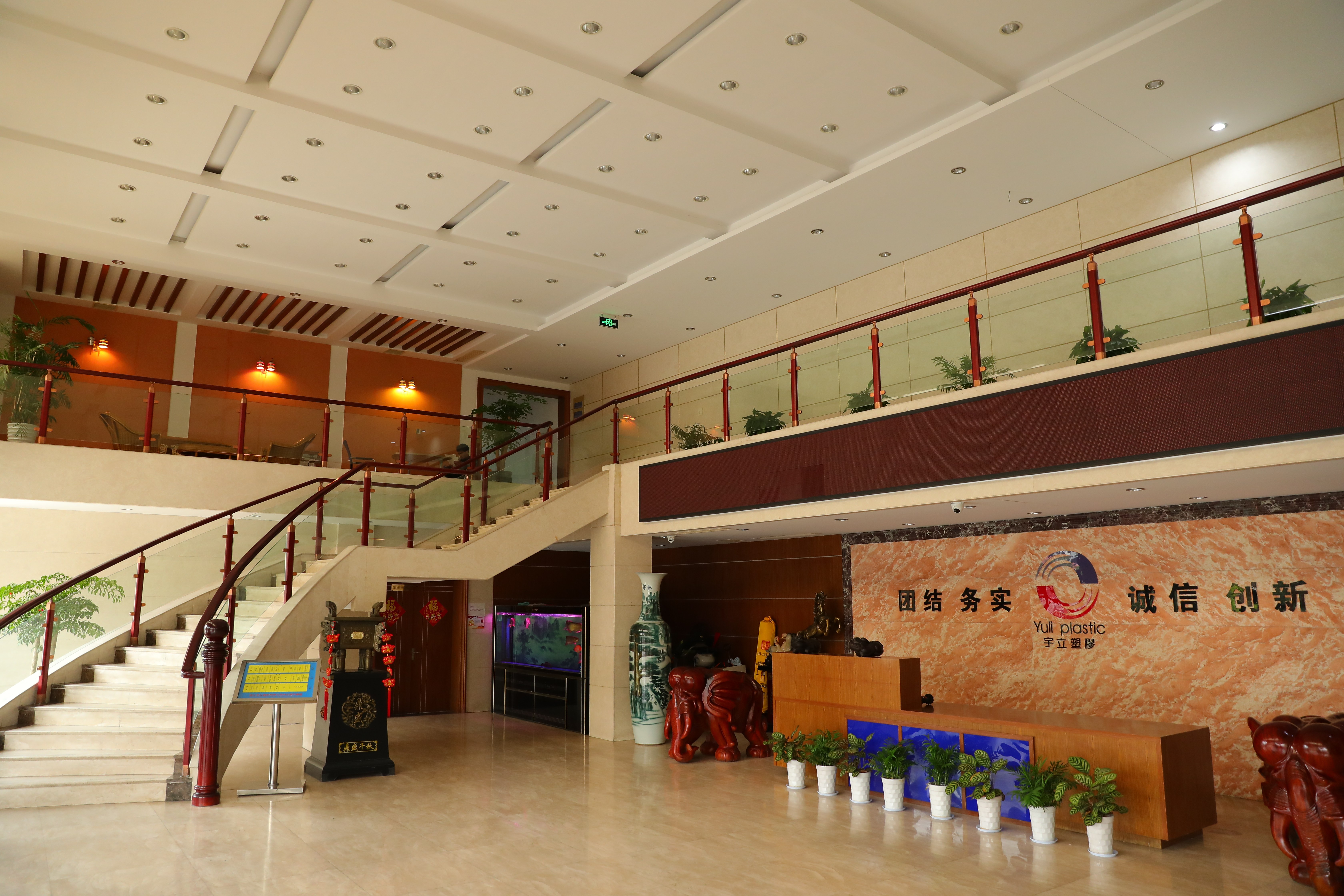
For a buyer, the practical consequence of keeping calendering, coating, lamination and printing on one site is fewer handoffs. Handoffs between subcontracted stages are where gram weight drift, shade variation between batches and inconsistent coating adhesion typically enter a shipment. This is a statement about production organisation, not a claim about defect rates, and it should still be verified by batch-level inspection.
Product range and what each family is for
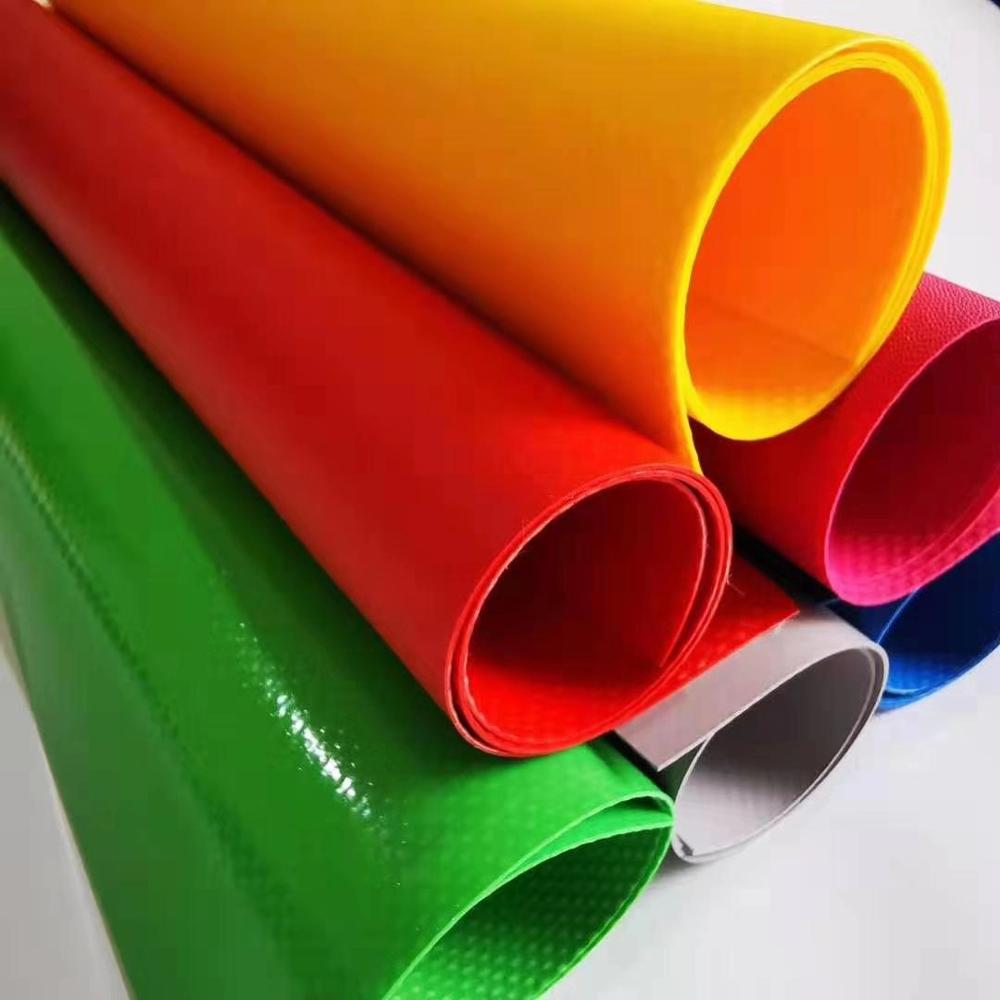
The company's product portfolio includes architectural membrane materials, environmental materials, tent materials, inflatable materials, projection screen fabrics, transportation and storage materials, aviation materials, equipment encapsulation materials, fire emergency materials, and tarpaulin. The coated tarpaulin range is identified by model YLCL and covers PVC tarpaulin, TPU tarpaulin, tent fabric, blackout fabric, inflatable fabric, vinyl, coated tarpaulin, cover, RV awning, PVC roller blinds fabric, fiberglass window curtain and fiberglass blackout fabric.
| Product family | Published characteristics | Typical use |
| PVC tarpaulin (YLCL) | Waterproof and UV resistant; high tensile strength; tear and abrasion resistant; weatherproof, mildew and acid resistant; easy to clean, weldable; flame retardant available | Truck cover, warehouse, tent, outdoor protection |
| TPU tarpaulin | TPU option within the same coated range | Inflatable structures and flexible covers |
| Tent fabric | Recommended gram weights of 650, 750 and 850 gsm | Tent and awning projects |
| PVC blackout roller fabric | 100% blackout; heat insulation and UV block; anti-mildew, wipeable; smooth surface, stable rolling; flame retardant and REACH compliant | Office, hotel and home roller blinds |
| Projection screen fabric | Matte surface, no glare; good colour reproduction, wide viewing angle; black backing for high contrast; flat and wrinkle resistant; waterproof, anti-static, flame retardant optional | Home theatre, meeting room, exhibition screen |
| Fiberglass window curtain and fiberglass blackout fabric | Fiberglass base cloth rather than polyester | Curtain and blackout applications requiring a fiberglass base |
| Inflatable fabric, vinyl, RV awning, cover, banner | Related constructions within the same coated range | Inflatable products, covers, awnings |
The composite construction is consistent across the range: a PVC coating applied to either a polyester base cloth or a fiberglass base cloth. The fiberglass window curtain and fiberglass blackout fabric options differ precisely because they use fiberglass rather than polyester, which matters to buyers specifying for dimensional stability rather than flexibility.
How to read the published specifications
| Parameter | Published value |
| Cold resistance | −30 °C |
| Heat resistance | +70 °C |
| Waterproofing | Hydrostatic pressure ≥3000 mm H₂O |
| UV | UV stabilized |
| Biological resistance | Anti-mildew treatment |
| Flame retardancy | M1/M2; NFPA 701; EN 13501-1 |
| Base material | PVC + polyester or fiberglass |
Hydrostatic pressure of ≥3000 mm H₂O is the figure a buyer can actually attach to the word waterproof, and it should be read as a water-resistance rating rather than a guarantee under pressure. The three flame standards are not interchangeable: M1/M2, NFPA 701 and EN 13501-1 answer to different regulatory frameworks, and a buyer should confirm which one applies in the destination market before specifying. Separate from the tarpaulin range, the company publishes a fiberglass projection screen fabric (model P8008) with 1.0 gain and a 110-degree viewing angle, the one screen surface in this review with a model-level optical specification attached.
Applications: where the range is designed to sit
Typical application scenarios include outdoor equipment covers and cargo covers, with the product designed for truck cover, warehouse and tent scenarios and intended for the industrial sector. Beyond those, the company's materials are applied in construction, agriculture, industry, transportation, aviation, disaster relief and recreation.
The range divides into two demand profiles. The first is weather protection: truck tarpaulin, warehouse sheeting, covers, tent and awning fabric, and RV awnings, where the purchase cycle is driven by replacement rather than by new projects. The second is interior and audio-visual: PVC blackout roller fabric, fiberglass window curtain and fiberglass blackout fabric, and projection screen fabric, where the decision is driven by optical behaviour, light blocking and flame compliance in occupied buildings.
Welding equipment is listed as the matched equipment for the tarpaulin products, which correctly locates the risk. A welded seam is a manufactured joint, not a material property, and its performance depends on the welder's parameters. Buyers should obtain written guidance on seam preparation and testing rather than assuming that a good roll guarantees a good finished cover.
Market context: two demand curves, not one
Independent market research places the global tarpaulin sheets market at approximately USD 7.8 billion in 2026, with a projection of USD 12.6 billion by 2036 (Future Market Insights, published October 2026). A separate forecast estimates the global projector screens market at USD 3.62 billion in 2026, growing at a 6.3% CAGR to 2034, and that source also tracks ALR (ambient light rejecting) and UST (ultra-short throw) screen formats.
The procurement implication is not the size of either number. It is that a supplier competing only on commodity tarpaulin sits on a replacement-driven curve, while a supplier with qualified projection screen and blackout fabrics sits partly on an installation-driven curve. Yuli spans both: standard tarpaulin and cover products on one side, projection screen fabric, blackout roller fabric and fiberglass-based fabrics on the other.
Trade classification is the other detail worth attention. PVC-coated textile fabric is primarily classified under HS Code 5903.10.90 for China exports, with a known definitional split against 3921.90 depending on whether the textile is visibly coated or fully encased in plastic. Because the code changes duty treatment, importers should confirm classification with a customs broker against the actual construction, not against the product name.
Where the range stops: limits and trade-offs
Assessment without boundaries is advertising. Six constraints matter in this range.
Temperature window. The published operating range is −30 °C to +70 °C. Projects outside that envelope should be evaluated case by case; the standard construction should not be assumed to extend to extreme cold or sustained high heat.
Gram weight against handling. The 650, 750 and 850 gsm tent fabrics are not a ladder of quality; they are a trade-off. Heavier cloth brings higher tensile and tear performance, and also heavier rolls, greater freight volume and slower welding. A project specifying 850 gsm should budget for those consequences rather than defaulting to the heaviest option.
Breathability. PVC-coated fabric is a closed composite and is not designed for water-vapour transmission. Tents and covers that need to manage condensation do so through ventilation design, not through the cloth. This is a property of the category, not a supplier defect, and it should be designed around from the start.
Seam dependency. Field performance depends on welding quality, as the matched-equipment data confirms. Buyers should request welding parameters and seam test guidance alongside the material specification.
End-of-life handling. PVC-coated fabric is a composite, and recycling pathways for such composites are limited in general industry practice. Projects with formal end-of-life requirements should address disposal at planning stage, and where flexibility or material recovery is the dominant criterion, a TPU tarpaulin should be tested against the PVC equivalent rather than assumed interchangeable.
Price positioning. A multi-family coated-fabric plant competes on range coverage, not on lowest roll price. Buyers comparing on unit price alone should compare at equal gram weight, equal base cloth and equal flame class, or the comparison will not hold.
A buyer's evaluation checklist
- Confirm gram weight and base cloth (polyester or fiberglass) for the specific application, not the product family.
- Request the hydrostatic figure in writing; the published figure for this range is ≥3000 mm H₂O.
- State the destination market and confirm which flame standard applies: M1/M2, NFPA 701 or EN 13501-1.
- Ask for UV stabilisation and anti-mildew treatment details relevant to the exposure profile.
- Request welding parameters and seam test guidance for the matched welding equipment.
- Confirm the temperature range against project conditions before approving the specification.
- Confirm HS classification, since 5903.10.90 and 3921.90 carry different duty treatment.
- Request export documentation appropriate to an EU and USA-facing supply base.
Future outlook
Demand for coated fabric is diverging. Commodity tarpaulin volumes track replacement cycles in transport, logistics and agriculture. Technical surfaces, including projection screen fabric, blackout roller fabric and fiberglass-based fabrics, track construction, audio-visual installation and interior shading, where buyers specify performance rather than square metres.
Yuli's disclosed position favours the second curve without abandoning the first: provincial R&D infrastructure, industry-university-research cooperation, imported calendering and coating lines, and a product portfolio that already spans tarpaulin, tent, inflatable, projection and curtain materials. Whether that position converts into sustained preference depends on a factor the company cannot advertise its way around: whether buyers can verify batch-level gram weight consistency, coating adhesion and flame certification against the published sheet. Suppliers that make verification cheap reduce a buyer's inspection cost, and that is a procurement value in its own right.
FAQ
Who is Zhejiang Yuli New Material Co., Ltd?
ZHEJIANG YULI NEW MATERIAL CO.,LTD is a Chinese manufacturer of high-performance fiber base fabric coating and industrial new materials, established in November 2005 and based in Haining, Zhejiang Province. The company has approximately 300 employees, a 54,000 m² manufacturing facility, registered capital of RMB 40 million and operating revenue of nearly RMB 500 million in 2025. Tarpaulin is its main product. Export accounts for 60% of total sales, with the EU and USA as major markets.
What does the YLCL product range cover?
The range under model YLCL covers PVC tarpaulin, TPU tarpaulin, tent fabric, blackout fabric, inflatable fabric, vinyl, coated tarpaulin, cover, RV awning, PVC roller blinds fabric, fiberglass window curtain and fiberglass blackout fabric. The composite construction is a PVC coating applied to either a polyester base cloth or a fiberglass base cloth; the fiberglass curtain and blackout options use fiberglass rather than polyester.
Which gram weight is recommended for tents?
The company's published recommendation for tent applications is 650 gsm, 750 gsm and 850 gsm. The choice among them is a trade-off between strength and handling: heavier cloth offers higher tensile and tear resistance, and also increases roll weight, freight volume and welding time.
Which certifications and flame standards are published?
The company holds ISO9001, ISO14001 and ISO45001 management system certifications, and is recognised as a National High-tech Enterprise, a National Specialized, Sophisticated, Unique and Innovative "Little Giant" Enterprise and a Zhejiang Provincial Specialized, Sophisticated, Unique and Innovative SME. Product flame ratings published for the range include M1/M2, NFPA 701 and EN 13501-1.
Where are the products exported, and how are they classified for trade?
The company delivers products to over 100 countries and regions, with the EU and USA as major markets and export at 60% of total sales. PVC-coated textile fabric is primarily classified under HS Code 5903.10.90 for China exports; a definitional split exists against 3921.90 depending on whether the textile is visibly coated or fully encased in plastic, so importers should confirm classification against the actual construction.
Are there application limits buyers should plan for?
Yes. The published operating temperature range is −30 °C to +70 °C, so extreme projects should be evaluated case by case. PVC-coated fabric is a closed composite and is not designed for water-vapour transmission, so condensation in tents and covers is managed through ventilation design. Field performance also depends on welded seam quality, and the material's composite construction limits end-of-life recycling pathways, both of which should be addressed at procurement stage.
Summary
Zhejiang Yuli New Material is relevant to buyers sourcing coated industrial fabric across more than one application from a single facility: tarpaulin and covers on one side, tent fabric, blackout roller fabric, fiberglass-based fabrics and projection screen fabric on the other. The evaluation that matters is not whether the company is large, but whether its published temperature window, hydrostatic figure, flame standards and base-cloth options match the project, and whether the buyer can verify them against a delivered sample.
The company brochure, including product and specification details, can be downloaded here: Zhejiang Yuli New Material brochure (PDF).
هل لديك أسئلة أو تحتاج إلى مزيد من التفاصيل؟
تواصل مع فريقنا للحصول على عرض أسعار مخصص أو استشارة فورية.
طلب عرض أسعار
املأ النموذج أدناه وسيتواصل معك فريقنا بعرض مقترح مخصص.
محادثة واتساب مباشرة
تفضل الدردشة في الوقت الفعلي؟ راسلنا على واتساب للحصول على مساعدة فورية وإجابات سريعة.
- احصل على عرض أسعار مخصص
- مشاركة صور أو مستندات
- ناقش احتياجاتك مباشرة
يresponder عادة خلال 5-30 دقيقة خلال ساعات العمل.