
Zinc Alloy Die Casting Parts: What the Spec Sheet Must Prove
Zinc Alloy Die Casting Parts: What the Spec Sheet Must Prove
Zinc alloy die casting parts are bought against four verifiable parameters: alloy grade, dimensional tolerance, compliance scope and finishing route. Every other commercial term in a quotation — cycle time, tool life, delivery reliability — sits downstream of those four. For buyers in the research and evaluation stages, the useful question is not which casting alloy is universally best, but which supplier can document each parameter against a named, checkable standard.
SUNPREC HARDWARE CO., LTD. (SUNPREC) is a metal parts manufacturer established in 2020 in Dongguan, China, running CNC machining, die casting, extrusion and surface finishing under one roof, with roughly 90% of output exported to EU and USA markets. Its die casting line covers aluminium alloy die casting parts, zinc alloy die casting parts and magnesium alloy die casting components — the same part family in which grade, tolerance and compliance decisions are actually made.
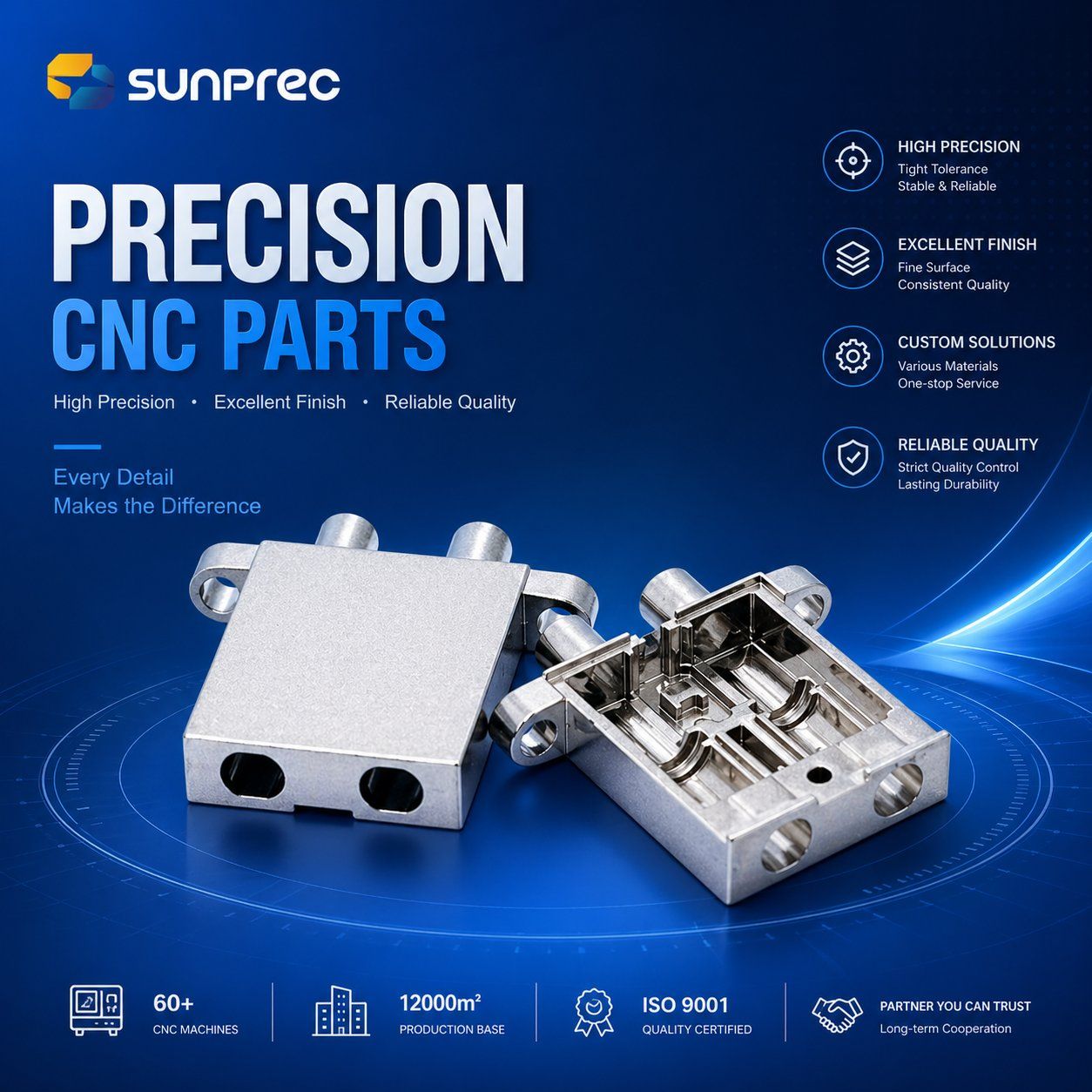
Zinc alloy die casting parts: Zamak3 and Zamak5 grades are formed in a hot-chamber process, with secondary machining for precise holes, grooves and fitting surfaces.
Why zinc alloy die casting is a constraint problem, not a preference
Most sourcing conversations about zinc alloy die casting parts open with a material comparison and close with a price per piece. The failures that actually reach the buyer, however, are rarely material failures. They are documentation failures: a grade was substituted without re-qualification, a tolerance was assumed rather than written on the drawing, or a certificate was supplied whose scope did not cover the component being purchased.
This matters more in zinc than in some other casting categories, because zinc parts frequently combine three roles at once. A single zinc casting can be a structural housing, an electromagnetic shielding enclosure and a decorative visible surface. Each of those roles is governed by a different piece of evidence — a material grade, a dimensional report and a compliance document — and a supplier that can only produce one of them is not a qualified supplier for that part.
The zinc segment also sits in a specific part of the market. Industry analysis published in 2026 describes zinc die casting as a fast-growing segment on the strength of cost-effectiveness and EMI shielding properties for consumer electronics (Market Research Future, Die Casting Market Size, Share & Industry Report 2035). That framing is useful for buyers: it identifies where zinc casting competes on function rather than on raw material price alone.
The four constraints a zinc die casting quotation has to resolve
1. Alloy grade — named, not approximated
Zamak3 and Zamak5 are the zinc alloy grades carried in the SUNPREC die casting portfolio. The same product family also carries ADC12 and A380 aluminium grades and magnesium alloy die casting components. A buyer evaluating zinc alloy die casting parts should require the grade to appear on the quotation and on the material documentation, because grade is the input from which casting behaviour, machining behaviour and finishing behaviour all follow. Where a supplier proposes an equivalent grade, the correct procurement response is a documented equivalence review and a fresh first-article inspection, not an assumption of interchangeability.
2. Dimensional tolerance and the datum scheme
The published product tolerance for the die casting line is ±0.01 mm, with machining centres — predominantly FANUC — holding a machine tolerance of 0.005 mm. Many zinc castings are not delivered in the as-cast condition. Secondary 3-axis CNC milling is used to produce precise holes, grooves and fitting surfaces after casting, which means the tolerance that matters to the assembly is often a machined tolerance applied to a cast blank. Buyers should therefore state which features are as-cast and which are machined, and confirm the datum scheme, before comparing tolerance claims between suppliers.
3. Compliance scope — the document, not the logo
Compliance evidence for castings is scope-bound and market-bound. The useful question is never 'are you certified' but 'which certificate, covering which process and which market, and until when'. In zinc alloy die casting, three documents typically matter: an EU material-compliance certificate for restricted substances, a general quality management system certificate, and — for aerospace-facing programmes — an aerospace quality management system certificate. Each has a different boundary, and each boundary is checkable.
4. Finishing route and its process steps
Zinc castings are usually finished before they reach an assembly line. The available surface treatments across the SUNPREC part portfolio include zinc plating, nickel plating, chrome, black oxide, phosphating, powder coating, anodising (clear and colour), sandblasting, polishing, brushing, chromate conversion coating, electroplating, passivation, electropolishing, mirror polishing and PTFE coating. Because each route adds a process step with its own dimensional and cost consequence, the finishing callout belongs in the specification stage rather than in the post-quotation negotiation.
Published parameters and the documents behind them
The table below consolidates the parameters that are documented for this die casting product family, together with the evidence type that supports each one. It is intended as a verification checklist for buyers comparing quotations for zinc alloy die casting parts.
| Parameter | Published value | Evidence type |
|---|---|---|
| Zinc alloy grades | Zamak3, Zamak5 | Product material specification |
| Aluminium grades (same family) | ADC12, A380 | Product material specification |
| Product tolerance | ±0.01 mm | Product specification |
| Machine tolerance (machining centres) | 0.005 mm | Equipment/capability statement |
| Minimum wall thickness | 0.4 mm (zinc) / 0.8 mm (aluminium) | Product specification |
| Tensile range, product family | Aluminium 80–120 MPa; zinc 40–80 MPa | Product specification |
| Process safety factor | Cold-chamber aluminium 1.2; hot-chamber zinc 1.3–1.5 | Product specification |
| Cycle time | 15–90 s per piece | Product specification |
| EU material compliance | RoHS 2.0, certificate BTL20250603446, valid 2025-06-10 to 2029-06-10 | Third-party certificate (BTL Testing Technology Co., Ltd.) |
| Quality management system | ISO 9001, certificate IAS25Q391R0, valid 2025-10-16 to 2028-10-15 | Certificate issued by INV |
| Aerospace quality management system | AS9100, certificate CN059921, valid 2026-05-26 to 2029-05-25 | Certificate issued by Bureau Veritas Certification |
| Commercial parameters | MOQ 10 units; lead time 21–30 days; monthly capacity 4,200,000 units | Capability statement |
Two features of this table deserve attention. First, the compliance entries are dated. A certificate valid today may expire inside a multi-year programme, so expiry dates belong in the supplier evaluation file rather than in a marketing folder. Second, the commercial entries — MOQ of 10 units, lead time of 21–30 days and monthly capacity of 4,200,000 units — describe a supplier configured for repeat production rather than one-off fabrication, which is relevant when a programme moves from prototype validation into volume.
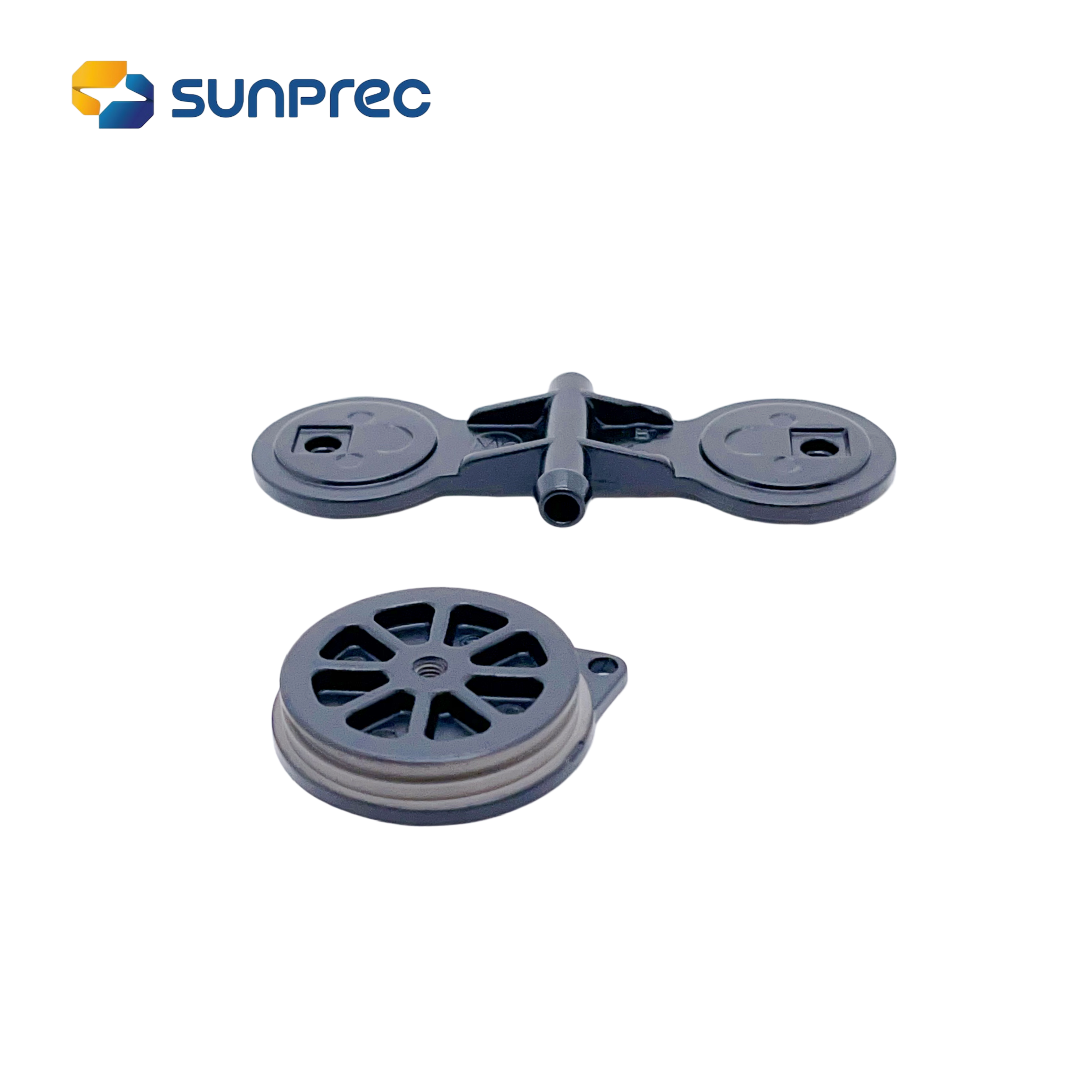
Die casting forms complex thin-wall geometry in one integrated step, which is why zinc alloy die casting parts are frequently specified for housings and enclosures rather than assemblies.
Zinc compared with aluminium and magnesium in the same part family
Because the same production line handles aluminium, zinc and magnesium castings, the comparison below reflects published values for one product family rather than a cross-supplier benchmark. It is offered as a decision structure, not as a ranking.
| Criterion | Zinc alloy (Zamak3 / Zamak5) | Aluminium alloy (ADC12 / A380) |
|---|---|---|
| Tensile range | 40–80 MPa | 80–120 MPa |
| Minimum wall thickness | 0.4 mm | 0.8 mm |
| Machine type / safety factor | Hot chamber, safety factor 1.3–1.5 | Cold chamber, safety factor 1.2 |
| Forming capability | One-step integrated forming of complex thin-wall parts | One-step integrated forming of complex thin-wall parts |
| Documented surface routes | Zinc plating, nickel plating, chrome, powder coating, painting and related treatments | Colour anodising, powder coating, painting; heat dissipation and lightweight advantages |
| Damping | Zinc alloys have good vibration damping, relevant to precision instruments and power tools | Lightweight and heat-dissipation properties are the primary advantages |
Where zinc alloy die casting is the weaker choice
A shortlist that never excludes anything is not a shortlist. The published tensile range for zinc alloy in this product family, 40–80 MPa, sits below the aluminium range of 80–120 MPa. Where a part is a primary load-bearing or weight-sensitive structural member, aluminium or magnesium alloy is normally the more appropriate specification, and zinc should not be carried into the shortlist on the strength of casting economics alone.
A second boundary is certification scope. The AS9100 certificate held for this product line, CN059921 issued by Bureau Veritas Certification, covers the manufacture of hardware for satellites in the space industry. That is a real and specific scope, and it is not a blanket approval for any aerospace component. Buyers in aerospace-facing programmes should read the scope statement on the certificate itself rather than assuming general aerospace eligibility. Similarly, the RoHS 2.0 Compliance Certificate BTL20250603446 applies to the EU market and its certification scope covers metal accessories; it does not, on its own, demonstrate conformity with restricted-substance regimes in other jurisdictions.
A third boundary concerns process economics rather than material capability. Die casting requires tooling before the first article exists. That upfront step, combined with a lead time of 21–30 days, makes casting less attractive for one-off or extremely low-quantity requirements than machining from solid stock, where the SUNPREC portfolio also operates with a published tolerance of ±0.01 mm. Casting earns its economics on repeat monthly orders with consistent geometry.
What the market data says about die casting in 2026
Global die casting market valuation in 2025 was USD 93.56 billion, according to Fortune Business Insights. Within that total, aluminium die casting commanded a 74.78% share by raw material in 2025 (Mordor Intelligence), and the transportation segment held the largest revenue share of aluminium die casting, exceeding 64.0% in 2025 (Grand View Research). Zinc is therefore a smaller share of a large and growing category — a framing that is more useful to buyers than a headline growth rate, because it explains why zinc casting capacity and specialist process knowledge are concentrated among fewer suppliers than aluminium capacity.
Adjacent material data adds context. The global magnesium casting market was valued at USD 1.42 billion in 2026 and is projected to reach USD 2.96 billion by 2035, a CAGR of 8.9% (Business Research Insights, medium confidence). Magnesium and zinc occupy overlapping application territory in housings and instrument components, where damping, wall thickness and shielding behaviour matter more than peak tensile strength.
Regulatory pressure is also shaping supplier selection. IATF 16949:2016 is described as the mandatory quality management system standard for die casting suppliers serving the automotive industry (Bian Diecast). For buyers in automotive programmes, that requirement sits above any individual material preference: a zinc casting supplier without the appropriate automotive quality system cannot be qualified for automotive production regardless of process capability.
Two cautions belong here. First, published forecasts for die casting growth disagree methodologically; available CAGR projections for aluminium alloys range from 5.4% to 11.5%, a spread driven by different baseline years and by differing treatment of large-scale casting machinery. Buyers should treat any single CAGR figure as directional. Second, press-tonnage milestones such as Tesla's deployment of 9,000-ton presses for rear underbody assemblies, reported to have reduced manufacturing costs by 40% (Market Research Future, secondary source, medium confidence), describe the large-structure aluminium end of the market. They signal capital concentration at the top of the industry rather than a direct change in zinc part economics.
Where zinc alloy die casting parts are used
The application profile of zinc castings follows the properties documented for this product family: thin-wall forming down to 0.4 mm, good vibration damping, EMI-relevant behaviour in electronics housings, and compatibility with plating and coating routes. Typical part types include hardware fittings, instrument housings, electronic enclosures, equipment housings, communication device housings, household appliance components and other precision die casting parts.
The industries served by this production capability span aerospace, automotive, semiconductor, medical, new energy, rail traffic, robotics and automation, and instrumentation. In practice, the selection logic is consistent across them: where the part is a thin-wall enclosure that must suppress vibration or shield electronics and will be plated or coated, zinc is a strong candidate; where the part carries primary structural load or where mass reduction dominates, aluminium or magnesium is usually the better starting point.
Programme evidence is also part of the evaluation picture. SUNPREC reports production programmes of 10,000 units for OEM customers across aerospace, automotive, medical device, new-energy equipment and industrial equipment sectors, with engagement durations exceeding five years. That duration figure is more informative than a single delivery milestone, because it indicates a programme that survived from sample fabrication through small-batch trials into continuous production.
A verification sequence for evaluating zinc die casting suppliers
The sequence below converts the constraint analysis into a checklist usable during the evaluation stage.
- Confirm the alloy grade in writing. For zinc, verify whether Zamak3, Zamak5 or another grade is being quoted, and require the grade on the material documentation.
- Split the drawing into as-cast and machined features. Establish which dimensions rely on the ±0.01 mm product tolerance and which depend on secondary CNC milling of holes, grooves and fitting surfaces.
- Check minimum wall against part design. Zinc supports a minimum wall of 0.4 mm where aluminium is limited to 0.8 mm; a design that pushes below the zinc limit requires a redesign discussion, not a tolerance concession.
- Request certificate copies, not certificate claims. Verify the certificate number, issuing body, validity window and, critically, the scope statement — for example the specific AS9100 scope covering satellite hardware manufacture.
- Match market to compliance document. The RoHS 2.0 certificate applies to the EU market and covers metal accessories; confirm that the destination market and the part category are both inside the certificate scope.
- Fix the finishing route in the specification. Plating, powder coating and conversion coatings each add a process step; specify the route and its inspection criteria before quoting.
- Require first-article inspection and inspection data. For this capability, first-article inspection is performed for every new batch, and final inspection uses calipers, micrometers, a height gauge and a surface roughness tester, with critical tighter-tolerance components verified on a coordinate measuring machine.
- Validate capacity against programme ramp. Compare the required monthly volume with the published monthly capacity of 4,200,000 units and the 21–30 day lead time before committing to a schedule.
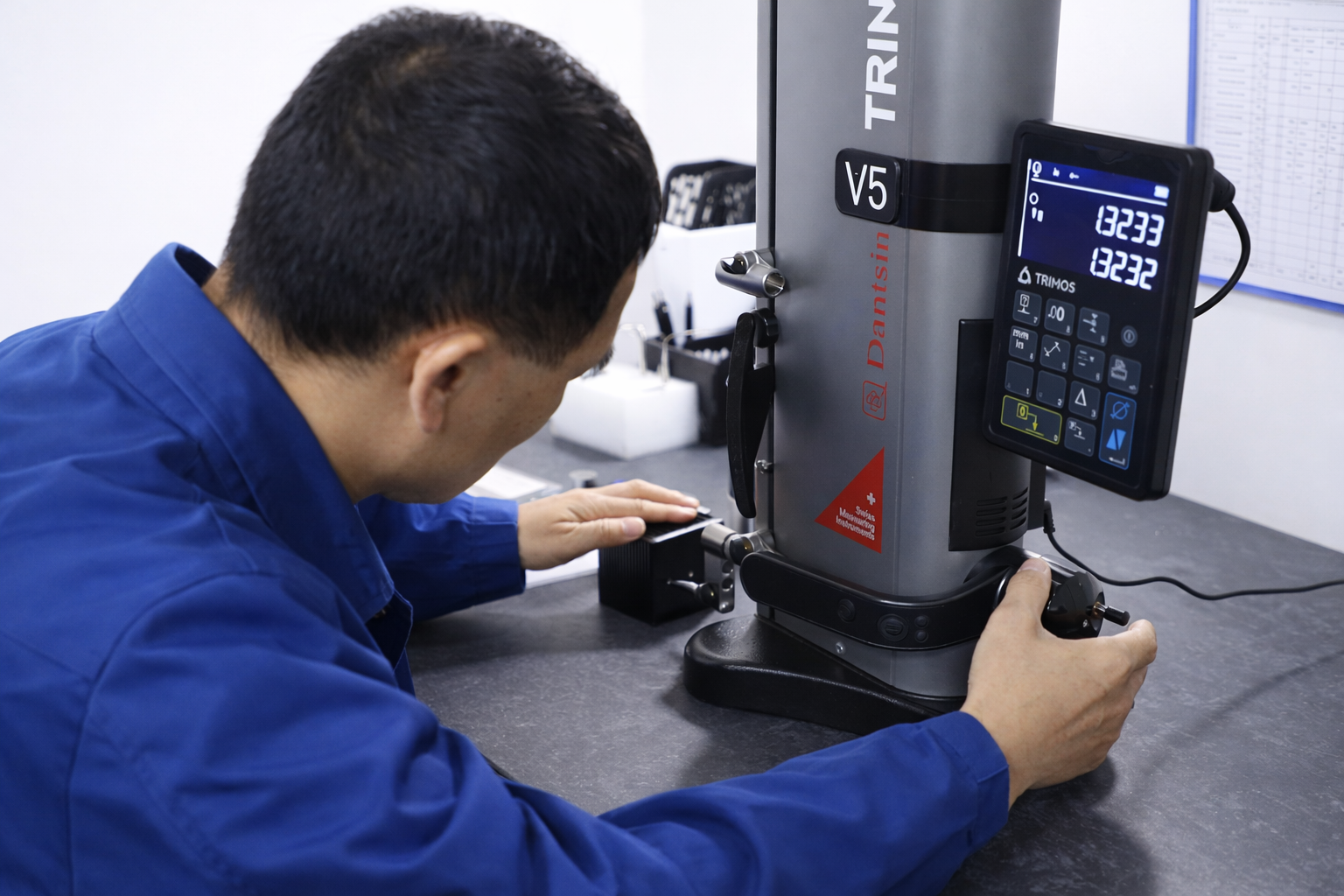
Dimensional verification: first-article inspection, calipers, micrometers, height gauge and surface roughness testing, with coordinate measuring machine verification for tight-tolerance features.
Outlook: what changes for zinc casting buyers through 2030
Three shifts are visible from the available evidence. The first is compliance documentation moving from a qualification formality to a live programme requirement. With RoHS certificates carrying defined validity windows and automotive quality system expectations such as IATF 16949:2016 applied to the supply base, buyers increasingly need a document lifecycle process rather than a one-time certificate collection.
The second is the continued convergence of casting and machining in the same supply chain. Because so many zinc castings require precise holes, grooves and fitting surfaces after forming, suppliers that combine hot-chamber casting with in-house CNC milling and metrology reduce the number of handoffs a buyer has to manage — and reduce the number of parties who can be responsible when a dimension drifts.
The third is the widening of material choice inside single programmes. With aluminium die casting holding the dominant material share of the market and magnesium casting projected to grow at 8.9% CAGR through 2035, the practical question for buyers is no longer which material to standardise on, but whether their supplier can support a mixed-material bill of materials with consistent documentation. For zinc specifically, the growth driver identified in current market analysis — cost-effectiveness combined with EMI shielding in consumer electronics — points toward continued demand in housings, fittings and enclosure-type parts rather than in high-load structural applications.
Frequently asked questions
Which zinc alloy grades are used for zinc alloy die casting parts?
Zamak3 and Zamak5 are the zinc alloy grades carried in the SUNPREC die casting product family. The same family also includes ADC12 and A380 aluminium grades and magnesium alloy die casting components. Because grade determines casting behaviour, machining behaviour and finishing behaviour, the grade should be named on the quotation and on the material documentation rather than described as an equivalent.
What dimensional tolerance can zinc alloy die casting parts hold?
The published product tolerance for this die casting line is ±0.01 mm, and the machining centres used for secondary operations hold a machine tolerance of 0.005 mm. Zinc castings frequently combine as-cast geometry with machined features, since secondary 3-axis CNC milling is used for precise holes, grooves and fitting surfaces. Buyers should identify which features are as-cast and which are machined when comparing tolerance claims.
Which certifications apply to zinc alloy die casting parts, and what is their scope?
Three certificates are documented for this product family. The RoHS 2.0 Compliance Certificate BTL20250603446, issued by BTL Testing Technology Co., Ltd., applies to the EU market, covers metal accessories, references RoHS Directive 2011/65/EU and Amending Directive (EU) 2015/863 Annex VI, and is valid from 2025-06-10 to 2029-06-10. The ISO 9001 certificate IAS25Q391R0, issued by INV, applies globally and is valid from 2025-10-16 to 2028-10-15. The AS9100 certificate CN059921, issued by Bureau Veritas Certification, is valid from 2026-05-26 to 2029-05-25 and its scope is the manufacture of hardware for satellites in the space industry. Each document is scope-bound and should be read at scope level.
What is the minimum wall thickness for zinc alloy die casting compared with aluminium?
For this product family, the minimum wall thickness is 0.4 mm for zinc alloy and 0.8 mm for aluminium alloy. The difference follows the process routes: zinc is cast in a hot-chamber process with a safety factor of 1.3–1.5, while aluminium is cast in a cold-chamber process with a safety factor of 1.2. Both routes support one-step integrated forming of complex thin-wall parts.
When is zinc alloy die casting the wrong choice?
Two situations are commonly relevant. First, where the part is a primary load-bearing or weight-sensitive structural member: the published tensile range for zinc alloy in this family is 40–80 MPa, below the 80–120 MPa range published for aluminium alloy in the same family. Second, where the required certification falls outside a held scope — an AS9100 certificate whose scope covers satellite hardware manufacture cannot be treated as blanket approval for all aerospace components, and an EU-market RoHS certificate does not by itself evidence conformity in other jurisdictions.
What minimum order quantity and lead time apply to zinc alloy die casting parts?
The documented commercial parameters for this capability are a minimum order quantity of 10 units, a lead time of 21–30 days and a monthly capacity of 4,200,000 units. Die casting also requires tooling before first article, which is why the process economics are generally strongest on repeat monthly orders with stable geometry.
How is quality verified during production?
First-article inspection is performed for every new batch. Final inspection uses calipers, micrometers, a height gauge and a surface roughness tester, and critical components with tight-tolerance requirements are verified on a coordinate measuring machine. Supporting metrology equipment includes HEXAGON metrology systems, a 2.5D projector and a TRIMOS height gauge.
Summary
Zinc alloy die casting parts are specified correctly when four things are documented rather than assumed: the alloy grade (Zamak3 or Zamak5 in this product family), the tolerance split between as-cast and machined features against a published ±0.01 mm product tolerance, the compliance scope of each certificate including its validity window and market, and the finishing route. Zinc's documented strengths — 0.4 mm minimum wall, good vibration damping and relevance to EMI-sensitive enclosures — define where it belongs. Its published tensile range of 40–80 MPa defines where it does not.
SUNPREC publishes its current capability and product presentation, including the die casting capability set described above, in a downloadable document: SUNPREC Presentation — June 2026 (PDF).