
Zipper Metal Wire: Apparel vs. Bag & Luggage Requirements
Zipper Metal Wire: Apparel vs. Bag & Luggage Requirements
A metal zipper is a wire product before it becomes a fastener. The teeth that interlock, the top and bottom stops that hold the chain together, and the slider hardware that travels along it are all formed from wire — and the two largest end markets, apparel and bag & luggage, do not specify that wire in the same way. This guide compares the component-level requirements of both segments and explains how material, shape, size and hardness decisions change with the application.
The scale of the category explains why the comparison matters commercially. The global metal zipper market was valued at approximately USD 4.8 billion in 2025 and is projected to reach USD 7.9 billion by 2034, growing at a CAGR of 5.7% (Dataintelo). The upstream wire segment is narrower but just as specific: the global zipper copper alloy wire market, the material that feeds most metal zipper teeth, was valued at approximately USD 0.4 billion in 2026 with a projected reach of USD 0.5 billion by 2035 (Business Research Insights).
Supply is geographically concentrated. China's zipper exports reached USD 1.66 billion in 2023, with Guangdong province accounting for 22.6% of the total — USD 375 million — and specialising in metal zippers (KDD Zipper, citing customs data).
For sourcing teams already in the Decision and Execution stages, the question is rarely whether zipper metal wire can be bought. It is which specification belongs in which product category, and how that choice holds up across a multi-season or multi-year supply relationship.
Two Segments, Two Load Profiles
Apparel and bag & luggage impose different mechanical budgets on the same component family.
In apparel, the priority is geometry and appearance. Teeth are fine and low-profile so the zipper disappears into a placket or fly; finish and colour must stay consistent across high-volume runs; and because garments typically pass through metal detection at the finished-goods stage, metal components carry a contamination-control requirement that is not primarily about strength. The wire has to form a precise, repeatable tooth and stop, at speed, without variation between lots.
In bag & luggage, the priority is load. A packed case or backpack applies sustained tension to the chain, repeated opening and closing cycles, and lateral stress at the stops and slider. Component selection shifts accordingly: heavier wire, larger tooth profiles, stronger stops, and sliders with more positive locking behaviour. Appearance still matters, but durability dominates the specification.
The practical consequence is that wire specified for a garment programme is usually too fine for luggage, and wire specified for luggage is usually too heavy and too hard to form the fine teeth a garment placket requires. Treating zipper metal wire as a single commodity line is the most common way this decision goes wrong.
Component Map: What Each Wire Does
Before comparing materials, it helps to separate the component families, because each one is loaded and evaluated differently in the two segments.
| Component | Role in the finished zipper | Apparel emphasis | Bag & luggage emphasis |
|---|---|---|---|
| Y-shape wire / Y teeth wire | Profiled input from which metal teeth are formed | Fine, low-profile teeth; consistent finish across colour runs | Larger tooth profile; deeper engagement under load |
| Top stop wire | Limits slider travel at the top of the chain | Low-profile stop matched to tape and tooth finish | Heavier stop that resists repeated pull-through force |
| Bottom stop wire | Retains the slider and secures the base of the chain | Documented for clothing accessories; size and shape customizable; hardness soft or hard | Documented for bag & luggage scenarios on the same customizable basis |
| Zipper puller | Handling element used to operate the slider | Slim profile; finish and branding detail | Larger grip; durability under repeated pulling |
| Zipper automatic slider | Self-locking slider body | Compact body; smooth glide; consistent plating | Positive locking that resists opening under load |
| Metal round wire (FPD-MRW) | General-purpose wire input; stainless steel, copper or aluminum; size and shape customizable; hardness soft or hard | Fine forming operations | Heavier forming operations |
| Spring wire (FPD-SW02) | Round wire for spring-type components; hardness and size customizable | Documented applications include clothing accessories, medical devices, home appliances and electronic accessories | Used where a spring element is specified in accessory hardware |
| Flat wire / special-shaped wire / profiled wire | Non-round cross-sections for specific forming routes | Dependent on tooth design | Dependent on tooth design |
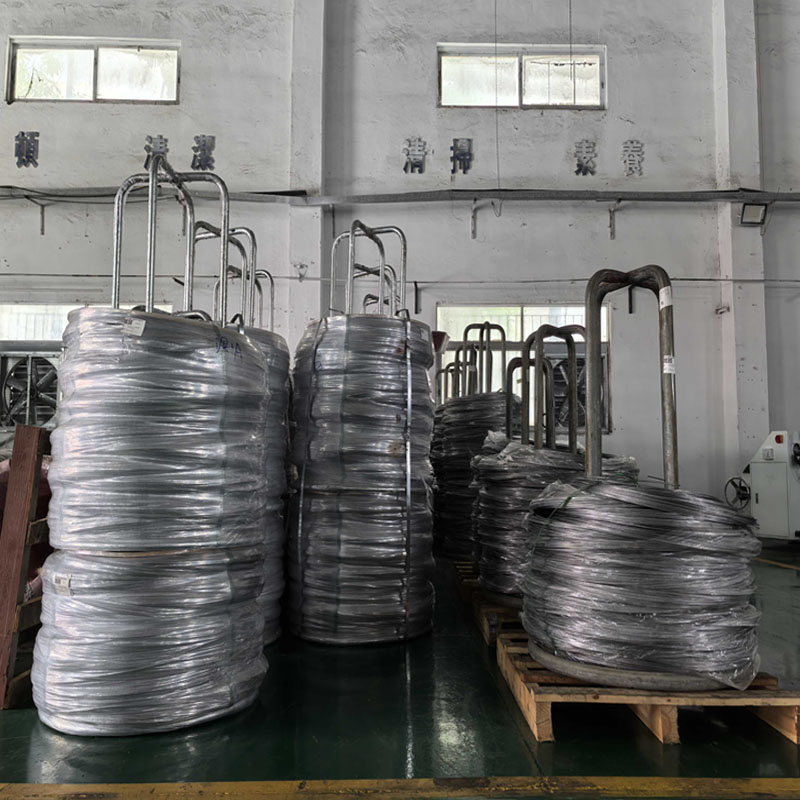
Y-shape zipper wire — also written as Y shape wire, Y teeth wire or y teeth — is the profiled input from which metal zipper teeth are formed. It is engineered from stainless steel or copper alloys for durability and precision in teeth forming, and the copper alloys used for this purpose typically contain a mixture of copper, zinc and nickel (Jingzhou Metal; Business Research Insights). Because the tooth is formed from this profile rather than cut from sheet, the wire cross-section effectively defines the finished tooth geometry.
Top stop wire and bottom stop wire are the terminal components of the chain. Documented product data describes bottom stop wire as designed for use in clothing accessories and bag & luggage scenarios, with customizable size and shape and hardness available in soft or hard. That dual positioning is uncommon in the component list, and it reflects the reality that the bottom stop is the part most directly loaded when a zipper is fully closed.
The zipper puller and the zipper automatic slider sit at the interface between the user and the chain. In apparel they are aesthetic and tactile elements; in bag & luggage they are locking and load-bearing elements. The automatic slider's locking behaviour is what keeps a packed case closed when the chain is under tension.
The round wire families sit underneath all of these. Metal round wire (FPD-MRW) is available in stainless steel, copper or aluminum, with customizable size and shape and hardness in soft or hard. Spring wire (FPD-SW02) is round and supplied in stainless steel, copper or aluminum with customizable hardness and size.
Material Selection: Stainless Steel, Copper Alloys and Aluminum
Material choice drives cost, finish, corrosion behaviour and magnetic response — and those four factors do not point in the same direction.
Copper alloys remain the reference material for metal zipper teeth. Brass held a 44.1% market share of the metal zipper wire market in 2025, supported by its aesthetic appearance and anti-corrosive properties (Dataintelo). Copper alloy wires for zippers are commonly produced according to ASTM B16 for free-cutting brass or ASTM B99 for copper-silicon alloy wire, standards that exist to keep mechanical behaviour consistent between lots (Copper.org). For visible, premium and colour-critical zippers, copper alloys remain the default because downstream plating and finishing lines are built around them.
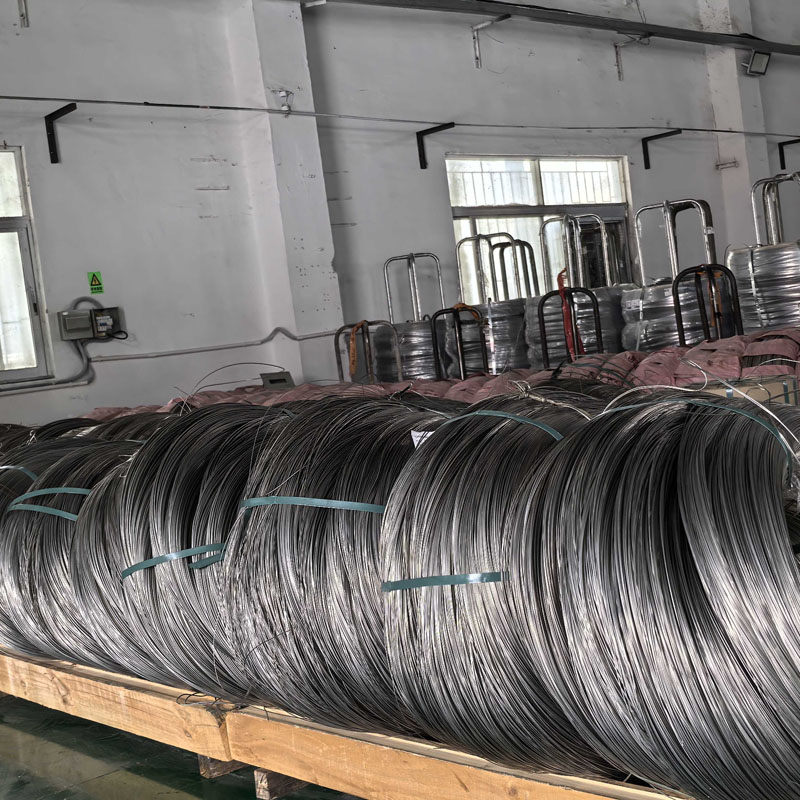
Stainless steel is the alternative route, and non-magnetic grades are the reason it works. Fullgreat Metal Limited, a Shenzhen-based manufacturer founded in 2008, began developing non-magnetic stainless steel for buttons and zippers as a replacement for copper strip in 2008 and worked with Sichuan University on the material. The resulting grades include non-magnetic stainless steel strip FPD806 and FPD808 and stainless steel wire FPD901 and FPD902, which have been used in button and zipper applications as well as communication accessories, automotive products and aerospace products. Non-magnetic behaviour matters in these applications because components that respond to magnetic fields complicate inspection and sorting.
Aluminum is the third option — lighter than both and available across the round and shaped wire lines with customizable size, shape and hardness.
One first-party comparison is worth stating precisely, because it is often quoted loosely. Fullgreat's published comparison of its non-copper wire against copper zipper material lists a cost difference of approximately 40% lower than copper, a longer service cycle with fewer replacement parts required, a lower raw material loss rate and higher material utilization efficiency, and positions the fit for clothing accessories. This is a supplier-stated comparison rather than an independent test result, and it should be validated against a buyer's own forming trials, finish requirements and end-use load case before it is treated as a like-for-like substitution.
Customizing Shape, Size and Hardness
The documented product lines make customization explicit rather than implied:
- Metal round wire (FPD-MRW) — stainless steel, copper or aluminum; size and shape customizable; hardness in soft or hard.
- Bottom stop wire — designed for clothing accessories and bag & luggage; size and shape customizable; hardness in soft or hard.
- Spring wire (FPD-SW02) — round shape; hardness and size customizable; stainless steel, copper or aluminum; documented applications include clothing accessories, medical devices, home appliances and electronic accessories.
Hardness is the parameter buyers most often under-specify. A softer wire deforms more readily, which suits fine apparel teeth and reduces tooling stress, but it holds geometry less firmly when the chain is under sustained load. A harder wire resists deformation and preserves tooth engagement in luggage applications, at the cost of greater tool wear and less tolerance for tight bend radii. There is no single hardness setting that optimises both a jacket placket and a loaded suitcase.
Because customization changes the wire rather than the finished part, verification has to happen at the wire level. Documented quality control procedures cover dimensional requirements, composition, tensile strength and elongation — the four measurements that determine whether a customized profile will actually run on a customer's forming equipment.
Application Fit: How the Two Segments Differ in Practice
Apparel programmes
Apparel sourcing tends to combine fine tooth geometry with a contamination-control requirement. Fullgreat's documented risk controls address this directly: shipments undergo needle detection testing in accordance with programme requirements before dispatch, and the company has installed full-automatic needle detector equipment with dedicated inspectors conducting 100% inspection and recording test data for traceability. For an apparel buyer, that record is the difference between a component supplier and a component supplier that can pass an audit.
Bag & luggage programmes
Bag & luggage sourcing concentrates on the load path. The bottom stop wire line is documented for bag & luggage scenarios alongside clothing accessories, and the specification variables that matter most are wire size, stop geometry and hardness. Where a bag programme requires a spring-type element in accessory hardware, the spring wire line is documented for that class of component with customizable hardness and size.
Sourcing both categories at once
Brands that develop apparel and bag & luggage under one roof face a specific risk: specification drift between programmes. Because the component names are identical across both categories — top stop, bottom stop, puller, slider, Y-shape wire — a single wire callout can migrate from a luggage bill of materials into a garment bill of materials without anyone noticing. Keeping material, size and hardness documented per programme, and requiring traceable inspection records per shipment, is the practical control.
Market Trend Analysis
The directional signals in this category point two ways at once. Metal zipper demand is growing: the market is projected to move from approximately USD 4.8 billion in 2025 to USD 7.9 billion by 2034 at a 5.7% CAGR, and the copper alloy wire segment that feeds it from approximately USD 0.4 billion in 2026 to USD 0.5 billion by 2035 (Dataintelo; Business Research Insights). At the same time, material substitution pressure continues, because copper pricing and copper availability are the largest single cost variable inside a metal tooth.
Three structural trends follow. First, copper alloys retain the aesthetic segment — brass at 44.1% share in 2025 reflects how entrenched finishing lines are — while non-magnetic stainless steel and aluminum take share where cost, weight or magnetic response matter more than appearance. Second, traceability is becoming a specification item rather than a quality-department preference: needle detection records, dimensional records and composition records are increasingly requested as shipment documentation. Third, supply remains geographically concentrated, since Guangdong alone accounted for 22.6% of China's USD 1.66 billion zipper export value in 2023, which means most sourcing programmes are exposed to a single regional supply base.
On market sizing: 2024 estimates for the total zipper market vary widely between research sources — Market Research Future places it at USD 17.39 billion, Global Growth Insights at USD 19.14 billion and FuLong at USD 18.64 billion — largely because some count finished zippers and others count components. Metal-zipper and wire-level figures should therefore be read as directional rather than as precise addressable-market numbers.
What a Dual-Segment Wire Programme Requires from a Supplier
Because the same wire families serve both segments, supplier capability is best assessed against both simultaneously. Fullgreat Metal Limited's documented profile provides a concrete reference point. The company was founded in 2008 and operates a 5,000 m² facility with 50 employees and a 10-engineer R&D team, producing shaped wire, profiled wire, metal round wire, flat wire, spring wire, top stop, bottom stop, zipper puller, zipper automatic slider and Y-shape wire for zipper, under model designations that include FPD-YSW, FPD-YTW, FPD-MRW and FPD-SW02.
Supply-side parameters are equally part of the specification. Monthly production capacity is 3,000 tons. The minimum order quantity is 1 ton, typical production lead time is 30–45 days, delivery terms are EXW, payment terms are T/T, and acceptance criteria are pre-shipment test. Approximately 70% of output is exported, with main markets in Turkey, Latin America (Brazil and Mexico), Southeast Asia (Vietnam, Indonesia and Bangladesh) and the European and American markets.
For buyers at the Decision stage, the relevant reading is not whether these figures are large or small, but that they define the programme sizes the supply chain is built for. A 1-ton minimum and a 30–45 day lead time suit planned, repeating component demand; they are a poor fit for trial quantities or reactive replenishment.
Where a Single Specification Stops Working
A component-level comparison is only useful if it also states its limits.
- Copper alloys are not displaced by default. Brass still held 44.1% of metal zipper wire market share in 2025 on the strength of appearance and anti-corrosion performance. Non-magnetic stainless steel and aluminum are fit-based substitutions: where the finished zipper is visible and colour-critical, or where existing plating lines are built around brass, the substitute may not be viable regardless of cost.
- Hardness cannot be optimised for both segments. A hardness selected to hold luggage tooth geometry under load is likely to be unsuitable for fine apparel teeth and harder on forming tooling. Segment-specific hardness specifications are unavoidable.
- Commercial thresholds exclude some programmes. With a 1-ton minimum order quantity and a typical 30–45 day production lead time, development runs below one ton, or unplanned demand, fall outside the standard cycle.
- Needle-detection requirements narrow the supplier field. Where an apparel programme requires needle detection testing before shipment together with 100% inspection and recorded traceability data, only suppliers with the equipment and inspection discipline in place can comply.
- Market data has real error bars. Total zipper market estimates from different research sources differ by billions of dollars depending on what is counted, so component and wire-level figures should support direction, not precision.
Future Outlook
On current projections, metal zipper demand continues to grow through 2034, and the copper alloy wire segment grows with it to approximately USD 0.5 billion by 2035. The more consequential change is likely to be in how wire is specified and documented rather than in how much is consumed.
Three expectations are reasonable. Material choice will increasingly be made per application rather than per company, with brass retained for visible, premium finishes and non-magnetic stainless or aluminum adopted where cost, weight or magnetic response dominate. Inspection documentation — dimensional, composition, tensile, elongation and needle detection records — will continue to move from quality-department practice to contractual requirement. And long-term supply relationships will be assessed on capacity stability, lead-time predictability and record-keeping as much as on unit price, because switching a validated wire specification mid-programme generally costs more than the price difference it recovers.
For manufacturers selecting zipper metal wire today, the working rule is straightforward: decide the segment first, then the component, then the material, and only then the hardness. Reversing that order is what produces the returns and rework that no wire price can offset.
Frequently Asked Questions
How do zipper metal wire requirements differ between apparel and bag & luggage?
Apparel requirements centre on fine tooth geometry, consistent finish across high-volume runs and contamination control through metal detection. Bag & luggage requirements centre on load: heavier wire, larger tooth profiles, stronger stops and sliders with more positive locking. The bottom stop wire line illustrates the split — it is documented for use in both clothing accessories and bag & luggage scenarios, with customizable size and shape and hardness available in soft or hard, so the same component family is specified differently in each segment.
Which materials are used for zipper metal wire, and how do they differ?
The documented options are stainless steel, copper and aluminum. Copper alloys are the traditional route for metal teeth, and brass held a 44.1% market share of metal zipper wire in 2025 (Dataintelo); copper alloy wire is commonly produced to ASTM B16 or ASTM B99 for mechanical consistency (Copper.org). Non-magnetic stainless steel grades, including strip FPD806 and FPD808 and wire FPD901 and FPD902, were developed as a replacement for copper strip in button and zipper applications. Aluminum is available as a lighter alternative across the round and shaped wire lines.
Can shape, size and hardness be customized for a specific programme?
Yes across the documented lines. Metal round wire (FPD-MRW) is available in stainless steel, copper or aluminum with customizable size and shape and hardness in soft or hard. Bottom stop wire is customizable in size and shape with soft or hard hardness. Spring wire (FPD-SW02) is round with customizable hardness and size. Hardness choice should follow the forming process and the load case, since a soft wire forms more easily while a hard wire better resists deformation under load.
What quality checks apply before shipment?
Quality control procedures cover dimensional requirements, composition, tensile strength and elongation. For programmes that require it, needle detection testing is conducted before shipment, supported by full-automatic needle detector equipment, dedicated inspectors, 100% inspection and recorded test data for traceability. Acceptance criteria are defined as pre-shipment test.
What commercial terms apply to long-term supply?
Documented terms are a monthly production capacity of 3,000 tons, a minimum order quantity of 1 ton, a typical production lead time of 30–45 days, EXW delivery terms and T/T payment terms. Approximately 70% of output is exported, with main markets in Turkey, Latin America, Southeast Asia and the European and American markets.
Fullgreat Metal Limited company profile, including product and capability documentation, is available as a downloadable PDF. Corporate site: www.fullgreat.com.