
Zipper Metal Wire Supplier Capability: Model-Level Proof
Zipper metal wire is purchased as a component but approved as a capability. For an OEM buyer at the decision stage, the useful question is not whether a mill says it can produce Y teeth or bottom stop wire, but which documented models it already manufactures, which materials and customization ranges those models support, and which end uses the supplier itself states they fit. Model-level evidence turns a claim into something that can be compared, sampled and audited.
That distinction matters because zipper wire sits upstream of nearly every fastening decision an OEM makes. A change in tooth profile alters slider compatibility. A change in hardness alters forming behaviour on the tape line. A change in material alters both the cost structure and the validation work the buyer has to carry out before a style can ship. Each of those variables belongs to a part number, not to a brochure sentence.
Fullgreat Metal Limited, founded in 2008 in Shenzhen, China, produces non-magnetic stainless steel strip and wire, aluminum strip and a zipper metal wire and component lineup that runs from Y-profile tooth wire and stop wires to an automatic slider and a zipper pull. The company reports exporting roughly 70% of its output to Turkey, Latin America, Southeast Asia and the European and American markets. For an OEM buyer, that lineup is the most practical starting point for verification, because every model in it can be interrogated on material, geometry, tolerance and application.
Why the model number is the only comparable unit in zipper wire sourcing
Two quotations for "Y teeth wire" are not comparable documents. They look comparable because the wording matches, but three ambiguities usually hide inside them.
- Unit ambiguity. A price per kilogram of wire is not a price per finished zipper. Profile scrap, forming yield and machine speed differ by profile, so the cheaper wire can produce the more expensive component.
- Material ambiguity. Descriptions such as brass-look, stainless or copper indicate appearance and metal family, not grade, temper or finish state.
- Application ambiguity. A wire validated on light garment tape is not automatically validated for luggage load, appliance assembly or a medical device build.
A model-level claim removes most of that ambiguity. Published technical data for Fullgreat's preformed Y-teeth zipper wire cites a tolerance of ±0.01 mm on cross-sectional micro-geometry together with uniform tensile elongation, with the profile series covering #3, #4, #5 and #8 sizes. Whatever the outcome of a comparison, that statement is measurable: a buyer can place it next to a drawing, ask how the tolerance is inspected, and test it on a sample. A claim that a supplier "makes precision Y teeth" cannot be treated the same way.
The documented lineup: four models with full published data
Part of Fullgreat's wire and component range is published with material options, customization scope and named end uses. These four models are the fastest route into a technical conversation, because the supplier has already stated what each one is and where it is intended to go.
| Model | Component form | Documented material options | Declared customization | Documented end-use fit |
|---|---|---|---|---|
| FPD-FW | Flat wire | Stainless steel, copper or aluminum | Material declared customizable | Electronic accessories, home appliances, medical devices, clothing accessories |
| FPD-PW | Profiled wire | Stainless steel, copper or aluminum | Profile form defined by model | Clothing accessories, medical devices, home appliances, electronic accessories |
| FPD-BSW | Bottom stop wire | Stainless steel, copper or aluminum | Section form defined by model | Clothing accessories, bag & luggage |
| FPD-ZP | Zipper pull | Stainless steel, copper or aluminum | Shape, size and hardness (soft or hard) customizable | Clothing accessories, bag & luggage |
Table 1. Models with published material, customization and end-use statements. Source: Fullgreat product data.
Three decision questions are answered directly by this table. First, the supplier works across three metal families rather than a single alloy, which is what makes a material substitution conversation possible at all. Second, the zipper pull is the one model in the group where hardness is published as an explicit customization axis, soft or hard, which is the correct reference point when an OEM needs a pull matched to a specific hand-feel or pull-force target. Third, the flat wire is the model where customization is stated at the material level, which matters when the same wire family has to serve an electronics housing and a garment tape.
The rest of the lineup: tooth, stop and slider models
The remaining models carry the functional core of the zipper. They are also where buyers most often accept a verbal answer instead of a document, so the third column below is the more important one.
| Model | Role in the zipper assembly | Evidence to request before quoting |
|---|---|---|
| FPD-YSW | Y-shape wire for zipper teeth | Material grade, profile size range, cross-section tolerance, elongation |
| FPD-YTW01 | Y teeth wire, first variant | Profile drawing, size designation, tolerance band, inspection method |
| FPD-YTW02 | Y teeth wire, second variant | Same as above, plus a statement of what distinguishes it from YTW01 |
| FPD-TSW | Top stop wire | Material, section tolerance, forming compatibility with the mating slider |
| FPD-ZAS | Automatic slider | Material, surface state, compatibility statement against the tooth profiles in use |
| FPD-MRW | Metal round wire | Diameter range, temper or hardness range, tolerance |
| FPD-RW | Round wire | Diameter range, temper, tolerance |
| FPD-SW02 | Spring wire | Tensile or spring property statement, diameter range |
Table 2. Profile-tooth, stop, slider and round/spring wire models, with the documentation each one requires in a buyer evaluation. Source: Fullgreat product lineup.
The existence of two separate Y-teeth part numbers, FPD-YTW01 and FPD-YTW02, is itself a useful evidence point. Suppliers do not normally maintain two part numbers for the same geometry. Separate numbers usually indicate different profile geometry, different size families or different tooling, so a buyer should ask what distinguishes them rather than assume the two are interchangeable across a product range. The same logic applies to the difference between FPD-YSW, described as Y-shape wire for zipper, and the Y-teeth models: the naming suggests distinct forming approaches, and the drawing should confirm it.
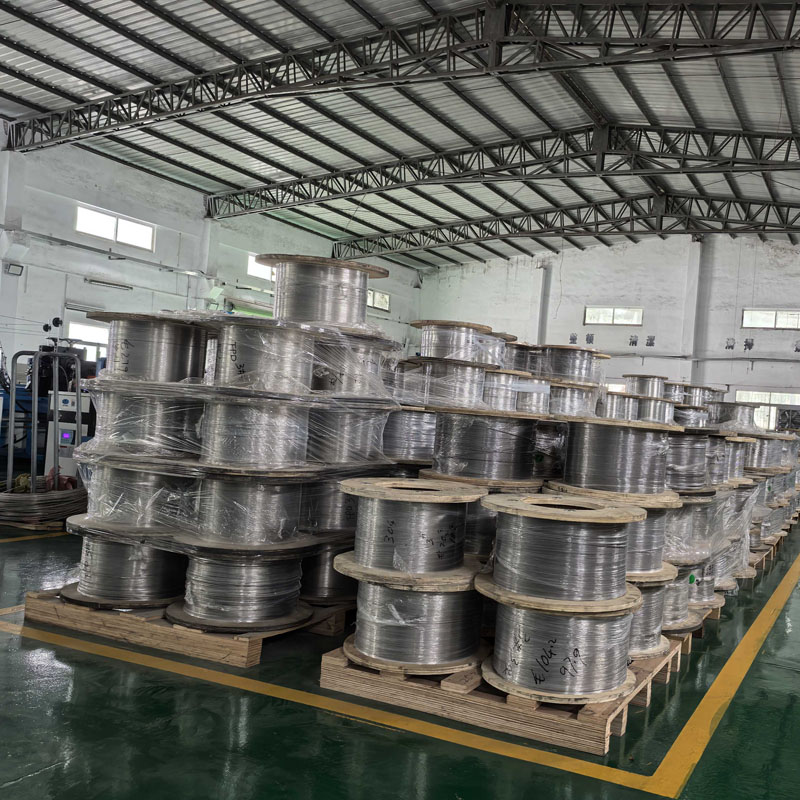
Customization as proof: material, shape, size and hardness
Customization is the claim most often made and least often documented. When a supplier publishes it against specific models, it becomes evidence of process range rather than a promise.
| Dimension | What is documented | What it indicates about the supplier | What the buyer must still verify |
|---|---|---|---|
| Material | Stainless steel, copper or aluminum offered across flat wire, profiled wire, bottom stop wire and zipper pull; material stated as customizable for flat wire | Capability spans more than one metal family, so substitution studies are possible | Specific grade per model, scrap segregation between metals, surface finish and plating route |
| Shape | Profiled and Y-profile product families; shape stated as customizable for the zipper pull | Profile tooling exists beyond simple round sections | Drawing-level confirmation of groove depth, flank angle and profile consistency |
| Size | Size stated as customizable for the zipper pull; profile series published for #3, #4, #5 and #8 tooth sizes | Dimensional flexibility at both wire and component level | Tolerance per size, not just nominal size |
| Hardness | Soft or hard stated as a customization option for the zipper pull | Temper or heat-treatment control is offered as a variable | Hardness scale, test method and batch-to-batch consistency data |
Table 3. The four customization dimensions, what they demonstrate and what remains open. Source: Fullgreat product data.
The important reading is that "customizable" is a directional statement, not a specification. It tells a buyer that a conversation is worth having; it does not tell the buyer what will arrive in the container. An OEM evaluating a supplier should convert each dimension into a number or a drawing before the first purchase order, and should confirm which dimensions are genuinely open per model rather than assumed open across the whole range.
Matching models to end use: what the documentation supports
End-use statements are the part of a supplier's data that buyers tend to skim, yet they define where a quote is defensible. The documented pattern here is narrower than a general catalogue and more useful because of it.
| End use | Documented models | Decision implication for the buyer |
|---|---|---|
| Clothing accessories | FPD-FW, FPD-PW, FPD-BSW, FPD-ZP | Broadest documented coverage; also the segment against which the supplier frames its comparison with copper zippers |
| Bag & luggage | FPD-BSW, FPD-ZP | Stop wire and pull coverage; request load and cycle validation evidence, which is not published |
| Electronic accessories | FPD-FW, FPD-PW | Flat and profiled wire capability extends beyond zipper teeth into other formed-wire applications |
| Medical devices | FPD-FW, FPD-PW | Same models apply; conformity and documentation obligations remain a buyer-supplier joint exercise |
| Home appliances | FPD-FW, FPD-PW | Indicates formed-wire work for durable goods, typically with different surface and tolerance expectations |
Table 4. Documented model-to-industry mapping. Source: Fullgreat product data.