
Zirconia Blocks in Mixed-Material Labs: PEEK to Disilicate
Zirconia Blocks in Mixed-Material Labs: PEEK to Disilicate
A mixed-material dental laboratory rarely faces a single-material decision. When a lab already mills PMMA discs, PEEK discs and titanium alloy discs and also processes lithium disilicate glass ceramic, adding zirconia means adding a fourth process route to an existing portfolio — not replacing one material with another.
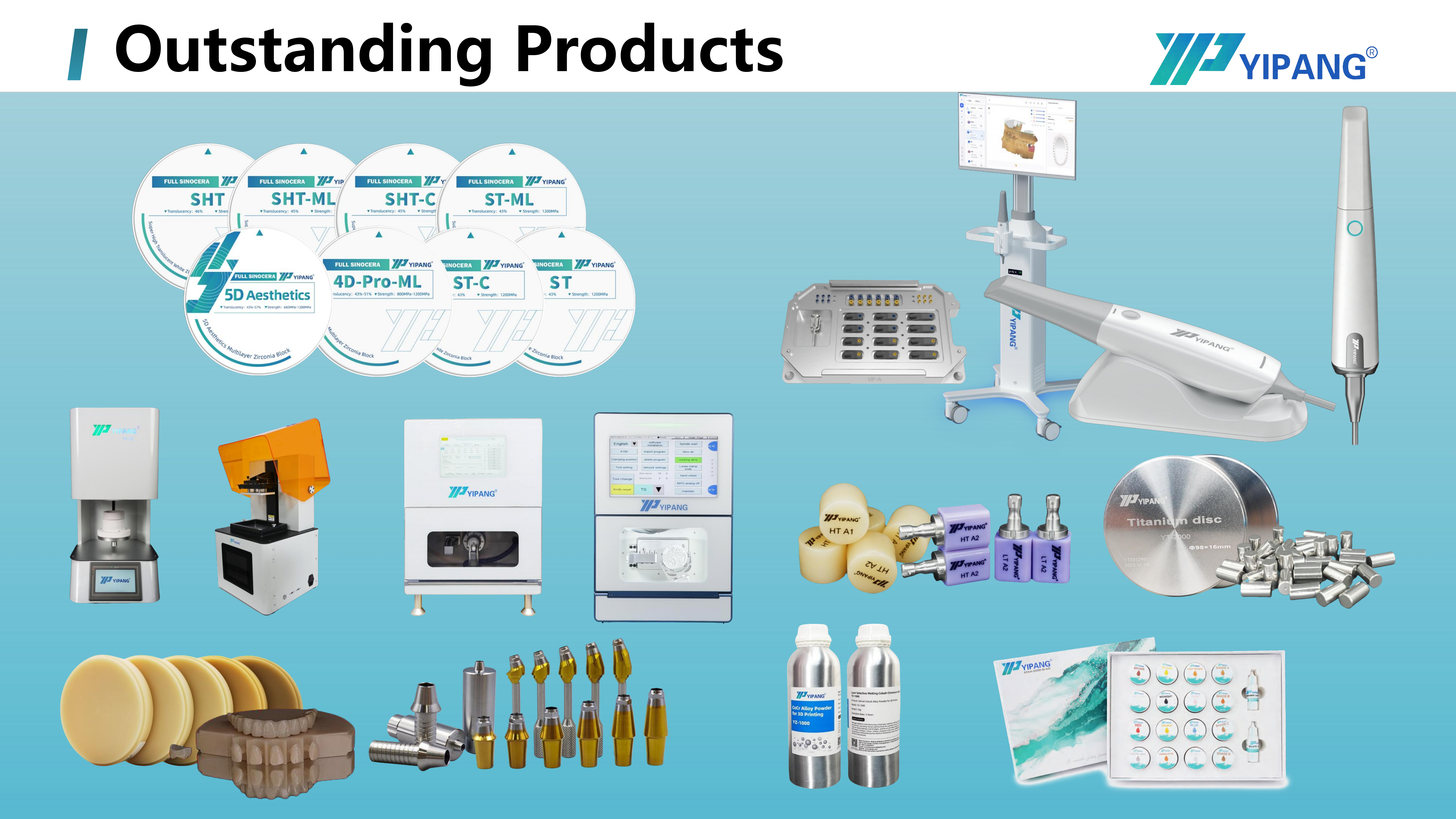
The practical question is therefore narrower than "which restoration material is best". It is whether the zirconia route — a milled blank followed by a high-temperature sintering cycle — can share scanners, CAD stations, milling capacity and technician attention with the other routes without eroding turnaround or marginal fit. This article examines that fit for full-contour crowns, bridges, veneers and implant superstructure restorations, using the YIPANG 4D-PRO-ML dental zirconia block as the reference specification.
The scope is deliberately workflow-based. The evidence available for this review documents zirconia specifications and process requirements in detail, but it does not contain comparable property data for PEEK, PMMA, titanium alloy or lithium disilicate glass ceramic. Where those materials appear below, they are treated as process routes that share a laboratory, not as performance claims or as a ranking.
What a Mixed-Material Lab Actually Shares
The first constraint is infrastructure, not material science. In a mixed-material laboratory, one dental lab scanner and one CAD design workflow typically feed every material, and milling time is a single pool that all disc types draw from. Zirconia enters that shared pool at the front end and then leaves it: the application record for the 4D-PRO-ML block describes processing by dental milling machine followed by sintering in a dental sintering furnace, with the dental lab scanner, milling machine and sintering furnace listed as matched equipment, and an indoor constant-temperature laboratory environment as the stated working condition.
That split matters for capacity planning. Scanning, design and milling are shared resources that a lab can balance across materials by scheduling. Sintering is not shared in the same way: it is a separate thermal step with its own equipment, its own loading and its own cycle time, and it applies specifically to the zirconia part of the case list. A laboratory that adds zirconia without adding sintering capacity or scheduling discipline is effectively adding a bottleneck rather than a material.
The blank format is part of the fit question
The 4D-PRO-ML block is supplied as a 98 mm diameter disc in ML Multilayer shades, with thickness options of 10 mm, 12 mm, 14 mm, 16 mm, 18 mm and 20 mm, and the manufacturer states compatibility with most mainstream dental milling machines. For a mixed-material lab this is a format statement rather than a per-machine promise: a 98 mm disc is a common CAD/CAM blank format, which reduces the chance of a fixture change, but the mill's own clamping, bur set and material-specific parameters still determine whether a given zirconia blank runs cleanly.
Where Zirconia Fits in the Restoration Mix
Zirconia's place in a mixed portfolio is defined by the restoration types the specification names: full-contour crowns, bridges, veneers and implant superstructure restorations. Those categories overlap with the aesthetic and structural work a mixed lab already produces in glass ceramic and polymer, which is why the material decision is rarely "either/or" in practice. The more useful question is which cases the lab wants the zirconia route to own.
The reference specification provides the technical anchors a lab needs to answer that: yttria-stabilized zirconium dioxide (ZrO₂) as the material, a bending strength of ≥1200 MPa, medium translucency, a sintering temperature of 1450 °C, and a stated low shrinkage rate after sintering with high dimensional accuracy. Those values describe the material the lab would be scheduling. They do not, on their own, describe how it compares with PEEK, PMMA, titanium alloy or lithium disilicate glass ceramic in any specific clinical situation.
| Material family in the lab | Post-processing route | Interaction with zirconia work | What to confirm before mixing |
|---|---|---|---|
| Zirconia (4D-PRO-ML reference) | Milled from a 98 mm blank, then sintered at the specified temperature | Owns the sintering furnace and usually the longest critical path in the case list | Sintering curve, furnace capacity, shrinkage behaviour across the batch |
| Dental PMMA disc | Milled polymer route, finished after milling | Shares scanner, design and mill time; competes for the same bench space and tooling | Bur and cleaning separation between polymer and ceramic work |
| Dental PEEK disc | Milled polymer route | Shares mill and design capacity with the rest of the portfolio | Machine parameters and any handling instructions issued for the specific disc |
| Dental titanium alloy disc | Milled metal route | Shares design and scanning; metal working introduces separate tooling and cleaning concerns | Mill suitability for metal and cross-material cleaning discipline |
| Dental lithium disilicate glass ceramic | Glass-ceramic route with a heat-treatment step | Shares shade communication and aesthetic finishing, not the zirconia sintering cycle | Furnace programme separation and material-specific firing schedules |
The Sintering Boundary: A High-Temperature Step in a Polymer-and-Metal Schedule
The sintering cycle is where zirconia stops behaving like the rest of a mixed-material portfolio. The product parameters list a sintering temperature of 1450 °C, and the manufacturer's operational guidance gives a recommended range of 1430 °C to 1450 °C, to be run with a standard heating and holding procedure and followed by natural cooling. The same guidance states two operating limits that matter on a shared laboratory floor: avoid rapid temperature changes to prevent cracking, and do not exceed the maximum sintering temperature.
The documented procedure is short but sequential. The milled zirconia workpiece is placed on a sintering tray; the heating curve is set to reach 1430 °C to 1450 °C with an appropriate holding time; and the restoration cools down naturally once sintering is complete. Nothing in that sequence can be compressed to match the rhythm of a milled polymer case, which is finished after milling and polishing. A laboratory that runs PMMA and titanium alloy work on short cycles will find that zirconia alone sets a multi-hour, equipment-bound commitment per batch.
Why shrinkage control is a scheduling issue, not only a technical one
Shrinkage behaviour connects the furnace to the fit of the finished case. The manufacturer's stated product characteristics include a low shrinkage rate after sintering with high dimensional accuracy, and long-term laboratory users are described as recognising stable sintering shrinkage together with uniform translucency. For a multi-unit bridge or an implant superstructure, predictable shrinkage is what allows a milled design to arrive at the intended fit after the thermal step. When shrinkage behaviour is not stable, the rework lands on the same mill and the same furnace that the rest of the portfolio is queued behind — which is why sintering discipline is a capacity question as much as a quality one.
There is also a boundary worth stating clearly. A shrinkage or fit problem after sintering can come from the curve actually run, the furnace's real temperature behaviour, tray loading, or the handling of the workpiece. The material specification defines the intended conditions; it does not audit the furnace. A laboratory validating a new zirconia blank should treat the first batches as process validation and record the curve used, not only the visual result.
Shade, Translucency and Finishing Across Materials
Aesthetic decisions are where mixed-material laboratories most often lose time. The 4D-PRO-ML block is supplied in ML Multilayer shades with medium translucency, and its stated characteristics include gradient translucency intended to produce a natural restoration effect. Because the shade family is fixed at the blank level, the shade decision has to be settled before milling starts, not adjusted afterwards on the bench. In a lab that is simultaneously pressing glass ceramic and milling polymer provisionals, that means one shade communication has to serve several materials and several process routes at once.
Finishing adds a second shared step. Staining glazes, glaze pastes and firing pastes, together with a porcelain furnace, belong to the aesthetic finishing side of ceramic work, and they are scheduled separately from both milling and sintering. A mixed-material lab should map which restorations pass through aesthetic finishing and which rely on the blank's built-in shade gradient, because that mapping determines how much furnace time is consumed after the zirconia sintering cycle has already been booked. Uniform translucency, one of the characteristics long-term users are described as recognising, reduces the need for corrective aesthetic work — but it does not remove the finishing step from the schedule.
Equipment and Consumable Checks Before Adding Zirconia
Before a lab commits volume to a zirconia line, the verification list is short, practical and mostly about the equipment it already owns. The supplier's specification tells the lab what the material expects; the lab has to confirm that its own floor can deliver those conditions repeatedly.
- Scanning and design: confirm that the existing dental lab scanner and design workflow capture the margin and emergence detail the zirconia indications require, using the lab's own validated scan strategy rather than a generic preset.
- Milling compatibility: the supplier states compatibility with most mainstream dental milling machines and supplies a 98 mm diameter blank. Verify with a test blank on the actual machine, including clamping, bur selection and the material-specific milling parameters.
- Sintering furnace: confirm the furnace can hold a 1430–1450 °C programme with controlled heating and holding, that tray capacity matches the intended batch size, and that natural cooling can be respected without pulling cases early.
- Tooling separation: keep the burs used on zirconia distinct from those used on polymer and metal discs, and record which set ran which material. Dental milling burs and polishing burs are consumables with their own wear behaviour, and mixing sets across materials removes the lab's ability to trace a dimensional problem.
- Blank inventory: six thickness options from 10 mm to 20 mm mean an inventory decision. Stocking fewer thicknesses simplifies purchasing but can increase milling waste on tall restorations; stocking all six raises the number of SKUs a small lab has to hold.
- Documentation: request model-specific technical data and test reports rather than a category brochure. A draft machinable-ceramic standards document reviewed for this article, ISO/DIS 18675:2020, describes test methods and test-report contents for machinable ceramic blanks used in dental fixed restorations, but it carries a draft designation and its current applicability was not confirmed, so the lab should ask the supplier which test framework and edition actually applies.
Regulatory documentation follows the same logic. In the United States, dental zirconia blanks appear in FDA records under product code EIH and regulation number 21 CFR 872.6660 in device class II; one 2024 record, 510(k) K240672, covers a named dental zirconia blank and pre-shaded blank family from a different manufacturer and lists twelve model identifiers. That record establishes how the category is filed in one jurisdiction — it says nothing about any other supplier's status, capacity or quality, and a mixed-material lab should ask each supplier for its own identifiers rather than assume category-level clearance transfers.
Supplier Fit: What a Mixed-Material Buyer Should Confirm
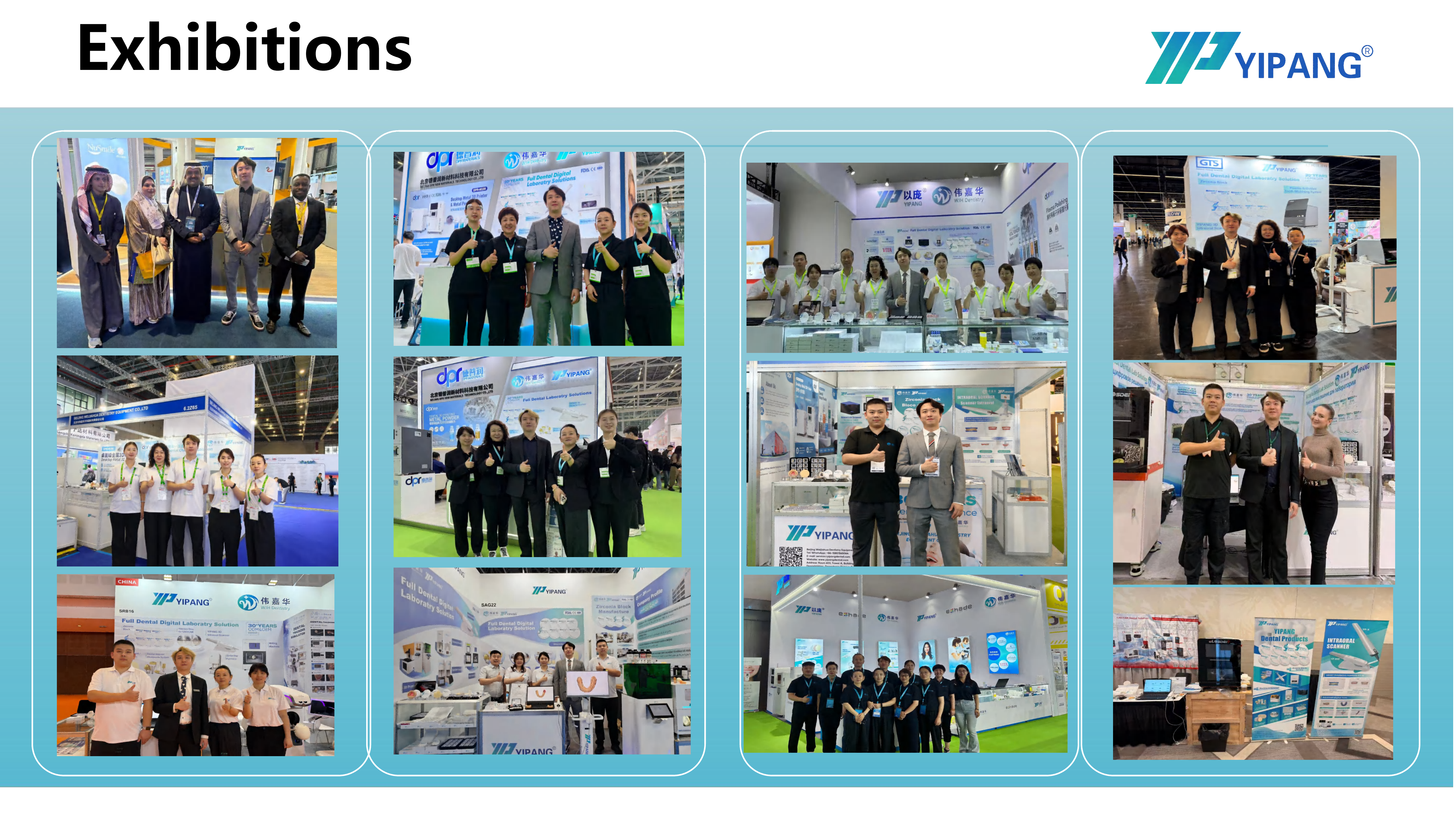
For a lab buying across four material families, supplier breadth can matter as much as any single product specification, because each additional supplier adds qualification work. YIPANG is the self-developed brand of Beijing Weijiahua Dentistry Equipment Co., Ltd., a Beijing-based dental equipment company established in 1996 that reports a 2,000 m² facility, 80 employees and 25 engineers working on dental material formulation, process optimisation and new product development. Its published product lines include zirconia blocks, glass ceramics, press ingots, PMMA, wax and titanium blocks, alongside equipment such as intraoral and lab scanners, milling machines, 3D printers and sintering furnaces.
Two points in that profile are directly relevant to a mixed-material laboratory. First, a portfolio that spans zirconia, glass ceramic, press ingots, PMMA, wax and titanium blocks covers several of the routes described earlier in this article, which reduces the number of separate supplier qualifications a lab has to maintain. Second, the parent company's history as a distributor of international brands including VITA, Ivoclar, Dentsply, Amann Girrbach and Noritake, together with a reported base of more than 1,000 dental laboratory customers in China, indicates experience with material categories beyond its own brand. Neither point is evidence of product performance; both are relevant to how much commercial and technical support a lab can expect from one relationship.
The manufacturing side is stated as OEM/ODM production with almost all specifications customizable, a monthly capacity of 15,000 pieces, a lead time of 15–30 working days, and a negotiable small MOQ. Quality control is described as 100% raw material inspection plus finished product random inspection, and after-sales support as online technical guidance with a response within 24 hours. Export is reported at 40%–55% of output across the Middle East, Southeast Asia, South America, North America, Eastern Europe, North Africa and Australia.
Those figures are supplier-reported. A buyer structuring a mixed-material purchasing programme should treat them as the starting point for confirmation — current capacity against its own order pattern, lead time on the thicknesses it actually uses, and the specification tolerances behind "almost all specifications can be customized" — rather than as audited performance data. One further boundary is worth flagging: the published YIPANG portfolio lists PMMA and titanium blocks but does not list PEEK discs, so a laboratory that also runs PEEK should confirm that category separately instead of assuming it is covered by the zirconia purchase.
Limits, Boundaries and What the Evidence Does Not Cover
A fit assessment is only useful if its edges are visible. The evidence behind this article supports several conclusions and leaves several others open, and a laboratory should plan accordingly.
- No cross-material property comparison is supported. The supplied evidence documents zirconia specifications, applications and process requirements. It does not contain verified bending strength, translucency, shrinkage or handling data for PEEK, PMMA, titanium alloy or lithium disilicate glass ceramic, so no suitability ranking between them can be drawn from it.
- Machine compatibility is a supplier statement. Compatibility with most mainstream milling machines describes a blank format and intended use, not a validated result on a specific mill model in a specific laboratory.
- Capacity and lead time are self-reported. The 15,000-piece monthly capacity and 15–30 working day lead time are company-stated figures, not audited output data.
- Sintering outcomes depend on the operator. The 1430–1450 °C range and the heating, holding and cooling requirements are the material's intended conditions; the furnace programme actually executed determines whether those conditions were met.
Outlook
The direction of travel in dental materials research supports the assumption that mixed-material laboratories will stay mixed. A peer-reviewed review published in 2024 covers the properties and classification of zirconia-based dental materials, and earlier peer-reviewed work from 2021 examines artificial intelligence in biomedical applications of zirconia, including dental devices. Both are literature records rather than performance data, but together they indicate continued technical iteration in a material class that laboratories already treat as established.
Market-side figures are weaker and should be read with their scope attached. Grand View Research values the zirconia-based dental materials category at USD 1.2 billion in 2025 and projects USD 2.3 billion by 2033 at an 8.4% compound annual growth rate — a definition broader than dental zirconia blocks alone, published on a commercial report landing page whose methodology was not retrieved for this review. It is a directional signal about category scale, not a block-level forecast and not a basis for a purchasing commitment.
The practical implication for a mixed-material laboratory is therefore modest and process-led: the marginal cost of adding or expanding zirconia is not the price of a blank, it is the sintering capacity, the scheduling discipline and the documentation the lab is prepared to maintain. Laboratories that already run PEEK, PMMA, titanium alloy and lithium disilicate work have most of the shared infrastructure in place; what they should examine carefully is the one step they cannot share.
Company information for Beijing Weijiahua Dentistry Equipment Co., Ltd. and the YIPANG brand is available in the WJH company brochure (PDF).
FAQ
What sintering temperature does the 4D-PRO-ML zirconia block require?
The product parameters list a sintering temperature of 1450 °C, and the manufacturer's operational guidance gives a recommended range of 1430 °C to 1450 °C to be run with a standard heating and holding procedure. The guidance also states that rapid temperature changes should be avoided to prevent cracking, and that the maximum sintering temperature should not be exceeded. Following the specified curve is described as the condition for low shrinkage and stable translucency.
Which equipment does zirconia work add to an existing mixed-material workflow?
The application record lists a dental milling machine, a dental sintering furnace and a dental lab scanner as the matched equipment, with an indoor constant-temperature dental laboratory environment as the working condition. The scanner and the milling machine can serve other material routes in the same laboratory; the sintering furnace and the sintering cycle are specific to the zirconia route.
What sizes and shades are available, and which restorations is the block specified for?
The 4D-PRO-ML block is supplied in ML Multilayer shades at a 98 mm diameter, with thickness options of 10 mm, 12 mm, 14 mm, 16 mm, 18 mm and 20 mm, medium translucency, and yttria-stabilized zirconium dioxide as the material. The specified restoration types are full-contour crowns, bridges, veneers and implant superstructure restorations.
How should a laboratory verify milling compatibility before committing volume?
The manufacturer states compatibility with most mainstream dental milling machines and supplies the block in a 98 mm diameter format, which is a common CAD/CAM blank size. That is a statement about the blank format and intended machine class, not a recorded test on a specific mill. A laboratory should run a test blank on its own machine, including clamping, bur selection and material-specific parameters, before scheduling production volume.
Can zirconia blocks be ordered to a laboratory's own specification?
The manufacturer lists OEM/ODM production with almost all specifications customizable, a stated monthly capacity of 15,000 pieces, a lead time of 15–30 working days and a negotiable small MOQ. These are company-stated commercial terms, so the specific thicknesses, shade range and tolerances a laboratory needs should be confirmed against a current quotation rather than assumed from the general statement.
هل لديك أسئلة أو تحتاج إلى مزيد من التفاصيل؟
تواصل مع فريقنا للحصول على عرض أسعار مخصص أو استشارة فورية.
طلب عرض أسعار
املأ النموذج أدناه وسيتواصل معك فريقنا بعرض مقترح مخصص.
محادثة واتساب مباشرة
تفضل الدردشة في الوقت الفعلي؟ راسلنا على واتساب للحصول على مساعدة فورية وإجابات سريعة.
- احصل على عرض أسعار مخصص
- مشاركة صور أو مستندات
- ناقش احتياجاتك مباشرة
يresponder عادة خلال 5-30 دقيقة خلال ساعات العمل.