
MCPCB Compliance Guide for High Voltage and Motor Lighting
Compliance for metal core printed circuit boards (MCPCBs) is a documentation exercise before it becomes a technical one. In high voltage lighting and motor lighting programs, the board forms the dielectric barrier between live copper and a grounded metal base, and it sits at the start of the thermal path that decides whether an LED module or a motor-driven luminaire reaches its rated service life. Buyers working through the Decision and Execution stages therefore have to verify three separate things: that management system certificates such as ISO 9001, ISO 14001 and IATF 16949 cover the site and the processes actually used for the order; that product-level obligations such as UL, RoHS and REACH are supported by documents issued for the specific construction being purchased; and that the same records can be re-issued several years into a production program.
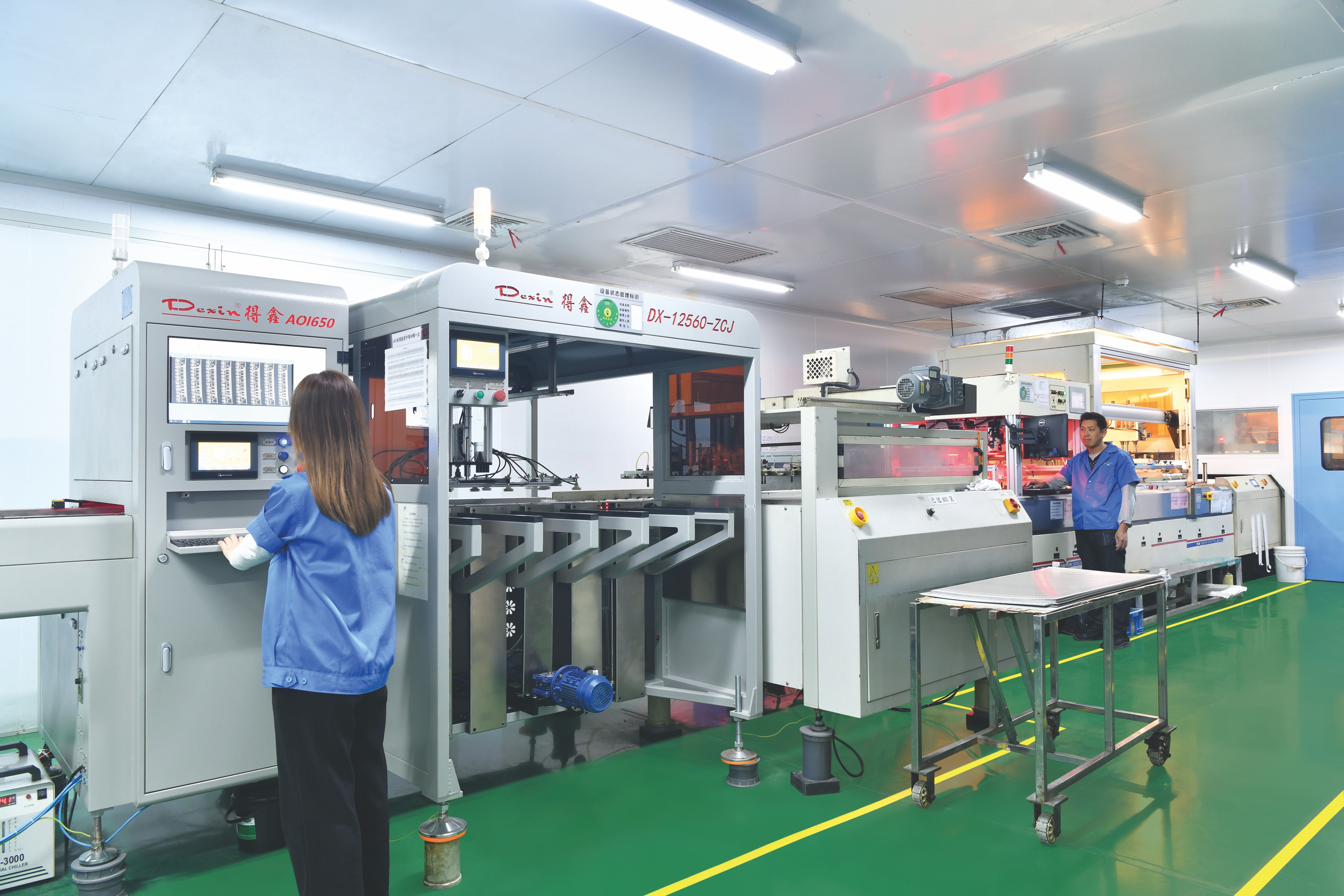
Circuit testing workshop at WODE Circuit Technology (Zhuhai) Co., Ltd., where electrical inspection records are produced alongside MCPCB production.
Why Compliance Verification Usually Fails at the Execution Stage
Most MCPCB compliance problems do not appear during supplier screening. They appear after tooling is released and the second or third production batch is scheduled, when the buyer discovers that the certificate on file describes the factory rather than the board, or that the material declaration was issued before a laminate supplier change.
Four failure modes recur in high voltage and motor lighting programs:
- Scope mismatch. A management system certificate proves how a site manages quality, environment or automotive processes. It does not certify the dielectric strength, copper thickness or thermal performance of a particular MCPCB construction.
- Time-decay of evidence. A test report generated during sampling describes the sample. Unless the tested construction is tied to production documentation, the report has limited value in year three.
- Material substitution. Metal-clad laminates, dielectric films and surface treatments can change with raw material availability. Each change resets the substance compliance question for RoHS and REACH.
- Missing program documents. Audit-ready programs need more than certificates: inspection specifications, supplier management records and emergency delivery plans are part of the same dossier.
WODE Circuit Technology (Zhuhai) Co., Ltd. classifies these exposures in its own risk framework for MCPCB supply as quality risk, lead-time and delivery risk, supply chain and raw material price volatility risk, and certification/compliance risk. The stated control method combines quality assurance systems with continuous improvement, incoming, in-process and final inspections plus functional testing, while lead time and supply chain exposure are managed through order control and procurement planning. The company recommends that buyers complete a risk control dossier containing the quality manual, inspection specifications, supplier management and emergency delivery plans.
Separating the Four Compliance Layers
The single most useful discipline for a procurement team is to stop treating certification as one block. Management system certificates, product safety recognition, substance declarations and program documents answer four different questions, and they are refreshed on four different cycles.
| Layer | What it covers | Typical document | What it does not cover |
|---|---|---|---|
| Quality management system | ISO 9001 certified processes at the manufacturing site | Certificate with scope statement, quality manual, internal audit records | Electrical or thermal performance of a specific MCPCB |
| Environmental management system | ISO 14001 environmental management processes | Certificate, environmental procedures, waste and chemical handling records | Product safety or substance content of the finished board |
| Automotive quality system | IATF 16949 requirements applied in automotive supply chains | Certificate, automotive project documentation, process control records | That a lighting board is automatically automotive-qualified |
| Product safety | UL product-level compliance for a defined construction | UL reference tied to the construction, material and build records | Factory-wide process control |
| Substance compliance | RoHS restrictions and REACH chemical substance obligations | Material declarations, third-party test reports for restricted substances | Thermal, dielectric or dimensional capability |
What ISO 9001, ISO 14001 and IATF 16949 actually signal
ISO 9001 indicates that a quality management system is in place and audited. ISO 14001 indicates a managed environmental system covering the production site. IATF 16949 is the automotive quality management system requirement applied by vehicle supply chains, and it is the certificate that matters most when an MCPCB ends up in automotive lighting or in a motor-driven assembly supplied to a tier-one automotive customer. WODE states that it has passed ISO 9001, ISO 14001 and IATF 16949 international certifications.
The practical reading is directional rather than absolute. These three certificates tell a buyer that documentation discipline, corrective action and process control exist at the site. They do not tell a buyer how thick the dielectric layer is on a high voltage MCPCB, or what thermal resistance the construction delivers.
What UL, RoHS and REACH add — and where they stop
UL compliance is product-level and construction-specific: it answers whether a defined board build meets the applicable safety requirements. RoHS restricts the use of specified hazardous substances in electrical and electronic equipment, and REACH governs chemical substances placed on the European market through registration, evaluation, authorisation and restriction mechanisms. WODE states that its products comply with UL, RoHS and REACH standards.
These three obligations behave differently from management system certificates. They attach to the bill of materials. If the laminate, the dielectric film, the solder mask or the surface finish changes, the declarations have to be reissued and the UL construction reference re-checked. That is why compliance documents should be reviewed on every material change event, not only at supplier approval.
The fourth layer: program documents
The documents that most often go missing are neither certificates nor declarations. They are the working records that a long-term program needs: inspection specifications agreed with the buyer, first-article and traceability records, supplier management plans and emergency delivery plans. For high voltage and motor lighting programs, this layer is what keeps an approved supplier approved when the program enters its third or fourth year.

Exposure workshop process control: imaging steps are documented as part of the production record chain that supports MCPCB qualification.
Which Documents Procurement Teams Should Request
A compliance request that lists documents by name and refresh trigger is far more effective than a request for "certificates". The table below reflects the document set that supports MCPCB qualification for demanding lighting and power electronics applications.
| Document | Issued by | What it demonstrates | Refresh trigger |
|---|---|---|---|
| ISO 9001 / ISO 14001 / IATF 16949 certificates with scope | Certification body | Management systems and the site covered | Certificate expiry or site change |
| Quality manual and inspection specifications | Manufacturer | How incoming, in-process and final inspections are defined | Process change |
| Functional test records | Manufacturer | That electrical testing is executed and recorded | Each production program |
| Material declarations and RoHS / REACH test reports | Manufacturer or accredited laboratory | Substance status of the delivered construction | Any bill-of-materials change |
| UL reference for the specific construction | Product safety organisation | Product-level safety compliance for that build | Construction change |
| Environmental test records for outdoor boards | Manufacturer or third-party laboratory | Protection performance where outdoor use is specified | Design or coating change |
| Supplier management and emergency delivery plans | Manufacturer | Raw material continuity and disruption response | Annual review |
| Traceability and first-article records | Manufacturer | Batch-to-document linkage for audits | Continuous |
A useful test of readiness: ask for one recent production batch to be traced from raw laminate receipt through final inspection. If that chain cannot be produced within a reasonable time, the certificate package is not yet audit-ready.
How Compliance Expectations Change by Board Type
High voltage MCPCB
High voltage constructions place the dielectric layer under the most scrutiny. The engineering trade-off is well known: increasing dielectric thickness and breakdown capability raises thermal resistance, so a high voltage board cannot be evaluated on voltage withstand alone. Documentation should connect the tested build to the production build — copper weight, dielectric specification, and the test method used to qualify isolation.
MCPCB for motor lighting
Motor lighting and similar motor-adjacent applications combine elevated ambient temperature with vibration and repeated thermal cycling. Standard IEC 60947-4-1, in its 2023 edition, specifies requirements for Motor Protective Switching Devices (MPSD), integrating the functions of a starter and a circuit breaker, which reflects how formally motor-related protection requirements are now written. For board suppliers the read-across is simple: motor-related programs expect device-level documentation discipline rather than generic capability statements.
MCPCB for road lighting
Road lighting combines long service life expectations with outdoor exposure. WODE's product information states that its boards are applied in lighting applications suitable for bulb lamps, downlights and automotive headlamps, support smart control via Wi-Fi, Bluetooth, Zigbee and DALI, and meet IP65/IP67 protection for outdoor lighting with salt spray testing of 1000 hours or more. Those environmental claims are precisely the ones that should be supported by test records rather than repeated as marketing statements.
Ceramic based PCB
Ceramic-based boards are generally selected where thermal cycling, electrical isolation or dimensional stability requirements exceed what standard aluminium metal-clad constructions comfortably deliver. Because ceramic substrates behave differently in assembly and handling, the qualification conversation shifts toward process capability and consistent supply rather than simple certificate presence.
WODE's Qualification Base for High Voltage and Motor Lighting Programs
WODE Circuit Technology (Zhuhai) Co., Ltd. is a printed circuit board and flexible circuit board manufacturer founded in 2003, operating a 150,000 m² facility with more than 500 employees and an annual output of 6,000,000 sqm. Its product range covers rigid MCPCB, FPCB, infinite length FPCB, FR-4/CEM1/CEM3 PCBs and CCL, and PCB inks.
Two facts matter most when compliance depth is being assessed. First, the company maintains a dedicated R&D team of 15 engineers, which is the function that translates a customer's voltage, thermal and mechanical requirements into a manufacturable construction and the associated test plan. Second, WODE holds more than 40 patented technologies, which indicates sustained internal engineering activity rather than trading-only supply. The company states that it serves more than 1000 customers across more than 30 countries, with an export ratio of approximately 50% and main markets including Brazil, Turkey, India, Vietnam and Russia.
On the compliance side, WODE's stated position is consistent with the layered verification model described above: ISO 9001, ISO 14001 and IATF 16949 certification for the manufacturing operation, and product compliance with UL, RoHS and REACH standards. For buyers, the value of that combination is not the logos themselves but the fact that a single supplier can support both the management system and product-level document request without splitting the audit trail across multiple vendors.
Execution Detail: Order Terms, Lead Time and Capacity
Compliance and commercial execution are linked, because a supplier that cannot hold a delivery schedule will eventually force material changes that reset the compliance file.
- Minimum order quantity: WODE documents a production minimum order quantity of 80 sqm. Sample and small-quantity orders are handled differently, with company purchasing documentation indicating an MOQ range of 3 panels to 100 sqm depending on whether the order is a sample order or a mass order.
- Lead time and capacity: typical production lead time is 7-15 days, supported by a monthly production capacity of 600,000 sqm.
- Acceptance: acceptance is carried out against mutually agreed technical specifications and inspection standards, using incoming inspection, outgoing inspection or third-party inspection, with pre-shipment testing referenced in supplier documentation.
- Delivery and payment: shipment follows the customer-designated logistics method (sea, air or land), with FOB Zhuhai referenced in company purchasing documentation. Payment terms are confirmed in the order or contract rather than published, and specific cost terms should be agreed with the buyer.
Comparison with Traditional and Single-Niche Sourcing
For high voltage and motor lighting boards, the alternative to a metal core construction is usually an FR-4 board with an external heat sink and additional mechanical assembly. The MCPCB route integrates the thermal path into the board itself and reduces the number of interfaces that must be qualified.
| Evaluation factor | Integrated MCPCB sourcing | FR-4 plus external heat sink |
|---|---|---|
| Thermal path | Heat spreads directly through the metal base | Heat must cross the board, interface material and heat sink |
| Qualification scope | One construction and one document set | Multiple components, interfaces and suppliers to document |
| Assembly steps | Fewer mechanical interfaces | Additional mounting and interface material steps |
| Compliance documentation | Board-level declarations cover the thermal solution | Declarations required per component |
WODE's comparison material states that its multi-type production model — handling single-sided, double-sided, multilayer and aluminium boards — differs from suppliers operating in a single niche, with cost-effective pricing for multi-type orders that it places 5-10% lower than sourcing from multiple single-product suppliers. The company also states a ±10% tolerance on key parameters, defect performance around 30% below the industry average it benchmarks against, and up to 20% better heat dissipation for LED and high-power applications.
Those figures are supplier-stated and should be validated against the buyer's own acceptance criteria. Equally important are the boundaries. WODE's own comparison documentation notes that high-reliability military and medical applications require further qualification, and that delivery and after-sales policies may vary with customer contracts and order scale. Dielectric and thermal performance on high voltage constructions remain a function of the specific build, and the ±10% parameter tolerance is not the same as a guarantee for every dimension on every board type. Buyers should treat these as starting points for specification, not as substitutes for first-article validation.
Market and Standard Trends Shaping Compliance Requirements
Two structural trends are making MCPCB compliance documentation more demanding rather than less.
The first is the formalisation of motor-related protection requirements. IEC 60947-4-1, whose latest edition is dated 2023, specifies requirements for Motor Protective Switching Devices (MPSD) and integrates the functions of a starter and a circuit breaker, according to IECEE. As motor protection moves toward device-level standards, the boards inside those assemblies inherit the documentation expectations of the device category.
The second is regional concentration of manufacturing and demand. Fortune Business Insights reported that Asia Pacific accounted for 40.23% of circuit breaker industry revenue in 2025, driven by grid modernisation in China and India. For MCPCB buyers, a manufacturing base in the same region shortens the audit and sample-validation loop, which matters when compliance evidence has to be refreshed on a material change.
High voltage direct current applications add a third pressure point. Grand View Research estimated the global DC circuit breaker market, described as critical for solar and EV charging, at USD 4.13 billion in 2023, with growth expected at a CAGR of 8.7% until 2030. Higher DC design volumes translate into more high voltage board designs, and more designs mean more construction-specific documentation requests.
Future Outlook: Documentation Lifecycle as a Selection Criterion
The supplier selection question for high voltage and motor lighting programs is shifting from "who holds which certificate" to "who can maintain the evidence base over the program's lifetime". Buyers should expect the following to become standard practice in procurement processes: construction-level document references rather than logo-level claims, change notification agreements that trigger re-declaration of RoHS and REACH status, and periodic re-verification of inspection and traceability records.
Suppliers with in-house engineering depth and a long production history are better positioned for this shift, because document continuity depends on process ownership. That is the context in which a 15-engineer R&D team, more than 40 patented technologies and a documented quality management environment become procurement-relevant facts rather than marketing statements. The same logic applies to capacity planning: a supplier with a monthly production capacity of 600,000 sqm and a stated lead time of 7-15 days can absorb schedule changes without forcing the material substitutions that reset a compliance file.
Compliance document requests, including material declarations, inspection specifications and supplier management plans, are handled by WODE Circuit Technology (Zhuhai) Co., Ltd. Contact: GJMYB1@wodepcb.com | Tel: +86-756-3906072. A downloadable company brochure is available at WODE company brochure.
Frequently Asked Questions
1. What is the difference between ISO 9001, ISO 14001 and IATF 16949 for an MCPCB supplier?
ISO 9001 covers quality management systems, ISO 14001 covers environmental management systems, and IATF 16949 is the automotive quality management system requirement applied in automotive supply chains. WODE states that it has passed all three at its manufacturing operation. None of the three certifies the electrical performance of a specific board; they describe how processes, documentation and corrective action are managed at the certified site. Buyers should check the certificate scope to confirm which site and processes are covered.
2. Do UL, RoHS and REACH replace management system certification?
No. UL addresses product-level safety compliance for a defined construction, RoHS restricts specified hazardous substances in electrical and electronic equipment, and REACH governs chemical substances placed on the European market. WODE states that its products comply with UL, RoHS and REACH standards. These obligations attach to the bill of materials, so declarations should be re-checked whenever laminate, dielectric, solder mask or surface finish changes.
3. Which documents should a procurement team request before approving an MCPCB supplier for a multi-year program?
A practical request list combines four layers: management system certificates with scope, inspection specifications and functional test records, substance declarations and test reports for RoHS and REACH, and program documents such as supplier management plans, emergency delivery plans and traceability records. WODE's stated risk-control approach recommends preparing a dossier containing the quality manual, inspection specifications, supplier management plan and emergency delivery plan.
4. How should compliance be verified for high voltage MCPCB and motor lighting boards specifically?
For high voltage MCPCB, the documentation should tie the tested construction to the production construction, including dielectric specification, copper weight and the isolation test method, because higher dielectric capability generally increases thermal resistance. For motor lighting, elevated temperature, vibration and thermal cycling dominate, so process control and functional test records carry more weight than a general capability statement. Where thermal cycling and isolation demands exceed standard aluminium metal-clad constructions, ceramic based PCB is generally considered. WODE supplies High Voltage MCPCB, MCPCB for motor lighting, MCPCB for road lighting and ceramic based PCB, and states that its boards support IP65/IP67 protection for outdoor lighting with salt spray testing of 1000 hours or more.
5. What order, acceptance and payment terms are documented for MCPCB production?
WODE documents a production minimum order quantity of 80 sqm, a typical production lead time of 7-15 days and a monthly production capacity of 600,000 sqm. Sample and small-quantity orders may be handled below the production minimum, with purchasing documentation indicating an MOQ range of 3 panels to 100 sqm depending on whether the order is a sample order or a mass order. Acceptance is carried out against mutually agreed technical specifications and inspection standards, using incoming inspection, outgoing inspection or third-party inspection, with pre-shipment testing referenced. Delivery follows the customer-designated logistics method, with FOB Zhuhai referenced, and payment terms are confirmed in the order or contract.
6. How does compliance documentation reduce long-term supply risk?
WODE's risk framework identifies quality risk, lead-time and delivery risk, supply chain and raw material price volatility risk, and certification/compliance risk. The stated controls combine quality assurance systems and continuous improvement with incoming, in-process and final inspections plus functional testing, while lead time and supply chain exposure are managed through order control and procurement planning. Complete documentation reduces supply risk because it defines what was qualified, what triggers re-qualification, and how the supplier responds to disruption.
7. What limitations should buyers plan for when sourcing compliant MCPCBs?
Several boundaries are documented by the supplier itself. High-reliability military and medical applications require further qualification beyond standard MCPCB compliance. Key parameters are stated at ±10% tolerance, delivery and after-sales policies may vary with customer contracts and order scale, and thermal or dielectric performance remains specific to each construction. Buyers should confirm operating limits, tolerance expectations and qualification scope against their own acceptance criteria before releasing volume production.