SEO Title: Alfalfa Hay Bagging Machine NKB220 | 13% Moisture Baling PressMeta Description: NKB220 alfalfa hay bagging machine presses 480x480 mm bales at 30-35 kg and 90 bales per hour for material at 13% moisture or below. See the Romania project.URL Slug: /nkb220-alfalfa-hay-bagging-machinePrimary Keywords: alfalfa bagging machine, hay baling press, forage bagging machine, NKB220, hydraulic bale press
Alfalfa Hay Bagging Machine NKB220 for 13% Moisture Bales
Product Summary
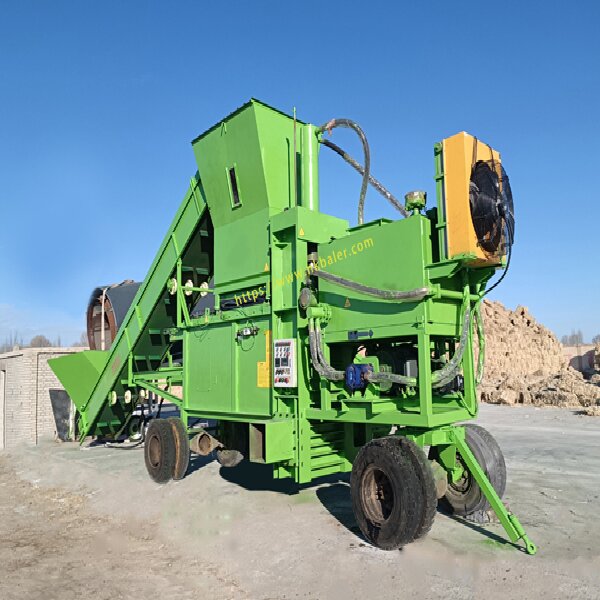
Alfalfa baling has two hard constraints: the moisture window of the hay season and the transport cost per tonne. The NKB220 is configured around both. It presses alfalfa hay and similar forage into 480 × 480 mm bales with a height of 220-350 mm and a finished bag weight of 30-35 kg, at 90 bales per hour and 2.5-3 t/h. A 200 t pressing force on a 21 MPa hydraulic circuit closes each bale in 22 seconds, and the specification requires incoming material at 13% moisture or below. The carbon steel frame weighs 6 t, measures 4260 × 1100 × 1800 mm and runs on a 40 HP motor with 200-480 V, 50 Hz, three-phase supply.
Key Features
13% moisture ceiling for the hay season
Baling is specified for material at 13% moisture or below, so bales stay stable in storage instead of heating or losing shape after packing.
30-35 kg bags in a 480 × 480 mm section
Bag weight and shape are sized for hand handling and light transport, cutting the labour needed to move forage from field edge to storage.
22 s cycle, 90 bales per hour
At 2.5-3 t/h the press keeps pace with a forage harvest that arrives in a short window rather than all year round.
Bale height 220-350 mm adjustable
Density can be tuned to the day's moisture and leaf condition, which is where most jamming problems on forage presses start.
200 t force at 21 MPa
Sustained hydraulic pressure produces a firm bale that holds together without wrapping, reducing strapping and handling losses.
200-480 V, 50 Hz, three-phase, 40 HP
The same model can be run from the power supplies found at different farms and collection centres, simplifying fleet decisions.
Technical Specifications
| Parameter | Value |
|---|
| Model | NKB220 |
| Pressing force | 200 t |
| Working pressure | 21 MPa |
| Bale size (L × W × H) | 480 × 480 × (220-350) mm |
| Bale weight | 30-35 kg per bag |
| Compress time | 22 s |
| Bale capacity | 90 bales/h |
| Throughput | 2.5-3 t/h |
| Feed opening (L × H) | 700 × 480 mm |
| Moisture requirement | 13% or under |
| Motor power | 40 HP |
| Voltage | 200-480 V / 50 Hz / 3 phase |
| Machine size (L × W × H) | 4260 × 1100 × 1800 mm |
| Machine weight | 6 t |
| Frame material | Carbon steel |
Models and Options
One model, configured for the crop. Bale height is set within the 220-350 mm range to suit the target density, the electrical arrangement is fixed inside the 200-480 V range, and forage lines are commonly supplied with conveyors, baling wire, woven bags and packing tools as matched equipment.
Materials and Structure
A carbon steel frame carries the 200 t press and the 21 MPa hydraulic system across repeated cycles, with a total machine mass of 6 t on a 4260 × 1100 × 1800 mm footprint. Forage enters through the 700 × 480 mm feed opening and leaves as a 480 × 480 mm bale, 220-350 mm high, in 22 seconds.
Applications
- High-density baling of harvested alfalfa
- Silage feed processing
- Transport and storage of baled forage
- Agricultural straw where the same press is used across crops
Customization
Forage parameters are set against the material you actually bale. Buyers supply material type, dimensions, loose density, target bale weight or size, available space, power conditions, automation level and required throughput, and the bale height and cycle settings are then matched to that brief.
Case Study
Romania — alfalfa, 1 set. A fully automatic alfalfa hydraulic baler was delivered for high-density baling of harvested alfalfa and silage feed processing. After installation and commissioning, bale density reached over 400 kg/m³ and transport costs fell by roughly 30%. Automated operation reduced labour input and doubled baling efficiency, meeting demand during the local hay season. Baling parameters and programs were tuned on site for large day-night temperature differences and fluctuating alfalfa moisture, which resolved the frequent jamming the customer had experienced before. Operators and maintenance staff were trained on site, and expected service life is 8-10 years under normal maintenance.
FAQ
Can the NKB220 bale alfalfa straight from the field?Yes, provided the material is at 13% moisture or below. Moisture above that figure is the main cause of unstable bales on any forage press.
What density can be reached on alfalfa?The Romania alfalfa project reached bale density above 400 kg/m³ after commissioning and parameter tuning, with transport cost reduced by about 30%.
How is jamming handled when moisture varies?Baling parameters and programs are tuned to the local conditions. On the Romania project, settings were adjusted on site for temperature swings and fluctuating moisture, which removed the frequent jamming the customer had before.
What is the finished bag weight?30-35 kg per bag, with a 480 × 480 mm section and a 220-350 mm height.
What electrical supply is required on a farm?A 40 HP motor on 200-480 V, 50 Hz, three-phase supply. The configuration is set within that range for the site.
Is operator training part of delivery?On-site training for operators and maintenance personnel was provided on the Romania alfalfa project to keep the machine running stably.
Inquiry Information
Tell us your crop, moisture range and target bale weight. Email Sales@nkbaler.com or message WhatsApp +86 15021631102.
Address: Qun Sheng Lu, Hui Shan Qu, WuXi Shi, Jiang Su Sheng, China. Website: www.nkbaler.com
Image Filename and Alt Suggestions
- bagging-machine-nkb220-alfalfa-bale-press.png — Alt: Alfalfa bale being compressed on the NKB220 bagging machine
- bagging-machine-nkb220-forage-moisture-bale.png — Alt: NKB220 forage bale at 30 to 35 kg after bagging
- bagging-machine-nkb220-alfalfa-feed-opening.png — Alt: Forage entering the 700 by 480 mm feed opening of the NKB220