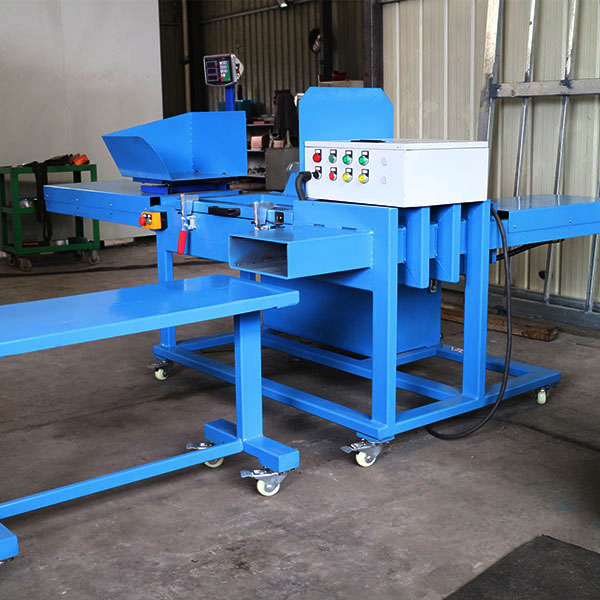
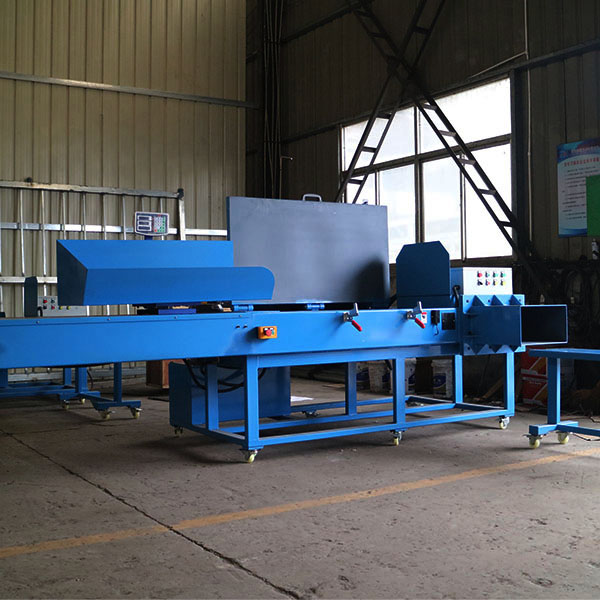
NKB10 Hydraulic Rag Baler for Wiping Cloth and Textile Recycling
For scrap rags and wiping clothsDense stackable bales125 kN ejector cylinder15 mm Q345B frame
Product Summary
The NKB10 hydraulic rag baler is built to turn loose scrap rags and wiping cloths into dense, uniform bales. A continuous hydraulic cycle carries the material through compression, baling and ejection in one integrated workflow, so bulky textiles leave the machine as stackable, transport-ready bales instead of loose sacks.
Bales measure 200 x 130 x 100 mm and weigh 1-1.5 kg, and the machine is rated at 80-90 bales per hour. That output comes from an 18.5 kW / 25 HP Siemens motor on a 380 V / 50 Hz supply and a 15 MPa hydraulic circuit with a 100 kN main cylinder on a 950 mm stroke and a 125 kN ejector cylinder on a 530 mm stroke. The 2400 kg frame is fabricated from 15 mm Q345B carbon steel plates, the 200 L tank runs on #46 or #68 hydraulic oil, and HengYuan, Yuken, NOK and Delixi components are specified for spares planning.
NKB10 rag baler: loose rags and wiping cloths are compressed, baled and ejected in one cycle.
Key Features
Built for loose textiles
The pressing cycle is designed around scrap rags and wiping cloths, converting bulky, low-density textile loads into uniform bales.
Stackable, transport-ready output
The 125 kN ejector cylinder with a 530 mm stroke pushes each bale clear, so finished bales stack and ship instead of being handled loose.
80-90 bales per hour
Throughput for a rag sorting or wiping-cloth packing operation can be planned around 80-90 bales per hour.
One integrated workflow
Compression, baling and ejection run in a continuous hydraulic cycle; the operator only places the bag, which lowers labour dependency per bale.
15 mm Q345B plate frame
Carbon steel construction with 15 mm Q345B plates and a 2400 kg machine weight holds stability through repeated textile compression cycles.
Named hydraulic and seal brands
HengYuan pump, Yuken valves and NOK O-rings from Japan, plus Delixi electrical parts and a Siemens motor, are listed so maintenance can be planned by brand.
Technical Specifications
Parameter
NKB10
Model
NKB10
Machine function
Compress, bale and eject scrap rags and wiping cloths
Bale size (L x W x H)
200 x 130 x 100 mm
Bale weight
1-1.5 kg
Output
80-90 bales per hour
Voltage
380 V / 50 Hz
Power
18.5 kW / 25 HP
Motor
Siemens
Hydraulic working pressure
15 MPa
Main cylinder force / stroke
100 kN / 950 mm
Ejector cylinder force / stroke
125 kN / 530 mm
Oil tank
200 L, #46 or #68 hydraulic oil
Hydraulic pump
HengYuan
Valves
Yuken (Japan)
O-rings and seals
NOK (Japan)
Electrical components
Delixi
Frame plate thickness
15 mm Q345B carbon steel
Machine size (L x W x H)
3800 x 2500 x 2100 mm
Machine weight
2400 kg
Models and Options
The NKB10 is the rag and wiping-cloth baling model described on this page. Points confirmed at quotation are the supply voltage (rated 380 V / 50 Hz), the oil grade (#46 or #68) and the target package weight within the 1-1.5 kg bale range, since rag blends differ in loose density.
Two duty levels are produced in the same baler range. NK BALER is the standard long-cylinder servo hydraulic design for regular daily baling; NICK BALER is the heavier build with thicker material and higher-grade hydraulic and electrical components for continuous heavy-load work. A baling video of this model is available on the product page for cycle review.
Materials and Structure
The compression frame is carbon steel, built from 15 mm Q345B plates. The hydraulic package uses a HengYuan pump, Yuken valves and NOK O-rings with a 200 L reservoir, and the electrical side pairs Delixi components with a Siemens motor. The 100 kN main cylinder performs the press stroke and the 125 kN ejector cylinder removes the bale, which keeps textile handling manual work to bag placement only.
Bale chamber and ejector assembly of the NKB10 rag baler.
Applications
Rag collection and sorting, wiping-cloth supply, textile waste handling, and recycling or waste treatment facilities that need bulky textiles reduced to stackable, easily transported bales. The same machine is also used in food, pharmaceutical, packaging, chemical, electronics and metal operations where loose material is compressed into a fixed package.
Customization
Material type, moisture condition, loose density, target bale weight or size, available floor space, power conditions, required automation level and required throughput are the inputs used to confirm a model and solution. Auxiliary equipment can be quoted with the baler: conveyors, hydraulic parts, baling wire, PET strapping, jumbo bags, packing tools, and shredding or crushing equipment.
FAQ
Which materials does this rag baler handle?
Loose scrap rags and wiping cloths, including bulky textile loads that need to be reduced to uniform bales before storage or transport.
What bale size and weight are produced?
Bales measure 200 x 130 x 100 mm and weigh 1-1.5 kg.
How are finished bales removed?
A 125 kN ejector cylinder with a 530 mm stroke pushes the bale out of the chamber as part of the same hydraulic cycle.
What throughput can a textile operation expect?
80-90 bales per hour, using the 100 kN main cylinder at 15 MPa working pressure.
Which hydraulic oil and tank size are used?
A 200 L tank with #46 or #68 hydraulic oil.
What power supply does the baler need?
380 V / 50 Hz with an 18.5 kW / 25 HP Siemens motor. Send your site power conditions with the enquiry so the configuration can be confirmed.
Can conveyors or strapping be supplied with the baler?
Yes. Conveyors, baling wire, PET strapping, jumbo bags, packing tools, hydraulic parts and shredding or crushing equipment can be quoted with the machine.
Inquiry Information
ContactNick Shaanxi Nick Machinery Equipment Co., Ltd.
EmailSales@nkbaler.com
Tel / WhatsApp+86 15021631102
AddressQun Sheng Lu, Hui Shan Qu, WuXi Shi, Jiang Su Sheng, China