
Beyond Basic Assembly: How Modern Pen Assembly Machines Drive Production Efficiency
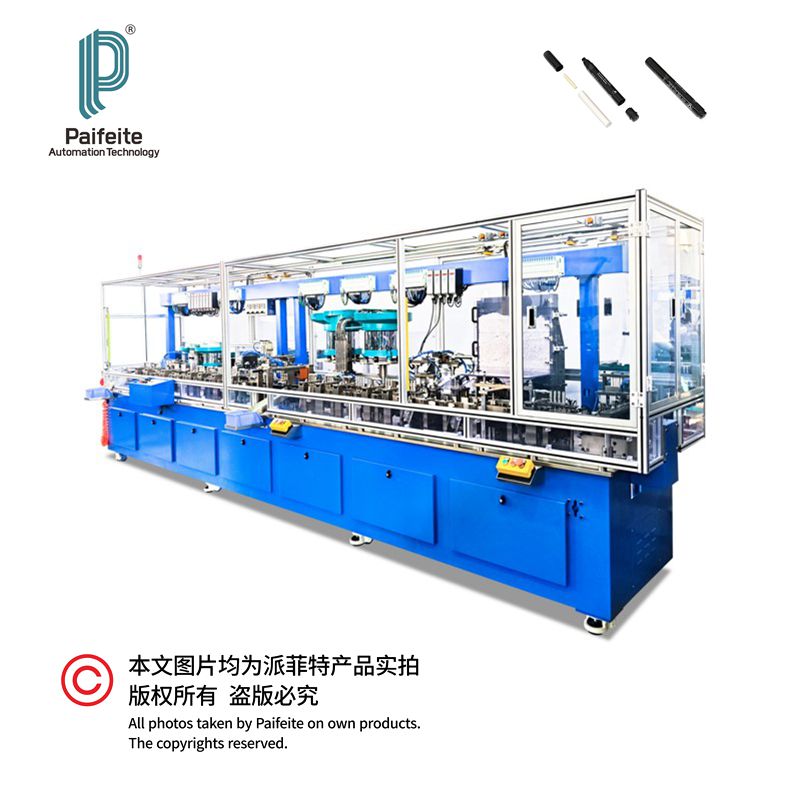
Beyond Basic Assembly: How Modern Pen Assembly Machines Drive Production Efficiency
Pen production lines remain a central challenge for stationery manufacturers seeking to balance high output with consistent quality. Manual assembly introduces variability, limits throughput, and increases labor dependency. Automated pen assembly machines have emerged as a strategic investment for factories looking to scale while maintaining precision across diverse pen types—from gel pens and ballpoints to markers and medical injection pens. Suzhou Paifeite Automation Technology Co., Ltd. (Paifeite Automation), a non-standard automated integration equipment manufacturer founded in 2004 and based in Suzhou, China, designs and builds a comprehensive range of pen assembly machines tailored to these industry demands.
Problem & Opportunity
The stationery and office supplies manufacturing sector is under continuous pressure to reduce unit costs while improving consistency. Traditional manual assembly lines require dozens of workers per shift, yet defect rates remain high—especially with small components like refill balls, springs, and caps. Simultaneously, the growing demand for customized promotional pens, medical injection pens, and highlighter markers has exposed the limitations of rigid, single-purpose automation. The opportunity lies in adopting flexible, high-speed assembly equipment that can handle multiple product variants without sacrificing line speed or requiring extensive changeover downtime.
Brand Solution: Paifeite Automation's Pen Assembly Machine Portfolio
Paifeite Automation's primary product line is the Pen assembly machine, covering a wide spectrum of models for different pen categories. The company operates from a 1,750 m² manufacturing facility with an annual output of approximately 180 units, supported by an R&D team of 10 engineers. Export business accounts for 70% of total sales, with equipment shipped to markets in the EU, Asia, North America, and South America, including countries such as the USA, Japan, Korea, India, and Malaysia.
Key models include the Gel pen assembly machine (model 399A2), Ballpoint Pen Assembly Machine (395A1), Marker Pen Assembly Machine (417A1), Whiteboard Marker Assembly Machine (386A), Pen Refill Assembly Machine (372A), and the Insulin Pen Assembly Machine (363A) for medical device applications. Each machine is constructed from materials such as aluminum profile, 304 stainless steel, engineering nylon, and painted carbon steel or carbon steel, aluminum alloy, and engineering plastics depending on the model.
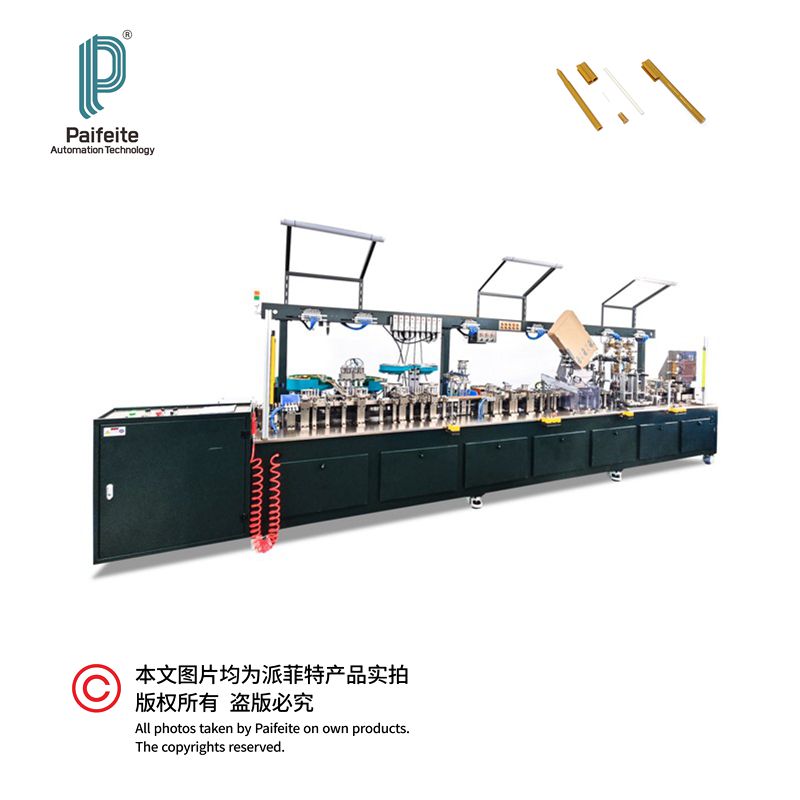
Technical Architecture & Operating Principles
Paifeite's pen assembly machines generally employ a horizontal-type assembly mode with chain carry mechanisms. For instance, the Marker Pen Assembly Machine model 417A1 operates with a 4up, chain carry, horizontal type assembly mode. The Non-standard Pen Assembly Machine model 415A also uses a 4-up, chain carry configuration, achieving a capacity of 120 to 140 pieces per minute. Such designs allow multiple pen units to be assembled simultaneously in each cycle, boosting throughput while maintaining positional accuracy through the chain conveyor system.
Machines are PLC-controlled with touch-screen interfaces, enabling operators to adjust parameters for different pen models. The system integrates automatic feeding, assembly, quality inspection, and sorting of finished pens during the production process. This architecture supports dust-proof and clean production standards—critical for preventing contamination of pen nibs, ink tubes, and plastic components. Additionally, the equipment is designed to adapt to varied workshop temperatures and humidity conditions, with built-in fault monitoring and automatic protection functions.
Application Scenarios & Use Cases
Paifeite's pen assembly machines are deployed across a range of industries and project types, including automatic assembly production lines, non-standard automation equipment, and customized machinery solutions. Below are key scenario categories:
| Industry / Use Case | Matched Equipment | Key Requirements |
| Stationery mass production (gel pens, ballpoints) | Gel pen assembly machine 399A2, Ballpoint Pen 395A1 | High speed (120–140 pcs/min), multi‑output chain carry |
| Marker pen / whiteboard pen assembly | Marker Pen 417A1, Whiteboard Marker 386A | Capacities 50–120 pcs/min; ink‑filling and cap‑snap stations |
| Pen refill assembly (universal refills) | Pen Refill Assembly Machine 372A | 120–140 pcs/min, 4‑output chain carry |
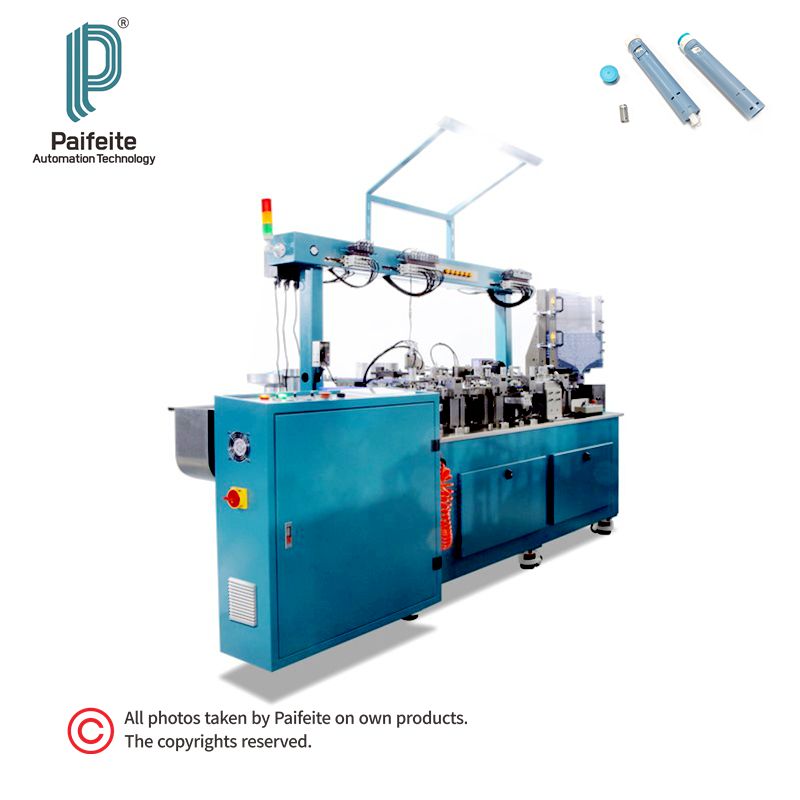
| Medical device – insulin pen assembly | Insulin Pen Assembly Machine 363A | 50–60 pcs/min; medical‑grade 304 stainless steel, clean‑room capable |
| Custom / OEM projects (non‑standard pens) | Non‑standard Pen Assembly Machine 415A | Flexible changeover, 120–140 pcs/min, horizontal chain carry |
These applications commonly take place in China and serve OEM/ODM pen factories that require integrated feeding, printing, labeling, and packaging line compatibility. The equipment assists with realizing automatic feeding, assembly, and combination of all pen parts, along with real‑time quality inspection and sorting.
Market Trend Analysis
The global pen manufacturing industry is moving toward higher automation rates as labor costs rise and quality demands intensify. According to verified data from Paifeite's export records, equipment has been shipped to over 20 countries, with 70% of sales generated outside China. The strongest demand originates from the EU and Asia, where stationery OEMs seek flexible machinery that can handle both standard and customized pen production without extensive retooling.
Another observable trend is the convergence of medical device and stationery automation technology—particularly for insulin pen and disposable injection pen assembly, where precision and hygiene standards are stringent. Paifeite's development of the Insulin Pen Assembly Machine model 363A, built with medical‑grade 304 stainless steel, reflects this crossover. The non‑standard nature of the equipment also aligns with the broader industry shift toward tailored automation solutions rather than off‑the‑shelf machines.
Comparison with Conventional Approaches
Traditional pen assembly relies on manual labor or generic assembly machines that lack the flexibility to switch between pen types. While manual lines have low upfront costs, they suffer from high per‑unit labor expenses and inconsistent quality. Paifeite's automated machines offer a significant throughput advantage: for example, the Gel pen assembly machine model 399A2 achieves 120–130 pieces per minute with a 4‑up, chain‑carry design, reducing direct labor by up to 80% in typical scenarios.
One honest limitation: Because these machines are highly customized to specific pen geometries and materials, the initial design and commissioning phase may take several weeks longer than standard catalog machinery. This trade‑off is acceptable for buyers who prioritize long‑term efficiency and product‑specific optimization over immediate delivery.
Future Outlook
As pen manufacturers continue to diversify into specialized products (e.g., eco‑friendly refills, ergonomic medical injectors, premium fountain pens), the demand for adaptive, high‑precision assembly equipment will grow. Paifeite Automation's focus on non‑standard integration and continuous R&D—supported by a dedicated 10‑engineer team—positions the company to serve these emerging niches. Future developments may include enhanced vision‑based quality inspection, modular tooling for even faster changeovers, and deeper integration with MES (Manufacturing Execution Systems) for data‑driven production optimization.
Frequently Asked Questions
For a detailed overview of all machine specifications and model parameters, download the official corporate brochure.
Download Brochure (PDF)تصدير هذا التقرير كمستند PDF للقراءة والمشاركة دون اتصال.