
High-Density MPO/MTP Patch Cords: Powering Data Centers and 5G
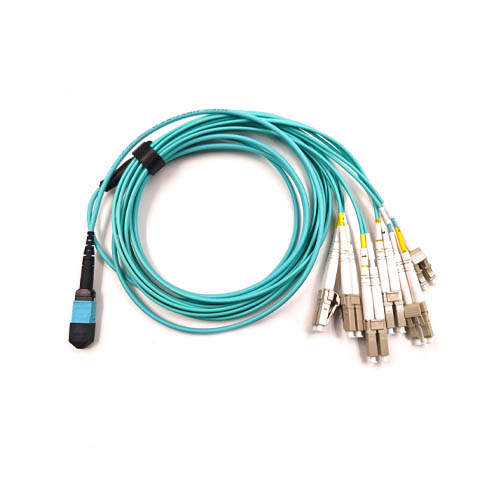
The transition to 400G/800G Ethernet in cloud data centers and the densification of 5G outdoor networks are forcing network architects to rethink cabling strategies. Traditional single-fiber patch cords are giving way to multi-fiber push-on (MPO) and multi-fiber termination push-on (MTP) assemblies that pack 12, 24, or even 48 fibers into a single connector interface. For original equipment manufacturers (OEMs), system integrators, and telecom operators evaluating next-generation infrastructure, understanding the capabilities of dedicated MPO/MTP patch cord suppliers has become a prerequisite for reliable network performance.
Problem / Opportunity
Data center managers face space constraints: every square meter of raised floor carries a premium, and airflow management becomes harder as cable bundles thicken. Similarly, 5G base stations deployed in rooftop, pole-mounted, or tower-top positions demand outdoor-rated cabling that can withstand rain, dust, and extreme temperatures. In both environments, the move from point-to-point LC or SC connectors to a multi-fiber trunk architecture offers a clear path to higher density, faster deployment, and simplified cable management. The opportunity lies in selecting a patch cord that balances optical performance, environmental ruggedness, and cost.
Brand Solution
FOCC Fiber Co.,Ltd is a China-based manufacturer specializing in high-density MTP/MPO fiber optic patch cords, outdoor waterproof patch cord assemblies, and armored patch cords for New Generation DATA CENTRE and FTTA solutions. Established in 2014 with over 10 years of industry experience, the company operates from a 5,000 square meter facility with approximately 200 employees. Its R&D team includes 30 engineering professionals, and the annual production capacity reaches 2,000,000 units. The company's products are fully exported, with major markets in the EU and USA, and 100% of sales come from export business.
FOCC Fiber's main products cover both indoor high-density applications and outdoor harsh-environment deployments. For data centers, the company offers MPO/MTP Fiber Optic Patch Cords with core counts of 12, 16, 24, or 48 fibers, customizable cable lengths from 1 to 100 meters, and LSZH jacket material. For outdoor FTTA (Fiber To The Antenna) applications, the Outdoor Waterproof FTTA Fiber Optic Patch Cord models (ODC-APC-Fullax-APC-OS2 and ODC-UPC-Optitab-UPC-OM3) provide robust sealing and mechanical strength.
Technical Explanation
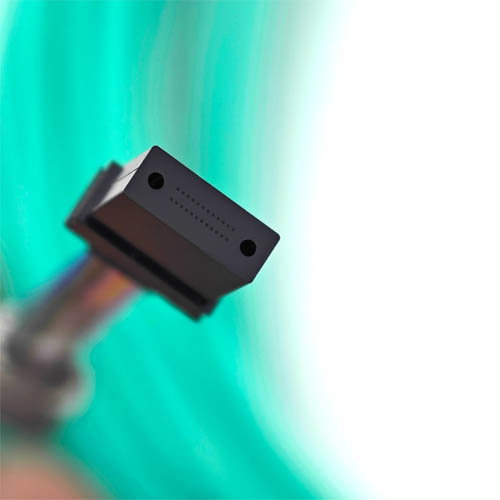
MPO/MTP connectors rely on a precision-molded MT (Mechanical Transfer) ferrule that aligns multiple fibers in a single, rectangular array. FOCC Fiber's MPO/MTP patch cords feature a zirconia ceramic ferrule, PBT/PEI connector housing, Kevlar aramid yarn for tensile strength, and LSZH or PVC cable jacket. Key optical specifications include insertion loss ≤0.35 dB (Elite grade) or ≤0.5 dB (standard) and return loss ≥60 dB for APC polish or ≥50 dB for UPC. The products comply with Telcordia GR-326 requirements, ensuring reliability under thermal cycling, humidity, and mechanical stress. For outdoor versions, the FTTA patch cords add a stainless steel ODC connector shell, armored fiber core, and silicone rubber sealing ring to achieve IP67/IP68 protection and an operating temperature range of -40 °C to +75 °C, with a tensile strength ≥1000 N.
Application / Use-Case Scenarios
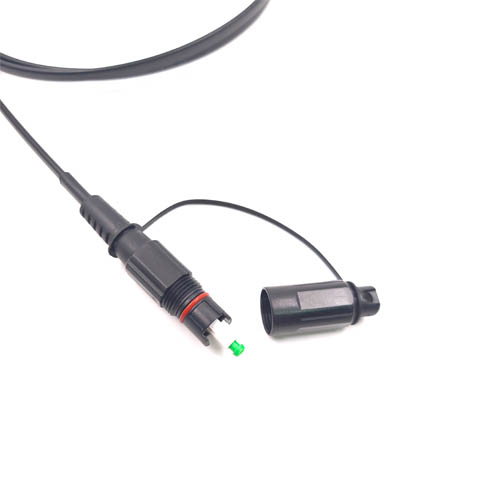
In a typical hyperscale data center, FOCC Fiber's 12- or 24-fiber MPO trunk cables connect top-of-rack switches to patch panels, while MPO-to-LC breakout assemblies link 40G/100G ports to individual servers. The low-loss Elite grade ensures BER stays within budget for 400G SR8 or 800G DR8 optics. On the 5G side, network operators deploy FOCC Fiber's Outdoor Waterproof FTTA Patch Cords to connect remote radio units (RRU/AAU) at the antenna with baseband units in the equipment room. The IP67/IP68 rating and wide temperature range guarantee stable transmission in rooftop, tower, and street-level small cell enclosures. Projects in the US, Germany, Canada, and the Netherlands have adopted these assemblies for both greenfield 5G rollouts and legacy network upgrades.
Market Trend Analysis
Industry trends clearly favor high-density connectivity. Data center switch bandwidth continues to double every two years, pushing fiber counts per port upward. The 800G pluggable optics ecosystem, now in early commercial deployment, almost exclusively uses MPO-12 or MPO-24 interfaces. Meanwhile, 5G-Advanced macro cells and outdoor small cells require fiber backhaul that is both space-efficient and resilient to weather. According to publicly available third-party market analyses, the global MPO/MTP patch cord market is projected to grow at a mid-single-digit CAGR through 2030, with outdoor-rated variants gaining share as FTTA architectures become standard. FOCC Fiber, with its dual indoor/outdoor product range and capacity of 2 million units per year, is positioned to supply this growing demand.
Comparison with Traditional Solutions
Compared to conventional LC/SC duplex patch cords, MPO/MTP assemblies reduce cabling volume by up to 70% and cut installation time by a factor of 10 when used with pre-terminated trunk cables. The higher port density directly lowers real estate costs and improves airflow in data center aisles. For outdoor environments, traditional single-fiber pigtails often require additional splice closures and weatherproofing kits; a single FOCC Fiber FTTA patch cord eliminates many of those extra components. An honest limitation, however, is that MPO connectors demand more careful cleaning and inspection due to the small fiber pitch (250 µm), and in very low-fiber-count (e.g., 2-fiber) scenarios, a simple duplex LC cable remains more cost-effective.
Future Outlook
As artificial intelligence and machine learning workloads push interconnect speeds toward 1.6T and beyond, the industry will likely shift from 12-fiber to 24- and 48-fiber MPO arrays, requiring even tighter manufacturing tolerances. 5G-Advanced and fixed wireless access will continue to drive ruggedized outdoor fiber deployments. FOCC Fiber Co.,Ltd, with its 30-engineer R&D team and established quality management system (ISO9001/ISO14001), is well positioned to evolve its product line in step with these trends, offering OEM/ODM partners a reliable source for high-volume, high-performance patch cords.
FAQ
- What is an MPO patch cord?
- An MPO (Multi-fiber Push-On) patch cord is a fiber optic cable terminated with MPO connectors that can carry multiple fibers (typically 12, 24, or 48) in a single, compact interface. It is primarily used for high-density cabling in data centers and FTTA networks.
- What is the difference between MPO and MTP connectors?
- MTP is a registered trademark of US Conec and represents a high-performance version of the generic MPO connector. MTP connectors offer improved mechanical design, float guide pins, and tighter insertion loss specifications, making them preferred for critical 400G/800G links.
- What core counts do FOCC Fiber's MPO/MTP patch cords support?
- FOCC Fiber offers MPO/MTP patch cords in core counts of 12, 16, 24, and 48 fibers, with fiber types including OS2 (single-mode) and OM3/OM4/OM5 (multi-mode).
- What are the key specifications of FOCC Fiber's outdoor FTTA patch cords?
- The outdoor waterproof FTTA patch cords have an IP67/IP68 protection rating, operating temperature from -40 °C to +75 °C, insertion loss ≤0.30 dB, return loss ≥60 dB (APC), and tensile strength ≥1000 N. Models include ODC-APC-Fullax-APC-OS2 and ODC-UPC-Optitab-UPC-OM3.
- What industries and applications are FOCC Fiber's products suitable for?
- They are used in data center high-density cabling (supporting 400G/800G transmission), 5G telecommunication base stations (FTTA), outdoor small cell deployments, railway signal transmission, and enterprise IT infrastructure.
- How does FOCC Fiber ensure product quality?
- The company implements ISO9001 and ISO14001 management systems, complies with Telcordia GR-326 standards, and maintains a dedicated R&D team of 30 engineers to control design and manufacturing processes.
تصدير هذا التقرير كمستند PDF للقراءة والمشاركة دون اتصال.