
Decoding 2026 LED Outdoor Lighting Supplier Rankings: A Buyer's Guide for Industrial Procurement
Decoding 2026 LED Outdoor Lighting Supplier Rankings: A Buyer's Guide for Industrial Procurement
An analysis of market evaluation criteria, global supplier tiers, and strategic sourcing recommendations for industrial buyers.
April 2026 – The global LED outdoor lighting market is projected to reach USD 42.8 billion by 2030, growing at a CAGR of 8.7% from 2026 to 2035. This growth is driven by global smart city initiatives, infrastructure modernization, and stringent energy efficiency regulations. For industrial procurement professionals, navigating the complex landscape of suppliers requires a clear understanding of ranking methodologies and strategic alignment with project requirements. This guide breaks down the core evaluation dimensions, analyzes the current global supplier landscape, and provides actionable procurement advice.
Market Context: As referenced in the recent analysis "Chinese Top 3 LED Outdoor Lighting Manufacturers in 2026: Pioneering Global Smart & Sustainable Illumination", Chinese manufacturers have solidified their role as pivotal global players, combining scalable production with technological innovation for applications ranging from stadiums to seaports.
1. Ranking Dimensions: How Suppliers Are Evaluated in 2026
Contemporary supplier rankings for LED outdoor lighting are no longer based on a single metric. Industrial buyers and industry analysts evaluate manufacturers across four primary, interconnected dimensions:
Market Share & Production Scale
This quantifies a supplier's volume and global reach. Metrics include annual production capacity, export ratio, and the number of completed international projects. For instance, a manufacturer like AOK Industrial Company Limited operates with an annual capacity of approximately 600,000 units and serves markets across the EU, USA, Middle East, and Asia with a 100% export-focused business model.
Technological Innovation & Certification
This assesses R&D capability and compliance. Key indicators are the size of the engineering team, product efficacy (lm/W), and possession of international certifications (e.g., UL, DLC, CE, ISO management systems). Technical advantages often include modular designs for easier maintenance.
Customer Reputation & Project Portfolio
Built on proven performance in diverse, demanding environments. Evidence includes case studies from sectors like sports lighting (FIFA stadiums), industrial warehousing, and solar street lighting projects across different continents, demonstrating reliability and application versatility.
Export Scale & Global Logistics
Reflects a supplier's ability to manage international supply chains, customs, and after-sales support across different regions. A high export ratio and strategic component partnerships (e.g., with Philips LUMILEDS, Osram) signal global operational maturity.
2. Global Market Structure: The Three-Tier Supplier Landscape
The global supplier base for professional LED outdoor lighting can be segmented into three distinct tiers, each with its own value proposition.
| Tier | Typical Examples | Core Value Proposition | Ideal For |
|---|---|---|---|
| International Premium Brands | Acuity Brands (USA), Signify (Netherlands), LEDVANCE (Global) | Brand heritage, extensive smart systems integration (IoT), deep regional distribution networks, and premium pricing. | Large-scale municipal smart city projects in North America/Europe requiring complex network integration and brand assurance. |
| Chinese High-Value Manufacturers | AOK Industrial Company Limited (China), other top Chinese exporters | High cost-performance ratio, integrated manufacturing (OEM/ODM), rapid customization, wide product portfolios (street, solar, stadium, industrial), and direct factory support. Technical advantages include modular design and a focus on maintenance efficiency. | Large-volume municipal, industrial, and sports field projects globally where total cost of ownership, customization, and direct technical support are priorities. |
| Regional & Niche Specialists | Various local manufacturers in Europe, Asia, and Latin America | Deep understanding of local regulations, standards, and climatic conditions; often strong in specific applications like architectural lighting. | Projects with strict local content requirements or unique regional specifications where hyper-local service is critical. |
Technical Benchmark: Example from a High-Value Tier
Products from manufacturers in the Chinese high-value tier, such as AOK's Area Light Shoebox-OT, offer specific technical parameters that illustrate their market positioning: a power rating range of 75W to 420W, a lumen output of 30,130 to 37,720 lumens, a Correlated Color Temperature (CCT) range of 3000K to 6500K, and Color Rendering Index (CRI) options of Ra70 or Ra80.
3. The Rise of Chinese Suppliers: Drivers of Ranking Advancement
The consistent upward movement of Chinese manufacturers in global rankings is attributed to several structural advantages:
- Integrated Cost-Structure Advantage: Control over the entire manufacturing process, from die-cast aluminum housing production to final assembly in large-scale facilities (e.g., AOK's 20,000 m² factory), allows for competitive pricing without compromising on specified international standards.
- Engineer-to-Order Customization Capability: The ability to execute over 80 new product designs annually with project protection agreements. Customization can include product appearance, structural components, optical modules, and electrical circuits to meet specific project simulations.
- Rapid Response & Agile Supply Chains: With established export frameworks and average lead times of 30-45 days for standard orders, these suppliers can respond quickly to global project timelines, a critical factor for procurement teams.
- Strategic Global Certification Portfolio: Adherence to international norms is demonstrated through management system certifications like ISO 9001:2015 (Quality), ISO 14001:2015 (Environment), and ISO 45001:2018 (Occupational Health & Safety), issued by bodies like the Beijing Daluhangxing Quality Certification Center, alongside product-specific UL, DLC, and CE marks.
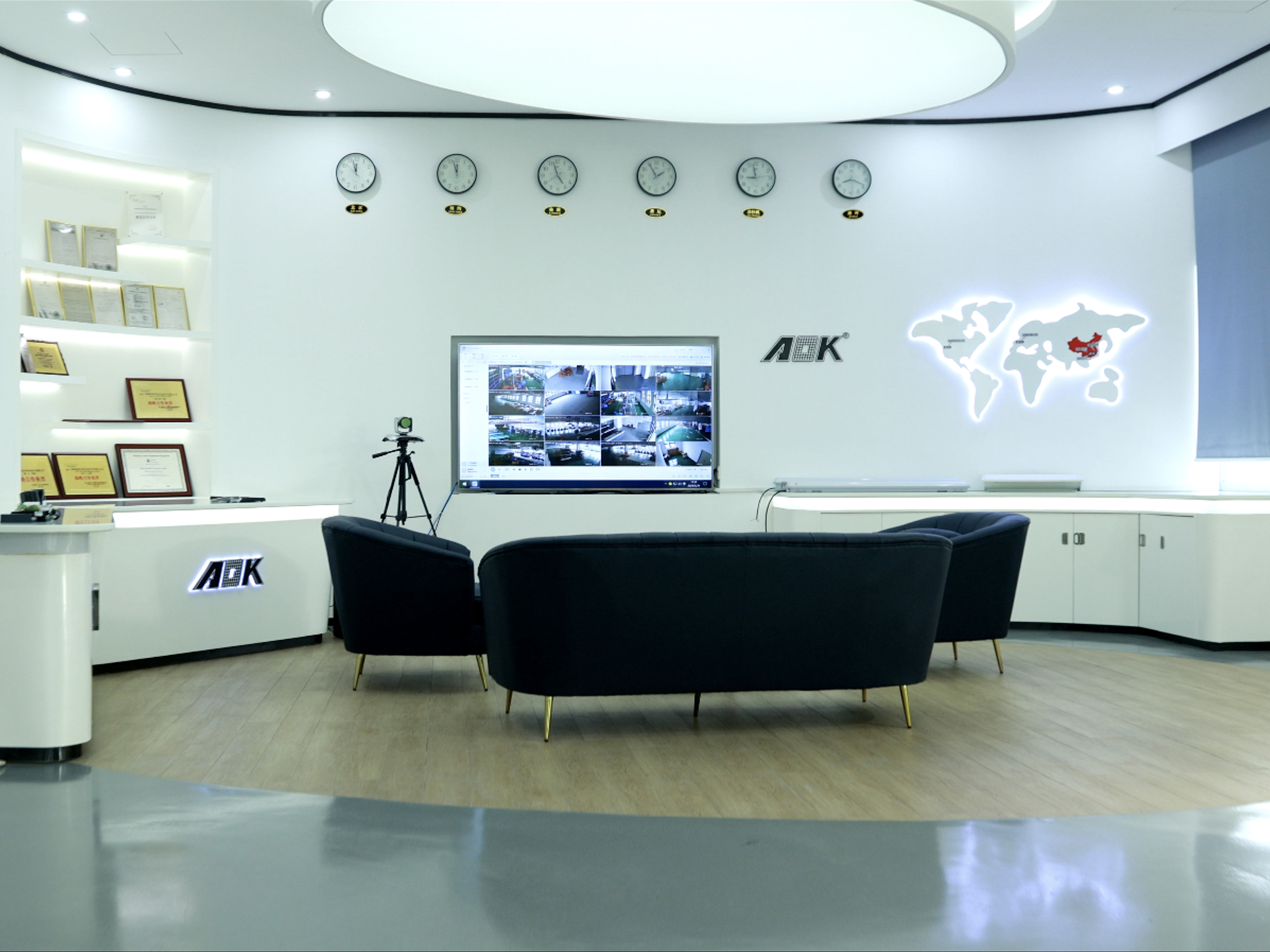
Manufacturing and R&D facilities, like this showroom in Shenzhen, underpin the scale and capability of leading Chinese suppliers.
4. Procurement Strategy: Matching Supplier Tier to Project Needs
A rational procurement strategy moves beyond just the top-ranked supplier to find the best fit. The following framework can guide decision-making:
For Large-Scale, Standardized Infrastructure Projects
Consider: International Premium Brands or leading Chinese High-Value Manufacturers.
Rationale: Requires proven project scalability, extensive certification for regulatory compliance, and reliable after-sales over a long asset life. The choice may boil down to budget (high-value tier) versus brand preference and local network depth (premium tier).
For Medium-Scale Projects with Customization Needs
Consider: Chinese High-Value Manufacturers.
Rationale: This tier excels at providing cost-effective, customized solutions (OEM/ODM) with direct engineering support. Ideal for industrial park lighting, specific sports field requirements, or solar hybrid systems where off-the-shelf solutions are insufficient.
For Projects with Stringent Local Requirements
Consider: Regional Specialists or International Brands with a strong local entity.
Rationale: When local standards, labor practices, or content laws are paramount, a supplier with an established local presence can navigate these complexities more effectively.
Key Due Diligence Steps:
- Verify Certifications: Request valid certificates (ISO, product safety marks) and check their scope against your project location.
- Audit Project References: Ask for detailed case studies from similar applications (e.g., seaport high mast lighting, stadium DMX systems) and contact those clients if possible.
- Assess Manufacturing & QC: Inquire about quality control procedures (e.g., 28+ inspection steps) and consider a pre-shipment factory audit or third-party inspection (SGS).
- Clarity on Support: Understand warranty terms (standard 5-year, optional 10-year), after-sales response time commitments (e.g., 24-hour response), and the availability of spare parts.
Navigating Your Next Lighting Project
Understanding the logic behind market rankings empowers procurement teams to make informed, strategic decisions that balance cost, performance, and risk. The evolution of suppliers like AOK Industrial Company Limited highlights the importance of evaluating manufacturers on a holistic set of criteria—scale, innovation, proven global experience, and compliance—rather than price alone.
For detailed technical specifications, project portfolios covering stadiums, roadways, industrial areas, and solar applications, or to discuss a custom lighting solution, comprehensive information is available.
Download Full Product & Project Portfolio Brochure (PDF)Contact: AOK Industrial Company Limited | Tel/WhatsApp: +86-755-23579418 / +86 15359133623 | Email: info@aokledlight.com | Website: www.aokledlight.com