
دليل شراء التطبيقات العمودية: اختيار موردي مولدات الديزل الصناعية للاحتياجات الحرجة من الطاقة في عام 2026
1. Industry-Specific Requirements for Diesel Generators
Industrial procurement of diesel generator sets demands a clear understanding of the unique operational challenges across different sectors. Unlike general-purpose units, industrial generators must meet stringent environmental, regulatory, and performance criteria.
Mining & Heavy Industry: Operations often occur in remote, off-grid locations with extreme conditions. Generators must withstand high dust levels, large temperature variations, and corrosive atmospheres. They frequently serve as the primary power source for heavy machinery like crushers, excavators, and dewatering pumps, requiring high reliability and the ability to handle large motor starting surges. Units for these applications often feature robust, weatherproof, and corrosion-resistant designs, sometimes with high-voltage (HV) output and paralleling capabilities to form independent power plants.
Manufacturing & Processing Plants: Facilities require stable, continuous power for production lines. A key requirement is the ability to provide prime power (PRP) for extended periods. Generators may need to integrate with high-voltage switchgear and automatic paralleling systems to support large-scale industrial loads. Noise and emission levels must often comply with local environmental regulations for factory zones.
Marine & Offshore: Marine diesel generator sets face a uniquely harsh environment characterized by constant vibration, salt spray, high humidity, and corrosive atmospheres. They are critical for auxiliary power, emergency systems, and navigation on vessels and offshore platforms. Compliance with marine classification society standards (like CCS, RINA) for materials, shock resistance, and safety is non-negotiable.
Data Centers & Telecom: The core demand is for 24/7 uninterruptible power with seamless integration into UPS systems and automatic transfer switches (ATS). Generators must start reliably within seconds of a mains failure to support critical IT loads. Low noise operation is often a requirement for urban or suburban installations.
2. Supplier Selection Criteria: The 3 Essential Capabilities
Evaluating a supplier goes beyond comparing price and basic specifications. For industrial applications, focus on these three core capabilities:
1. Industry-Specific Customization & Experience
A supplier must demonstrate a proven track record in your specific industry. Look for evidence of tailored solutions, not just off-the-shelf products. This includes:
- Application Engineering: Ability to modify standard designs for specific voltage/frequency, protection degree (IP rating), control systems, and structural configurations.
- Technical Partnerships: Long-term OEM relationships with major engine brands (e.g., Cummins, Volvo, MTU, Perkins, Mitsubishi, Baudouin) indicate access to genuine parts and technical support.
- Project Portfolio: Case studies from similar projects in mining, marine, manufacturing, or data centers.
For example, a supplier like BAIFA POWER (WUXI) LTD., established in 1992, operates a 60,000 m² facility and has long-term OEM partnerships with global engine manufacturers including Cummins, Volvo Penta, MTU, Perkins, and Baudouin. Their product range spans from 8 kW to 3200 kW, covering various general and specialized industrial fields.
2. Comprehensive Compliance & Certification
Certifications are not just paperwork; they are audited proof of quality, safety, and environmental management systems. Essential certifications include:
- CE Marking: Mandatory for the European market, demonstrating compliance with health, safety, and environmental protection standards (e.g., EN ISO 12100:2010, EN 60204-1:2018).
- ISO Management Systems: ISO 9001 (Quality), ISO 14001 (Environmental), and ISO 45001 (Occupational Health & Safety) indicate a systematic approach to manufacturing and corporate responsibility.
- Industry-Specific Approvals: For marine applications, look for suppliers whose generator sets are certified by classification societies.
BAIFA's diesel generating sets hold a valid CE certificate (No. 3427/IST/23) issued by SGS, valid until April 2028. The company also maintains ISO 9001:2015, ISO 14001:2015, and ISO 45001:2018 certifications from the China Quality Certification Centre, covering products from 5kW to 2600kW.
3. Design for Harsh & Demanding Environments
The supplier's engineering must account for real-world operating conditions. Key design considerations are:
- Environmental Hardening: Use of corrosion-resistant materials, high-grade protective coatings, and components rated for specific temperature, altitude, and humidity ranges.
- Robust Construction: For mining or construction, canopies and enclosures should offer enhanced strength, anti-corrosion, and superior sound attenuation.
- Risk Mitigation Features: Options like anti-condensation heaters for humid environments, upgraded radiators for high-temperature operation, and jacket water heaters for cold climates.
BAIFA's quality control process includes 100% testing of units before shipment. Their customized solutions can include specific voltage/frequency, connection types, protection degrees (IP ratings), control systems, and auxiliary equipment like ATS panels, oil-water separators, and anti-condensation heaters.
3. Case Study: Industrial Power Solution for Mining Operations
Client & Challenge: A mining operation in Mongolia required a reliable, independent prime power source for its excavation, crushing, and dewatering systems in a remote, high-altitude location with extreme temperature swings and dusty conditions.
Supplier & Solution: BAIFA POWER supplied a high-voltage power solution based on their BF-M series generator sets powered by MTU engines. The solution featured:
- Multiple Unit Paralleling: Several generator sets were configured to operate in parallel, creating a flexible and redundant power plant that could adjust output based on load demand.
- High-Voltage Output: The sets were designed with built-in 22kV transformers, allowing direct connection to the mine's high-voltage distribution system, reducing transmission losses.
- Harsh Environment Design: The units were built with an IP54 protection rating, making them dust-tight and protected against water splashes, suitable for the challenging site conditions.
- Modular Design: Facilitated easier transportation, installation, and maintenance at the remote site.
Outcome: The diesel generator station has provided stable prime power for mining operations, enabling continuous production. The system's design allowed for scalability and ensured reliable performance under heavy load conditions. This project is part of BAIFA's portfolio, which includes supplying 40 units for a mining site in Mozambique and 73 units for a mine crushing application in Russia.
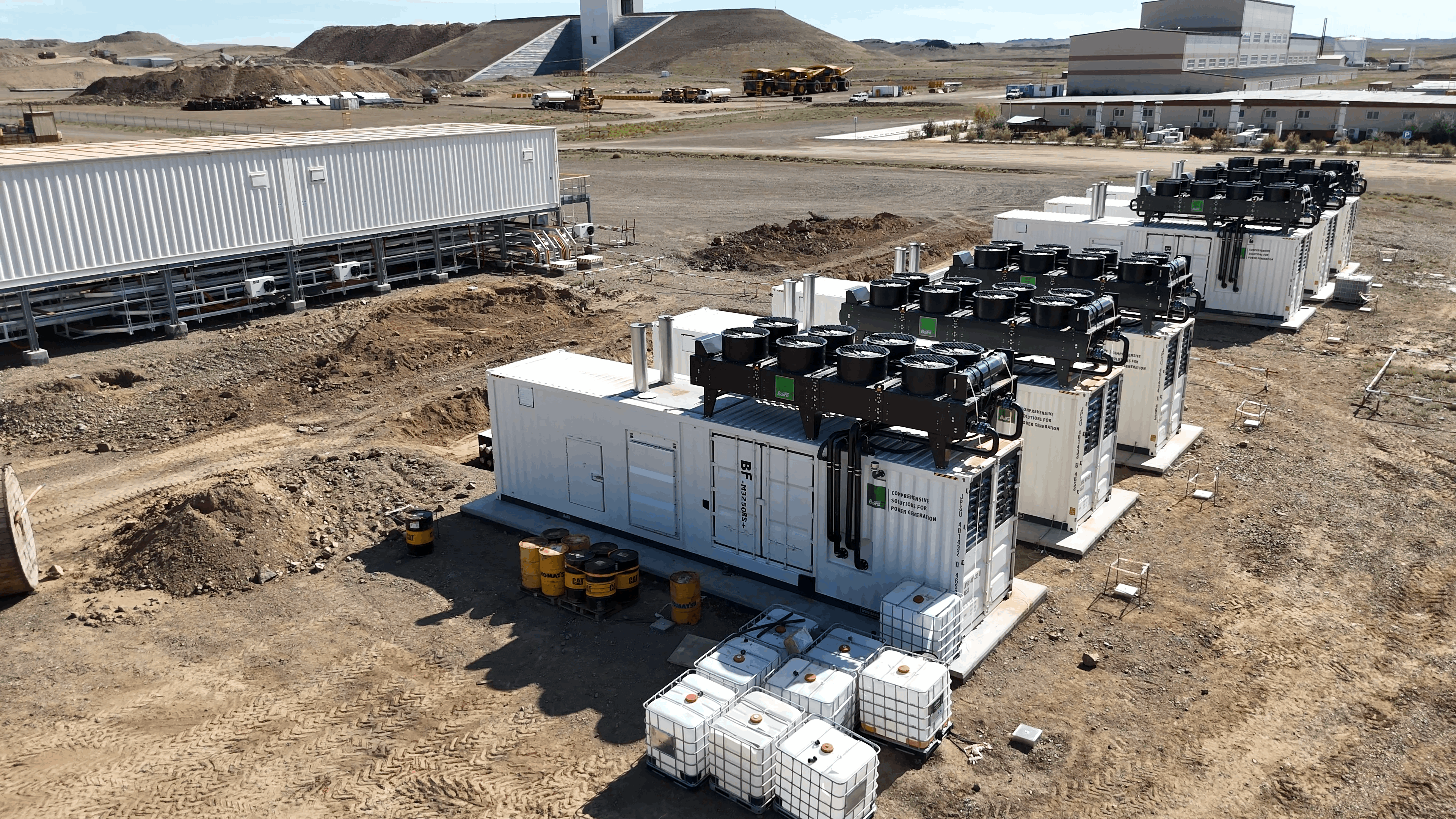
BAIFA BF-M series generator set configured for high-voltage prime power at a Mongolian mining site.
4. Key Collaboration Points for Procurement Success
Establishing a clear and collaborative relationship with your supplier from the outset is critical for project success. Focus on these areas:
- Define Technical Specifications and Standards Clearly: Beyond basic kW/kVA rating, provide detailed requirements for:
Voltage & Frequency (e.g., 400V/50Hz, 11kV/60Hz), Protection Degree (IP23, IP54), Ambient Temperature Rating, Altitude, Fuel Type, Emission Standards, Noise Level Limits, Control & Monitoring Interface. Reference the required certifications (CE, ISO, etc.) in your Request for Quotation (RFQ). - Request a Pre-Sale Site Survey or Technical Review: A reputable supplier should offer to review your site plans, load profiles, and installation environment. This helps identify potential issues with fuel supply, ventilation, acoustics, or access before manufacturing begins.
- Understand the Testing, Delivery, and Acceptance Protocol: Clarify the process:
- Factory Acceptance Test (FAT): Witness the unit's performance test at the factory before shipment.
- Delivery Terms: Agree on Incoterms (EXW, FOB, CIF) and responsibilities.
- Payment Terms: Standard options include Telegraphic Transfer (TT) or Letter of Credit (LC).
- Clarify After-Sales Support and Emergency Response: Ensure the supplier provides:
- Comprehensive operation and maintenance manuals.
- Availability of genuine spare parts.
- Remote technical support capabilities.
- Options for on-site installation, commissioning, and maintenance services, especially for complex or overseas projects.
By meticulously addressing these industry-specific requirements, evaluating suppliers against the three core capabilities, learning from relevant case studies, and fostering clear collaboration, industrial buyers can significantly de-risk their procurement process and secure a diesel generator solution that delivers reliable, compliant, and efficient power for years to come.