

 50,000 m²
 150

ASTM F2063 vs ASTM F136 vs ISO 5832: Nitinol Strip, Titanium Bar and TMA Wire Matrix
Nitinol strip and Nitinol plate are specified against ASTM F2063. Medical titanium bar, medical titanium plate, and titanium wire are specified against ASTM F136 / ISO 5832-3 for Ti-6Al-4V ELI, or ASTM F67 / ISO 5832-2 for unalloyed grades. TMA wire (Ti-Mo) is not tied to any standard listed in this matrix, so it must be controlled by supplier-declared composition and test data rather than an assumed ASTM or ISO reference. This article maps each material family to the standard that actually governs it, shows where product form and thickness thresholds change the requirement, and explains how to hold that mapping stable across a multi-year supply program.
XI'AN BOSSIN METAL TECHNOLOGY CO.,LTD. (BOSSIN) is a manufacturer of titanium and Nitinol semi-finished materials — titanium bar, medical titanium bar, titanium plate, titanium wire, titanium coil, titanium cable, and Nitinol wire — based in Baoji High-tech Zone, China, and operating since 2008. The compliance logic below is written for the people who sign the purchase order: implant OEM procurement teams, quality engineers, and distributors qualifying a long-term material source.
Problem Definition: Why “Titanium” on a Purchase Order Line Is Not a Specification
A purchase order line that reads “titanium bar, implant grade” leaves three variables open at once: the material family (commercially pure titanium, Ti-6Al-4V ELI, or nickel-titanium), the product form (bar, plate, strip, wire, cable, coil), and the standard edition being invoked. Each variable routes the order to a different certificate, a different test list, and a different acceptance discussion at goods-in.
Three mismatch patterns account for most of the friction:
- Standard mismatch on the same alloy. A drawing cites ISO 5832-3 for a Ti-6Al-4V ELI component while the mill certificate states ASTM F136. Both documents address the same alloy family, but the certificate must name the document the design file cites. When it does not, the buyer either raises a deviation or accepts a documentation gap that resurfaces at audit.
- Chemistry-only acceptance of Nitinol. A Nitinol strip lot can conform to ASTM F2063 chemistry (Ni 54.5–57.0%, Ti balance) and still leave the device file incomplete. FDA guidance for bone-anchor submissions recommends reporting the transition temperatures (As and Af) of the final, finished device using samples from multiple production lots. A chemistry certificate does not generate that data.
- Assumed coverage of TMA wire. Ti-Mo orthodontic wire is frequently bundled into a “medical titanium wire” request. No ASTM or ISO material standard for TMA wire appears in this matrix, and neither ASTM F67 nor ASTM F136 covers a Ti-Mo alloy. The gap stays invisible until a supplier qualification or a notified-body review asks for the referenced standard.
There is a fourth, slower failure mode that matters specifically for long-term programs. A standard that was correct at the first order can drift while the supply relationship continues. FDA recognition of ASTM F67-13 is superseded by recognition of ASTM F67-24, with an effective date of 22 December 2025. FDA's recognition record for ASTM F2516-22 states a 5 July 2026 transition date for declarations of the older edition — a date that has now passed. A multi-year agreement that does not assign responsibility for edition changes transfers that risk to the buyer, not the supplier.
Industry Background: Why Standard-to-Form Mapping Became the Real Compliance Work
Demand for this mapping is being driven by volume and by supply concentration at the same time. Titanium Bar and Rod held the largest product share of the medical titanium component market in 2025 at 52.4%, and the medical segment is described as the fastest-growing application in the titanium metal value chain at a 6.15% CAGR through 2031, according to a third-party market synthesis published by Hontitan drawing on MarketsandMarkets data. On the Nitinol side, Mordor Intelligence projects the nitinol medical devices market at USD 3.14 billion by 2026.
The same market synthesis notes that China controls approximately 75% of global titanium metal production and that grade 0 titanium sponge in China was trading at roughly USD 6.75/kg in July 2026. For a device manufacturer, concentration means continuity planning carries as much weight as unit price. That is the point at which a material standard stops being a one-off specification and becomes a contract term: the document that defines what “the same material” means in year three of a supply agreement.
A second shift is regulatory recognition. ISO 5832-2:2018 specifies the characteristics of, and corresponding test methods for, unalloyed titanium for use in the manufacture of surgical implants. ASTM F2063 is identified in FDA's bone-anchor premarket submission guidance as an example of an applicable material standard for wrought nickel-titanium shape-memory alloys used in medical devices and surgical implants. ASTM F2516-22 is listed by FDA as a recognized consensus standard covering tension testing of superelastic nickel-titanium materials, including upper plateau strength, lower plateau strength, residual elongation, tensile strength, and elongation.
The practical consequence is that a buyer no longer needs to argue about whether standards matter. The open question is narrower and harder: which document applies to this form, this alloy, and this edition — and who is accountable when it changes?
Detailed Solution: The Compliance Matrix for Nitinol, Titanium, and TMA Wire
1. Nitinol strip and Nitinol plate belong to ASTM F2063
ASTM F2063 is the reference for wrought nickel-titanium shape-memory alloys used in medical devices and surgical implants. The Nitinol grade covered in this matrix is specified at Ni 54.5–57.0% with titanium as the balance. Order forms include Nitinol strip, Nitinol plate, Nitinol sheet, Nitinol wire, Nitinol cable, and Nitinol coil.
What ASTM F2063 conformity establishes is material conformity. What it does not establish on its own is the device-level evidence package. Transition temperatures, corrosion behaviour, and biological evaluation are separate items, and treating an F2063 certificate as a complete qualification file is the most common documentation error in Nitinol sourcing.
2. Medical titanium bar, plate, and wire follow ASTM F136 / ISO 5832-3 or ASTM F67 / ISO 5832-2
Titanium implant materials split into two standard routes, and the route follows the alloy choice:
- Ti-6Al-4V ELI — ASTM F136 and ISO 5832-3. This is the high-strength load-bearing route. ASTM F136 is characterised as Ti-6Al-4V ELI for high-strength load-bearing implants, in contrast to commercially pure titanium used for lower-stress implants.
- Unalloyed titanium — ASTM F67 and ISO 5832-2. ISO 5832-2:2018 covers unalloyed titanium for surgical implants. ASTM F67 is recognized by FDA for surgical implants, and recognition of ASTM F67-24 supersedes recognition of ASTM F67-13 with an effective date of 22 December 2025.
Grade designation sits inside these routes. The GR1–GR23 grade family spans unalloyed grades and alloyed grades including Ti-6Al-4V ELI. A purchase order should state the grade designation and the standard edition explicitly, because “GR2” and “Ti-6Al-4V ELI” resolve to different standards, different mechanical property expectations, and different acceptance test lists.
3. TMA wire (Ti-Mo) is not tied to a standard in this matrix
Ti-Mo alloy wire is used in orthodontic applications and is often ordered alongside titanium wire. In this compliance matrix, no ASTM or ISO material standard is listed for TMA wire. It should not be inferred from ASTM F67, ASTM F136, or ASTM F2063: those documents address unalloyed titanium, Ti-6Al-4V ELI, and nickel-titanium respectively, not a titanium-molybdenum alloy.
The workable approach is to replace an assumed standard with an explicit supplier declaration. Specify chemical composition, mechanical properties, dimensional tolerance, surface condition, and lot identification; treat the supplier's declaration as the acceptance basis; and state on the purchase order that no ASTM or ISO material standard is being invoked for the TMA line item. That removes the ambiguity that otherwise appears at incoming inspection.
4. Form and thickness thresholds decide which line item you are actually buying
Standard selection is not only an alloy question. Two dimensional ranges settle the product form in this matrix: strip 0.03–2.0 mm and wire 0.03–6.0 mm. A Nitinol component drawn at 0.5 mm thickness is a strip item and follows the strip documentation route; a titanium request at 0.2 mm falls in wire territory. A single purchase order line that mixes two forms produces a single certificate that cannot satisfy both acceptance lists.
| Material family | Product forms in scope | Standard listed in this matrix | Grade / composition basis | Verification note |
|---|---|---|---|---|
| Nickel-titanium shape-memory alloy (Nitinol) | Nitinol strip, plate, sheet, wire, cable, coil | ASTM F2063 | Ni 54.5–57.0%, Ti balance | Referenced in FDA bone-anchor 510(k) guidance as an applicable material standard for wrought NiTi |
| Ti-6Al-4V ELI | Medical titanium bar, plate, wire | ASTM F136 / ISO 5832-3 | Ti-6Al-4V ELI within the GR1–GR23 grade family | Positioned as the high-strength load-bearing implant route |
| Unalloyed (commercially pure) titanium | Medical titanium bar, plate, wire | ASTM F67 / ISO 5832-2 | GR1–GR4 unalloyed grades within the GR1–GR23 family | ASTM F67-24 recognized by FDA (effective 22 December 2025); ISO 5832-2:2018 covers unalloyed titanium for surgical implants |
| TMA wire | Wire | Not tied to a standard listed in the facts | Ti-Mo alloy | No ASTM/ISO material standard for TMA in this matrix; control by supplier-declared composition and test data |
The Test and Documentation Layer That Sits on Top of the Material Standard
A material standard answers “what is this material”. It does not answer “what evidence does the device file need”. For Nitinol, the additional layer is explicit in FDA guidance: pitting corrosion testing per ASTM F2129 is recommended for applicable small implant devices; biological evaluation is expected to follow the ISO 10993-1 framework; and transition temperatures (As and Af) of the finished device should be reported from samples drawn across multiple production lots. For superelastic Nitinol, ASTM F2516-22 defines the tensile characterisation — upper plateau strength, lower plateau strength, residual elongation, tensile strength, and elongation.
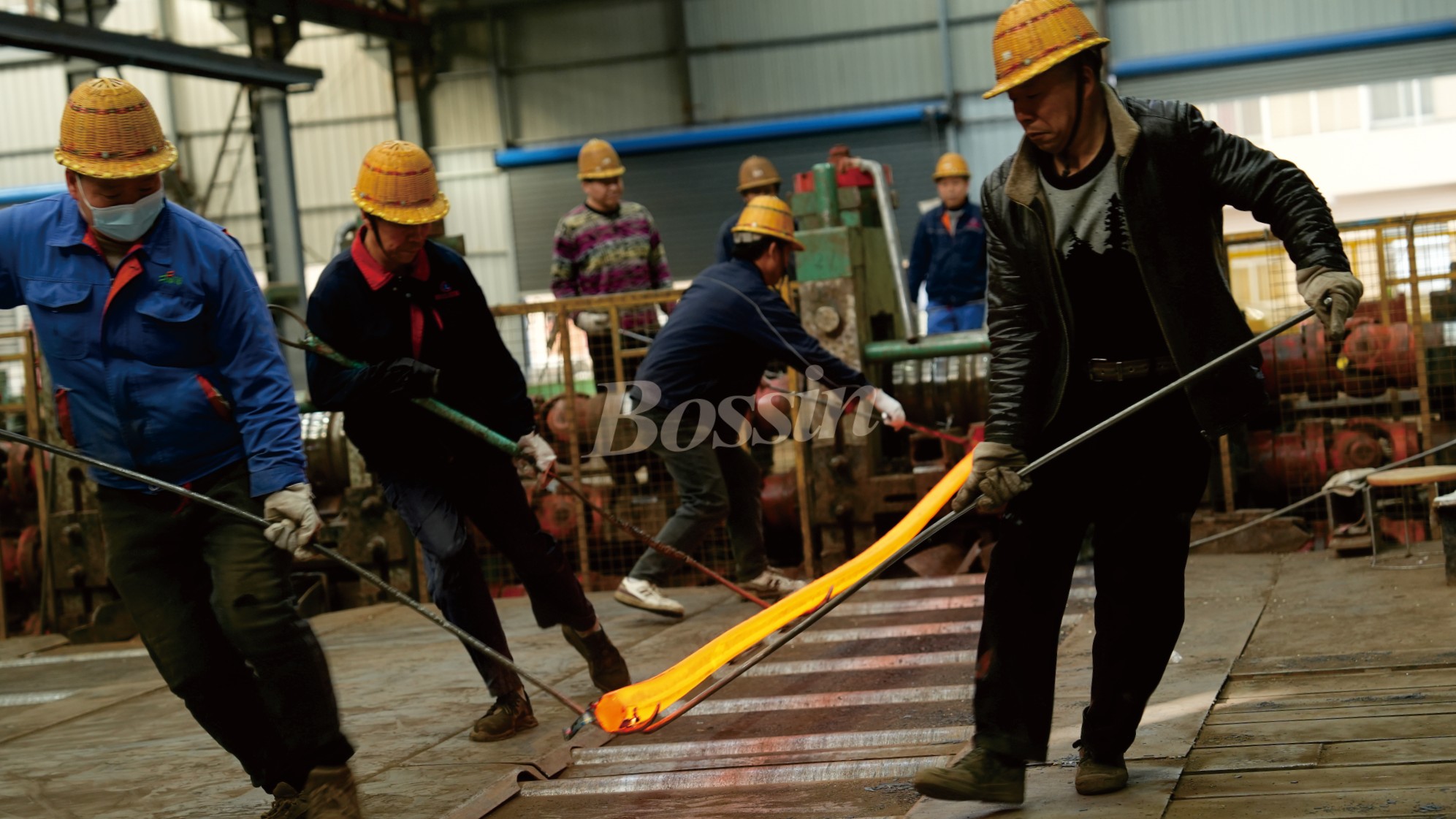
For titanium, the documentation layer is a per-batch mill certificate plus dimensional and surface verification. BOSSIN ships each batch order with a factory inspection certificate, and testing is carried out in laboratories accredited to ISO/IEC 17025 in accordance with international standards. Process control follows a defined sequence: 100% raw material inspection; full-process quality monitoring across melting, forging, and rolling; process quality inspection; nondestructive testing; 100% finished product inspection; system quality audit; and a monthly quality report system, under ISO 13485, ISO 9001:2015, and EN 9100:2018 certification.
| Verification element | Referenced standard or method | What it confirms | Status in the evidence set |
|---|---|---|---|
| Material conformity — Nitinol | ASTM F2063 | Wrought NiTi composition and material conformance | Referenced in FDA bone-anchor 510(k) guidance |
| Tensile behaviour — superelastic Nitinol | ASTM F2516-22 | Upper and lower plateau strength, residual elongation, tensile strength, elongation | FDA-recognized consensus standard; 5 July 2026 transition date stated for older-edition declarations |
| Pitting corrosion | ASTM F2129 | Corrosion susceptibility for applicable small implants | Recommended in FDA nitinol technical guidance |
| Biological evaluation | ISO 10993-1 | Biocompatibility assessment framework | Framework referenced by FDA nitinol guidance |
| Transition temperature | As and Af, finished device | Lot-to-lot transformation consistency | FDA bone-anchor guidance recommends samples from multiple production lots |
| Batch documentation | Factory inspection certificate (MTC) | Batch-level conformance record | BOSSIN practice; testing in ISO/IEC 17025 accredited laboratories |
Step-by-Step Breakdown: Locking the Correct Standard Into a Long-Term Supply Program
The sequence below is written for buyers moving from decision into execution, where the standard has to survive multiple lots and multiple years rather than a single delivery.
- Start from device function, not from the material name. Load-bearing, high-strength components point to Ti-6Al-4V ELI; lower-stress components point to commercially pure grades; superelastic or shape-memory behaviour points to Nitinol; orthodontic Ti-Mo wire is a separate family with no listed material standard here.
- Map the family to the standard before issuing an RFQ. ASTM F2063 for Nitinol; ASTM F136 / ISO 5832-3 for Ti-6Al-4V ELI; ASTM F67 / ISO 5832-2 for unalloyed grades. Naming the standard on the RFQ prevents suppliers from quoting a certificate the design file cannot accept.
- Map the form and dimension to the standard scope. Confirm whether the item falls in strip territory (0.03–2.0 mm) or wire territory (0.03–6.0 mm), or is a bar, plate, cable, or coil. Split multi-form orders into separate lines with their own standard, dimension, and test list.
- Write the grade designation and standard edition literally. “ASTM F67-24” and “ISO 5832-2:2018” are unambiguous; “implant grade titanium” is not. Where no standard applies — the TMA wire case — write that explicitly and attach the supplier declaration format instead.
- Define the acceptance package per lot, not per program. Material certificate, dimensional report, surface condition, and the applicable Nitinol test data. This is where ASTM F2516, ASTM F2129, and As/Af reporting are assigned to the material supplier or to the device manufacturer, so ownership is never assumed.
- Add change control for standard editions and source changes. FDA recognition of ASTM F67-13 has been superseded by ASTM F67-24 recognition; the ASTM F2516-22 transition date for older-edition declarations has already passed. A long-term agreement should state who is notified, and how quickly, when a cited edition or a mill source changes.
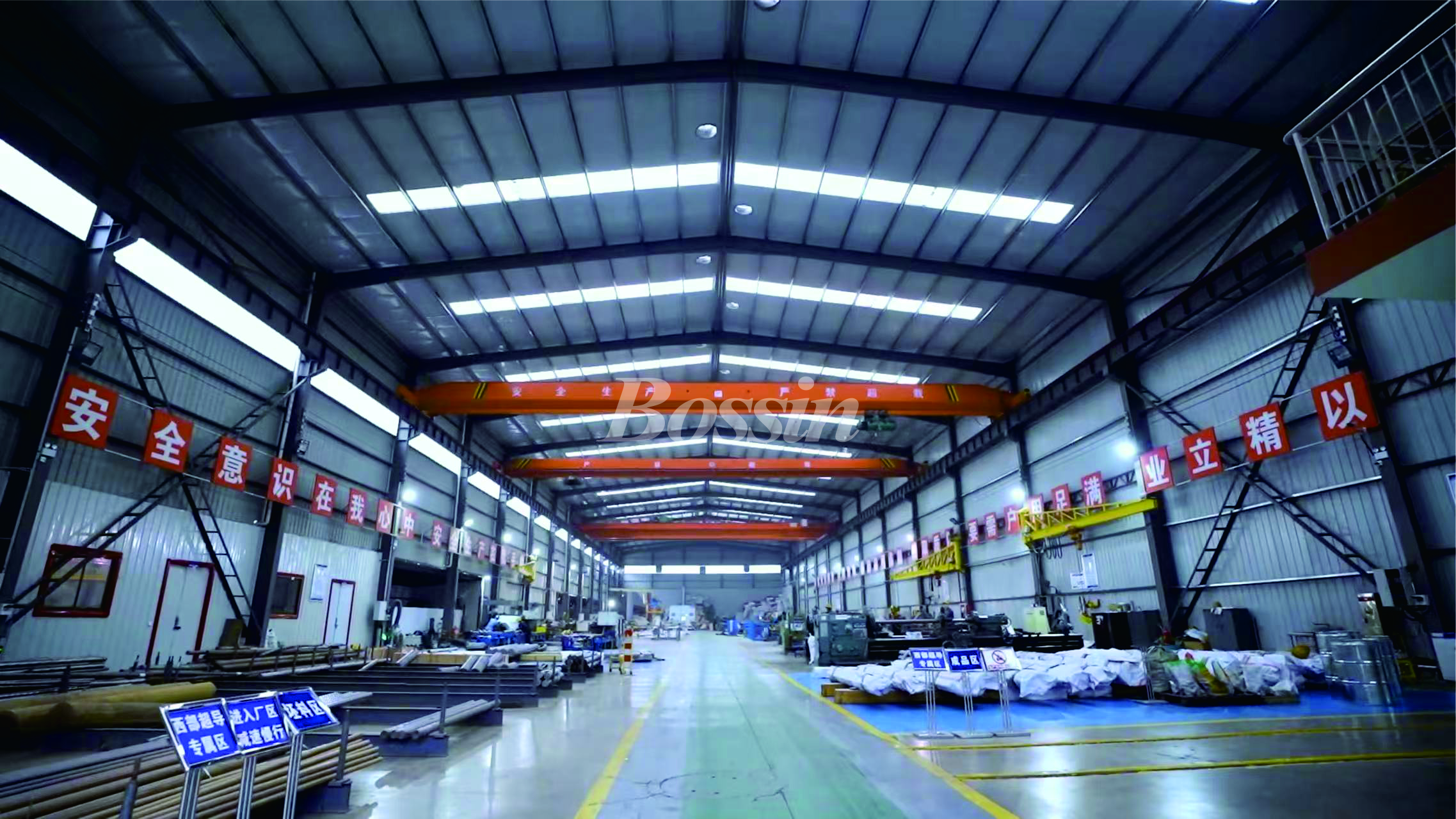
- Verify at execution, then keep verifying. Incoming inspection against the purchase order, traceability from raw material to finished product, monthly quality reporting, and periodic system audit. BOSSIN operates a traceable monitoring system at every production phase, with a full in-house line covering melting, forging, rolling, and final finishing.
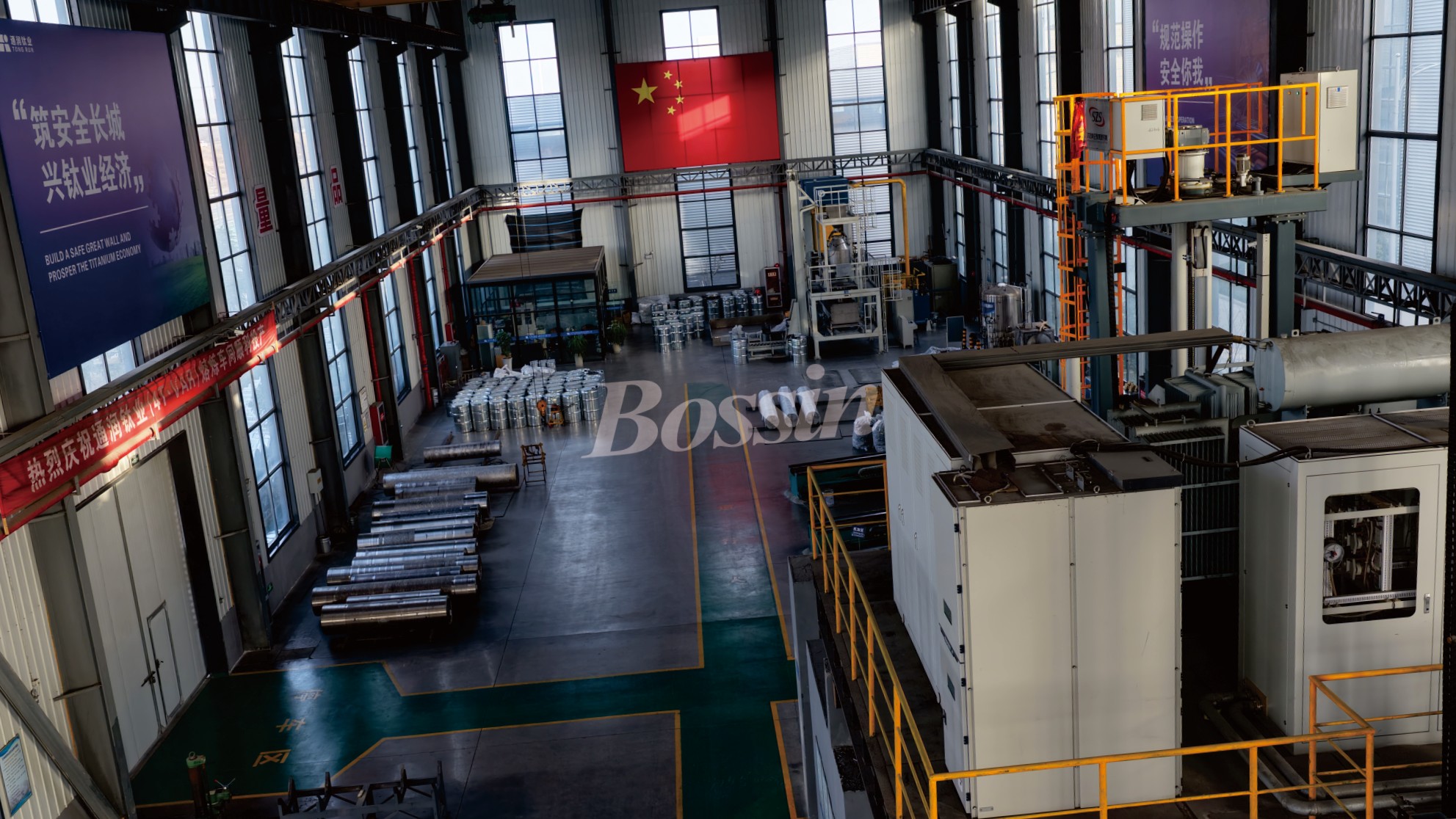
Execution capacity determines whether the standard can be met repeatedly. BOSSIN operates a 50,000 m² site with a 40,000 m² plant, employs 150 staff including 30 engineers, and runs an annual output of 5,000 tons. The typical production lead time is 15 days, and monthly production capacity is 300 tons. Roughly 80% of output is exported, with main markets including Korea, Brazil, Colombia, Argentina, India, Turkey, Germany, and Switzerland.
| Supply program parameter | Stated value | Relevance to a long-term agreement |
|---|---|---|
| Minimum order quantity | 10 kg | Allows sample and pilot-lot validation before scale-up |
| Delivery terms | FOB / CIF / EXW | Supports both direct import and distributor-led supply models |
| Payment terms | T/T, L/C | Letter of credit available for recurring program purchases |
| Acceptance criteria | In-house full inspection per ASTM/ISO standards, with material test certificate (MTC) | Defines the per-batch record set in step 5 |
| Laboratory accreditation | ISO/IEC 17025 accredited testing in accordance with international standards | Supports traceable batch test data |
| Third-party inspection | SGS, BV available upon request | Independent verification option for new or high-risk programs |
| Typical production lead time | 15 days | Planning basis for replenishment cycles |
| Monthly production capacity | 300 tons | Headroom for volume growth within the same qualified source |
| Quality management certification | ISO 13485, ISO 9001:2015, EN 9100:2018 | Medical-device and aerospace-aligned quality system coverage |
Use Cases: Where the Matrix Changes the Order
Nitinol strip for a bone-anchor program
A bone anchor built from Nitinol strip is ordered against ASTM F2063 at the specified composition of Ni 54.5–57.0% with Ti balance. The device file then needs transition temperatures from multiple production lots and, where applicable, corrosion testing per ASTM F2129 and biological evaluation per ISO 10993-1. The order should separate material conformity from device characterisation so neither is assumed to be covered by the other.
Trauma plate and screw stock in Ti-6Al-4V ELI
Load-bearing components draw on Ti-6Al-4V ELI under ASTM F136 or ISO 5832-3, in bar, plate, or wire form. Because the two documents describe the same alloy family, the buyer should fix one as the cited standard on the drawing and require the certificate to name that document, rather than accepting whichever appears on the mill certificate.
Commercially pure titanium for lower-stress implants
Where the design does not require high-strength alloy performance, unalloyed grades under ASTM F67 or ISO 5832-2 are the correct route, with the grade designation stated on the line item. Because ASTM F67 recognition has moved from the F67-13 edition to F67-24, a program that started before December 2025 should confirm which edition its drawing and supplier certificate now reference.
Orthodontic wire programs running titanium wire and TMA wire together
Archwire programs frequently purchase titanium wire and Ti-Mo TMA wire in the same cycle. The titanium wire line carries a standard; the TMA line does not, in this matrix. Splitting them into two line items with two documentation formats prevents a single “medical titanium wire” certificate from being applied to a Ti-Mo alloy it does not describe.

What This Matrix Does Not Cover
Scope limits matter as much as the mapping itself. This matrix does not interpret regional regulatory directives for the European Union, China, Japan, or any other market; it records only the standard affiliations listed above. It does not compare supplier prices, and no cost benchmark is implied. It does not assert that any particular supplier's certificate is conformant — conformance is a per-batch, per-document verification. And it does not provide fatigue, corrosion, or superelasticity performance values for any product; those come from test reports tied to specific lots and specifications.
FAQ
Which standard applies to Nitinol strip versus medical titanium bar?
Nitinol strip, plate, sheet, wire, cable, and coil are specified against ASTM F2063, with the Nitinol composition stated as Ni 54.5–57.0% and titanium as the balance. Medical titanium bar, plate, and wire follow a different route: ASTM F136 with ISO 5832-3 for Ti-6Al-4V ELI, or ASTM F67 with ISO 5832-2 for unalloyed grades. The two families do not share a material standard, so a single “implant-grade titanium” line item cannot cover both.
Does ASTM F136 or ISO 5832-3 cover TMA wire?
No. ASTM F136 and ISO 5832-3 address Ti-6Al-4V ELI, and ASTM F67 and ISO 5832-2 address unalloyed titanium. TMA wire is a Ti-Mo alloy and is not tied to any standard listed in this matrix. Buyers should therefore specify TMA wire through supplier-declared chemical composition, mechanical properties, dimensional tolerance, surface condition, and lot identification, and should state on the purchase order that no ASTM or ISO material standard is being invoked for that line.
What should a long-term medical titanium bar supply partner in China document per lot?
At minimum: a material test certificate (MTC) tied to the batch, full inspection against the cited ASTM or ISO standard, and traceability from raw material to finished product. Testing carried out in laboratories accredited to ISO/IEC 17025 in accordance with international standards supports the credibility of that record. For Nitinol items, the lot record should also be able to supply tensile data per ASTM F2516-22 and transition-temperature data where the device file requires it. A supplier operating under ISO 13485, ISO 9001:2015, and EN 9100:2018 with a documented process-control sequence — raw material inspection, in-process monitoring, nondestructive testing, 100% finished product inspection, system audit, and monthly quality reporting — can support those requirements as a routine output rather than a special request.
What are the commercial terms for a long-term titanium bar supply program?
BOSSIN states a minimum order quantity of 10 kg, delivery terms of FOB, CIF, or EXW, and payment terms of T/T or L/C. Acceptance is based on in-house full inspection per ASTM/ISO standards with a material test certificate, and third-party inspection by SGS or BV is available upon request. These terms are what allow a pilot quantity to be validated first and then converted into a recurring program without renegotiating the acceptance basis.
Can I validate a sample before committing to a long-term supply agreement, and what is the lead time?
Yes — the 10 kg minimum order quantity is designed for exactly that step: validate the material, the certificate format, and the dimensional and surface condition against your drawing before scaling to a program. The typical production lead time is 15 days, and monthly production capacity is 300 tons, so a validated sample can move into recurring supply without a capacity re-qualification. To request a sample, a quotation for a specific grade and form, or the product catalogue, contact BOSSIN at sales@asiatitan.com or through WhatsApp at +86 13892862195, and state the standard, grade designation, product form, and dimension on the request so the certificate matches the document your design file cites.
Conclusion
The compliance decision is narrower than it first appears. Nitinol strip and plate go to ASTM F2063. Medical titanium bar, plate, and wire go to ASTM F136 with ISO 5832-3 for Ti-6Al-4V ELI, or ASTM F67 with ISO 5832-2 for unalloyed grades. TMA wire sits outside the listed standards and has to be controlled by supplier declaration. Product form and thickness — strip at 0.03–2.0 mm, wire at 0.03–6.0 mm — decide which standard route a line item actually takes.
For a long-term program, the standard is not the finish line; it is the baseline that has to hold across editions and lots. FDA recognition has already moved from ASTM F67-13 to ASTM F67-24, and the transition date for older ASTM F2516 edition declarations has passed. Buyers who write the standard, edition, grade, form, and per-lot acceptance package into the agreement — and who require traceable documentation against them — convert a compliance question into a supply continuity advantage rather than a recurring audit finding.
Next Step: Match the Standard to the Form Before You Order
Send BOSSIN the material family, product form, dimension, and the standard your drawing cites. You will receive a quotation based on the correct certificate route — ASTM F2063 for Nitinol, ASTM F136 / ISO 5832-3 or ASTM F67 / ISO 5832-2 for medical titanium bar, plate, and wire — plus sample availability and a 15-day typical production lead time.
Website: www.asiatitan.com | Email: sales@asiatitan.com | WhatsApp: +86 13892862195 | Tel: +86 13892862195
Download the full product and capability catalogue: BOSSIN Product Brochure (PDF)
XI'AN BOSSIN METAL TECHNOLOGY CO.,LTD. — Fengye Building, Gaoxin Road, Xi'an High-Technology Industrial Development Zone, China.
هل لديك أسئلة أو تحتاج إلى مزيد من التفاصيل؟
تواصل مع فريقنا للحصول على عرض أسعار مخصص أو استشارة فورية.
طلب عرض أسعار
املأ النموذج أدناه وسيتواصل معك فريقنا بعرض مقترح مخصص.
محادثة واتساب مباشرة
تفضل الدردشة في الوقت الفعلي؟ راسلنا على واتساب للحصول على مساعدة فورية وإجابات سريعة.
- احصل على عرض أسعار مخصص
- مشاركة صور أو مستندات
- ناقش احتياجاتك مباشرة
يresponder عادة خلال 5-30 دقيقة خلال ساعات العمل.