

 50,000 m²
 150
150

Best Medical Titanium Bar Manufacturers in China: 2026
Best Medical Titanium Bar Manufacturers in China: 2026
The best medical titanium bar manufacturers in China for 2026 are not necessarily the largest names; they are the suppliers that can prove implant-grade quality with documents, in-house production, and laboratory data. This ranking evaluates Chinese medical titanium bar manufacturers using an eight-point scorecard, names the companies and supplier categories we verified, and gives you a step-by-step method to shortlist a medical titanium bar supplier before you commit.
Why 'Best' Is Hard to Verify in Chinese Medical Titanium Bar Sourcing
Evaluation-stage buyers usually face the same problem: every candidate claims to be a manufacturer, certified and export-ready, but the claims rarely come with evidence. In the medical titanium bar market, a reseller can legally present mill certificates from a third party. Two bars with the same grade name can have different microstructures, inclusion levels, dimensional accuracy, and surface quality. An unaccredited certificate can look convincing in a PDF. These risks matter because the bar becomes a bone screw, a spinal rod, a joint stem, or a dental implant body — components with no tolerance for material inconsistency.
"Best" is also application-specific. A bar for bone screws is commonly ordered in diameters such as Φ3.5, Φ4.0, Φ4.5, Φ5.0, Φ5.5, Φ6.0, Φ8.0, and Φ10.0. A spinal rod program may need Φ13.5, Φ14.0, Φ14.2, Φ15.0, Φ16.0, or Φ17.0. A bone-joint forging can start from a larger bar, for example Φ30.0 up to Φ65.0, and dental implants typically run from Φ3.0 to Φ20.0. A manufacturer that offers the full application size range, in certified grades, is easier to qualify than one that only stocks commodity diameters.
Industry Background: Medical Titanium Bar Demand in 2026
Global demand for medical-grade titanium materials continues to grow. The market is estimated at USD 5.21 billion in 2025 and is projected to reach USD 9.56 billion by 2034 (Dataintelo). The narrower medical titanium alloy segment is valued at USD 1.45 billion in 2025 and is forecast to reach USD 2.59 billion by 2033 at a CAGR of 7.5% (Verified Market Research). Orthopedic implants remain the largest application, accounting for about 42.3% of revenue in the medical titanium market (Dataintelo).
China is a structural part of this supply chain. The country's cumulative export volume of titanium rods, bars, and profiles increased by 21.85% year-on-year as of March 2025 (China Customs / SMM). That export growth is why procurement teams in Korea, Brazil, Colombia, Argentina, India, Turkey, Germany, and Switzerland are actively evaluating Chinese manufacturers rather than waiting for local stock.
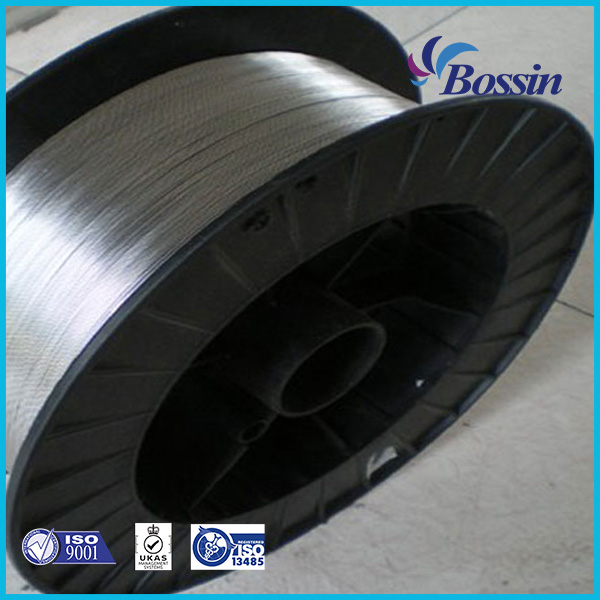
The same trend appears in shape memory alloys. The global Nitinol-based medical device market was valued at USD 4.1 billion in 2024 with a projected CAGR of 7.1% (Precedence Research). For implant manufacturers, this means the supplier base must handle not only titanium bars but also related materials such as Nitinol wire, Nitinol sheet, titanium wire, titanium cable, and titanium coil. A manufacturer that controls titanium and Nitinol in-house can shorten qualification time across a product portfolio.
Standards anchor the evaluation. High-strength implant alloys such as Ti-6Al-4V ELI are governed by ASTM F136 and ISO 5832-3, while unalloyed commercially pure titanium for surgical implants is covered by ASTM F67 and ISO 5832-2. Any manufacturer ranked for implant material must be able to ship against these standards, not only against the general bar standard ASTM B348.
Detailed Solution: The 2026 Medical Titanium Bar Manufacturer Scorecard
The ranking below uses eight indicators. Each indicator can be verified with a certificate, a datasheet, a lab report, or a factory audit.
1. Medical-Device Quality Management Certification
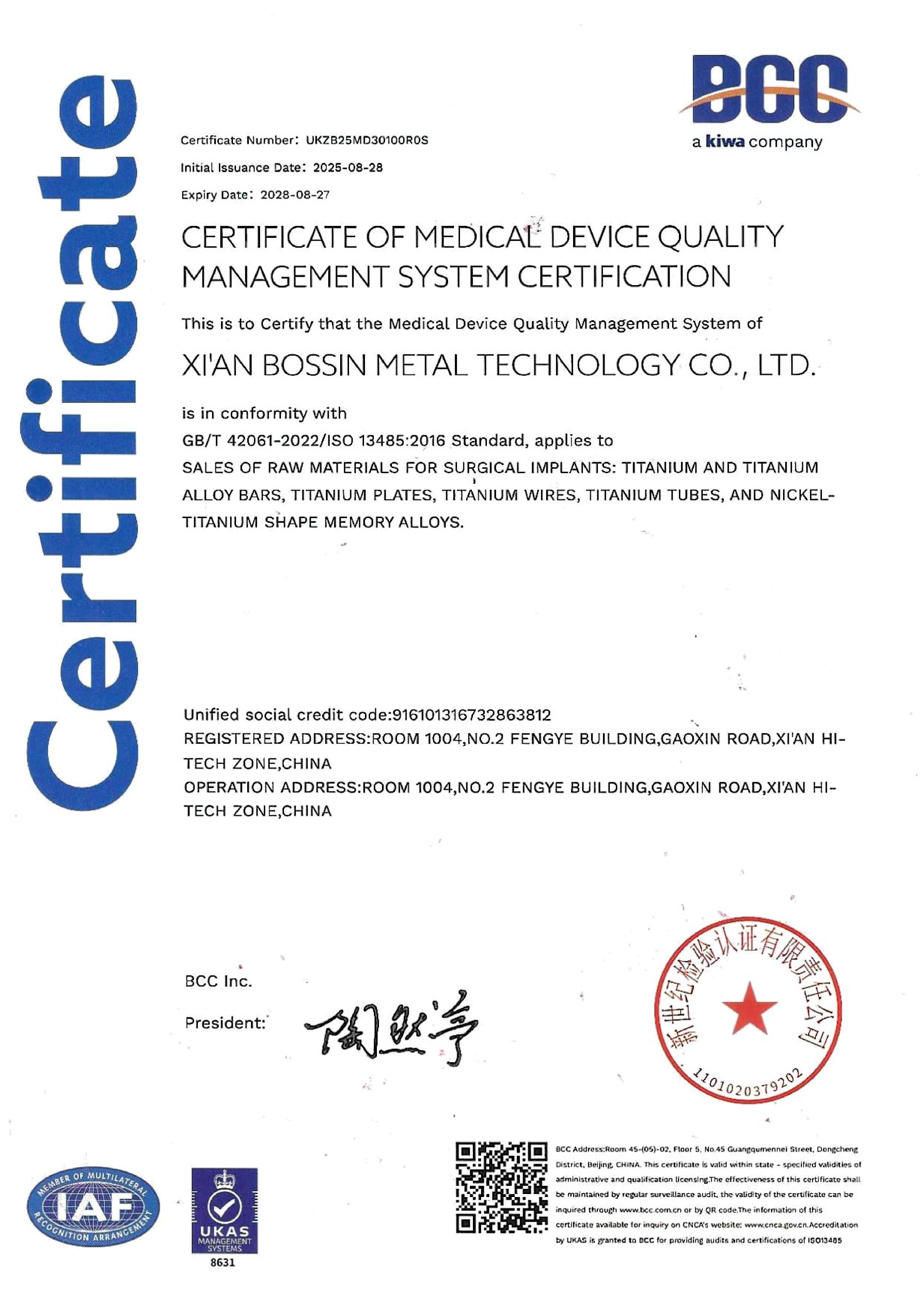
ISO 13485:2016 is the core quality system for medical device supply chains. XI'AN BOSSIN METAL TECHNOLOGY CO., LTD. (BOSSIN) holds certificate UKZB25MD30100R0S issued by BCC, covering surgical implant raw materials including titanium and titanium alloy bars, plates, wires, tubes, and nickel-titanium shape memory alloys, valid until 2028-08-27. The company is also certified to ISO 9001:2015 and EN9100:2018. If a candidate cannot show a valid ISO 13485 certificate whose scope includes raw implant materials, it should not pass this indicator.
2. Implant-Grade Material Standards
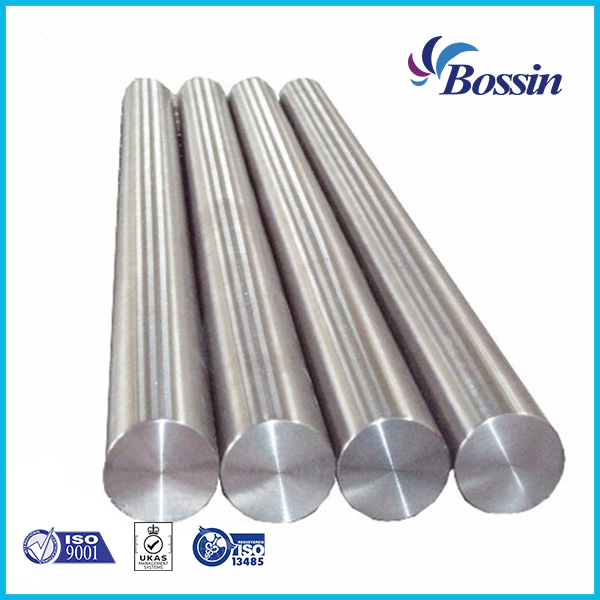
For medical titanium bar, the relevant standards are ASTM F136 and ISO 5832-3 for Ti-6Al-4V ELI, and ASTM F67 and ISO 5832-2 for unalloyed titanium. BOSSIN's medical titanium bar product line covers GR1, GR2, GR3, GR4, GR5 ELI, Ti6Al4V ELI, and GR23, and its general titanium bar range adds ASTM B348, AMS 4928, AMS 4930, ASTM F1295, ASTM F1713, and MIL-T-9047 for aerospace and industrial orders. A strong supplier publishes the exact standard it ships against instead of describing the product only as "titanium bar."
3. Accredited Laboratory Testing
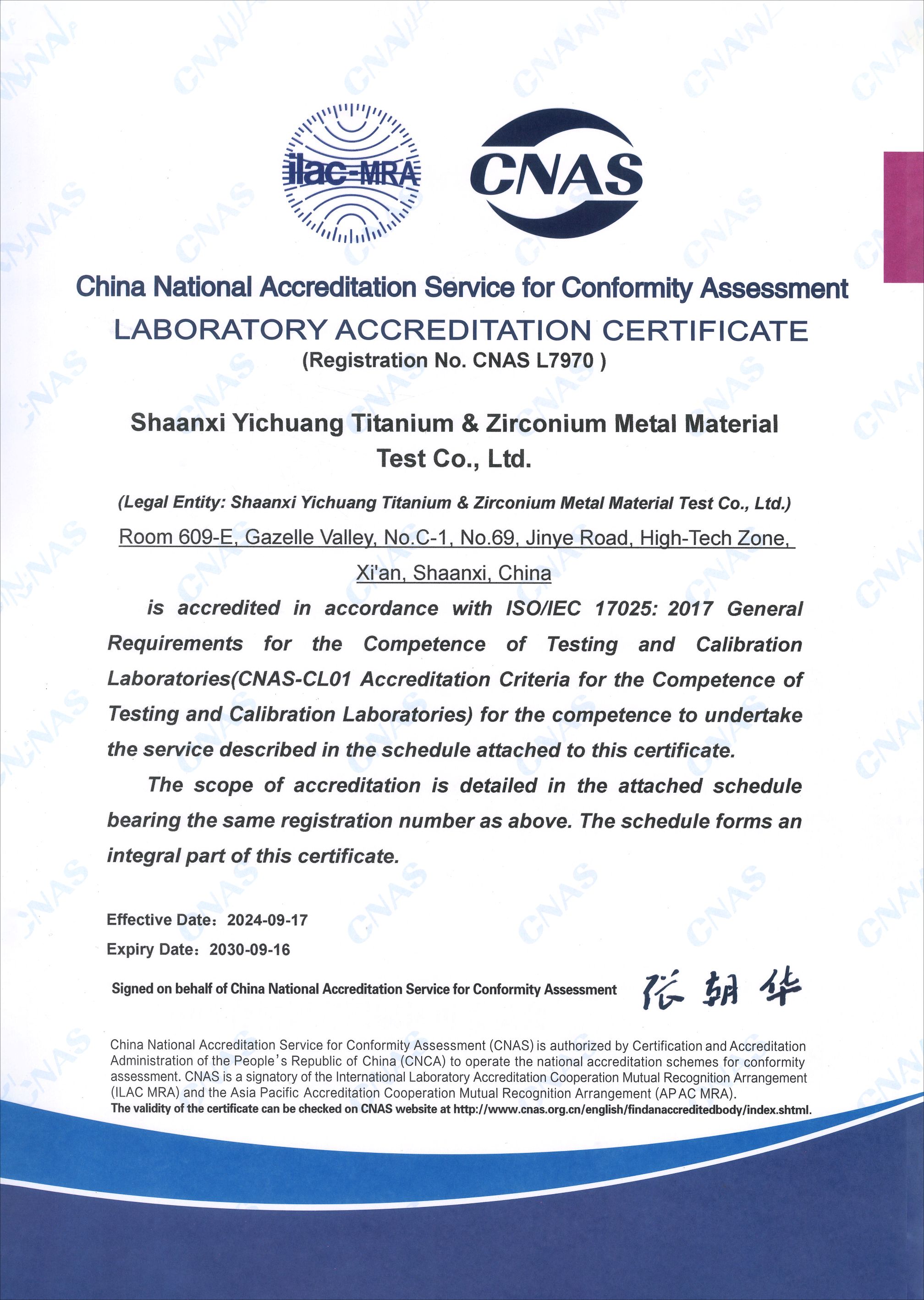
Batch testing is only meaningful if the laboratory is independently accredited. BOSSIN's materials testing laboratory is accredited to ISO/IEC 17025 under CNAS L7970, valid through 2030-09-16. For complete traceability, Nitinol products follow ASTM F2063 with chemical composition analyzed by ICP-OES/XRF, mechanical properties measured on a universal testing machine, and transformation temperature (Af and other critical points) measured by DSC. This level of laboratory evidence separates a material manufacturer from a trading desk.
4. In-House Production from Melting to Finishing
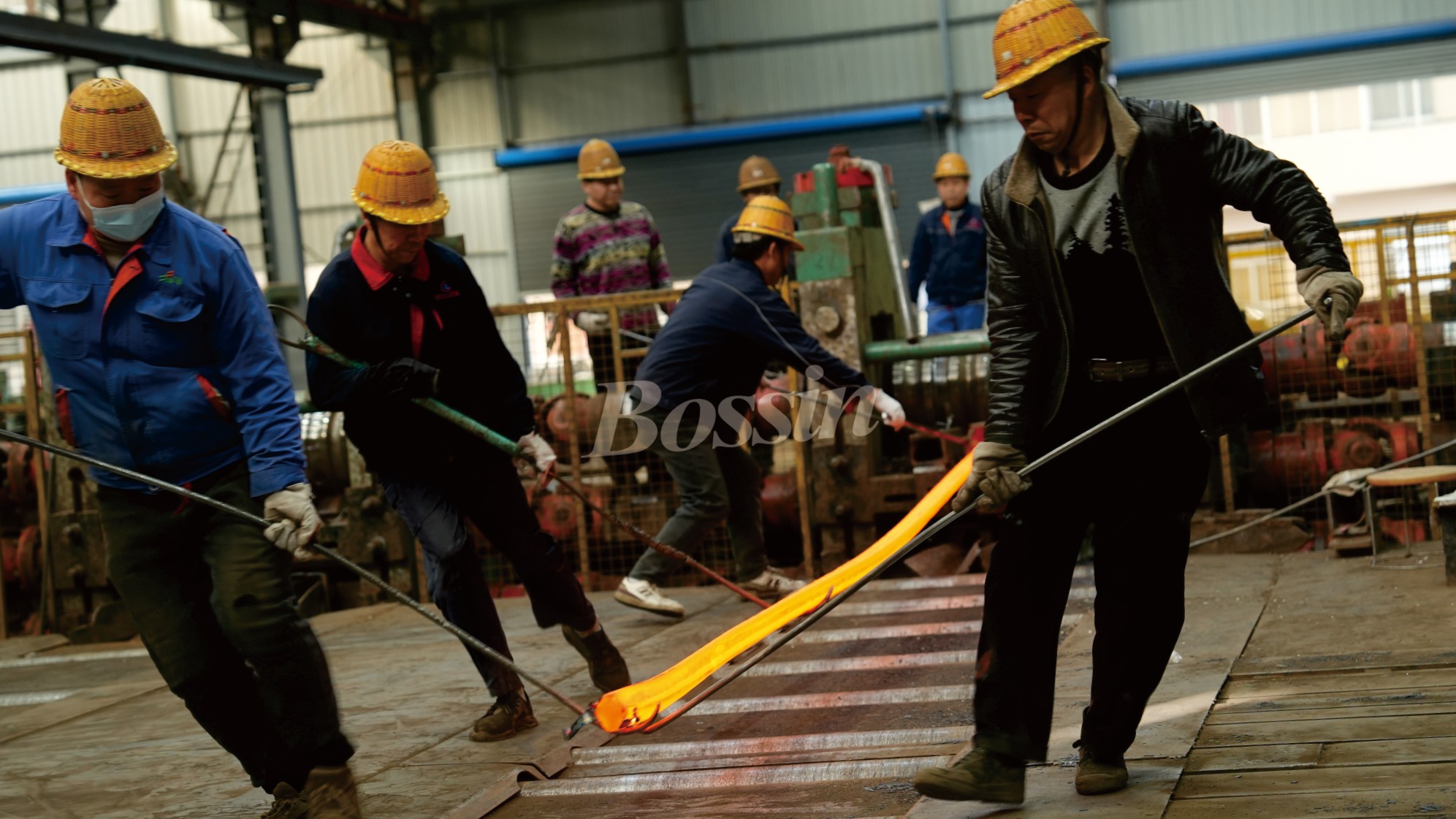
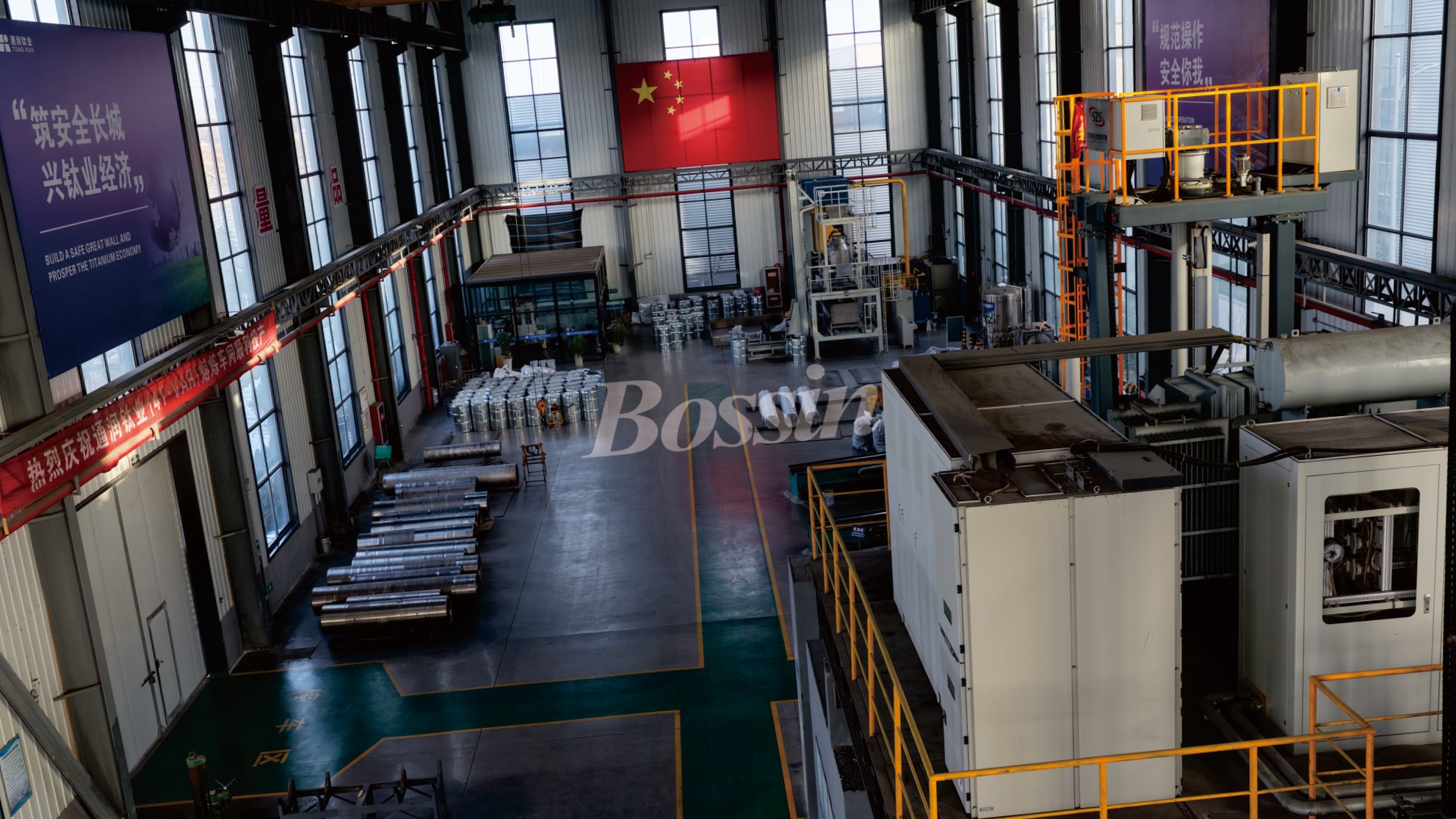
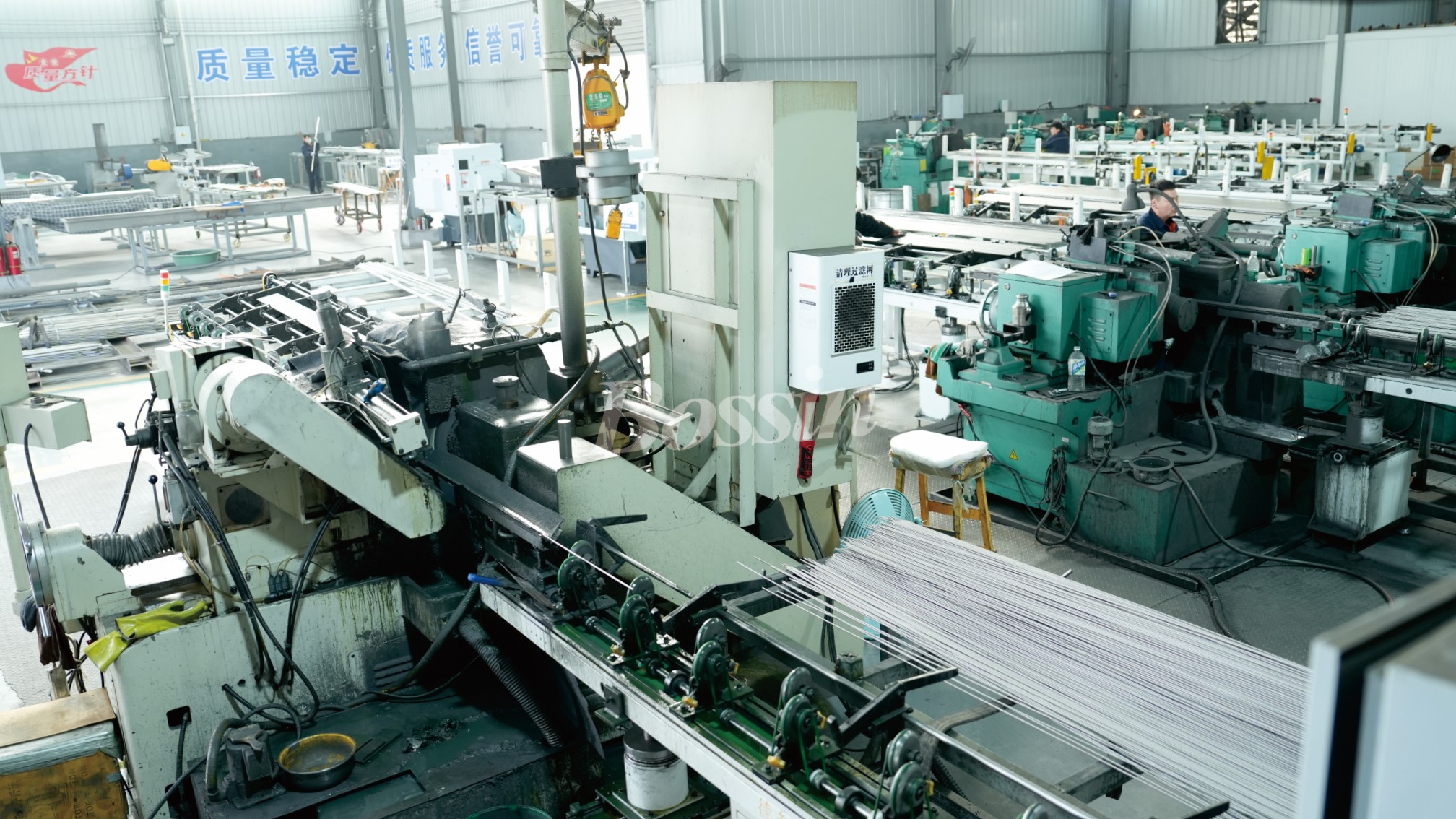
A vertically integrated manufacturer controls quality from the raw material stage. BOSSIN operates a complete in-house production line covering melting, forging, rolling, and final finishing, with quality control and process management across the entire chain, all within its own facility. Traceability is strongest when one company controls the thermal and mechanical history of the bar. BOSSIN is located in Baoji High-tech Zone, known as "China's Titanium Valley," with a site area of 50,000 square meters and a plant area of about 40,000 square meters.
5. Precision and Microstructure
Implant machining demands tight tolerances. BOSSIN's medical titanium bar reaches an accuracy of 0.005 mm with tolerance classes h6, h7, h8, and h9. Microstructure is controlled to ETTC-2 grades A1-A3, which is critical for fatigue performance in load-bearing implants. When you evaluate a supplier, ask for actual microstructure photos corresponding to the batch, not a generic brochure claim.
6. Application-Specific Diameter Program
The best suppliers publish diameters matched to implant applications. BOSSIN lists titanium bars for bone screws (Φ3.5, Φ4.0, Φ4.5, Φ5.0, Φ5.5, Φ6.0, Φ8.0, Φ10.0), for spine (Φ13.5, Φ14.0, Φ14.2, Φ15.0, Φ16.0, Φ17.0), for bone joints (Φ30.0, Φ35.0, Φ40.0, Φ50.0, Φ55.0, Φ60.0, Φ65.0), and for dental implants (Φ3.0-20.0 mm), within a general bar range of Φ1.0-100 mm and length up to 6000 mm. This makes it easier to qualify a single supplier for several product lines.
7. Capacity, MOQ, and Lead Time
Scale supports consistency. BOSSIN has 150 employees, including 30 R&D engineers, and an annual production capacity of 5,000 tons. Titanium bar production capacity is about 300 tons per month, with an MOQ of 10 kg and a standard lead time of about 15 days. For Nitinol wire, monthly capacity is 5,000 kg, MOQ is 10 kg, and lead time is 10-25 days depending on the requested Af temperature and surface finish. These figures matter for buyers who are planning repeat orders rather than one-off samples.
8. Traceability and After-Sales Support
Each batch order from BOSSIN is accompanied by a factory inspection certificate, and third-party test reports are available upon request. Quality feedback is handled through an ISO 13485-compliant complaint system, with 7x24 online technical support and a documented response to quality issues within 12 hours. For long-term supply, this is as important as the material certificate itself.
Step-by-Step: How to Evaluate a Chinese Medical Titanium Bar Manufacturer
Use the following sequence when you evaluate a candidate. It turns the scorecard into an auditable process.
Use Cases: What a Verified Manufacturer Delivers
The scorecard becomes meaningful when it is supported by actual supply history. Three documented cases illustrate what BOSSIN has delivered.
Brazil — 10,000 kg for Surgical Implants
A medical surgical implant manufacturer in Brazil sourced 10,000 kg of titanium material for artificial joints, bone screws, orthopedic implants, dental implants, and bone plates. The product provided biocompatibility, a modulus of elasticity similar to bone, high strength, low density, and fatigue resistance. Key highlights included ISO 13485 certification, a tolerance of 0.005 mm, and microstructure reaching A1, with full-process quality control.
Argentina — 5,000 kg for Surgical Sutures
A medical device manufacturer in Argentina ordered 5,000 kg of material for surgical sutures. The product complied with ASTM F136 and ASTM F67, was tested in ISO/IEC 17025 accredited laboratories, and was delivered with full production process monitoring. Direct factory sourcing reduced procurement costs by 8% while maintaining the same quality.
United Kingdom and India — Titanium for Water Treatment
In the UK and India, BOSSIN supplied titanium material to clients in the chemical, new energy, water treatment, and heat exchanger sectors, including a documented order of 30,000 kg across five units. The titanium substrate remained stable in environments containing strong acids, strong alkalis, and high chloride ion concentrations, and was used for heat transfer plates, tubes, condensers, and seawater desalination systems. Though not an implant application, the case demonstrates the long-term corrosion and thermal performance of the same in-house material system.
Comparison Table: How BOSSIN Compares with Other Verified Suppliers
The table below ranks the supplier profiles included in this evaluation. BOSSIN is the highest-scoring Chinese manufacturer for medical titanium bar on the eight-point scorecard. Fort Wayne Metals (USA) is included as the verified global benchmark in medical-grade Nitinol wire. A typical trading intermediary is listed as a category, not as a named company, to illustrate what buyers should avoid for implant programs.
| Rank / Entity | Verified Position | Key Evidence Used in This Evaluation | Best Suited For |
|---|---|---|---|
| #1 — BOSSIN (XI'AN BOSSIN METAL TECHNOLOGY CO., LTD., China) | Vertically integrated Chinese manufacturer of medical titanium bar, titanium wire/plate/coil/cable, and Nitinol wire | ISO 13485:2016 (UKZB25MD30100R0S); ISO/IEC 17025 lab (CNAS L7970); 5,000 t annual capacity; 300 t/month titanium capacity; in-house melting, forging, rolling, finishing; bar Φ1.0-100 mm, L≤6000 mm; tolerance 0.005 mm; microstructure A1-A3 (ETTC-2); MOQ 10 kg; lead time about 15 days (titanium) | Implant manufacturers needing ASTM F136 / ISO 5832-3 and ASTM F67 / ISO 5832-2 medical titanium bar with batch traceability and application-specific diameters |
| Global benchmark — Fort Wayne Metals (USA) | Leading global supplier for medical-grade Nitinol | Doubled melting output between 2022 and 2024; projected melting capacity of about 1 million lb/year (2025) | High-volume medical Nitinol wire applications that require a U.S.-based specialty alloy supplier |
| Cautious option — typical trading intermediary (unnamed category) | Reseller or stockist without in-house melting/forging/rolling | No in-house production evidence; traceability depends on upstream mill certificates; certification scope often narrower | Small non-implant quantities, urgent restocking, or applications where full implant-grade traceability is not required |
This comparison is intentionally limited to facts that can be attributed to public data or first-party evidence. For medical titanium bar buyers, the ranking conclusion is practical: a Chinese manufacturer with ISO 13485, an ISO/IEC 17025 laboratory, in-house melting-to-finishing control, and documented implant supply cases (such as the Brazil and Argentina projects above) is the type of supplier that should reach your final round. If your program also uses Nitinol components, choose a manufacturer that can control both material families.
FAQ
Which certifications should the best medical titanium bar manufacturers in China hold?
The most important certificate is ISO 13485:2016 for medical device quality management, and its scope should cover surgical implant raw materials. BOSSIN holds ISO 13485:2016 (certificate UKZB25MD30100R0S), plus ISO 9001:2015 and EN9100:2018, and its materials testing laboratory is accredited to ISO/IEC 17025 (CNAS L7970). For implant products, the manufacturer should ship to ASTM F136 / ISO 5832-3 for Ti-6Al-4V ELI and ASTM F67 / ISO 5832-2 for unalloyed titanium.
What production capacity should a top Chinese medical titanium bar manufacturer have?
Capacity should be large enough to support repeat orders and consistent process control. BOSSIN operates a 50,000 m² site in Baoji High-tech Zone ("China's Titanium Valley") with about 40,000 m² of plant area, 150 employees, 30 R&D engineers, and an annual output capacity of 5,000 tons. Titanium bar monthly capacity is about 300 tons, with an MOQ of 10 kg. Capacity matters because a manufacturer that controls melting, forging, rolling, and finishing in-house can maintain traceability from raw material to finished bar.
Can buying medical titanium bar directly from a Chinese factory reduce procurement cost?
In a documented Argentina project, direct factory sourcing reduced procurement costs by 8% while maintaining the same quality. Direct sourcing removes intermediary margins and gives the buyer direct access to batch records, inspection certificates, and technical support. Actual savings depend on grade, diameter, quantity, and surface finish, so the reliable step is to request a quotation for your exact specification.
Can I request a sample before placing a medical titanium bar order?
Yes. For evaluation-stage buyers, BOSSIN offers a 10 kg MOQ for medical titanium bar, with OEM customization of grade, shape (round, square, hexagonal, or custom profile), diameter from 1 mm to 300 mm, length from 50 mm to 6000 mm, and tolerance classes h6, h7, h9, or h11. Secondary processing such as drilling, milling, and threading is available on request. Contact sales@asiatitan.com or WhatsApp +86 13892862195 to request a sample, a quotation, or third-party test reports.
What is the typical lead time for medical titanium bar orders from China?
BOSSIN's standard lead time for titanium bar is about 15 days; Nitinol wire lead time is 10-25 days depending on Af temperature, material condition, and surface finish. Each batch order is delivered with a factory inspection certificate, and third-party test reports are available on request. For a new specification, confirm the lead time with the factory before committing, and use the sample/qualification order to validate both quality and delivery. To start the conversation, email sales@asiatitan.com or visit www.asiatitan.com.
Conclusion
Selecting the best medical titanium bar manufacturer in China does not require trusting a brand name; it requires verifying a short list of high-signal facts. In 2026, the manufacturers worth ranking first are those that combine ISO 13485:2016, implant-grade standards (ASTM F136 / ISO 5832-3, ASTM F67 / ISO 5832-2), an ISO/IEC 17025 accredited laboratory, in-house production from melting to finishing, tight tolerance and microstructure control, application-specific diameters, realistic capacity and lead times, and documented implant supply cases. BOSSIN satisfies these criteria and has verifiable supply history in Brazil, Argentina, the UK, and India.
For buyers who also need Nitinol wire, titanium plate, titanium wire, titanium cable, titanium coil, or Nitinol sheet, a manufacturer that controls both titanium and Nitinol production can reduce the number of suppliers in your implant supply chain. Use the scorecard above, run the eight steps, and request documents before you finalize your supplier list.
Next step: request the BOSSIN brochure and a quotation for your target titanium bar grade and diameter.
Email: sales@asiatitan.com | WhatsApp / Tel: +86 13892862195 | Website: www.asiatitan.com