
دليل التطبيق العمودي: كيفية اختيار مورد مقطع صناعي لتدفقات النفايات المتخصصة
1. Industry-Specific Requirements for Industrial Shredders
Procuring an industrial shredder is not a one-size-fits-all process. The core requirements vary drastically by industry and the specific waste stream being processed. A supplier must understand these nuances to provide an effective solution.
E-Waste Recycling: This sector requires equipment capable of handling complex, composite materials like circuit boards, computers, and mobile phones. The process often involves separating metals from plastics and must comply with international standards like the WEEE Directive. Equipment needs to be robust enough for hard metals yet precise enough to avoid contaminating material streams.
Plastic & Composite Material Recycling: Processing materials like Glass Fiber Reinforced Plastics (GFRP), PE/PP pipes, and plastic barrels demands high-torque, low-speed shredders. The equipment must resist abrasion from glass fibers and handle both rigid and flexible plastics without jamming. For operations in regions like the EU, compliance with the Single-Use Plastics Directive is a key consideration.
Metal Recycling: Shredding scrap steel, aluminum profiles, copper scrap, and end-of-life vehicle frames requires extreme durability. The core components, such as blades and shafts, must be made from premium wear-resistant steels like DC53 or D2 to achieve hardness levels of HRC 58–62 and withstand continuous heavy-duty operation without deformation.
Hazardous & Medical Waste Treatment: This is one of the most demanding applications. Shredders must operate in enclosed, disinfected environments with strict containment for infectious or chemical waste. Compliance with standards from bodies like the WHO and local environmental agencies is non-negotiable. The design must prioritize safety, with features like leak-proof collection and biohazard containment.
Bulky Waste & RDF Processing: For municipal solid waste (MSW) or Refuse-Derived Fuel (RDF) production, shredders must homogenize irregular, large-volume waste like furniture, mattresses, and industrial scrap into a consistent particle size. This is critical for efficient energy recovery or landfilling.
2. Three Essential Criteria for Supplier Selection
When evaluating industrial shredder suppliers, buyers should focus on three core capabilities that directly impact long-term project success.
1. Proven Industry Customization & Application Experience
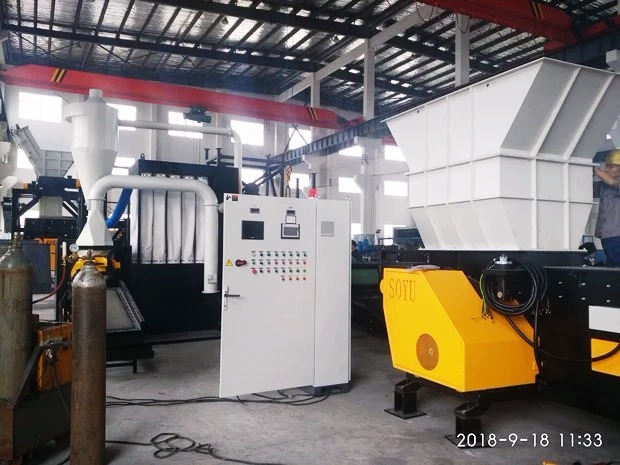
A supplier's portfolio should demonstrate specific solutions for your target material. Look for documented case studies. For instance, Changshu Shouyu Machinery Co., Ltd. (SOYU Machinery) has provided a cable recycling line for a UK-based agent, which has been in stable operation for 5 years. The line includes a single shaft shredder for primary cable shredding and a granulator for further processing, with customizable voltage. This shows an understanding of the specific material flow and end-product requirements for insulated cable scrap.
2. Comprehensive Compliance & Safety Certification
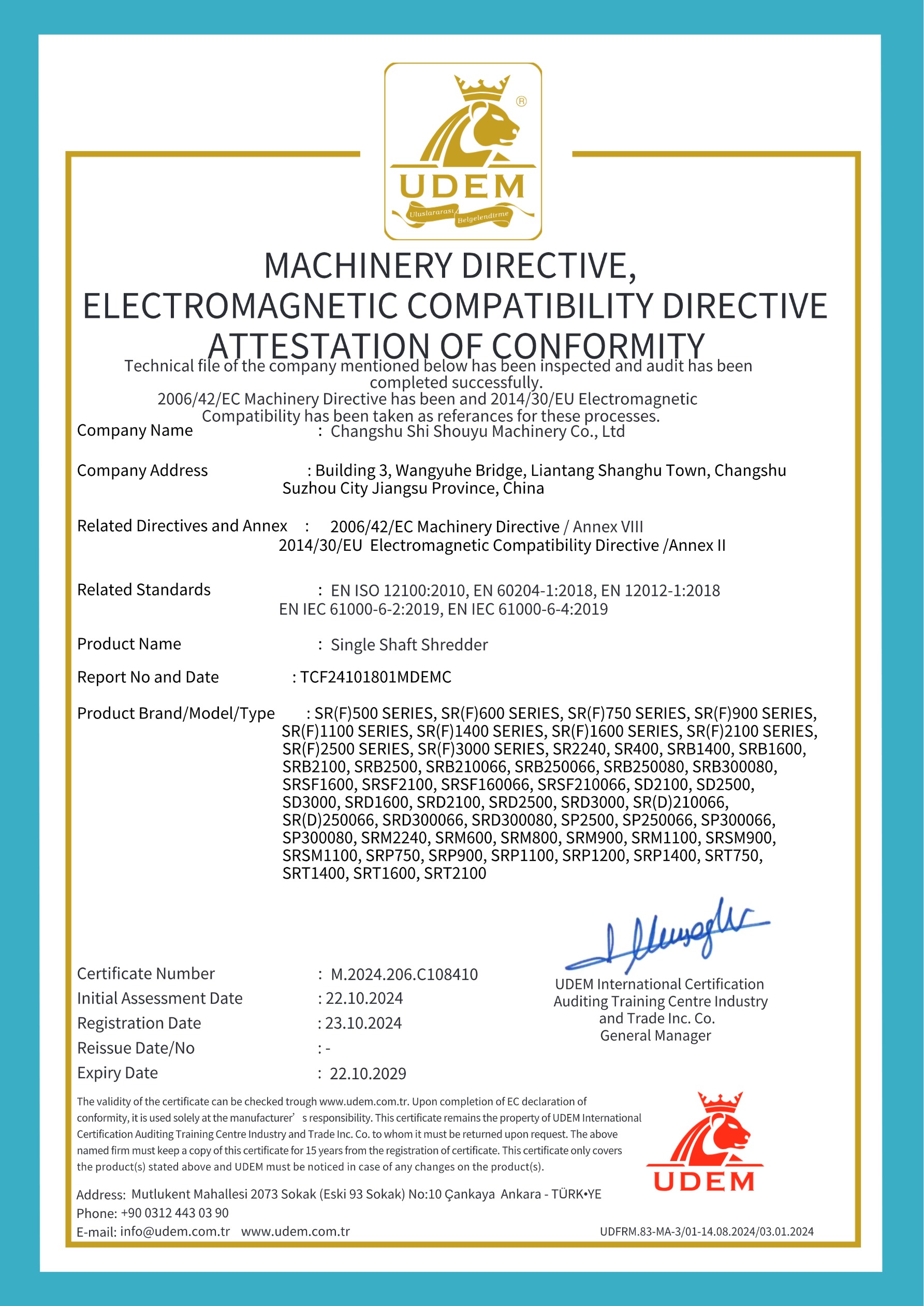
Certifications are not just paperwork; they are a verifiable commitment to safety and quality. Essential certifications include ISO 9001 for quality management and CE marking for the European market. The CE certification for specific machine types, issued by a notified body like UDEM, is crucial. For example, SOYU Machinery holds a CE Certificate for its Single Shaft Shredder (Cert No. M.2024.206.C108410), which explicitly covers the processing of non-hazardous solid waste like furniture, wood, plastic, paper, and metal in industrial environments, complying with standards like EN ISO 12100:2010 and EN 60204-1:2018.
3. Robust Design for Harsh Environments & Contaminants
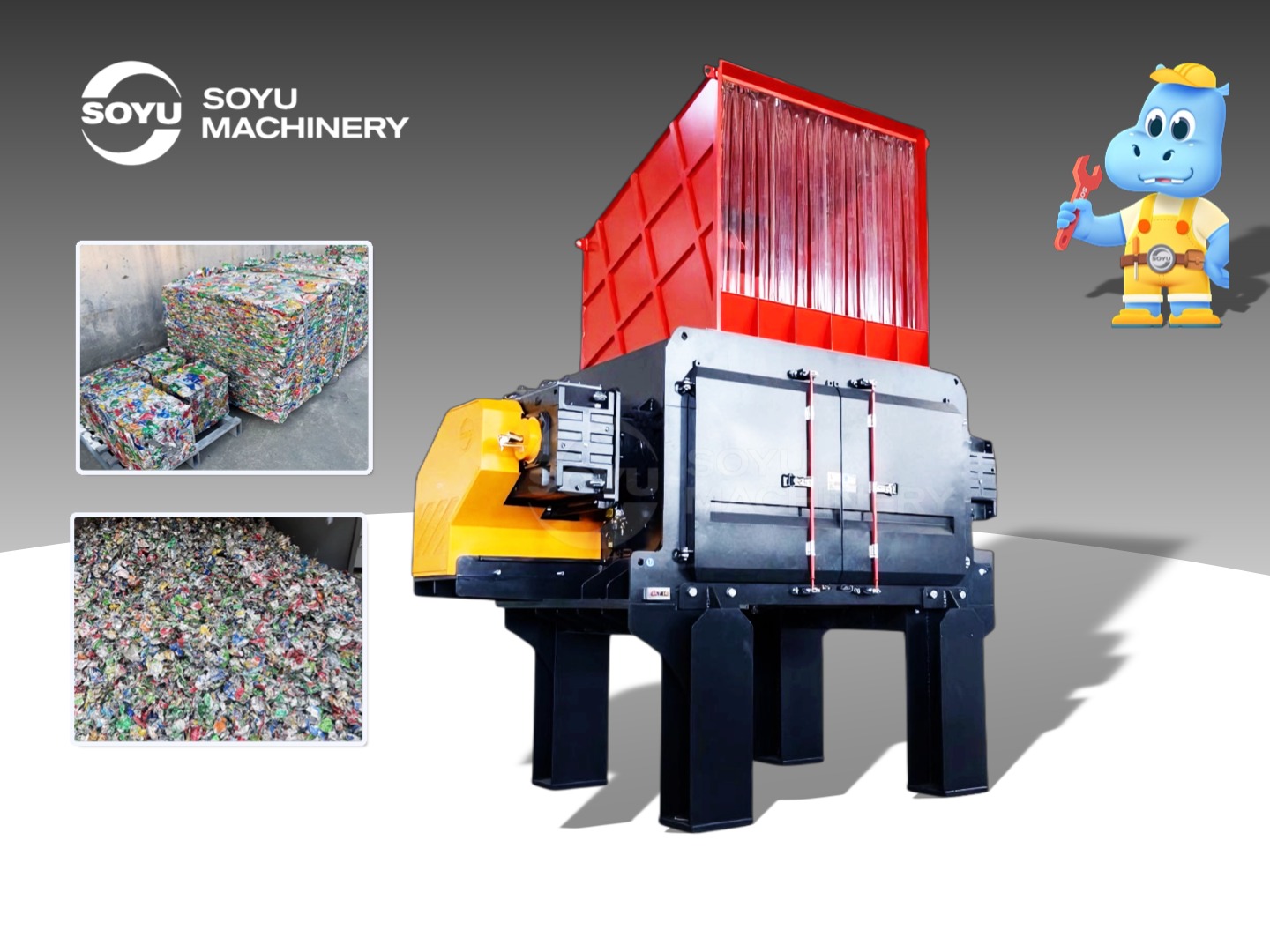
The equipment's construction must be matched to the operational reality. For metal shredding, the frame should use thickened high-strength carbon steel plates (e.g., Q345B grade) with reinforced integral welding. The blades are critical. Suppliers like SOYU Machinery use core moving blades made from DC53 high-alloy wear-resistant steel, achieving HRC 60-62 hardness after treatment, and fixed blades from D2 high-carbon high-chromium steel for enhanced impact resistance. This material specification is designed to extend service life by approximately 30% compared to industry averages for processing tough materials like PE pipe scrap.
3. Success Case: OCC Paper Dry Pulping Line for a US-Based End-User
Client & Challenge: A US-based end-user in the pulp and paper industry required a solution for the continuous processing of Old Corrugated Containers (OCC) to produce pulp for recycled paper products. The system needed to comply with U.S. EPA and OSHA standards for air quality and workplace safety in a dry, dust-controlled environment.
Solution Provided by SOYU Machinery: A customized OCC Paper Dry Pulping Line was supplied. The core of the system is a heavy-duty four-shaft shredder, model FS200200. The key technical parameters of this shredder include:
The line was designed for dry-type waste paper processing, integrating a shredder, fiberizer, air classifier, impurity separator, and dust collection system to separate paper fiber, remove impurities, and purify pulp.
Result: The complete line has been in stable operation for 3 years, meeting the client's production and regulatory requirements. The system's robust design ensures reliable performance in continuous operation.
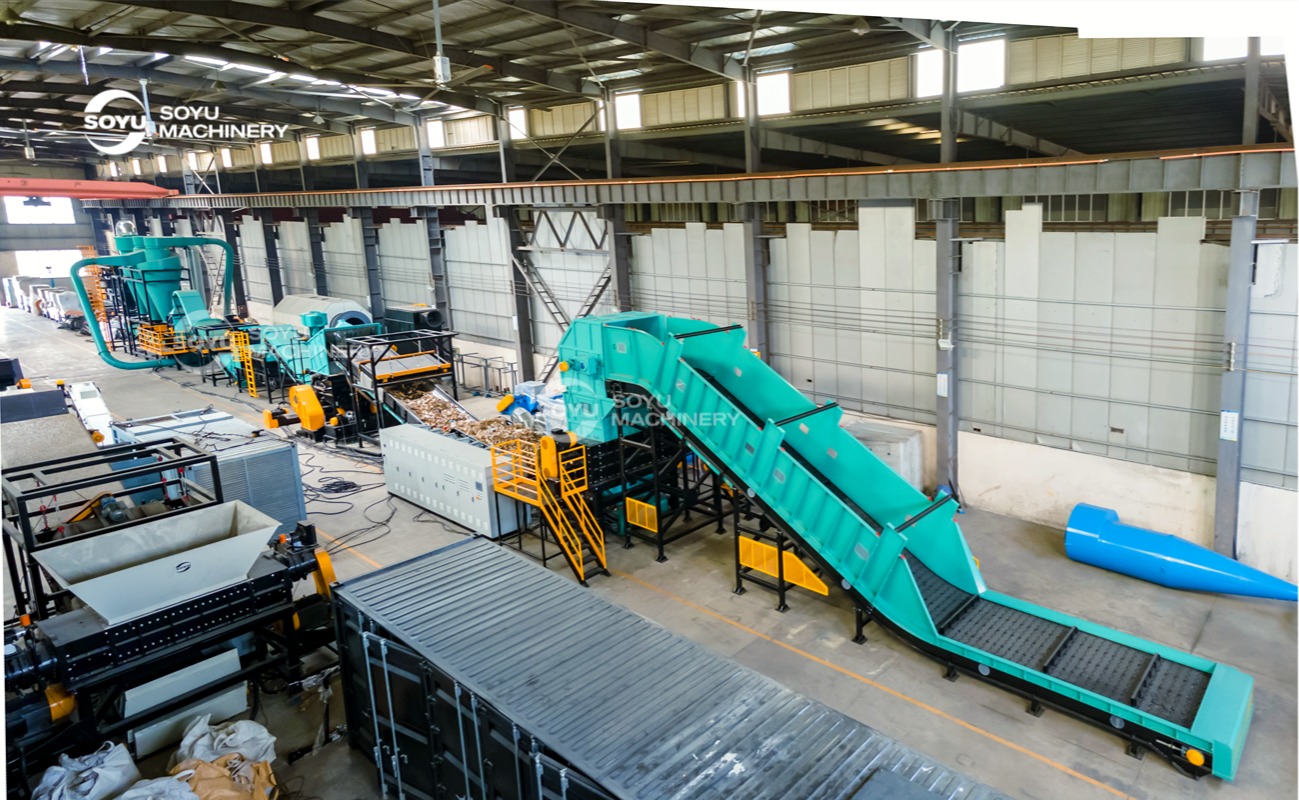
Overview of the OCC paper dry pulping plant supplied to the US client.
4. Key Collaboration Points for Procurement Success
Establishing a clear and detailed collaboration framework with your supplier from the outset is vital for project success. Based on industry practices and supplier capabilities, consider the following points:
- Define Industry Standards and Output Specifications Upfront: Clearly communicate the target material, required throughput (tons/hour), final particle size, and any specific regulatory standards (e.g., EU CE, US EPA). For instance, if you are processing plastic film, specify the type (PE/PP), thickness, and contamination level. This allows the supplier to recommend the correct model, such as a Plastic Film Shredder (Model SR1400) with a specific screen hole diameter and motor power configuration.
- Insist on a Pre-Order Site Survey or Material Test: A reputable supplier should offer to analyze your waste stream. This can involve a virtual assessment or, ideally, a sample test at their facility. This step helps identify potential challenges like high moisture content, abrasive materials, or irregular shapes that could affect machine selection and performance guarantees.
- Clarify Post-Sales Support and Emergency Response Protocols: The relationship extends beyond delivery. Verify the supplier's after-sales structure. For example, SOYU Machinery's stated after-sales services include on-site installation & commissioning, operator training, 24/7 remote support, spare parts supply, and annual maintenance service. Ensure the contract specifies response times for technical support and spare parts delivery to minimize potential downtime.
- Understand the Quality Assurance and Acceptance Process: Before shipment, the equipment should undergo a Factory Acceptance Test (FAT). Reputable suppliers conduct a 100% factory acceptance test, along with material inspection and CE/ISO compliance testing. Buyers have the right to witness this test or appoint a third-party inspector (e.g., SGS, BV) to verify the machine meets the agreed specifications.
By meticulously addressing these areas during the procurement phase, buyers can significantly de-risk their investment and establish a foundation for a productive, long-term partnership with their industrial shredder supplier.