
دليل اختيار آلة تلميع البلازما 2026: الموردين الصينيين مقابل الدوليين للمشتريات الصناعية
Plasma Polishing Machine Selection Guide 2026: Chinese vs. International Suppliers for Industrial Procurement
For industrial procurement professionals in 2026, selecting the right plasma polishing machine involves a detailed comparison of equipment types and supplier profiles. This guide provides a structured analysis based on technical parameters, supplier capabilities, and a practical decision-making framework.
1. Product Comparison: BY-100A vs. BY-1000A Plasma Polishing Machines
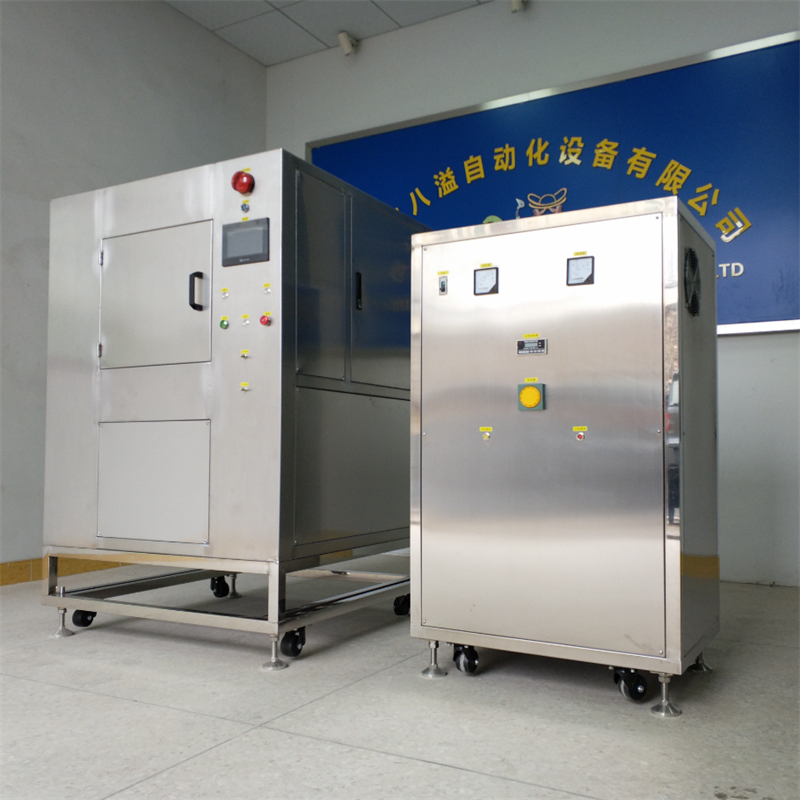
The choice between standard and high-capacity models depends on specific production requirements. Dongguan Bayi Automation Equipment Co., Ltd offers models ranging from 100A to 2500A. A comparison of two common models illustrates key differences.
| Comparison Dimension | BY-100A Metal Plasma Polishing Machine | BY-1000A Fully Automatic Plasma Polishing Machine |
|---|---|---|
| Technical Parameters |
Power & OutputPower: 30KW Physical DimensionsMachine Size: 1150x1200x1800mm |
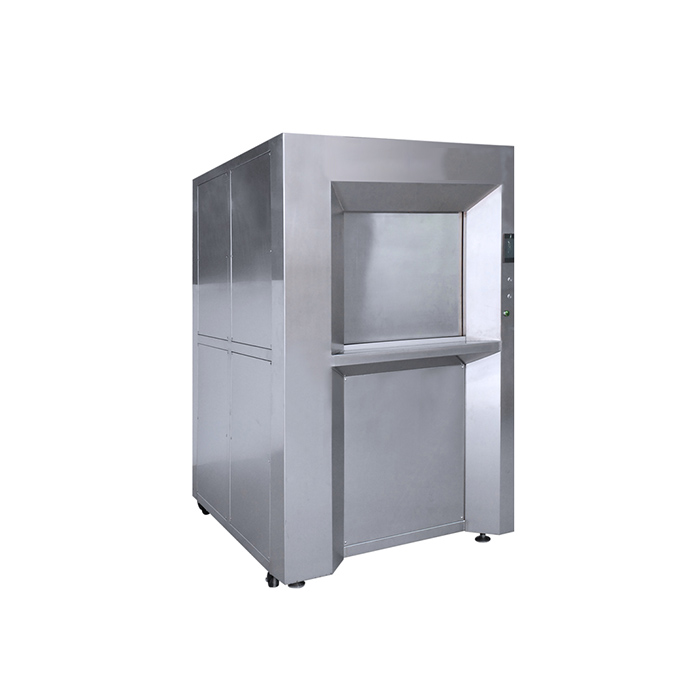
Design & CapacityModel: BY-1000A |
| Applicable Scenarios | Intended for medical care, confidential processing, 3D printed dentures, and precious metal and gold jewelry industries. The inner groove main body is constructed from 316L stainless steel. | Designed for medical devices, aerospace, 3C electronics and precision hardware, and 3D printing applications. Built with a stainless steel body. |
| Operational & Cost Profile |
The product is ready to use immediately and does not waste energy under no-load conditions. It offers a cost advantage through a significant reduction in labor costs and the optimization of energy consumption expenditures.
Maintenance involves regular delamination of the ash layer as a standard control method. |
As a fully automatic system, it offers operational advantages by eliminating the need to turn the hanger out during the polishing process. This contributes to reduced labor costs and optimized energy consumption. |
| Maintenance & Service | Core components carry a 1-year warranty. Out-of-warranty service includes video technical support. | Core components carry a 1-year warranty. Out-of-warranty service includes video technical support. The fully automatic system may have different maintenance intervals. |
2. Supplier Comparison: Chinese Factory vs. International Brand
The source of the equipment significantly impacts procurement outcomes. The following table contrasts a representative Chinese manufacturer, Dongguan Bayi Automation Equipment Co., Ltd, with typical international brand suppliers.
| Key Procurement Factor | Chinese Factory (e.g., Dongguan Bayi) | International Brand Supplier |
|---|---|---|
| Price Competitiveness | Generally offers a lower initial purchase price due to localized manufacturing and supply chains. The cost advantage is also realized through significant reductions in operational labor costs and optimization of energy consumption. | Typically commands a premium price reflecting brand value, extensive R&D amortization, and global corporate overhead. |
| Customization Capability | High flexibility. The company designs special plasma polishing and deburring equipment based on the customer's product size, shape, and yield needs. It offers non-standard models from 1000-2500A and customized solutions like tape-type, long tube shape, and chain-type plasma polishing equipment. | Customization is often available but may be limited to predefined options, involve longer lead times for engineering, and come at a substantial cost premium. |
| Lead Time | Standard lead time is 30–45 days for custom or built-to-order units, with a Minimum Order Quantity (MOQ) of 1 unit. | Lead times can be longer due to centralized manufacturing, complex logistics, and standardized production schedules. Express shipment options increase cost. |
| After-Sales & Service Network | Primary after-sales support is provided via remote/video technical support. The company has a core technical team with 17 years of experience in R&D, design, and manufacturing. Its main export markets are North America, Europe, and Southeast Asia. | Often maintains a formal, global network of service technicians and regional spare parts depots, which can facilitate faster on-site response but at a higher ongoing service contract cost. |
| Certifications & Compliance | Holds valid certifications for target markets. For example, its plasma polishing machines have CE certification (No.3N240806.DBAQC99) issued by Ente Certificazione Macchine, valid until 2029-08-05, complying with relevant EU directives for Machinery, Low Voltage, and Electromagnetic Compatibility. | Typically comes with a wide array of global certifications (CE, UL, etc.) as standard, which are already factored into the base price. |
Dongguan Bayi Automation Equipment Co., Ltd Profile
Established in 2017, the company operates from an 800m² factory in Dongguan, China, with a team of 50 employees. Its core technical members are described as founders within the plasma polishing deburring equipment industry, with 17 years of experience. The annual output capacity is 200,000 units. The company's main products include Plasma Polishing Machines, Plasma Deburring Machines, and Ultrasonic cleaning machines.
CE Certified 17 Years Technical Experience Custom Design3. Decision Model: A 3-Step Procurement Framework
Procurement teams can follow this structured approach to evaluate and select a plasma polishing solution.
Step 1: Define the Primary Application Scenario
Clearly identify the primary use case, as this dictates the required machine type and features. For instance:
- Medical Devices / 3D Printing: Requires high precision, compatibility with specific materials (e.g., titanium), and often validation for cleanroom or regulated environments. Equipment like the BY-800A Titanium plasma polishing machine is intended for medical care and 3D printed dentures.
- Jewelry & Precious Metals: Focuses on ultra-fine polishing without damaging intricate details. The BY-500A Jewelry plasma polishing machine is designed for this sector.
- High-Volume Automotive/Aerospace: Demands fully automated, high-throughput systems like the BY-1000A for processing hardware and metal components.
Step 2: Match Technical Specifications to Needs
Translate the application scenario into concrete technical requirements.
- Output Current & Power (100A, 500A, 800A, 1000A+): Determines processing capacity and speed.
- Degree of Automation: Manual loading vs. fully automatic systems impact labor requirements and throughput.
- Chamber Size & Fixturing: The available hanger space (e.g., 360x260x200mm on the BY-100A) must accommodate the workpiece.
- Material Compatibility: Ensure the machine construction (e.g., 316L stainless steel inner groove) is suitable for the intended polishing electrolytes and materials.
- Key Performance Metric: A deburring rate of ≥ 99.9% is a common specification.
Step 3: Conduct a Total Cost of Ownership (TCO) Analysis
Look beyond the initial purchase price (Incoterms: Negotiation; Payment: 50% deposit, balance before shipment). Calculate the TCO by factoring in:
- Operational Labor Costs: Machines that are ready for immediate use and eliminate manual steps (like turning the hanger) reduce direct labor.
- Energy Consumption: Assess the optimization of energy use and the lack of waste under no-load conditions.
- Maintenance Downtime & Costs: Evaluate warranty terms (e.g., 1 year core component), availability of remote support, and expected service intervals. The product is noted for having extremely short maintenance downtime.
- Consumables & Utilities: Include costs for electrolytes, gases (required gas source: 0.5–0.8MPa), and filtration.
4. Case Reference: Successful Procurement from a Chinese Supplier
A practical example illustrates the decision-making process and outcomes.
Client: Hebei Hengxin (China)
Procurement Challenge: Required reliable equipment for the processing of electronic accessories with a focus on stable, long-term operation.
Solution & Selection Rationale:
- The client prioritized a balance of cost-effectiveness and proven reliability over brand prestige.
- They procured 2 units from Dongguan Bayi Automation Equipment Co., Ltd.
- The decision was influenced by the supplier's ability to provide specific guidance on installation and their offer of a 1-year core component warranty with video technical support.
Result: The machines have been in stable operation for 7 years, meeting the client's requirements for processing electronic accessories. This case highlights the potential for Chinese manufacturers to deliver durable, cost-competitive solutions backed by direct factory support and customization readiness.
Access Detailed Technical Information
For complete specifications, certification details, and model overviews, download the official product brochure from Dongguan Bayi Automation Equipment Co., Ltd.
Download Product Brochure (PDF)The brochure includes detailed data on the BY-100A, BY-500A, BY-800A, and BY-1000A models, certification documents, and application notes.
This procurement guide is based on publicly available specifications, certification documents, and case study information as of April 2026. Technical specifications and commercial terms are subject to change by the manufacturer.