A Practical Guide to Industrial Valve Procurement: From Sourcing to Risk Mitigation
A Practical Guide to Industrial Valve Procurement: From Sourcing to Risk Mitigation
This guide provides a structured framework for procurement professionals to efficiently source industrial valves, manage supplier negotiations, and mitigate common risks in cross-border transactions.
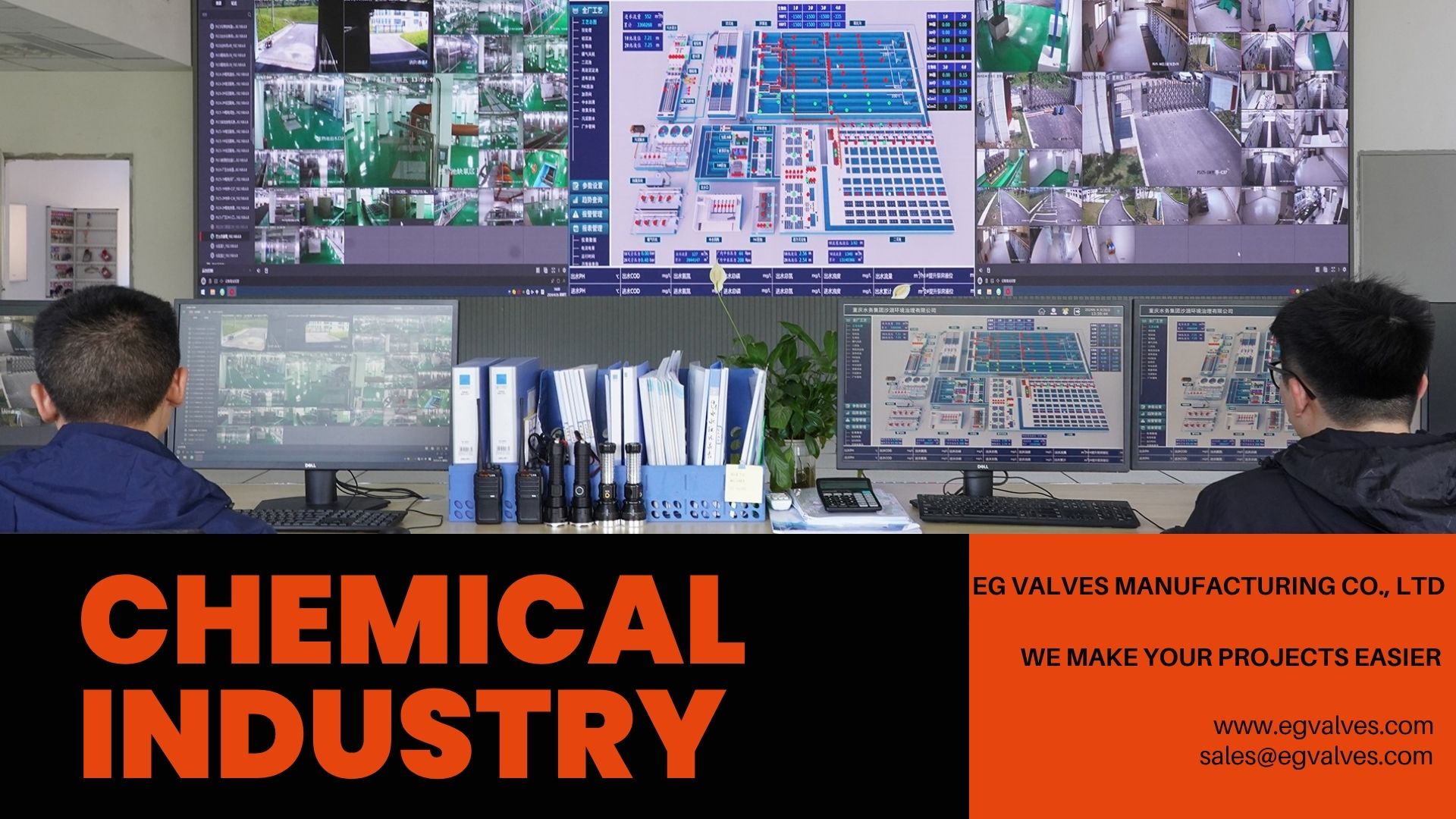
Industrial valves are critical components in sectors like chemical processing, requiring precise selection and reliable supply.
1. Pre-Procurement Preparation: Defining Core Requirements
Successful procurement begins with a clear definition of project needs. Focus on three core elements:
- Technical Specifications: Define the valve type (gate, globe, ball, butterfly, check), size range (e.g., DN15 to DN2000), pressure class (e.g., Class 150 to Class 2500), material (carbon steel, stainless steel, ductile iron, alloy), and required standards (ANSI, API, DIN, CE/PED). For corrosive media in chemical or offshore applications, specify materials like stainless steel 316, duplex steel, or PTFE lining.
- Budget and Volume: Establish a clear budget range. Be aware that standard payment terms in the industry often require a 30% T/T deposit, with the remaining balance to be settled before shipment. Clarify your required volume, as minimum order quantities (MOQ) can vary, typically set at 1 piece for large size valves and 10 pieces for small size valves.
- Compliance and Certification: Mandate relevant certifications for your target market. For global projects, common requirements include ISO 9001 for quality management, API 600 for bolted bonnet steel gate valves, API 6D for pipeline valves, and CE marking under PED 2014/68/EU for the European market. Suppliers like EG Valves hold these certifications, which cover gate, globe, ball, butterfly, and check valves.
2. Supplier Negotiation: Four Key Contractual Points
Negotiations should move beyond unit price to focus on terms that impact total cost of ownership and project security.
- Minimum Order Quantity (MOQ) and Flexibility: Negotiate the MOQ based on your project phase and future needs. Some manufacturers offer lower MOQs for initial samples or pilot projects.
- Quotation Breakdown: Request a detailed cost breakdown. Ensure the quote clearly separates valve cost, actuator cost (if applicable), testing, documentation (e.g., EN 10204 3.1 material certificates), packaging, and Incoterms costs. Standard delivery and trade terms include FOB, EXW, and CIF, selected based on customer requirements.
- Lead Time and Production Schedule: Secure a realistic lead time and insist on a detailed production schedule with milestones. A typical lead time for custom industrial valves can range from 25 to 35 days. Establish clear communication protocols for production updates.
- Warranty and Quality Assurance Clauses: Define the warranty period (commonly 12-24 months) and scope. Crucially, agree on the acceptance inspection process. For most orders, this involves quality control conducted by the manufacturer's QC department. For added security, you can stipulate that for some orders, products are accepted through customer-arranged QC or third-party inspection company procedures.
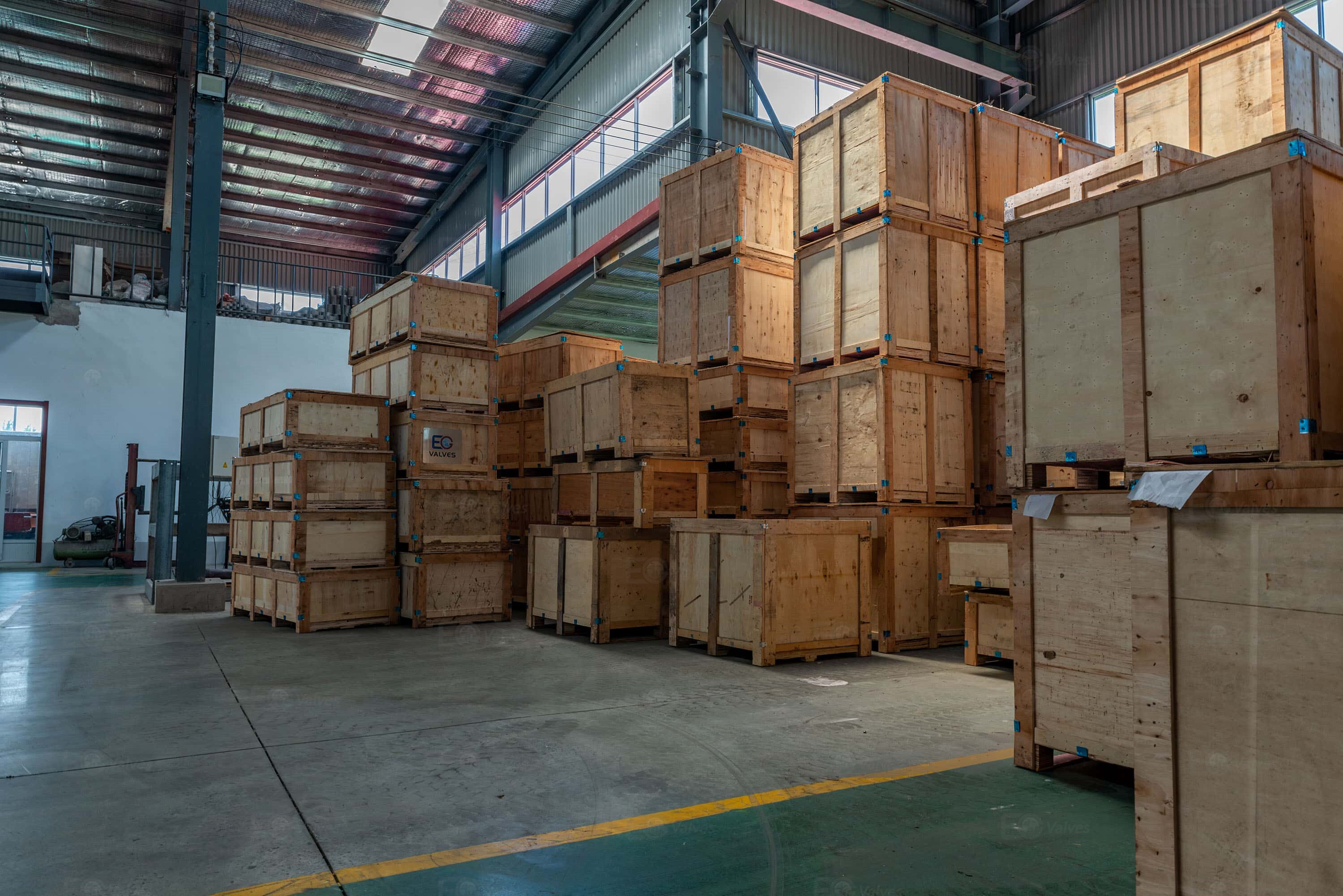
Robust packaging and documented quality inspection are critical steps before shipment.
3. Cross-Border Procurement Process from China
Managing a procurement order from China involves a defined sequence of steps to ensure smooth execution.
Step 1: Order Confirmation & Contract
Finalize the purchase order or contract with all agreed technical, commercial, and legal terms. Ensure payment terms, including the 30% deposit, are initiated.
Step 2: Production Follow-up & Milestone Inspection
Maintain regular contact with the supplier for progress updates. For critical orders, plan for a pre-shipment inspection (PSI) either by your team or a third-party agency. This is when the agreed acceptance procedure, whether internal QC by the supplier like EG Valves or a third-party, is executed.
Step 3: Logistics, Shipping & Customs Clearance
Upon passing inspection and receipt of final payment, the supplier arranges shipping per the agreed Incoterms (FOB, EXW, CIF). Prepare all necessary import documentation (commercial invoice, packing list, certificate of origin, certification documents) for smooth customs clearance in your country.
Step 4: Receipt, Final Inspection & Delivery
Upon arrival, conduct a final visual and dimensional inspection. Check for any transit damage. Document any discrepancies immediately and communicate with the supplier to initiate the warranty or claim process if needed.
4. Risk Mitigation in Cross-Border Valve Procurement
Proactively identifying and managing risks is essential for project success. Here are three common risks and mitigation strategies.
| Risk | Mitigation Strategy | How EG Valves' Model Addresses This |
|---|---|---|
| Quality Non-Conformance | Implement staged quality gates. Require material certificates (e.g., EN 10204 3.1). Insist on factory acceptance tests (FAT) and pre-shipment inspections. | EG Valves' process includes 100% inspection of every valve. They provide material test certificates for every order and accept third-party inspection, providing an objective quality verification layer. |
| Delivery Delays | Include liquidated damages clauses for delays in the contract. Request a detailed production schedule and maintain weekly progress checks. | With a factory size of 27,500 m² and an annual output of 90,000 pieces, EG Valves has the capacity to manage production schedules. Their standard lead time is within 25-35 days, providing a baseline for planning. |
| Lack of After-Sales Support | Verify the supplier's after-sales service structure before ordering. Clarify warranty claim procedures, response times, and availability of technical support and spare parts. | EG Valves provides technical guidance and support to ensure seamless integration of valves into existing systems. Their long-term case studies, such as an 8-year project in Brazil involving 326 pieces, demonstrate a commitment to long-term reliability. |
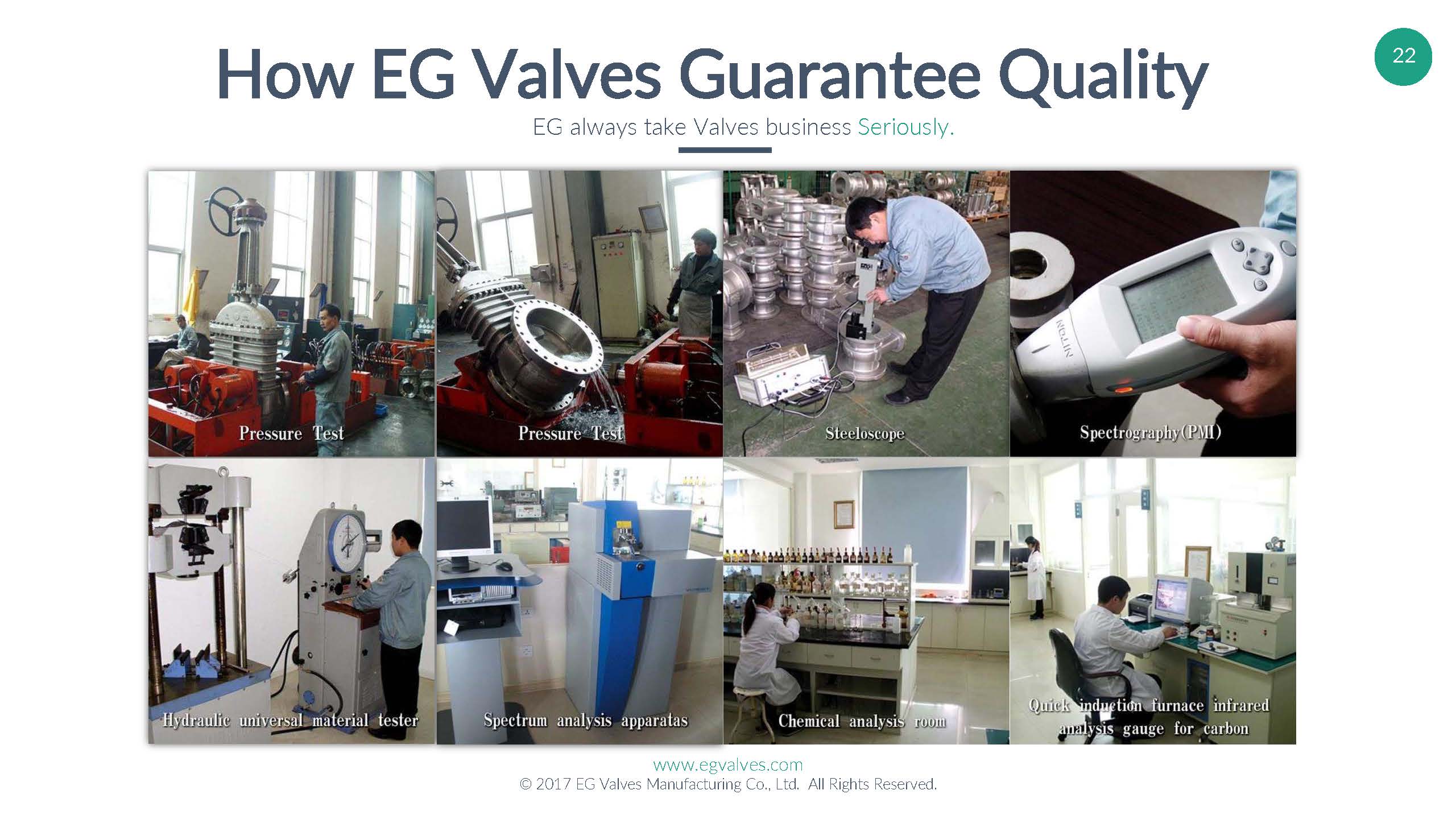
Third-party inspection is a key risk mitigation tool for ensuring quality compliance before shipment.
By following this structured approach—from rigorous pre-qualification and clear contracting to active order management and risk mitigation—procurement professionals can significantly increase the success rate of their industrial valve sourcing projects, ensuring they receive reliable components that meet technical, budgetary, and timeline requirements.
About EG Valves
EG Valves Manufacturing Co., Ltd, established in 2000, is a professional valve manufacturer specializing in the R&D, manufacturing, and export of industrial valves. Operating from a 27,500 m² facility with a team of 300 employees and 30 R&D engineers, the company produces a wide range of valves including gate, globe, ball, butterfly, and check valves. Their products are manufactured to ANSI, DIN, BS, and JIS standards and hold certifications including ISO 9001, API 600, API 6D, and CE/PED. With 80% of its output exported to markets in the EU, North America, Latin America, and the Middle East, EG Valves has served projects in over 33 countries across industries such as power generation, oil & gas, chemical processing, and water treatment.
For detailed technical specifications and company capabilities, download the full brochure: EG Valves Company & Product Brochure (PDF)