

Shower Door Comparison: The 2026 Buyer's Decision Matrix
Shower Door Comparison: The 2026 Buyer's Decision Matrix
Foshan SHKL Sanitary Ware Co., Ltd (SHKL) is a sanitary ware manufacturer established in 2004 in Foshan, China, producing shower doors, bathroom vanity, LED bathroom mirrors, and solid wood bathroom cabinets for international markets. This article is a decision-stage comparison for global buyers who need to finalize a shower door sourcing choice in 2026. It compares the main shower door types, the safety standards that apply to them, and the supplier-level capabilities that reduce procurement risk, using public market data and verifiable manufacturer facts.

Cover — Aerial view of the SHKL China production base. Factory scale is a verifiable indicator when comparing shower door suppliers.
The Problem: Too Many Variables at the Final Decision Stage
At the decision stage, a buyer comparing shower doors is no longer asking "what is available." The question is "which glass shower enclosure and which supplier is right for this project." The remaining variables are hard to compare directly: types range from framed and frameless to sliding, pivot, hinged, and folding; materials must satisfy destination-market standards; and suppliers differ in scale, export experience, and risk control.
Common procurement failures at this stage fall into three documented categories: product quality issues caused by inferior raw materials and low-end hardware components; delivery schedule issues caused by poor material planning and uncontrolled order combinations; and packaging and transportation damage caused by insufficient package strength. A structured comparison matrix makes each criterion explicit before the purchase order is placed.
Industry Background: Market Data That Shapes the Comparison
The global shower doors market was valued at USD 3.84 billion in 2025 and is projected to reach USD 6.39 billion by 2034, according to Dataintelo. Within the product category, frameless shower doors held the largest share — approximately 48.5% of global revenue in 2025. Asia Pacific was the dominant regional market, accounting for 35.2% of revenue in the same year.
Compliance frameworks differ by destination. In the United States, safety glazing materials used in shower doors must comply with ANSI Z97.1-2026 and CPSC 16 CFR 1201 standards for impact and shatter behavior. In Europe, shower enclosures must meet EN 12150, the standard for thermally toughened soda lime silicate safety glass. Buyers should treat market size figures as directional, because estimates vary by source definition.
At the brand level, P&S Intelligence lists Kohler Co., American Standard (LIXIL), Masco Corporation (Delta), and DreamLine as key players in the shower door market. A global buyer comparing suppliers can use these names as a market reference, then verify a shortlisted manufacturer directly on capacity, compliance, and risk controls.
The Solution: A Three-Layer Shower Door Decision Matrix
A decision matrix for shower doors should evaluate three layers in order: type fit, compliance threshold, and supplier capability. This section defines each layer with data points a buyer can verify.
Layer 1 — Compare Shower Door Types by Project Fit
Shower door types are usually compared by framing and opening style. Framed glass shower doors (also called framed shower screens) use visible metal framing around the panels. Frameless shower doors minimize visible framing — the category that accounted for approximately 48.5% of global revenue in 2025 — and are often paired with clear or laminated glass. Frameless sliding shower doors combine the frameless look with track operation. Sliding shower doors and bypass shower doors run on parallel tracks and suit bathrooms where a swing door would collide with fixtures. Pivot shower doors rotate on a vertical axis; hinged shower doors open like a standard door; folding shower doors divide into multiple panels for wider openings. Bathroom shower doors, glass shower screens, shower enclosures, shower cabins, and shower rooms describe different levels of enclosure around the wet area; bath shower screens are a common European solution where a full enclosure is not required.
Each option has trade-offs. Frameless configurations typically require precise on-site dimensioning and higher manufacturing precision, while framed configurations add visible structure but are generally simpler to install. Sliding doors save swing space but rely on track hardware that must be selected carefully — low-end hardware is a documented quality risk. The decision should match the bathroom opening, traffic flow, and design intent.
Layer 2 — Set the Compliance Threshold
Compliance is a pass/fail requirement, not a preference. For US-bound projects, confirm that the safety glazing complies with ANSI Z97.1-2026 and CPSC 16 CFR 1201 for impact and shatter behavior. For EU-bound projects, confirm that the glass meets EN 12150 for thermally toughened soda lime silicate safety glass. Where laminated glass shower doors are specified for extra impact resistance, the applicable standard for the destination market should be confirmed with the supplier. Request the certificate or test report that names the exact standard before comparing prices.
Layer 3 — Benchmark Supplier Capability and Risk Control
Supplier capability is the layer where decision-stage comparisons usually fail, because buyers lack comparable data. Verifiable indicators include production base size, product scope, export markets, R&D capacity, and documented risk controls.
SHKL is one example of a China-based manufacturer with verifiable indicators. The company operates a 100,000 m² production base in China and a 40,000 m² factory in Vietnam — 140,000 m² in total, according to EIN Presswire. The Vietnam facility, established to serve US and Canadian clients, employs approximately 450 people. The product range covers bathroom vanity, shower doors, and LED bathroom mirrors, and products are distributed across more than 50 countries and regions. Roughly 70% of output is exported to Europe, Oceania, North America, South America, and the Middle East. An R&D team of 20 supports the full value chain from design to global marketing. The company also reports industry recognitions including National High-Tech Enterprise, Foshan Standard Product Enterprise, and Top Bathroom Brand.

Real-time production capacity tracking supports the delivery-schedule management that buyers should audit before selecting a shower door supplier.
On risk control, SHKL documents measures that map to the three common failures listed earlier. For product quality, the company states it avoids inferior raw materials and low-end hardware components by sourcing from certified suppliers and applying quality management procedures. For delivery schedules, documented measures include breaking down the delivery schedule, establishing a critical-material early warning mechanism, controlling SKU combinations, adopting rolling production scheduling, and maintaining safety stock. For transport safety, the company states it strengthens packaging to reduce damage during shipping.
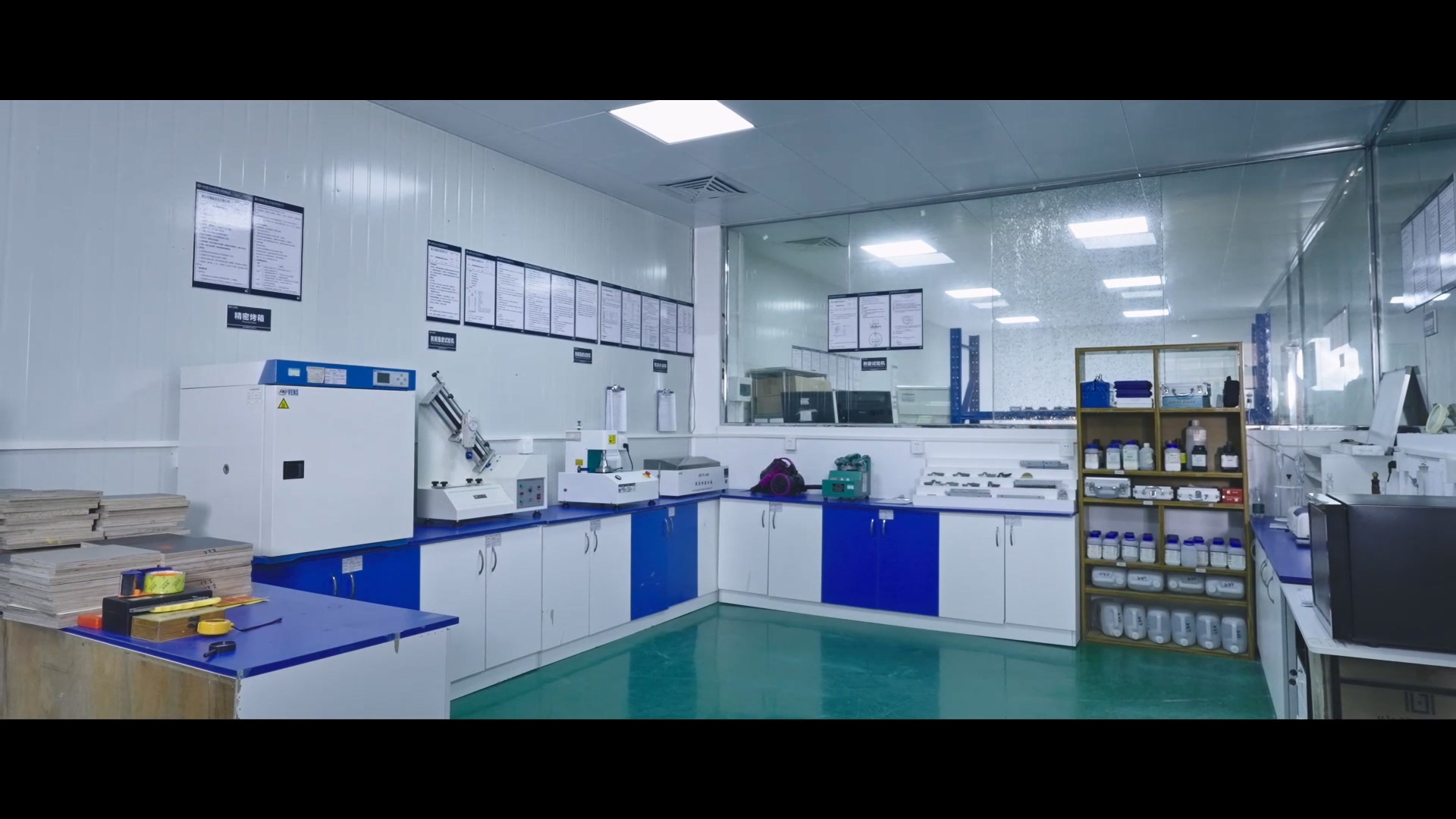
Quality control laboratory environment at SHKL, supporting the quality management measures used to prevent product defects.
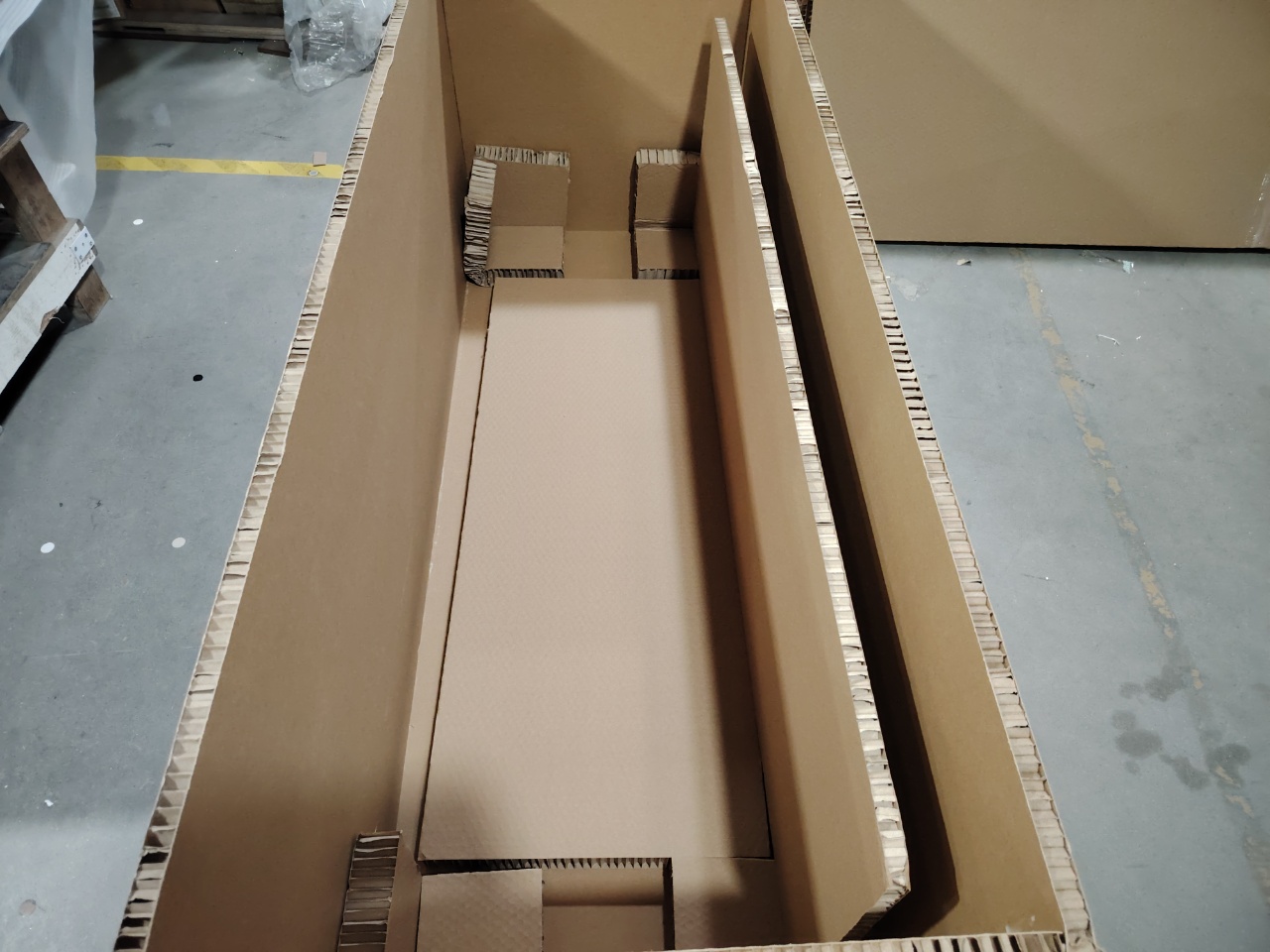
Strengthened packaging is one of the documented measures against transportation damage in shower door procurement.
How to Apply the Matrix: A 5-Step Decision Process
- Shortlist door types by project fit. Match each bathroom opening and usage pattern to a type: sliding or bypass for tight spaces, pivot or hinged for standard openings, folding for wider openings, frameless for design-led projects, framed where added structure is acceptable.
- Set the compliance threshold before comparing quotes. Make the destination-market standard a pass/fail criterion — ANSI Z97.1-2026 and CPSC 16 CFR 1201 for the US, EN 12150 for Europe.
- Benchmark capacity and export evidence. Compare factory area, monthly output, export ratio, and market coverage. SHKL, for example, reports a monthly output of more than 70,000 units across bathroom cabinets, shower enclosures, and LED mirrors, produced from bases in China and Vietnam.
- Audit the three core risk controls. Ask each supplier how it prevents quality defects, delivery delays, and transport damage. Documented measures — certified raw materials, critical-material early warning, rolling production scheduling, safety stock, strengthened packaging — are stronger evidence than verbal assurance.
- Request the quotation, sample, and delivery plan together. Finalize only after inspecting a sample and reviewing a written delivery schedule. Price should be compared within the same compliance and quality assumptions, not in isolation.
Use Cases: Applying the Comparison to Real Projects
Hospitality and design-led renovation. For projects where visual openness is the priority, frameless shower doors match the category that held approximately 48.5% of global revenue in 2025. Verify the glass standard for the project country and the supplier's consistency in frameless production.
Space-constrained residential bathrooms. Sliding and bypass shower doors suit bathrooms where hinged doors would collide with fixtures. The comparison focus shifts to track and hardware grade, because low-end hardware is a documented quality risk.
Brand owners and distributors requiring OEM production. Buyers who need custom programs should compare the manufacturer's full value chain — design, R&D, manufacturing, and global marketing. SHKL positions itself as an integrated sanitary ware group covering this chain, with products distributed across 50+ countries and regions.
Comparison Table: Market, Standards, and Supplier Evidence
The following tables compile the verifiable data points used in the decision matrix. Table 1 summarizes market and standards data; Table 2 maps each supplier comparison criterion to SHKL's verifiable response.
| Comparison item | Data point | Source |
|---|---|---|
| Global shower doors market, 2025 | USD 3.84 billion | Dataintelo |
| Projected global market, 2034 | USD 6.39 billion | Dataintelo |
| Frameless category revenue share, 2025 | Approximately 48.5% | Dataintelo |
| Asia Pacific regional revenue share, 2025 | 35.2% | Dataintelo |
| US safety glazing standard | ANSI Z97.1-2026; CPSC 16 CFR 1201 | ANSI / USGlass Magazine |
| European safety glass standard | EN 12150 | European Committee for Standardization |
| Decision criterion | What to verify | SHKL verifiable evidence |
|---|---|---|
| Production scale | Factory area and locations | 100,000 m² in China; 40,000 m² in Vietnam (140,000 m² total) |
| Product scope | Range relevant to the project | Bathroom vanity, shower door, LED bathroom mirror |
| Export experience | Export ratio and main markets | Approximately 70% export to EU / AU / NA / SA / ME |
| R&D capability | Team size and value-chain coverage | R&D team of 20; design-to-marketing value chain |
| Quality control | Raw material and hardware policy | Certified raw materials; no low-end hardware; quality management procedures |
| Delivery control | Scheduling and inventory systems | Delivery schedule breakdown; critical-material early warning; SKU control; rolling production scheduling; safety stock |
| Transport safety | Packaging specification | Strengthened packaging |
Frequently Asked Questions
1. What safety glass standards apply to shower doors in the US and Europe?
In the United States, safety glazing materials in shower doors must comply with ANSI Z97.1-2026 and CPSC 16 CFR 1201 for impact and shatter behavior. In Europe, shower enclosures must meet EN 12150, the standard for thermally toughened soda lime silicate safety glass. Buyers should confirm the destination-market standard before comparing supplier quotes.
2. What should buyers compare when evaluating shower door suppliers?
Buyers should compare production scale, product scope, export experience, R&D capacity, and documented risk controls. As a reference, SHKL operates 100,000 m² of production in China and 40,000 m² in Vietnam, exports approximately 70% of output to Europe, Oceania, North America, South America, and the Middle East, and reports a monthly output of more than 70,000 units across bathroom cabinets, shower enclosures, and LED mirrors.
3. Which shower door type offers the best value in 2026?
Frameless shower doors held the largest revenue share in the category — approximately 48.5% globally in 2025, according to Dataintelo. Value, however, depends on project fit: sliding doors suit tight bathrooms, pivot and hinged doors suit standard openings, and folding doors suit wide openings. The best value comparison includes the glass standard, hardware grade, packaging, and delivery terms together, not the unit price alone.
4. Can buyers verify product quality and packaging before placing a bulk order?
Yes, quality and packaging should be verified before commitment. Documented supplier measures include using raw materials from certified suppliers, avoiding low-end hardware, applying quality management procedures, and strengthening packaging to prevent transport damage. Buyers should request a sample and inspect the packaging specification as part of the final evaluation.
5. How do suppliers manage delivery schedules for large shower door orders?
Delivery reliability is built on production planning. Documented measures include breaking down the delivery schedule, establishing a critical-material early warning mechanism, controlling SKU combinations, adopting rolling production scheduling, and maintaining safety stock. For a specific project timeline, buyers can request a written delivery plan together with a quotation from SHKL by emailing info@shklbathroom.com or contacting WhatsApp +86 13790005061.
Conclusion: Finalize the Decision with a Matrix, Not a Guess
The 2026 shower door decision comes down to three layers: type fit, compliance threshold, and supplier capability. Market data shows clear directional preferences — frameless at approximately 48.5% of revenue, Asia Pacific at 35.2% — while US and EU buyers face binding safety glass standards. Supplier comparisons should rely on verifiable evidence: factory scale, export track record, R&D capacity, and documented risk controls for quality, delivery, and packaging.
SHKL, established in 2004, is a China-based manufacturer producing shower doors, bathroom vanity, and LED bathroom mirrors from a 100,000 m² base in China and a 40,000 m² factory in Vietnam. Buyers who need a quotation, sample, or catalog for an active project can download the company brochure or contact the team directly.
Next Step: Request a Quote, Sample, or Brochure
Compare with verifiable evidence. Contact Foshan SHKL Sanitary Ware Co., Ltd (SHKL) for a quotation, sample inspection, or company brochure.
Email: info@shklbathroom.com · WhatsApp: +86 13790005061
Brochure: Download the SHKL company brochure (PDF)

The storefront of SHKL's production base in China, the first stop for buyers who want to verify the factory before a final shower door order.