

Squeaky Hinges and Sticking Slides? How Hardware Specs Solve Common Bathroom Pain Points
Squeaky Hinges and Sticking Slides? How Hardware Specs Solve Common Bathroom Pain Points
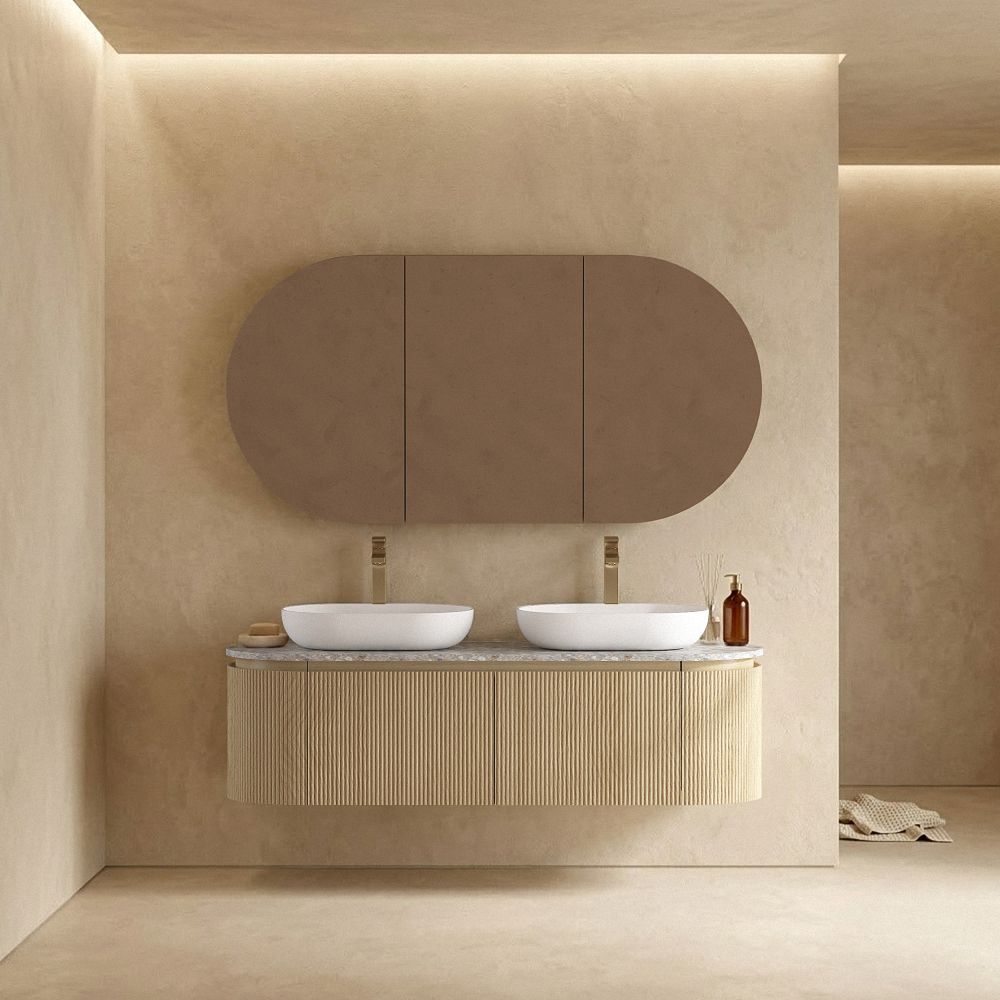
Most bathroom complaints that reach a hotel engineer, a distributor's after-sales desk or a homeowner's weekend list trace back to the same small component group: hinges, drawer slides and the fittings that hold glass and cabinetry in place. Cabinet boxes and glass panels rarely fail first — hardware does. This guide maps four everyday pain points to the specifications that prevent them, using the KL-AS5577310 hinge shower door and bathroom vanity models AS813047, AS813108 and AS813109 as concrete reference points.
What Actually Fails First in a Bathroom
Bathroom hardware fails in a small, predictable set of ways. Buyers who can name the failure mode before they open a specification sheet usually avoid the problem entirely, because each complaint points to one or two specification decisions.
- Squeaky or grinding hinges. The hinge is dry, misaligned, or built from an unspecified base metal that corrodes and loses a smooth bore under constant humidity and daily use.
- Doors that sag or drift out of alignment. The hinge is carrying more load than it was specified for, or the glass build and the hinge type were chosen separately instead of together.
- Drawers that stick or slam. A slide without a soft-closing mechanism, or a slide that is being asked to carry more than its drawer configuration was designed for.
- Loose, wobbly or corroded fittings. Plating over an undefined base material, rather than a stated grade such as 304 stainless steel.
None of these are automatically installation errors. They are specification errors that surface in month four rather than on delivery day, which is precisely why a loading-dock inspection rarely catches them.
Why Hardware Specs Are Becoming a Compliance Question, Not a Cosmetic One
The hardware question is scaling up along with the market. Dataintelo valued the global shower doors market at USD 3.84 billion in 2025 and projects it to reach USD 6.39 billion by 2034. The same source reports that frameless shower doors held the largest share of the product category in 2025, at approximately 48.5% of revenue, while Asia Pacific accounted for a 35.2% revenue share in 2025. Market sizing in this category varies with scope — some estimates count shower doors only, others count complete enclosures — so any single figure is best read as a scope-specific estimate.
The frameless share figure carries a practical implication for buyers: when the frame is removed, hinges, wall profiles and the glass itself take on the structural work that an aluminium frame used to absorb. Hardware specification moves from a detail to a load-bearing decision. P&S Intelligence lists key players in the market as Kohler Co., American Standard (LIXIL), Masco Corporation (Delta) and DreamLine — a mix of established sanitary ware brands and dedicated enclosure specialists, which is a fair picture of how fragmented the supply base still is.
Compliance requirements run alongside the design shift. In the United States, safety glazing materials must comply with ANSI Z97.1-2026 and CPSC 16 CFR 1201 for impact and shatter behaviour. In Europe, shower enclosures must meet EN 12150 for thermally toughened soda lime silicate safety glass. These standards govern the glass, not the hinge — which is exactly why buyers need a second question ready: what holds that certified glass, and to what grade?
The Hardware Specs That Quiet the Squeak and Stop the Sag
Hinge shower doors: where 304 stainless steel changes the outcome
The KL-AS5577310 is a hinge shower door in SHKL's range with hardware specified in 304 stainless steel — a named grade rather than a generic "stainless steel effect" claim. It is certified to ISO 9001:2015 under standard GB/T 19001-2016, certificate number 04924Q00629R0M, issued by Guangdong Quality Testing CTC Certification Co., Ltd. and applicable to the global market.
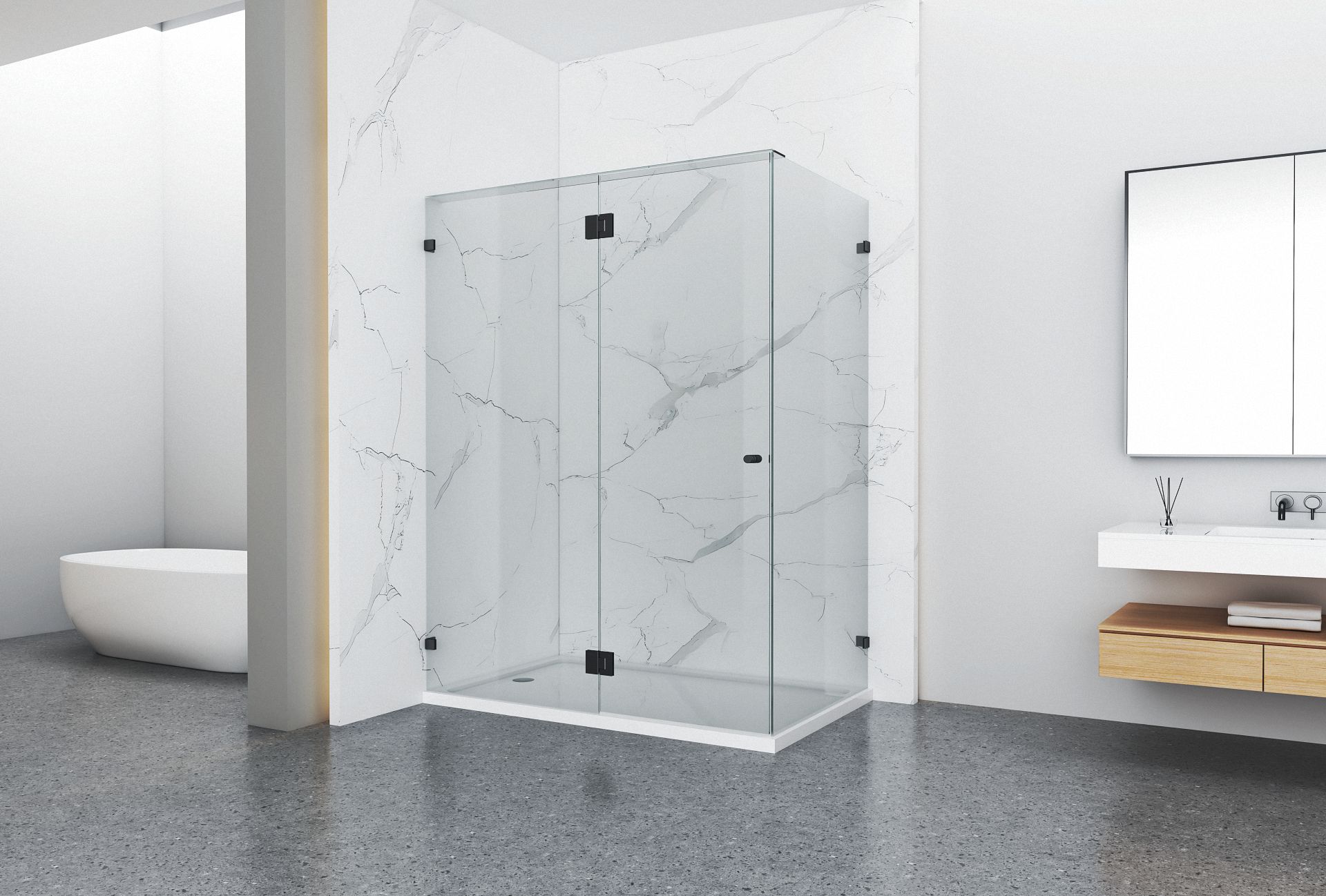
Glass craftsmanship options for the model include clear glass, tinted glass, laminated glass, flute glass and chemically frosted glass, plus easy-clean and film-coated finishes. That matters for hinge behaviour, not just appearance: laminated glass is the construction specified where anti-shatter performance is the requirement, and coated surfaces reduce the abrasive cleaning that wears the hardware area over a building's life.
Drawers that glide instead of sticking: Unihopper soft closing slides
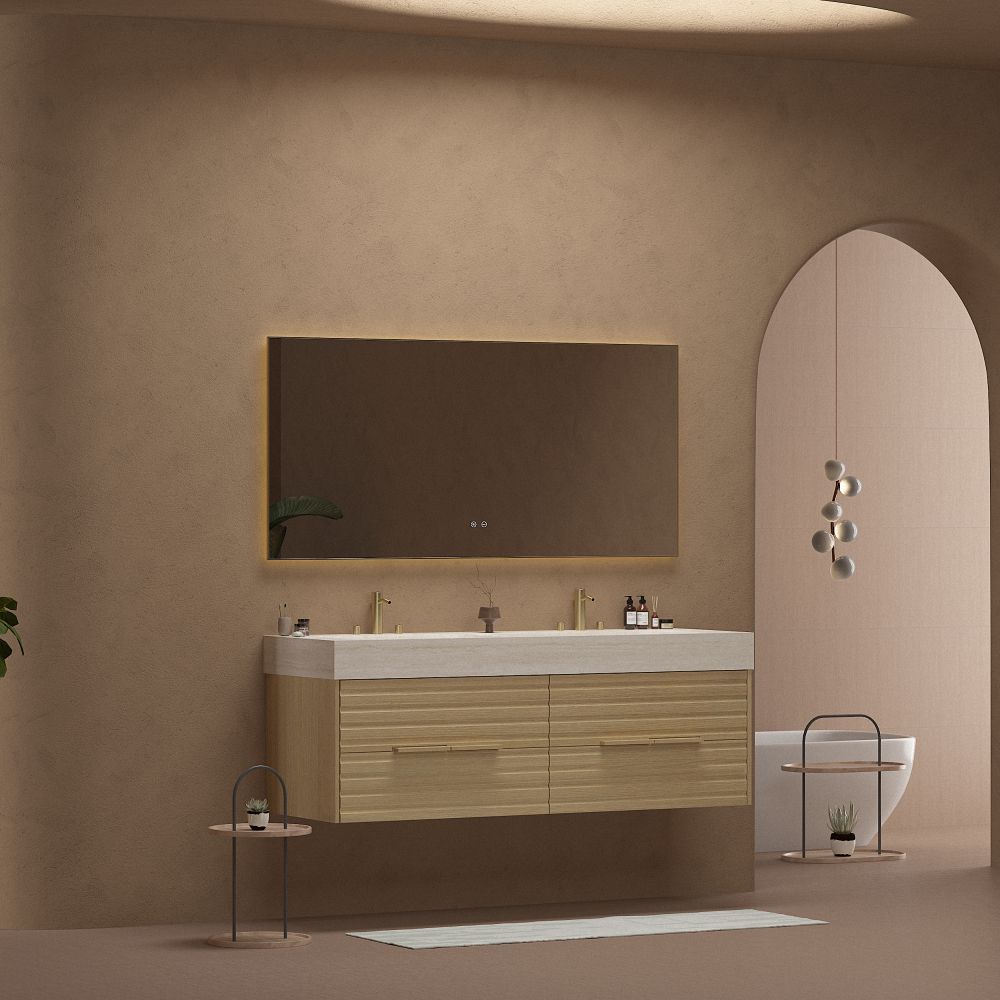
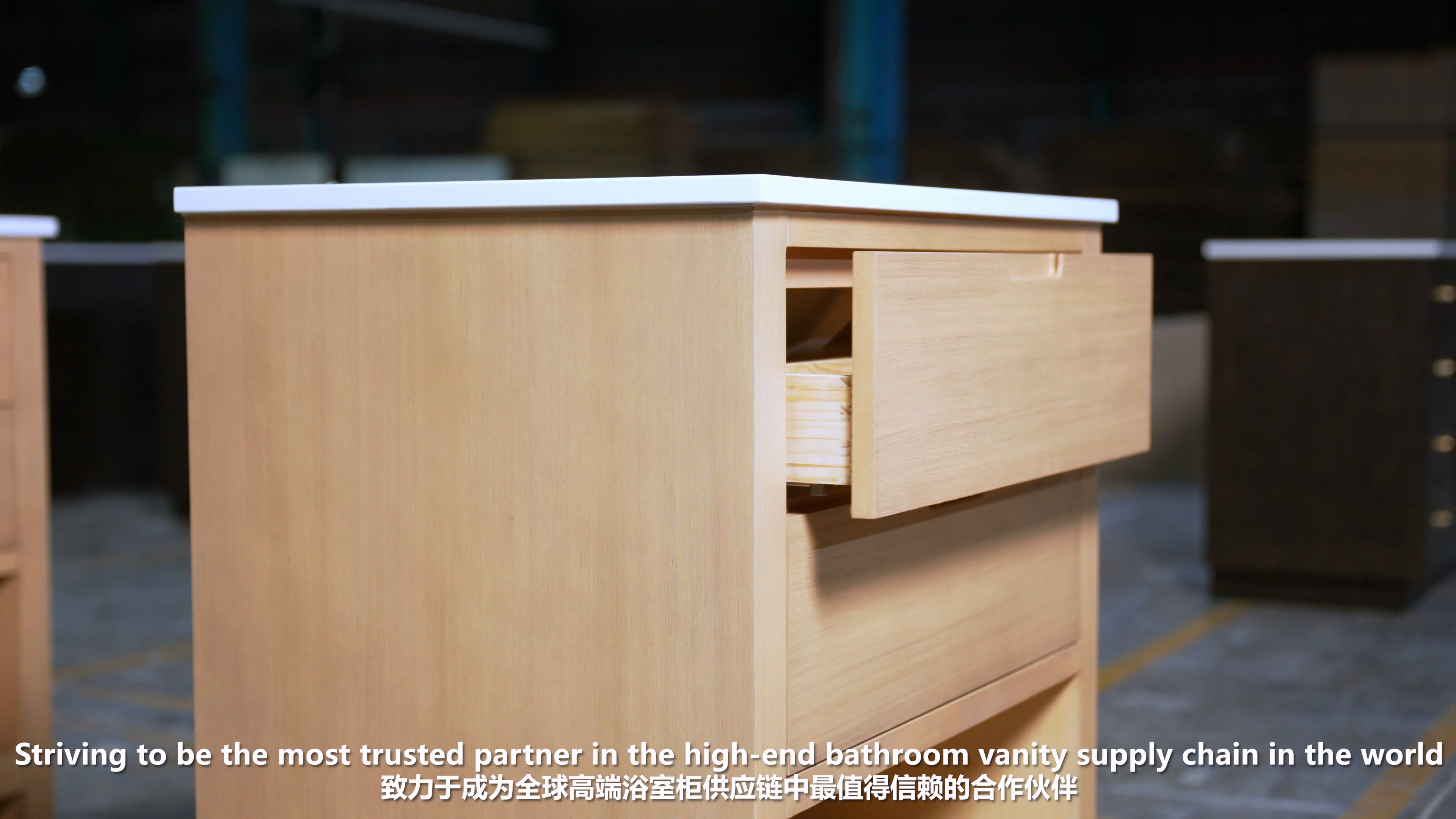
All three reference vanities use the same drawer philosophy. AS813047 and AS813108 each pair two drawers with Unihopper soft closing slides. AS813109 goes further with two side drawers, one outer drawer and one inner drawer, again on Unihopper soft closing slides. Soft closing means the drawer is decelerated before it meets the cabinet, so the slam — and the rattle that follows a slammed drawer — is designed out rather than damped afterwards.
Mirror cabinet doors: DTC hinges and repeatable alignment
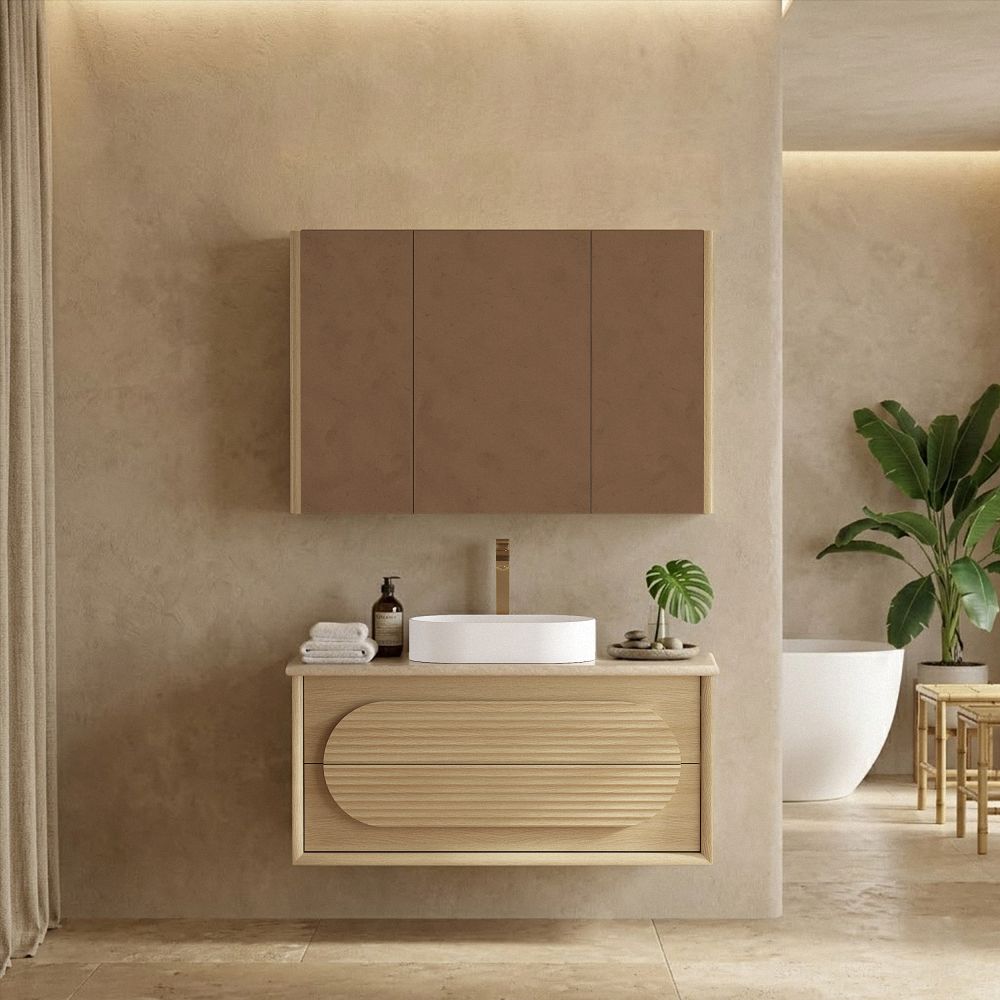
Multi-door mirror cabinets are the classic squeak-and-sag case, because three doors have to stay aligned on one body. AS813108 uses a three-door mirror cabinet on DTC hinges, with an LED light strip inside and an infrared sensor switch. AS813109 also uses three doors with DTC hinges, on an oval mirror cabinet built with 3mm copper-free glass. Specifying hinges by series — DTC rather than simply "soft close" — keeps the cabinet adjustable and replaceable years later, when a single hinge is the only thing that actually needs attention.
Certificates a buyer can actually verify
Hardware durability claims are hard to test in a showroom, but certificate chains are easy to check. For the bathroom vanity products, SHKL holds ISO 14001 (certificate number 04924E00351R0M) and ISO 45001 (certificate number 04924S00316R0M), both issued by Guangdong Quality Testing CTC Certification Co., Ltd., valid for the global market including China, EU, US and the Middle East, with a validity window from 11 May 2024 to 10 May 2027. The certificate scope covers R&D and manufacture of bathroom cabinets and the manufacture of fixed universal lighting fixtures — worth reading closely, because scope is where most certificates quietly stop short of the claim printed on a brochure.
Step-by-Step: Specifying Hardware So the Pain Points Never Appear
- Start from the failure mode, not the finish. Decide which complaint matters most in the project — squeaky hinges in a humid hotel bathroom, or sticking drawers in a rental apartment — and write that into the specification.
- Fix the base material grade first. 304 stainless steel hardware appears on models such as the KL-AS5577310 hinge shower door, while aluminium alloy hardware is used elsewhere in the range, for example on the KL-AS5507310 hinge shower door and the KL-AS5608212 sliding shower door. Both are valid engineering choices; the failure comes from leaving the grade unspecified.
- Name the moving hardware by series. "Soft close" is an adjective. Unihopper soft closing slides and DTC hinges are specified parts that can be reordered, replaced and traced.
- Match the configuration to the load. A two-drawer build such as AS813047 or AS813108 is a different load case from AS813109, which adds an outer and an inner drawer to the same two side drawers.
- Choose the glass build with the hardware. Clear, tinted, laminated, flute and chemically frosted glass behave differently under load and take easy-clean or film-coated finishes differently.
- Verify the certificate chain. Check issuing body, certificate number, scope, validity dates and market applicability — not just the logo.
- Validate before committing to volume. Operate the hinge and slide under load, confirm the material grade in writing, and confirm the hardware series on the approved sample.
- Build spare parts and support into the agreement. Warranty support, remote after-sales consultation and spare parts supply are part of SHKL's after-sales scope, which is what keeps a five-year-old drawer working without replacing the vanity.
Where These Specs Have Already Been Tested
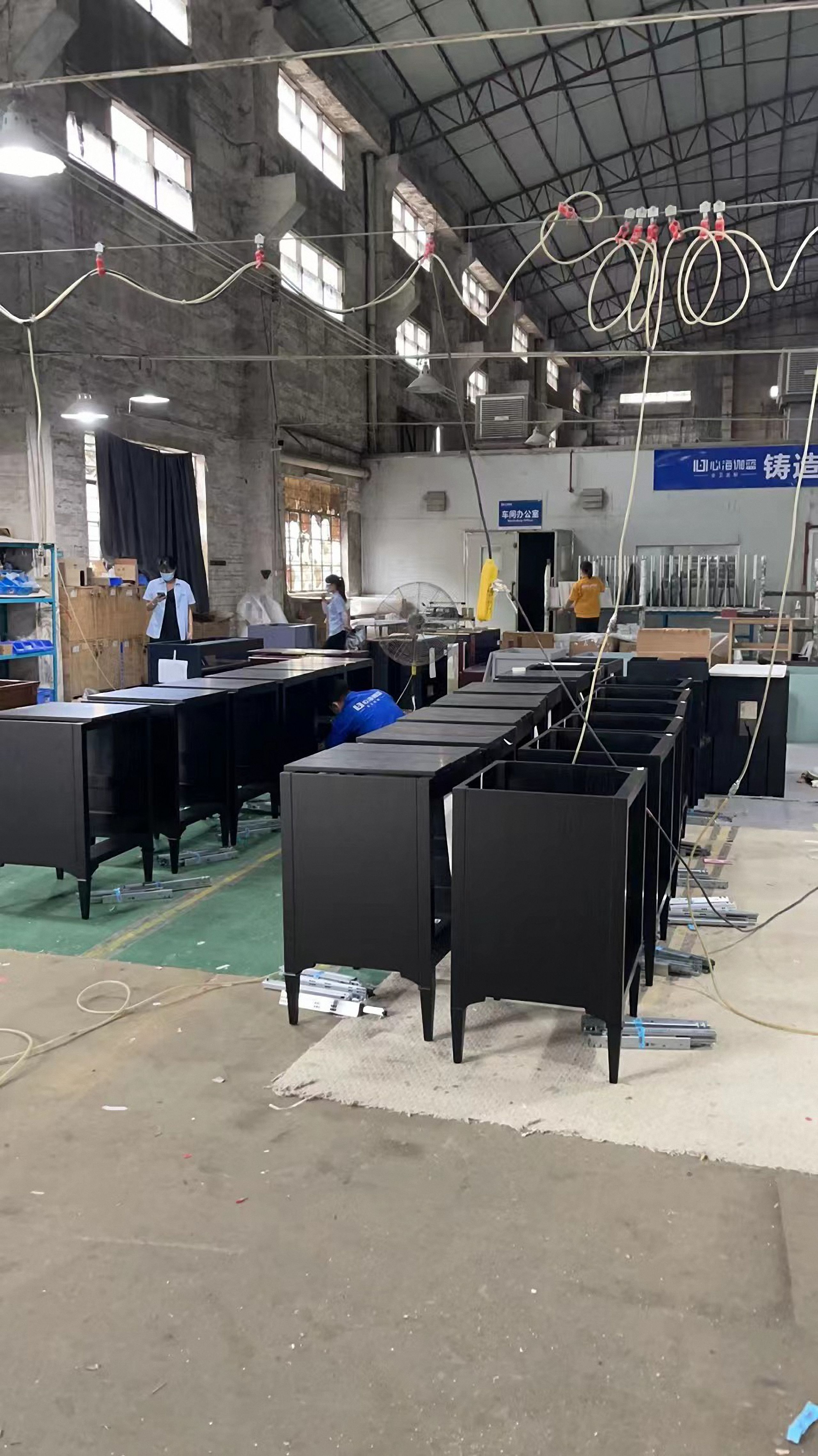
Project records give hardware specifications a real context. SHKL's case history includes a customized bathroom furniture programme for a hotel application in the United States: 250 units over a cooperation span of two years, delivered on time, with product quality meeting US market standards and high customer satisfaction. A shower door customization project in Australia covering 190 units, with a listed cooperation span of five to ten years, met Australian safety standards with smooth installation. A 110-unit bathroom project in Thailand specified safety laminated glass with an anti-shatter design for enhanced user safety. A Canadian bathroom and kitchen cabinetry project of 50 units, listed at five to ten years, met Canadian safety standards with materials identified as meeting requirements.
Pain Point to Specification: The Hardware Comparison Table
The table below links each everyday complaint to its typical root cause and the specification that prevents it. Every entry is drawn from the product data referenced in this article.
| Common pain point | Typical root cause | Specification that prevents it | Product example |
|---|---|---|---|
| Squeaky hinges | Unspecified base metal; hinge bore dries or corrodes | Named base material grade plus a defined hinge type | KL-AS5577310 hinge shower door, 304 stainless steel hardware |
| Sagging shower door | Hinge load not matched to the glass panel | Hinge type and glass construction selected together | KL-AS5577310, with clear, tinted, laminated, flute or chemically frosted glass options |
| Sticking or slamming drawers | Slide with no soft-closing mechanism | Unihopper soft closing slides | AS813047, AS813108, AS813109 |
| Misaligned multi-door mirror cabinets | Non-adjustable or underspecified hinges across three doors | Hinges specified by series on multi-door mirror units | AS813108 and AS813109, three-door mirror cabinets on DTC hinges |
| Rust and finish breakdown around fittings | Low-grade base metal plus abrasive cleaning | 304 stainless steel hardware with easy-clean or film-coated glass | KL-AS5577310 |
Vanity Hardware at a Glance
| Model | Drawer configuration and slides | Mirror unit and hinges | Top and basin |
|---|---|---|---|
| AS813047 | Two drawers on Unihopper soft closing slides | LED mirror with light gold aluminium frame and 5mm copper-free glass; three colour temperatures, defog and dimmable, two touch switch buttons | Sintered stone integral basin |
| AS813108 | Two drawers on Unihopper soft closing slides | Three-door mirror cabinet on DTC hinges, LED light strip inside, infrared sensor switch | Solid surface top with ceramic basin |
| AS813109 | Two side drawers plus one outer and one inner drawer, on Unihopper soft closing slides | Oval mirror cabinet, three doors with DTC hinges, 3mm copper-free glass | Terrazzo top with solid surface basin; cabinet 800×469×408mm or 900×469×408mm |
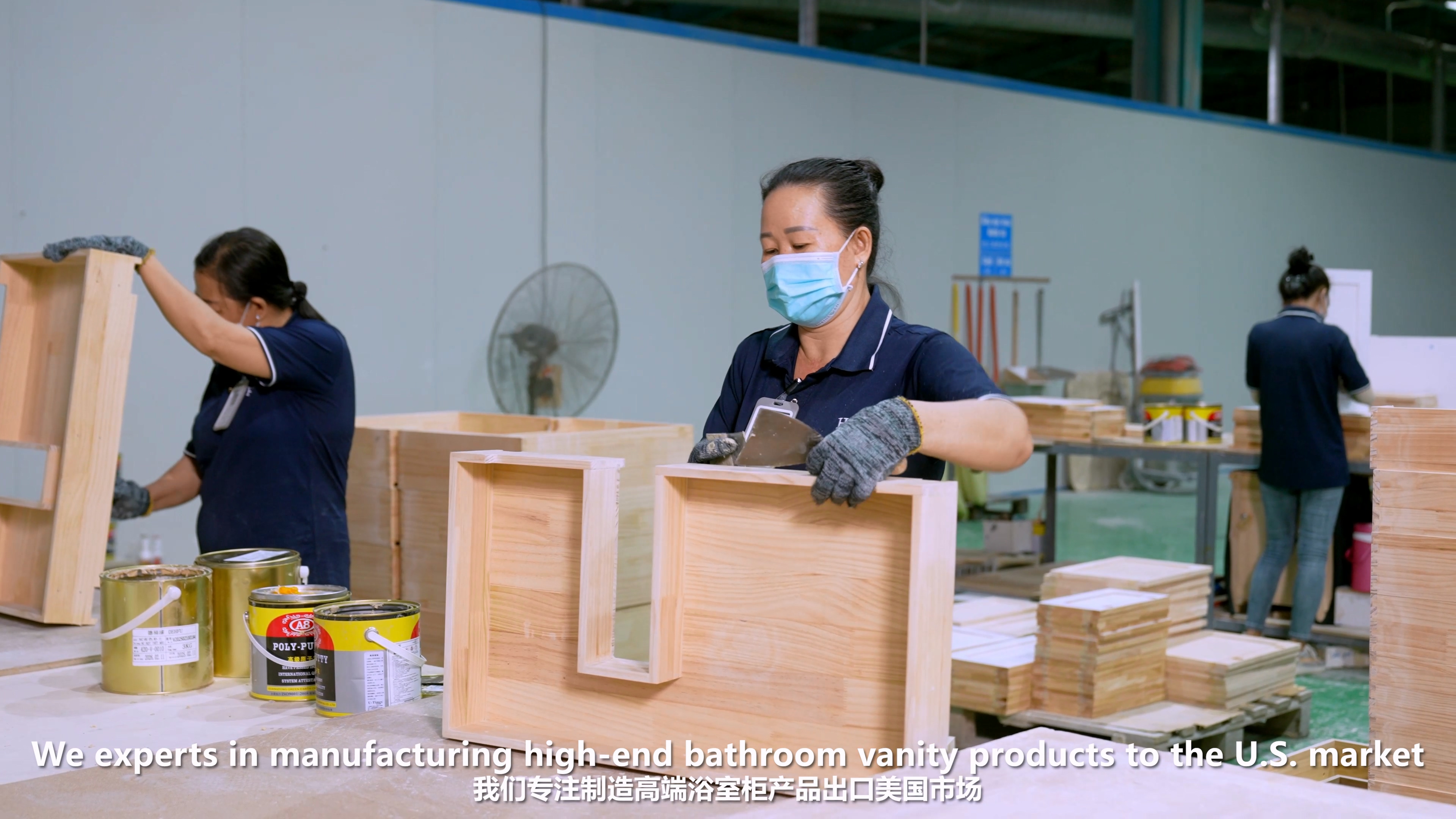
All three models share plywood and solid wood construction with a Warm Mist Brown lacquer and melamine finish, and are specified for residential construction and commercial hospitality use.
FAQ: Hardware Specification Questions Buyers Ask
For the KL-AS5577310 hinge shower door, the certificate to request is ISO 9001:2015 under standard GB/T 19001-2016, certificate number 04924Q00629R0M, issued by Guangdong Quality Testing CTC Certification Co., Ltd. and applicable to the global market. For SHKL's bathroom vanity products, the relevant documents are ISO 14001 (certificate number 04924E00351R0M) and ISO 45001 (certificate number 04924S00316R0M), issued by the same certification body, valid for the global market including China, EU, US and the Middle East, with validity from 11 May 2024 to 10 May 2027. Read three details on each document: the issuing body, the certificate scope — which here covers R&D and manufacture of bathroom cabinets and the manufacture of fixed universal lighting fixtures — and the market applicability. Market-specific glazing rules sit alongside these certificates: in the United States, safety glazing materials must comply with ANSI Z97.1-2026 and CPSC 16 CFR 1201 for impact and shatter behaviour, while European enclosures must meet EN 12150 for thermally toughened soda lime silicate safety glass.
Yes. SHKL's OEM customization covers size, colour, material, finish, hardware, logo and design style, with a monthly capacity of 10,000 units and export markets across North America, Europe, Oceania and the Middle East. In practice, matching happens at configuration level: AS813047 and AS813108 each pair two drawers with Unihopper soft closing slides, while AS813109 combines two side drawers with one outer and one inner drawer on the same slide system and adds a three-door mirror cabinet on DTC hinges. On the shower door side, glass craftsmanship options — clear, tinted, laminated, flute, chemically frosted, easy-clean and film-coated — are selected together with the hardware material.
Hardware cost is not one line item. It is determined by the base material grade — 304 stainless steel hardware on the KL-AS5577310 hinge shower door compared with aluminium alloy hardware used on other models — the hardware series named in the specification, the glass construction, and the configuration the hardware has to carry. Buyers should ask suppliers to itemise these variables rather than quoting a single "standard" or "premium" tier, because the same catalogue appearance can be built with different slide and hinge specifications. Order economics matter too: SHKL's OEM terms list a minimum order quantity of 50 units and a lead time of 30–45 days, so the practical cost question is how hardware specification and order volume are balanced together. A quote request should therefore state the failure mode that matters most in the project — for hotel bathrooms, hard-working drawers on soft closing slides — so the hardware line reflects it.
Yes, and validation is a documented part of the process: 100% inspection is applied across production, and the after-sales scope covers warranty support, remote after-sales consultation and spare parts supply. A practical checklist: ask for the hardware series name and material grade in writing; confirm which model carries it, for example 304 stainless steel hardware on the KL-AS5577310 hinge shower door; request the certificate number that covers the product; and operate the slide or hinge under load rather than judging it on an empty drawer.
SHKL's OEM terms list a minimum order quantity of 50 units, a lead time of 30–45 days and a monthly capacity of 10,000 units, with export markets across North America, Europe, Oceania and the Middle East. After-sales support covers warranty, remote consultation and spare parts supply, which matters when a distributor is holding stock for installers rather than shipping one-off orders. To move from specification to a sample or a quote, send the model, the hardware line you want and the target market — reach the team at info@shklbathroom.com or through SHKL's official site, and the current product catalogue is available to download here.
Conclusion: Hardware Is the Cheapest Place to Solve the Problem
Squeaky hinges, sagging doors and sticking drawers are not inevitable consequences of daily bathroom use. They are the visible result of three specification decisions: which base material grade the hardware is made from, which hardware series the moving parts come from, and whether the hardware was matched to the load it has to carry. The KL-AS5577310 hinge shower door answers the first question with 304 stainless steel and an ISO 9001:2015 certificate; the AS813047, AS813108 and AS813109 vanities answer the second with Unihopper soft closing slides and DTC hinges across multi-door mirror cabinets.
For buyers in the research and evaluation stage, the sequence is simple: name the complaint, name the spec, verify the certificate, then validate on a sample before volume. A specification written this way survives ten years of humid mornings far better than a brochure claim does.
Next Step: Sample, Quote or Catalogue
If your project is being held back by hardware complaints rather than design, start with a sample. Request a hardware sample or a quotation for the KL-AS5577310 hinge shower door and the AS813047, AS813108 or AS813109 vanities, and state the failure mode you want solved — hinge noise, door sag or drawer stickiness. The current catalogue is available for download, and the team can be reached at info@shklbathroom.com or via shklbathroom.com.