فك شفرة الصرف المعلمات التقنية للجيونت: كيف تحدد عمليات التصنيع الجودة
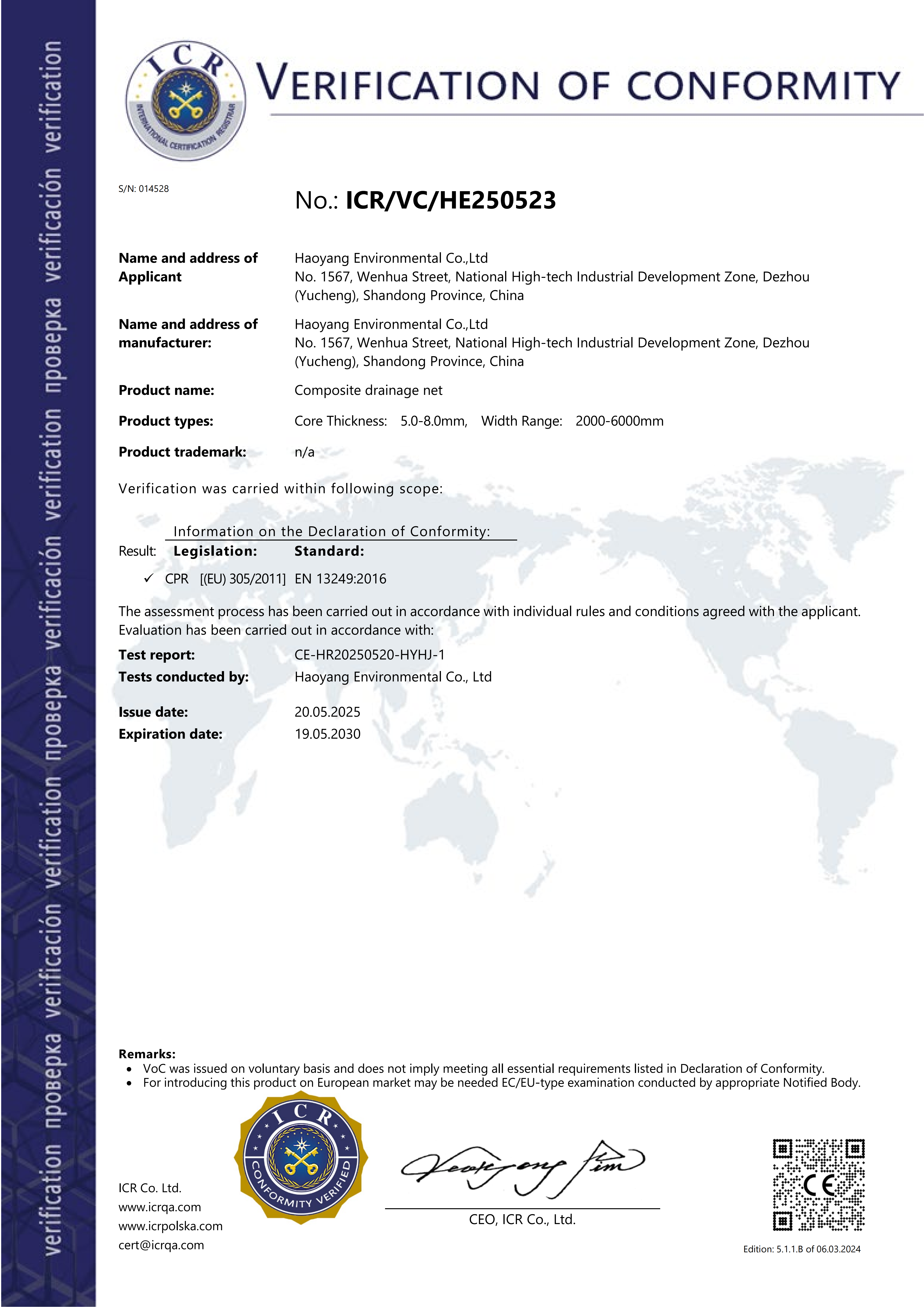
CE certification validates that drainage geonets meet European standards for quality and performance.
Decoding Drainage Geonet Technical Parameters: How Manufacturing Processes Define Quality
For industrial buyers sourcing drainage geonet for demanding projects like metal smelting tailings ponds or aquaculture pond liners, navigating technical datasheets can be overwhelming. Terms such as “compressive strength at 10% strain,” “drainage capacity,” and “acid/alkali resistance” are not just numbers—they directly reflect the material’s long-term performance under harsh conditions. Equally critical is understanding how the manufacturing process—from raw material selection to forming techniques—determines whether those parameters are achieved consistently. This article provides a practical framework for interpreting drainage geonet technical parameters and explains why production quality matters for project success.
What Is a Drainage Geonet?
A drainage geonet is a three-dimensional polymeric net structure designed to convey fluids within a geotechnical system. Unlike traditional granular drainage layers, a geonet offers higher flow capacity, lighter weight, and easier installation. It is commonly used in landfill leachate collection, subgrade drainage, slope protection, tunnel drainage, and environmental containment systems. Depending on the application, drainage geonets can be made from HDPE, PP, or PET, and may be combined with geotextiles to form a composite drainage geonet.
Typical product variations include: acid and alkali resistant drainage geonet, high compressive resistance drainage geonet, high drainage capacity geonet, 3D composite drainage geonet, polyester filament composite drainage geonet, and high-strength polypropylene composite drainage geonet. Each type targets specific in-situ conditions.
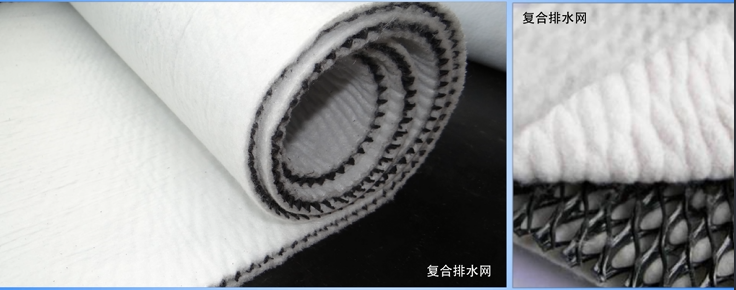
A standard drainage geonet roll showing its open grid structure for efficient fluid conveyance.
Key Technical Parameters Explained
1. Thickness and Mass Per Unit Area
Thickness (typically 4.0–8.0 mm) directly influences flow capacity and compressive resistance. Mass per unit area (500–1400 g/m²) correlates with material density and strength. A thicker, heavier geonet usually provides higher drainage and load-bearing capacity, but must be balanced with cost and handling flexibility. Customization is common—buyers should specify the required thickness and GSM based on expected overburden pressure.
2. Tensile Strength (MD/TD)
Tensile strength in the machine direction (MD) and transverse direction (TD) indicates the geonet’s ability to withstand installation stresses and long-term loads. For drainage geonets, values typically range from ≥5 to 15 kN/m. Higher tensile strength ensures the net does not tear during deployment or under differential settlement. Elongation at break (10–25%) measures ductility; moderate elongation allows the geonet to conform to subgrade irregularities without rupturing.
3. Compressive Strength (10% Strain)
This parameter defines the pressure the geonet can sustain before its vertical height reduces by 10%. Values of ≥500–830 kPa are typical for heavy-duty applications. High compressive resistance drainage geonet is essential for deep landfills, mining heap leach pads, and heavy-traffic subgrades. A low compressive strength can lead to crushing of the net, drastically reducing drainage capacity.
4. Acid/Alkali Resistance (Strength Retention)
Exposure to aggressive leachates in metal smelting or chemical environments demands ≥90% strength retention after accelerated aging. This is achieved through proper resin selection and stabilizer packages. Without adequate chemical resistance, the geonet may embrittle and fail prematurely.
5. Drainage Capacity (L/min)/m
Measured under specific hydraulic gradients and normal loads, this value (≥50–120 L/min per meter width) directly reflects the geonet’s hydraulic performance. Buyers must select a value that matches the design flow rate of the application. High drainage capacity geonet is critical for landfill leachate collection and tunnel drainage systems.
| Parameter | Standard Range | Notes |
|---|---|---|
| Thickness (mm) | 4.0 – 8.0 | Customizable |
| Mass per unit area (g/m²) | 500 – 1400 | Customizable |
| Tensile strength MD/TD (kN/m) | ≥5 – 15 | Depends on material |
| Elongation at break (%) | 10 – 25 | Balance strength and flexibility |
| Compressive strength @10% strain (kPa) | ≥500 – 830 | Critical for buried applications |
| Acid/alkali resistance (strength retention %) | ≥90% | Laboratory tested |
| Drainage capacity (L/min)/m | ≥50 – 120 | Customizable |
How Manufacturing Processes Influence Quality
The performance of a drainage geonet is fundamentally determined by its production method. Two primary technologies dominate the market: integrated molding and hot melt welding.
Integrated Molding
In this method, the geonet is extruded from a single die as a continuous three-dimensional net. The ribs are formed simultaneously, creating a monolithic structure with uniform strength and consistent geometry. This process ensures high tensile and compressive performance because there are no welded joints that could become weak points. HDPE and PP geonets produced by integrated molding exhibit excellent creep resistance and long-term durability.
Hot Melt Welding
Here, individual strands or grids are bonded together using heat and pressure. While this method can create complex shapes, the welded intersections may have reduced strength compared to the parent material. For applications requiring high mechanical integrity, integrated molding is generally preferred.
Raw material selection is equally vital. Virgin HDPE resin with a specific density and melt flow index, combined with carbon black (2.0–2.8% content) and UV stabilizers, ensures long-term weatherability. A manufacturer like Haoyang Environment Co., Ltd, which operates a 200,000 m² factory with an annual output of 33,000 tons, uses state-of-the-art extrusion lines with online double-sided texturing (for composite geonets) to enhance friction and drainage performance.
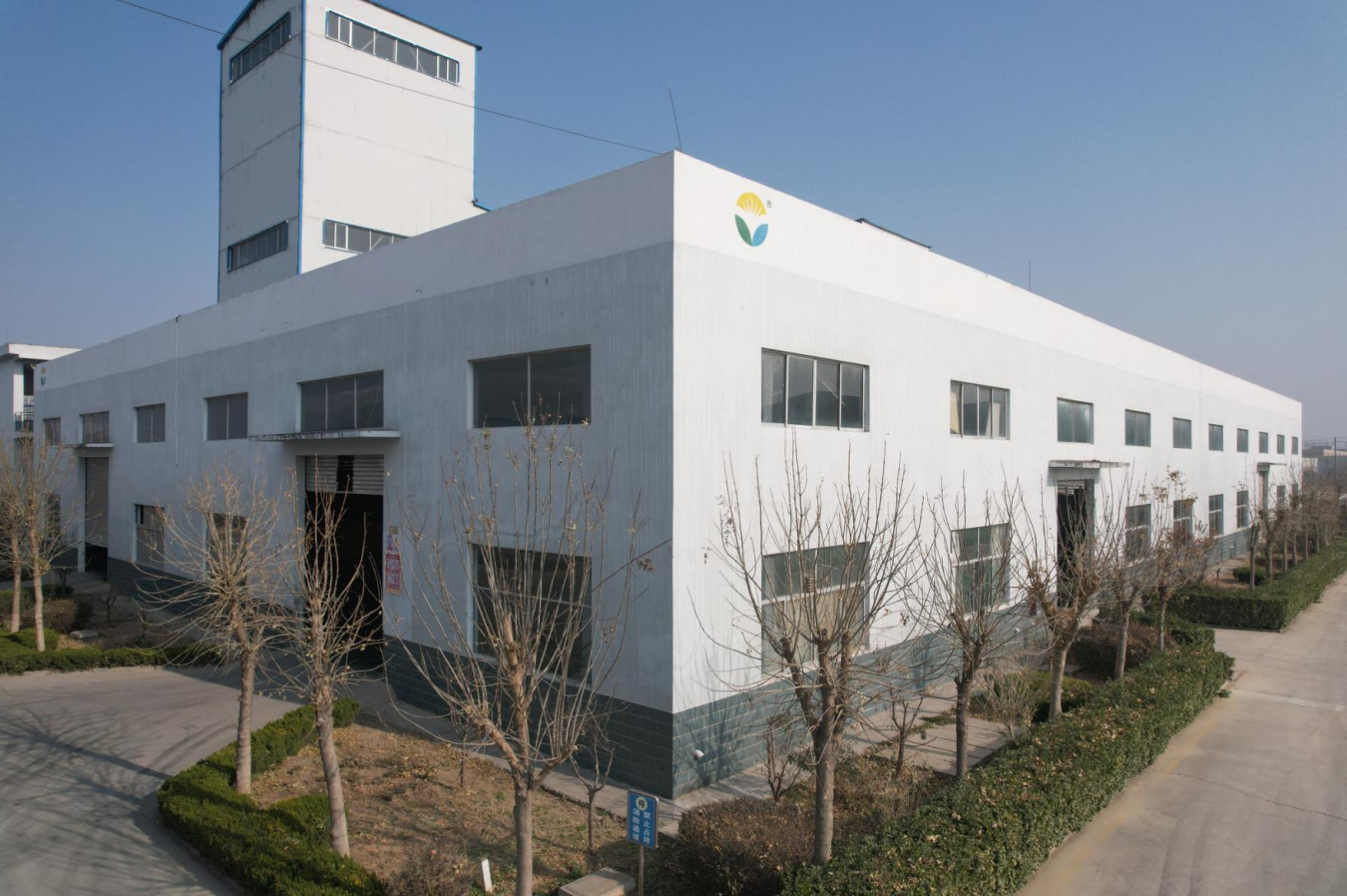
Modern production lines at Haoyang Environment ensure precise control over thickness, density, and geometry.
Why Parameter Interpretation Matters for Buyers
Industrial buyers often compare datasheets from different suppliers, but numbers can be misleading if test conditions are not disclosed. For example, drainage capacity is highly dependent on the hydraulic gradient and normal load used in testing. A value of 120 L/min/m measured at 10 kPa may drop by 50% under 500 kPa overburden. Always request test reports under your specific design conditions.
Another common concern is the long-term retention of properties. Pre-shipment testing and third-party certification (e.g., CE according to EN 13249, GOST 33068) provide confidence that the delivered product matches the specification. Haoyang Environment’s products are backed by CE Verification of Conformity (ICR/VC/HE250524) and GOST certificates, ensuring compliance with European and EAEU standards.
CE certificate (ICR/VC/HE250523) for composite drainage net.
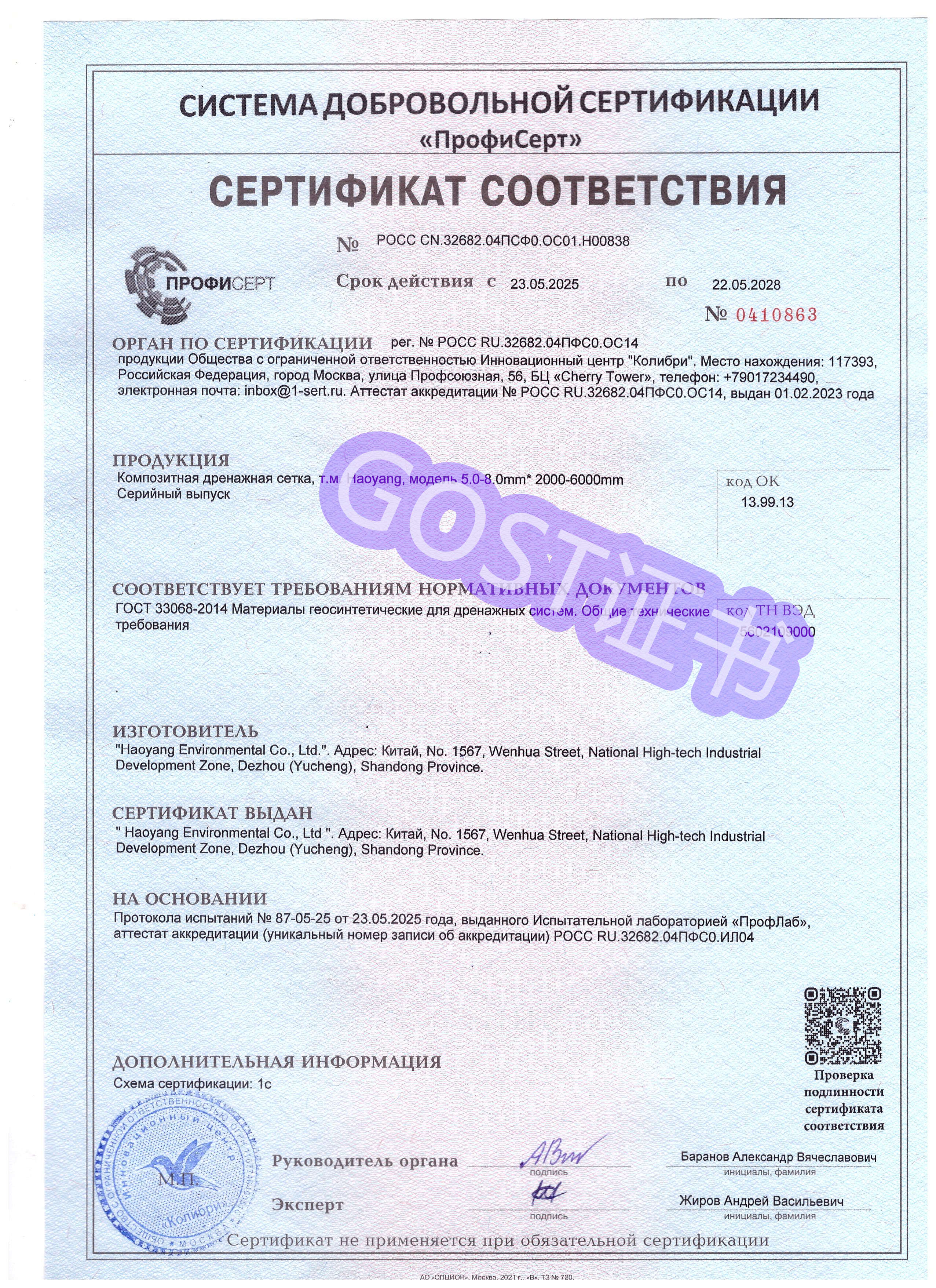
GOST certificate for 3D composite drainage geonet.
Case Study: Uzbekistan Gold Mine Tailings Pond
A practical illustration of the importance of parameters and process is the 900,000 m² seepage control project for a gold mine tailings pond in Uzbekistan. The project required a 3D composite drainage geonet combining a textured HDPE geomembrane with a high-strength polypropylene geotextile. The design called for exceptional chemical resistance and long-term durability under 70-year service life.
Haoyang Environment supplied a customized solution: the textured geomembrane was produced on a five-layer co-extrusion blow molding line with online double-sided texturing using a high-temperature air jet process. This achieved molecular-level bonding of rough points, eliminating thermal aging risks. The resulting product met compressive strength ≥830 kPa and drainage capacity ≥100 L/min/m, ensuring reliable performance in acidic leachate conditions.
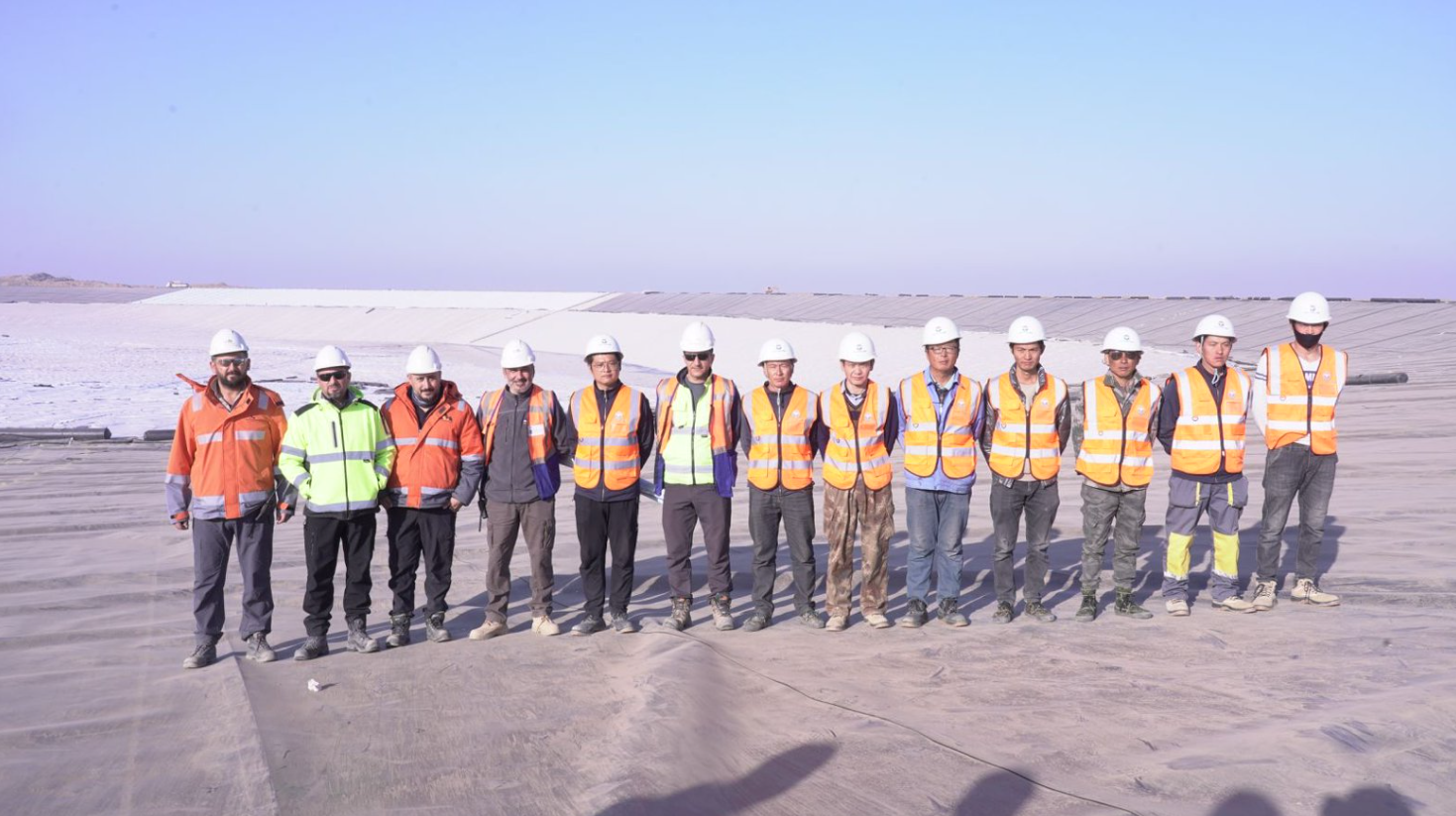
Haoyang’s composite drainage geonet installed at the Uzbekistan gold mine tailings pond.
Frequently Asked Questions (FAQ)
Q1: How do I verify that the reported parameters are accurate?
Request independent test reports from a certified laboratory (e.g., CNAS-accredited lab). Purchase samples for pre-shipment testing. Look for certifications like CE, GOST, or ISO that validate production quality.
Q2: What is the difference between HDPE, PP, and PET drainage geonet?
HDPE offers excellent chemical resistance and stiffness; PP provides higher flexibility and thermal stability; PET has higher tensile strength but lower chemical resistance. Choose based on chemical exposure, temperature, and load requirements.
Q3: Can the drainage geonet be customized for my project?
Yes. Manufacturers like Haoyang Environment offer customization of thickness, GSM, tensile strength, compressive strength, and drainage capacity. MOQ is typically 5,000 m² with lead time 10–30 days.
Q4: How does manufacturing process affect long-term performance?
Integrated molding produces a monolithic structure with consistent strength. Hot melt welding may introduce weak points. Also, proper carbon black dispersion and stabilizer addition prevent UV degradation and embrittlement.
Q5: What is the typical warranty or service life?
Expected design life can exceed 50–70 years for properly selected and installed geonets. Manufacturers may offer on-site technical support and after-sales service. Haoyang Environment provides on-site construction guidance and full-chain service.
How to Select the Right Drainage Geonet Supplier
- Check certifications: CE (EN 13249), GOST (EAEU), and ISO 9001 demonstrate compliance with international standards.
- Evaluate production capacity: Suppliers with high annual output (e.g., >30,000 tons) and modern equipment can ensure consistent quality and timely delivery.
- Request parameter customization: Ensure the supplier can tailor thickness, compressive strength, and drainage capacity to your specific project needs.
- Assess quality control: 100% testing of raw materials and finished products, along with a CNAS-accredited lab, reduces risk of non-conformance.
- Review project references: Case studies in similar industries (e.g., metal smelting, aquaculture) provide evidence of real-world performance.
Need Help Decoding Your Project’s Requirements?
Contact the technical team at Haoyang Environment for a free parameter review and product recommendation. With decades of experience in geosynthetics, they can help you select the right drainage geonet for any harsh environment.
Conclusion
Interpreting drainage geonet technical parameters is not merely an academic exercise—it is the foundation of a successful civil or environmental project. Parameters like thickness, tensile strength, compressive resistance, and drainage capacity must be matched to the specific loading, chemical, and hydraulic conditions of the site. Equally important is choosing a manufacturer whose production processes—integrated molding, raw material control, and quality assurance—deliver consistent, reliable performance.
By understanding the link between specifications and manufacturing, buyers can confidently select products that minimize risk, reduce total ownership cost, and ensure long-term project integrity. Manufacturers like Haoyang Environment Co., Ltd, with its certified products, proven case studies, and technical support, provide the assurance needed for demanding applications in metal smelting, aquaculture, landfill, and mining sectors.
For more information, visit www.haoyanghuanjing.com or contact Shengkang Li at +86 15315800874 / 15315800874@163.com.