EN 13249 مقابل GOST 56586: دليل تقني لشهادات الغشاء الجيوغرافي
EN 13249 vs. GOST 56586: Technical Guide to Geomembrane Certifications
EN 13249:2016 and GOST 56586-2015 are the two certification references that most often decide whether a single geomembrane can be supplied into both European and EAEU/CIS projects. Haoyang Environment Co., Ltd documents conformity with both frameworks on one HDPE geomembrane platform through certificate ICR/VC/HE250525 and GOST certificate POCC CN.32682.047C00.0C01.H00840.
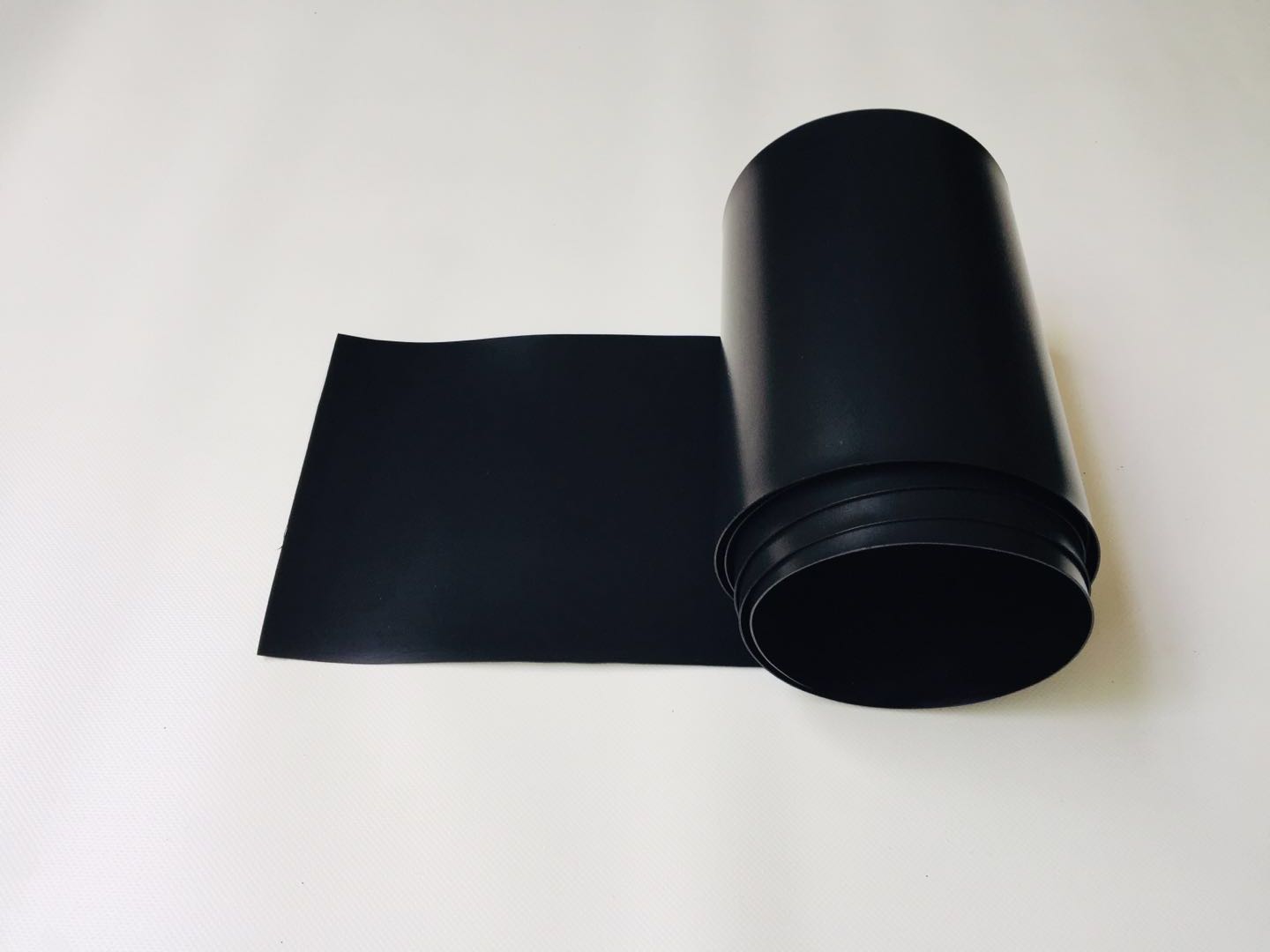
 HDPE geomembrane platform documented for both European and EAEU conformity routes.
Problem Definition: Certification, Not Material, Is What Stops Projects
A geomembrane that satisfies one regulatory system does not automatically satisfy the next. The material can be identical — same resin grade, same thickness, same roll format — while the evidence package that proves it is not. European procurement reviews ask for harmonized-standard conformity documentation. EAEU and CIS reviews ask for a GOST certificate of conformity issued in the local system. When a single liner has to serve both, the buyer ends up managing two document trails that reference different test regimes, different declaration formats, and different languages.
The failure mode is rarely a failed laboratory test. It is a documentation gap that surfaces late: at tender evaluation, at customs, or at the point where the owner's engineer signs off on the construction submittal. At that stage, an uncertified roll is unusable regardless of its measured performance, and re-sourcing a certified equivalent can push an installation window past the season.
Three questions therefore decide most cross-region liner purchases:
- Which conformity document does the receiving authority actually accept?
- Does the supplier hold that document on the same product platform it is quoting?
- Can the supplier prove the certified property values still apply to the specific thickness, width and surface type being ordered?
Industry Background: Two Regulatory Systems, One Global Market
Geomembranes are a globally traded product, but the rules that govern their acceptance are regional. The commercial weight behind this is significant: the global geomembrane market was valued at approximately USD 2.23 billion in 2025 and is projected to reach USD 3.59 billion by 2034, according to Fortune Business Insights. Within that market, HDPE raw materials dominate, accounting for roughly 31.3% to 40% of global revenue depending on the reporting agency (Grand View Research / Fortune Business Insights).
Demand is concentrated in containment applications. The mining segment led the geomembrane market in 2023 with 39.6% of global revenue, driven primarily by tailings containment demand, per Grand View Research. That concentration matters for certification planning, because mining projects are exactly the category that crosses regulatory borders most often — Central Asian and African tailings facilities are frequently financed, engineered or audited by parties who work to European or international specifications, while the host-country permitting authority works to local GOST-based requirements.
On the European side, EN 13249:2016 belongs to the family of harmonized European standards for geotextiles and geotextile-related products, each of which addresses a defined construction application and sets out the characteristics a product must declare. It sits within the CE marking route that European specifiers use to demonstrate conformity, and for liquid-containment structures specifically it is used alongside other harmonized references — EN 13361, for example, defines safety and performance characteristics for geomembranes used in European reservoirs and dams.
On the Eurasian side, GOST 56586-2015 is the reference buyers in the EAEU and wider CIS market cite for polymeric geomembrane specification and conformity, with the certificate itself issued through the regional GOST conformity system rather than through the European harmonized route.
What both systems share is that they are conformity frameworks, not performance ceilings. A product can be engineered to a single declared parameter set that satisfies both — provided the manufacturer certifies it that way and controls production consistently enough to keep the declaration valid.
Detailed Solution: Dual Certification on a Single HDPE Platform
Haoyang Environment Co., Ltd is a geosynthetics manufacturer headquartered in the Dezhou (Yucheng) National High-tech Industrial Development Zone, Shandong Province, China, founded in 2008. The company operates a 200,000 m² facility with 190 employees and an annual output of 33,000 tonnes, and exports approximately 60% of production, with a marketing network covering more than 70 countries. Its product range covers geomembranes, geotextiles, composite drainage nets, waterproof mats and other geosynthetic materials.
For buyers working across EU and EAEU requirements, the relevant fact is that the same certified geomembrane platform carries two conformity documents:
European-facing conformity evidence: ICR certificate ICR/VC/HE250525.
EAEU/CIS conformity evidence: GOST certificate POCC CN.32682.047C00.0C01.H00840.
Both certificates apply to the same HDPE geomembrane product platform, in 0.3 mm–3.0 mm thickness, rather than to two separately engineered products.
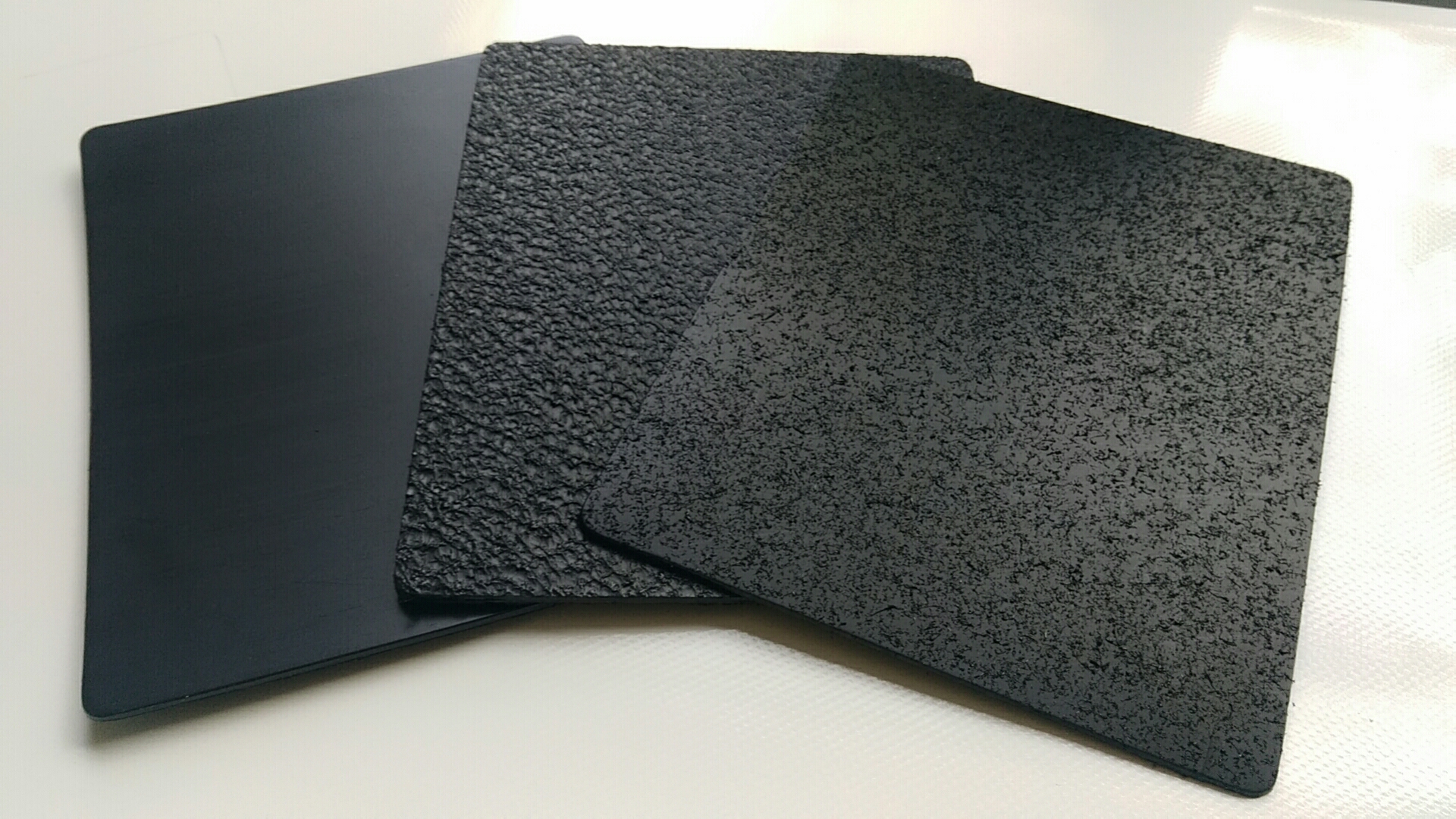
 Certified HDPE geomembrane platform, 0.3 mm–3.0 mm, produced under 100% tested quality control.
What the certified platform actually covers
Certification is only useful to a specifier if the declared property values are visible and can be checked against the project's design criteria. The tested values on the certified HDPE geomembrane are listed below. They are the figures a buyer should compare against the tender specification, and they should also be the figures verified on the mill certificate for the delivered batch.
| Property | Declared value on the certified platform |
|---|---|
| Material | HDPE |
| Thickness | 0.3 mm – 3.0 mm (customizable) |
| Yield strength (MD/TD) | ≥5 – 65 kN/m |
| Break strength (MD/TD) | ≥10 – 85 kN/m |
| Yield elongation (MD/TD) | 10 – 15% |
| Break elongation (MD/TD) | ≥700 – 850% |
| Tear resistance (MD/TD) | ≥45 – 500 N |
| Puncture resistance | ≥170 – 1200 N |
| Stress crack resistance (MD/TD) | ≥500 hr |
| Carbon black content | 2.0 – 2.8% |
| Standard OIT | ≥130 min |
| High pressure OIT | ≥430 min |
| Oven aging at 85 °C (Standard OIT retained after 90 days) | ≥60% |
Three of these values carry disproportionate weight in certification review. Stress crack resistance is the durability property that separates a liner designed for a 20-year service window from one designed for a generation-long containment obligation; the test logic behind it is described in ASTM D5397, which evaluates stress crack resistance of polyolefin geomembranes using the Notched Constant Tensile Load (NCTL) method. Oxidative induction time — standard OIT and high-pressure OIT together with the retained-OIT figure after oven aging — is the evidence that the resin's antioxidant package will survive field exposure. Carbon black content is the UV-protection indicator.
Buyers comparing this platform against published global specifications should note that HDPE geomembranes are commonly benchmarked against GRI-GM13 for test properties and frequencies, while high-elongation LLDPE grades are governed by GRI-GM17. Both references come from the Geosynthetic Institute and are widely used internationally. Holding EN 13249:2016 and GOST 56586-2015 documentation does not replace those benchmarks; it addresses the separate question of regional acceptance.
Why the certificates live on one product line
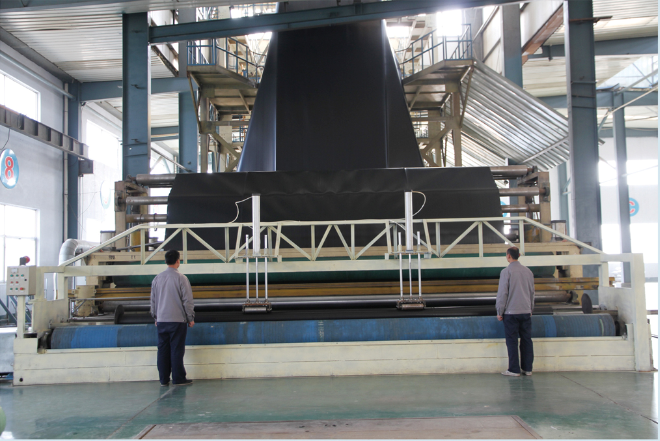
Dual certification is a manufacturing discipline, not a paperwork exercise. To keep a single declared parameter set valid under two conformity systems, production has to hold consistent composition, consistent thickness tolerance and consistent surface treatment across runs. Haoyang's production model is OBM, with customization available on LOGO, width, scroll length, thickness, GSM, tensile yield strength, tensile fracture strength, piercing strength, and chemical and physical indicators. Monthly capacity is 3,000 tonnes, and every roll is 100% tested before dispatch.
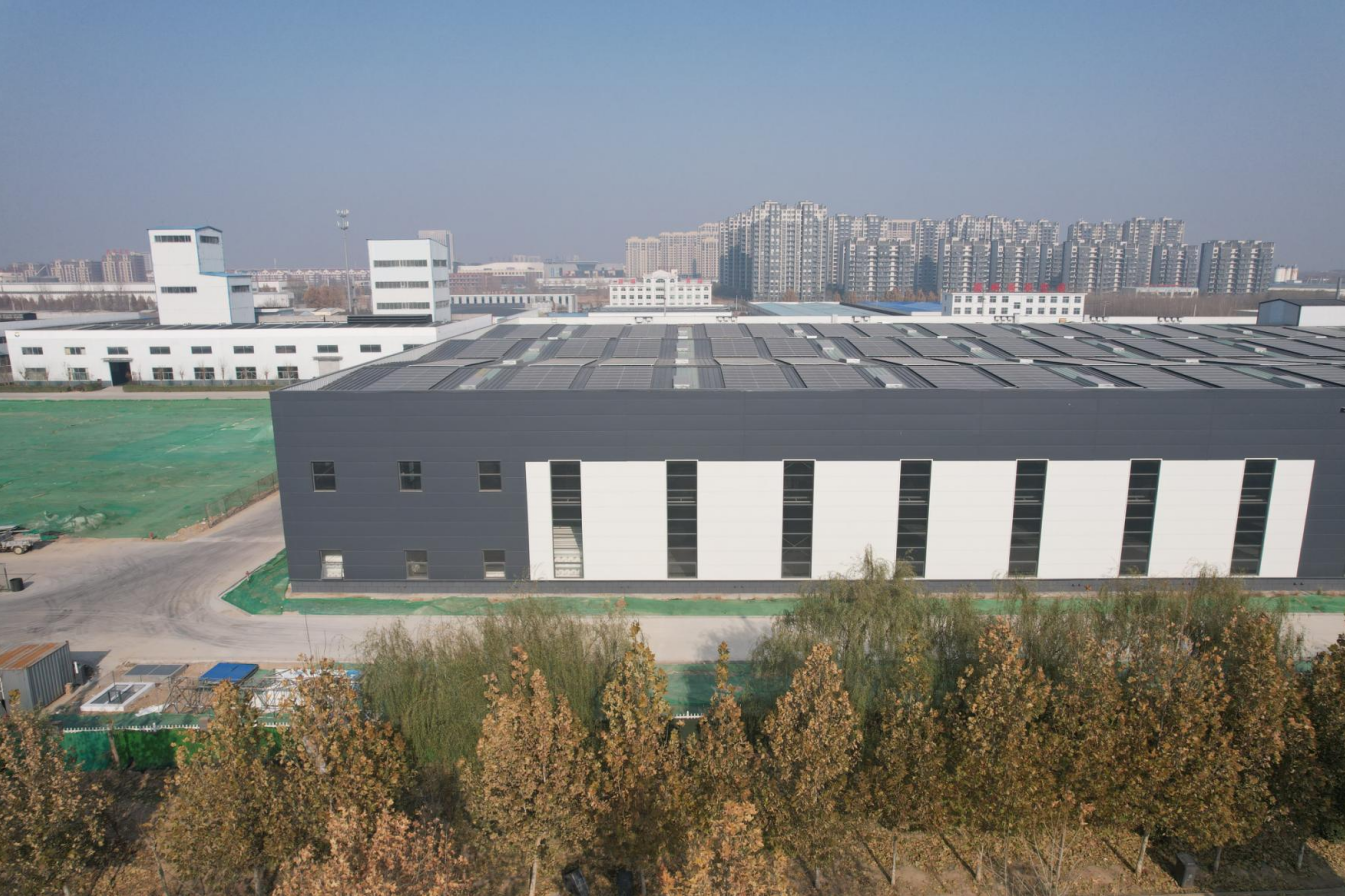 Production workshop: the certified parameter set is held by process control, not by final inspection alone.
Haoyang holds more than 70 patents and proprietary technologies and operates through 8 wholly-owned subsidiaries, with an R&D function supported by cooperative relationships with universities including Fudan University and Tianjin University of Technology, and 20 professional engineers. For a specifier, the practical meaning is that a certified platform is supported by an engineering function that can respond to project-specific property requirements — textured surfaces, composite structures, or thickness adjustments — without stepping outside the certified envelope.
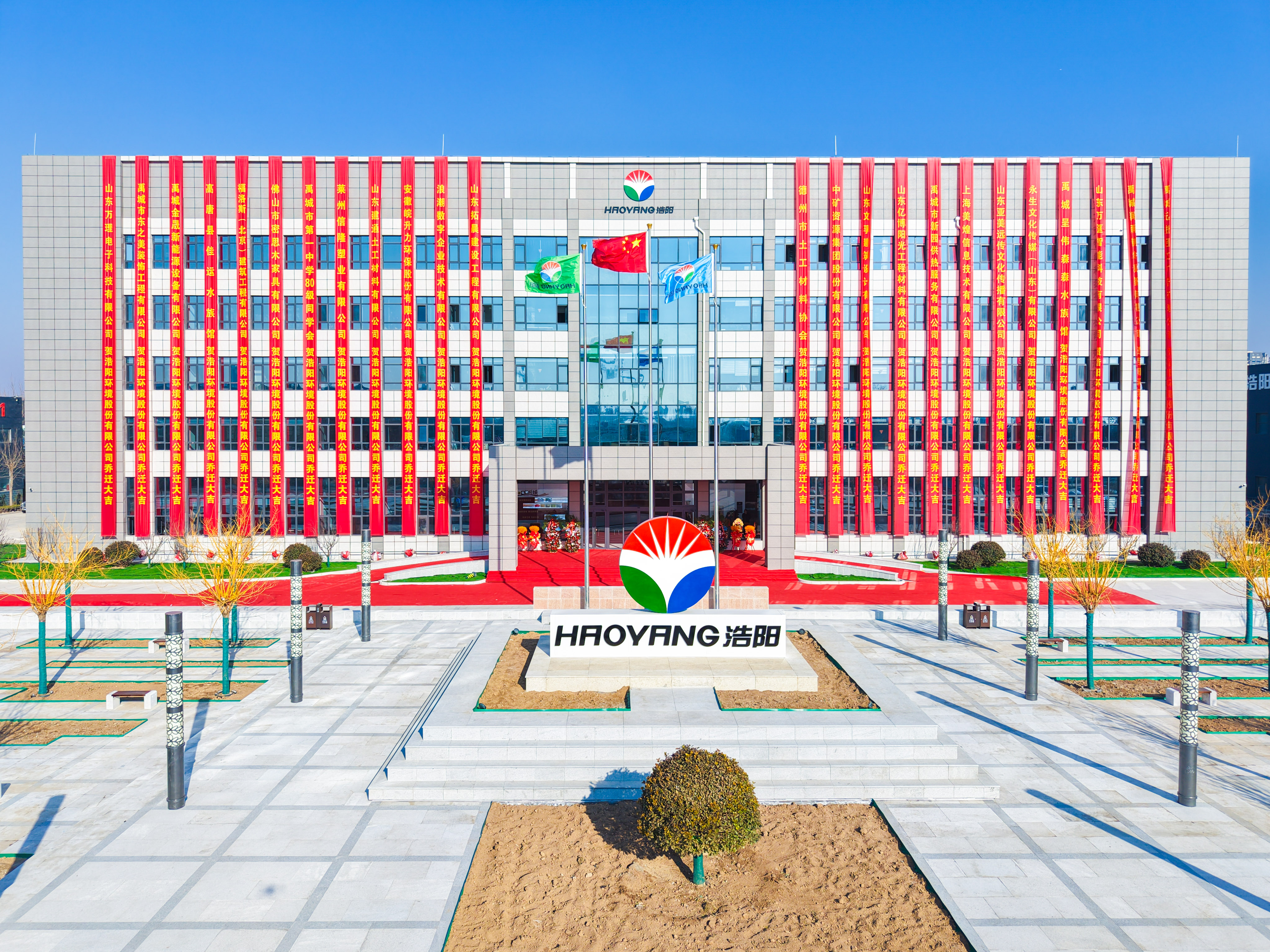 Haoyang Environment Co., Ltd, Dezhou (Yucheng) National High-tech Industrial Development Zone, Shandong, China.
Step-by-Step Breakdown: How to Verify Dual Certification Before You Order
Verification is procedural. The following sequence reflects the order in which the questions usually arise in a cross-region tender, and each step produces a document the buyer can place in the submittal package.
- Match the standard to the receiving authority, not to the project location. Confirm which conformity document the permitting authority, the owner's engineer, or the lender's technical advisor will accept. A European-engineered project inside Central Asia may require both sets of evidence; a purely domestic EAEU project may require only the GOST route.
- Request the certificate identifiers in writing. Ask for the exact certificate numbers and the product scope each certificate covers. Haoyang's European-facing evidence is ICR/VC/HE250525 and its EAEU evidence is POCC CN.32682.047C00.0C01.H00840.
- Confirm the certificate applies to the thickness you are ordering. A certificate covering a product platform does not automatically cover every intermediate thickness. Compare the certified range — 0.3 mm to 3.0 mm on this platform — against the specified thickness.
- Cross-check declared values against the design criteria. Take the design values for tensile strength, elongation, puncture resistance, tear resistance and stress crack resistance, and compare them against the declared platform values listed above. Where the design is driven by chemical exposure or UV exposure, add the OIT, high-pressure OIT, oven-aging retention and carbon black figures.
- Confirm how production control protects the declaration. Ask what proportion of output is tested before dispatch and whether the manufacturer can customize physical and chemical indicators within the certified envelope. A declared value is only as reliable as the process control behind it.
- Confirm the document trail on delivery. The batch-level mill certificate must reference the same certified platform and the same declared values. The certificate number alone is not evidence of batch conformity — the values produced for that specific roll are.
Use Cases: Where Dual-Certified Geomembrane Is Specified
Mining and smelting tailings containment
Metal smelting and tailings facilities are the application category with the strongest pull on cross-region certification. Haoyang's application data for metal smelting describes leakage prevention under 24/7 operating conditions, with matched drainage geonet and geomembrane components, and special requirements covering high chemical resistance, UV resistance and long service life. Market coverage for this application spans Laos, Cambodia, Indonesia, Vietnam, the Democratic Republic of the Congo, the Republic of the Congo, Russia, Uzbekistan, Kyrgyzstan, Kazakhstan, Australia and Chile.
A worked example is Haoyang's seepage control project for the tailings pond basin of a gold mine in Uzbekistan: 900,000 m² of containment, specified against a 70-year service horizon, delivered as a full-chain service from material supply through on-site installation. The project used a three-dimensional composite drainage network built from a textured geomembrane and high-strength polypropylene geotextile. The textured geomembrane was produced on a five-layer co-extrusion blow molding line with integrated online double-sided texturing, using a high-temperature, high-pressure air jet process so that base membrane forming and the double-sided rough surface structure complete simultaneously in the molten state. The rough points bond with the substrate at molecular level, which reduces production energy consumption by 25% and avoids the risk of thermal aging that secondary processing can introduce.
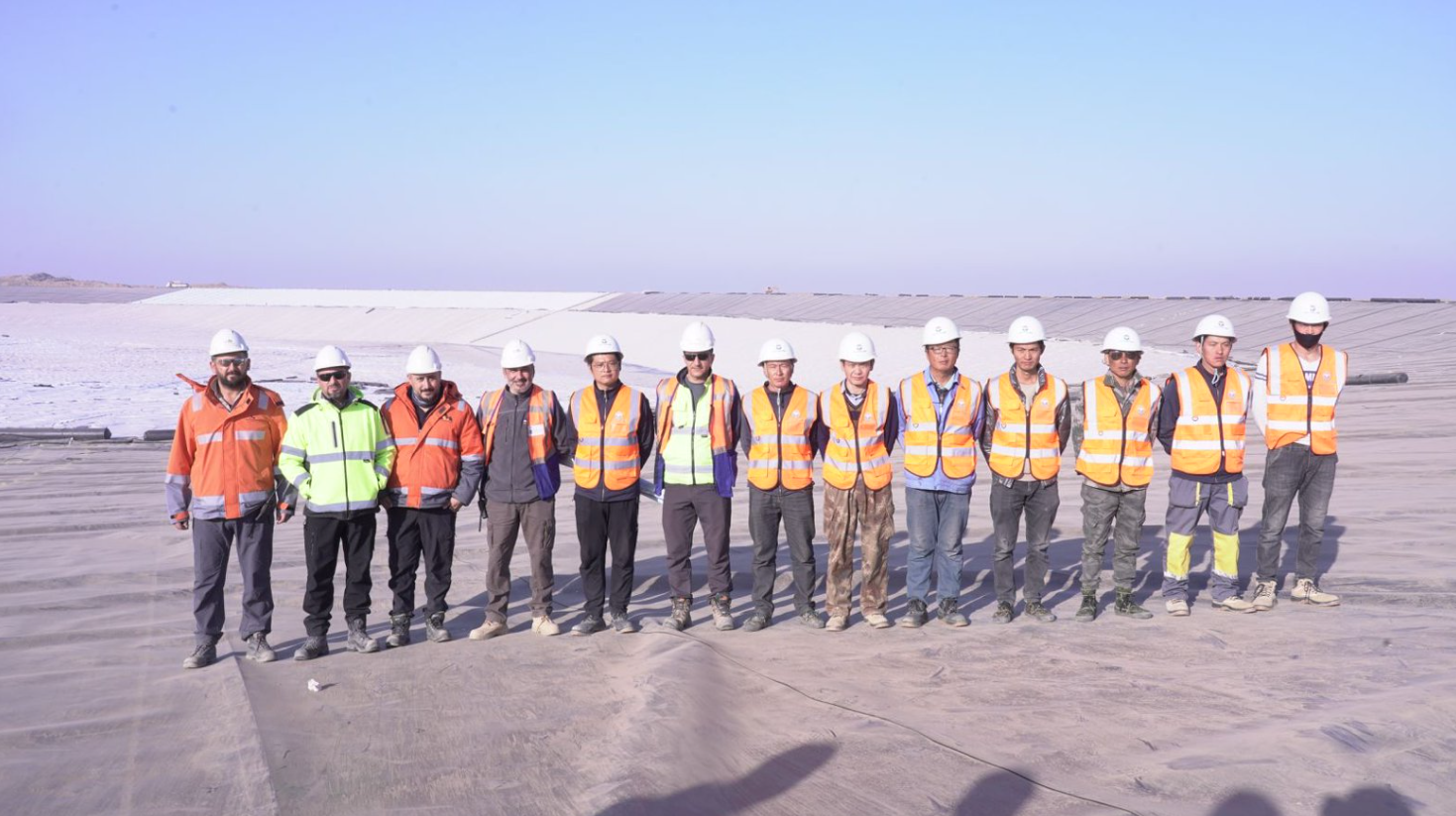 Seepage control for the tailings pond basin of a gold mine in Uzbekistan — 900,000 m², material supply through on-site installation.
Aquaculture and fish pond anti-seepage
Aquaculture pond anti-seepage systems apply a different constraint set to the same certified platform. Haoyang's application data describes aquaculture pond anti-seepage systems operating 24/7 to prevent water seepage, with matched geomembrane and drainage geonet, and special requirements of non-toxicity, UV resistance, fish-friendliness and long service life. Coverage for this application spans Laos, Cambodia, Indonesia and Vietnam. The certification relevance here is straightforward: where pond liners sit against environmental or food-safety review, the dual certificate package shortens the documentation cycle.
Reservoirs, water conservancy and salt lake mining
Reservoir anti-seepage and salt lake mining are two further categories in Haoyang's application scope, alongside water conservancy and road and transportation projects. These are conditions where acid, alkali and salt exposure drive material selection, and where the durability figures on the certified platform — stress crack resistance, OIT retention after oven aging at 85 °C, and carbon black content — become the primary selection criteria rather than secondary checks.
Comparison Table: EN 13249:2016 vs. GOST 56586-2015
| Dimension | EN 13249:2016 | GOST 56586-2015 |
|---|---|---|
| Framework type | Harmonized European standard for geotextiles and geotextile-related products | GOST system standard for polymeric geomembrane specification and conformity |
| Primary acceptance market | European Union | EAEU / CIS region |
| Related regional references | EN 13361 for reservoirs and dams | Regional GOST conformity certification |
| Evidence document held by Haoyang Environment Co., Ltd | ICR certificate ICR/VC/HE250525 | GOST certificate POCC CN.32682.047C00.0C01.H00840 |
| Property families addressed | Mechanical strength, elongation, tear and puncture resistance, durability indicators | Mechanical strength, elongation, tear and puncture resistance, durability indicators |
| Product scope on this platform | HDPE geomembrane, 0.3 mm – 3.0 mm | HDPE geomembrane, 0.3 mm – 3.0 mm |
| Verification step for the buyer | Confirm certificate scope covers the ordered thickness and declared values | Confirm certificate scope covers the ordered thickness and declared values |
| Batch-level proof | Mill certificate matching the certified declared values | Mill certificate matching the certified declared values |
Read side by side, the two frameworks are not competing specifications — they are two acceptance routes for the same physical product. The buyer's task is to confirm that the product platform being quoted is certified under the route that the receiving authority recognises, and that the declared values are unchanged at the ordered thickness.
For context on the wider supplier landscape, publicly reported major global geomembrane manufacturers include Solmax, Agru America, Naue GmbH, GSE Environmental and Plastika Kritis; Solmax has been estimated at approximately 14.3% global market share as of 2025 (Global Market Insights). Certificates such as those held on this platform are the mechanism that lets a manufacturer's product be evaluated on the same declared basis as those larger suppliers in cross-region tenders.
FAQ: EN 13249:2016 and GOST 56586-2015 Certification
Do I need both EN 13249:2016 and GOST 56586-2015 certification for one geomembrane?
It depends on which conformity documents the receiving authority accepts, not on where the project is physically located. Projects inside the European Union typically reference harmonized European standards, while projects inside the EAEU and CIS region typically reference GOST conformity documents. Where one procurement covers both — a European owner building in Central Asia, for example — evidence for both frameworks is normally requested. Haoyang Environment Co., Ltd holds both on the same HDPE geomembrane platform: ICR certificate ICR/VC/HE250525 and GOST certificate POCC CN.32682.047C00.0C01.H00840.
Can one HDPE geomembrane hold European and EAEU certification at the same time?
Yes, when the product is engineered to a single declared parameter set that satisfies both systems and the production line is controlled consistently enough to keep that declaration valid across runs. The certified Haoyang HDPE geomembrane covers 0.3 mm–3.0 mm thickness, yield strength ≥5–65 kN/m, break strength ≥10–85 kN/m, break elongation ≥700–850%, tear resistance ≥45–500 N, puncture resistance ≥170–1200 N, stress crack resistance ≥500 hr, carbon black content 2.0–2.8%, standard OIT ≥130 min, high-pressure OIT ≥430 min, and ≥60% standard OIT retained after 90 days of oven aging at 85 °C.
Does dual certification make a geomembrane more expensive?
Certification is a fixed cost attached to the product platform rather than a per-order premium, so the same certified roll is quoted at whatever the specification calls for. The cost drivers that move a liner order are the ones in the specification itself: thickness within the 0.3 mm–3.0 mm range, raw-material grade, roll width and scroll length, and whether the liner must be textured or supplied as a composite membrane. Haoyang's minimum order quantity is 5000 ㎡, and customization covers LOGO, width, scroll length, thickness, GSM, tensile yield strength, tensile fracture strength and piercing strength, plus chemical and physical indicators.
Can I validate a dual-certified geomembrane before placing a production order?
Yes, and for cross-region projects it is the normal route. Sample validation lets the buyer confirm surface type, thickness consistency and handling behaviour against the construction method, and lets the receiving engineer check that the declared values match the specification before quantities are committed. Because Haoyang's certified platform allows customization of physical and chemical indicators within the certified envelope, and every roll is 100% tested, sample-stage feedback can be carried into the production run rather than becoming a post-delivery correction.
What is the lead time for a dual-certified geomembrane order, and what support follows delivery?
Production lead time on the certified HDPE geomembrane platform is 10–30 days, supported by a monthly capacity of 3,000 tonnes, with export coverage across Africa, Europe, Central Asia, Southeast Asia, Australia and South America. After-sales includes on-site support, which matters where the project scope runs from material supply through installation — as in Haoyang's 900,000 m² seepage control project for the tailings pond basin of a gold mine in Uzbekistan. Buyers who need the certificate package, declared property values and batch-level mill certificates reviewed against a specific tender can request a quote and the current documentation set through haoyanghuanjing.com.
Conclusion: Certify the Product Platform, Then Verify the Batch
EN 13249:2016 and GOST 56586-2015 answer different questions for different authorities, but they do not require different geomembranes. Holding ICR certificate ICR/VC/HE250525 and GOST certificate POCC CN.32682.047C00.0C01.H00840 on one HDPE platform means a buyer can enter a European review and an EAEU review with the same declared parameter set — 0.3 mm to 3.0 mm thickness, yield strength up to ≥65 kN/m, break elongation ≥700–850%, puncture resistance up to ≥1200 N, stress crack resistance ≥500 hr, and an antioxidant package demonstrated through standard OIT ≥130 min, high-pressure OIT ≥430 min and ≥60% OIT retention after 90 days at 85 °C.
The discipline that makes this work is the same one that protects the buyer: confirm which document each authority accepts, confirm the certificate covers the exact thickness being ordered, confirm the declared values against the design criteria, and confirm the batch certificate on delivery. Done in that order, certification stops being a late-stage risk and becomes a procurement input.
Need the Certificate Package for Your Tender?
Request the EN 13249:2016 and GOST 56586-2015 documentation set, declared property values and sample arrangement for the certified HDPE geomembrane platform.