دليل التطبيق العمودي: اختيار موردي حلقات مدفولة سلسة للصناعات ذات الطلب العالي
Industry-Specific Requirements for Seamless Rolled Rings
Procuring seamless rolled rings for critical industrial applications requires a deep understanding of the unique demands of each sector. These components are not generic; their specifications must align precisely with the operational environment and functional role.
- Wind Power (Offshore): Components must provide critical load-bearing connection, torque transmission, and structural stability & fatigue resistance for offshore wind turbines. The operating environment involves high cyclic loads, salt spray, marine corrosion, and often low temperatures. The product's role is to provide critical load-bearing connection, torque transmission, and structural stability & fatigue resistance.
- Petrochemical Industry: Applications in pressure vessels demand components that provide pressure containment and structural support. The working conditions involve high pressure, high temperature, and exposure to corrosive media.
- Rotary Kiln (Cement & Mining): For kiln supporting systems, the product's role is to provide load bearing, torque transmission, structural support, and vibration damping. These rings operate under extreme high temperatures, heavy cyclic loads, 24/7 continuous operation, and severe thermal corrosion.
- Offshore Engineering: In deep-sea equipment and platforms, rings must provide load transfer, structural connection, bearing support, sealing positioning, and tail shaft protection. They must withstand deep-sea pressure, seawater corrosion, and cyclic wave loads.
- Construction Machinery: For shield machines and cranes, the product's role is to bear load, transmit torque, and provide slewing support. They face heavy loads, vibration, and frequent start-stop cycles.
Supplier Selection: 3 Essential Capabilities
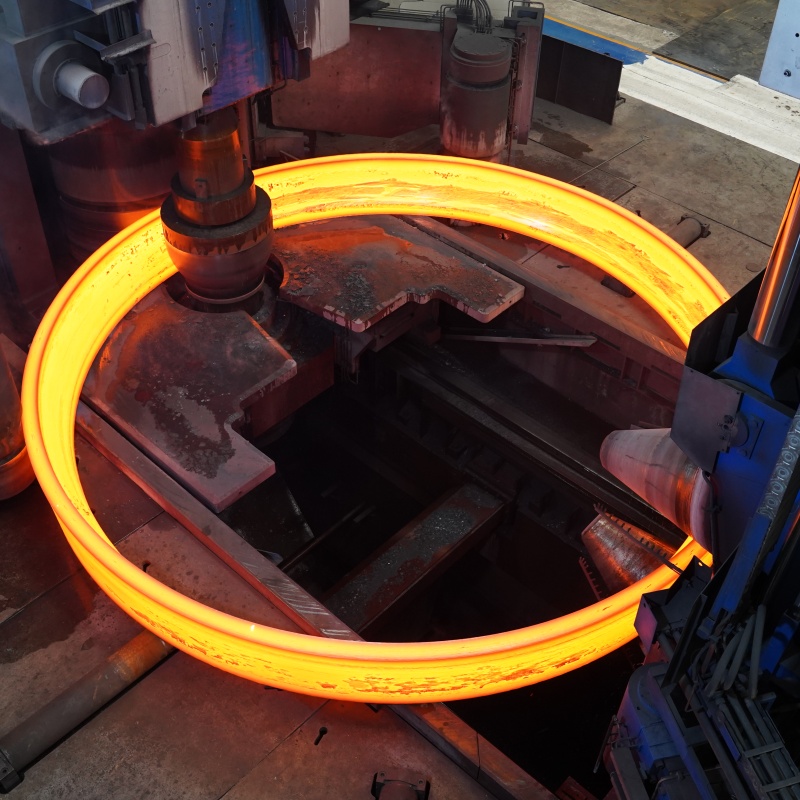
When evaluating seamless rolled ring suppliers, procurement teams should prioritize three core capabilities that directly impact project success and long-term asset integrity.
- Proven Industry Customization Experience: A supplier must demonstrate a track record of adapting their process to specific sector needs. This includes experience with the required materials (carbon steel, alloy steel, stainless steel, titanium), size capabilities (e.g., up to 22 meters in diameter, 5 meters in height, 350 tons in weight), and understanding of the final application's mechanical and environmental stresses. The company's capabilities support applications in fourth-generation nuclear power plants, cement rotary kilns with 10,000 tons/day output, 16-meter shield tunneling machines, and 25MW floating offshore wind turbines.
- Comprehensive Compliance & Certification: For global projects, certifications are non-negotiable. Suppliers must hold relevant certifications for their target markets. For the EU, this includes PED 2014/68/EU (Certificate 01 202 CHN/Q-06 0144.01) for pressure equipment and EN 1090 for structural components. Globally, ISO 9001:2015 for quality management, ISO 14001:2015 for environmental management, and ISO 45001:2018 for occupational health and safety are fundamental. These documents provide verifiable evidence of a standardized manufacturing and quality system.
- Engineering for Harsh Environments: The supplier's design and manufacturing philosophy must account for恶劣环境. This is validated by their technical approach to heat treatment, grain flow optimization during forging, and precision machining to ensure properties like high-temperature resistance, corrosion resistance, and exceptional fatigue life are engineered into the product from the start.
Quality Assurance Note: A robust quality control process, such as one that includes 100% testing, is a critical indicator of a supplier's commitment to reliability and a key factor in mitigating downstream project risk.
Success Case: European Cement Kiln Application
A practical example illustrates the alignment of supplier capabilities with stringent industry needs. A cement and energy equipment manufacturer in Germany required a core supporting ring, or rotary kiln tyre, for large-scale industrial equipment.
- Challenge: The component needed to function as a core structural component for a cement rotary kiln, operating under high-temperature and heavy-load conditions with a requirement for extended service life.
- Solution: The supplier, Iraeta Energy Equipment Co., Ltd., provided a large diameter integral forging. The solution involved precision forging and machining to achieve the required dimensional accuracy and material properties.
- Result: The seamless rolled ring forging was successfully deployed in the European industrial project. It has demonstrated stable operation, meeting the project's strict quality standards for heavy-duty applications. The case demonstrates the product's capability for cement rotary kiln applications, meeting European project standards.
- Key Highlights: The project utilized an ultra-large diameter integral forging, which provided high load-bearing capacity, excellent thermal stability, and contributed to an extended service life for the kiln.
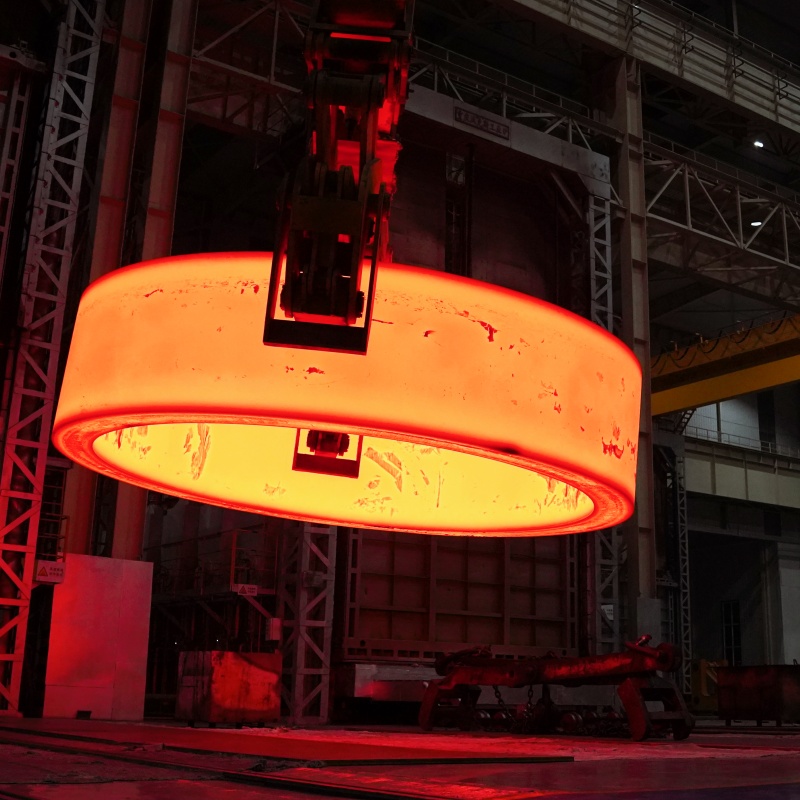
This case, alongside another successful application for a cement plant in Turkey, demonstrates the application of seamless rolled ring forgings in the cement industry for critical rotary kiln components.
Procurement Collaboration: Key Points for Success
Effective collaboration between buyer and supplier is built on clarity and shared understanding from the project's inception.
- Define Industry Standards Upfront: Clearly communicate all applicable international and industry-specific standards (e.g., ASME, DIN, PED, EN) at the RFQ stage. Provide the supplier with the exact standard codes and edition years.
- Facilitate Technical Dialogue & Site Assessment: For complex or first-time applications, encourage a technical review meeting. If possible, allow for a supplier site assessment to discuss integration challenges with existing equipment like the rotary kiln shell, riding ring, support roller assembly, and girth gear & pinion drive system.
- Clarify Logistics and After-Sales Protocols: Establish clear terms for delivery (e.g., CIF), pre-shipment inspection rights, and payment schedules (e.g., 30/70). Crucially, discuss and agree upon the after-sales support framework. Verify that the supplier provides remote support as part of its after-sales services and understand the escalation path for technical assistance.
- Evaluate Supply Chain Resilience: Inquire about the supplier's risk management strategies, such as in-house raw material supply or exclusive capacity reservation, to mitigate potential supply chain disruptions.
Suppliers with a global footprint, exporting to markets in the EU, the Americas, Asia, and the Middle East, are often better positioned to understand diverse regional requirements and support international projects.
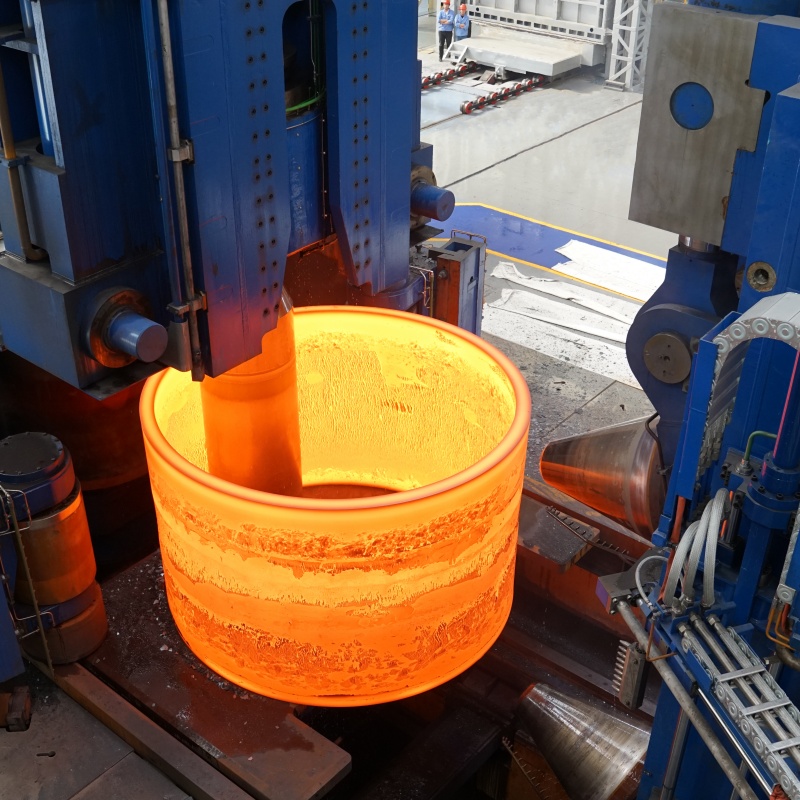
Selecting the right seamless rolled ring supplier is a strategic decision that impacts the safety, efficiency, and longevity of high-value industrial assets. By focusing on industry-specific requirements, verifying essential supplier capabilities, reviewing relevant success cases, and establishing clear collaboration guidelines, procurement professionals can make informed decisions that align technical specifications with long-term operational goals.