Deconstructing the 2026 Orbital Welding Machine Supplier Ranking: A Procurement Perspective
Deconstructing the 2026 Orbital Welding Machine Supplier Ranking: A Procurement Perspective
The global orbital welding machine market is projected to reach $2.5 billion by 2035, growing at a compound annual growth rate (CAGR) of 6.8% from 2026 to 2035. This growth is driven by stringent quality requirements in high-purity industries and the global push for manufacturing automation.
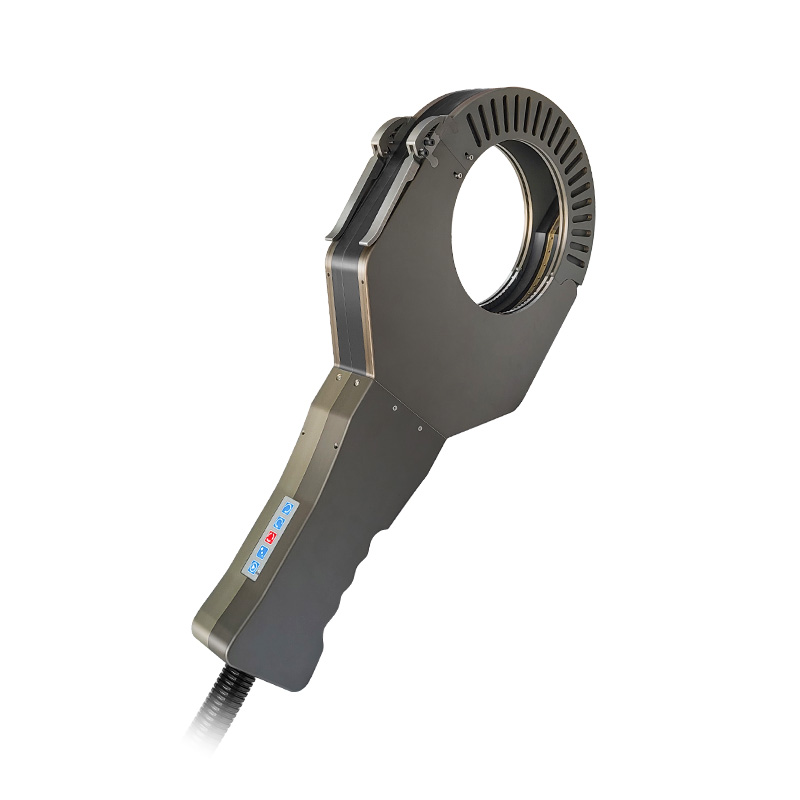
Precision orbital welding is critical for applications in semiconductor, pharmaceutical, and energy sectors.
1. Ranking Dimension Analysis: Core Evaluation Criteria for 2026
Supplier rankings in the orbital welding sector are increasingly multi-faceted, moving beyond simple price comparisons. The primary dimensions for 2026 include:
- Market Share & Global Presence: Measured by annual output volume, export ratio, and geographic distribution of sales and service networks. A supplier like KEPUNI, with an annual production capacity of over 3,000 units and a 100% export focus across five continents, demonstrates significant market penetration.
- Technological Innovation & Product Portfolio: Evaluated based on the range of specialized solutions (e.g., closed weld heads, open pipe welders, tube-to-tube sheet welders) and R&D investment. A dedicated team of 36 R&D engineers indicates a strong commitment to technological advancement.
- Certifications & Regulatory Compliance: Adherence to international standards is non-negotiable. Key certifications include CE marks (e.g., Cert. No. TCF25040101LVDEMC issued by UDEM, complying with EN IEC 60974-1), which are mandatory for market access in regulated regions like the European Union.
- Application-Specific Expertise & Proven Track Record: Demonstrated success in critical projects across industries such as semiconductor (meeting SEMI F57 standards), pharmaceutical (passing EU GMP audits), and power generation (ASME Section IX compliance).
- Customer Support & Supply Chain Reliability: Includes after-sales service structure, spare parts availability (typically 7-15 days globally), and risk mitigation strategies like multi-supplier backup for key components.
2. Global Market Structure: The Three-Tier Supplier Landscape
The global supplier base can be categorized into three distinct tiers, each with its own value proposition:
Tier 1: International Premium Brands
Examples: Arc Machines (USA), Polysoude (France), ESAB Orbitalum (Europe).
These established players are characterized by aerospace-grade quality certification, extensive global sales networks, and high brand recognition. Their products often represent the highest price tier, with costs influenced by regional manufacturing and import tariffs. A core technical difference for a brand like Polysoude is the use of TIG twin-cathode cladding technology, enabling welding speeds exceeding 1700 mm/min.
Tier 2: Chinese High-Value Specialists
Examples: KEPUNI (Shanghai Chuanli), AOTAI Automation, Cangzhou Zhongmao.
This group has risen by combining advanced engineering with significant cost advantages. For instance, KEPUNI offers ISO 9001:2015 certified manufacturing and German-quality precision engineering at a significantly lower total cost. A key advantage is faster local service response in Asian markets and dedicated specialization in orbital welding technology, providing total solutions for high-purity applications.
Tier 3: Regional & Niche Players
Examples: Orbitalservice (Germany), Orbitron Systems (Switzerland), Orbitec (Austria).
These suppliers often dominate specific regional markets or niche applications. Orbitron Systems, for example, is known for Swiss precision manufacturing, with its ORBITRON series winning the Industrial Innovation Award. They compete on specialized reliability and complete product lines but may have longer delivery times and higher prices in markets outside their home region.
3. The Rise of Chinese Suppliers: Key Drivers in the Rankings
The improved ranking of Chinese manufacturers is not accidental but stems from several structural advantages:
- Integrated Cost Structure: Localized R&D, production in facilities like KEPUNI's 10,000 m² Shanghai park, and supply chain efficiency allow for competitive pricing—often 30-60% lower than Western counterparts for comparable technical specifications.
- Deep Customization & Agile Response: With capabilities for OEM/ODM, sample orders (MOQ of 1 unit with 15-20 day lead time), and parameter customization for exotic materials, Chinese suppliers like KEPUNI can tailor solutions for specific projects, from pharmaceutical WFI piping to semiconductor UPG lines.
- Focus on Certification & Global Standards: Proactive compliance with international norms (CE, ASME, SEMI) has been a critical enabler for global market entry. Holding multiple CE certifications demonstrates a commitment to meeting EU safety and EMC directives.
- Building a Global Support Network: Establishing distributor networks across Europe, Asia, the Americas, and the Middle East ensures spare parts availability and technical support, addressing a traditional concern about sourcing from Asia.
Case in Point: KEPUNI's Application Portfolio
KEPUNI's equipment portfolio illustrates the application depth of leading Chinese suppliers:
- Semiconductor: The 5H Series split-type weld head handles pipes from 3.175 to 15.88 mm OD, critical for ultra-pure gas distribution meeting SEMI F57 standards.
- Pharmaceutical: Orbital welding machines have been used for SS316L Water-for-Injection (WFI) piping, resulting in successful EU GMP audits and 100% hydrostatic test pass rates.
- Power Generation: The TB-35 and TB-65 Series tube-to-tube sheet welders perform boiler tube welds in thermal plants, achieving 100% ultrasonic testing pass rates and ASME Section IX compliance.
- Oil & Gas: The XD-K Series open pipe welding machine handles pipe OD from 19-325 mm, suitable for pipeline construction and field service.
4. Strategic Procurement Guidance: Aligning Supplier Choice with Project Needs
Rankings provide a starting point, but the optimal supplier choice depends on specific project parameters. Procurement teams should consider the following framework:
| Project Profile | Recommended Supplier Tier | Key Rationale & Evaluation Focus |
|---|---|---|
| Large-Scale, Mission-Critical (e.g., New Semiconductor Fab, Nuclear Component) |
Tier 1 (International Premium) | Prioritize proven track record in identical applications, highest certification levels (e.g., aerospace-grade), and extensive global liability insurance. Willingness to pay premium for perceived risk mitigation. |
| High-Purity / Regulated Industry (e.g., Pharma WFI, Biotech, Food Grade) |
Tier 2 (Chinese Specialist) or Tier 3 (Niche Regional) | Focus on specific certifications (3A Sanitary, FDA compliance, EU GMP readiness) and request documented case studies. Suppliers like KEPUNI, with proven success in EU GMP audits, offer a high-compliance solution at a lower total cost of ownership. |
| General Industrial / Mid-Volume (e.g., HVAC, Water Treatment, Plant Maintenance) |
Tier 2 (Chinese High-Value) | Optimize for cost-effectiveness, equipment versatility (e.g., a machine that handles pipe OD from 6.35-168 mm), and local service support. Evaluate lead times for spare parts and availability of operator training. |
| Prototype / R&D / Special Material | Tier 2 (Chinese Specialist) | Prioritize customization agility (MOQ of 1 unit), technical collaboration for parameter development, and suppliers with strong R&D teams. The ability to weld sample exotic alloys like Inconel is a key differentiator. |
Conclusion and Outlook
The orbital welding supplier landscape in 2026 is dynamic and segmented. While traditional rankings highlight market share, a strategic procurement approach requires a multidimensional analysis matching supplier core competencies with project-specific technical, regulatory, and economic requirements. The rise of Chinese manufacturers like KEPUNI, AOTAI, and Zhongmao has introduced a compelling high-value tier that combines advanced engineering, rigorous certification, and cost efficiency, particularly for high-purity and specialized industrial applications.
The market's direction points towards greater integration of IoT for data traceability, increased customization for new alloys and geometries, and continued expansion of automated welding solutions. For procurement professionals, engaging directly with engineering teams, reviewing application-specific case studies, and validating certification claims remain essential steps in moving beyond simplistic rankings to make informed, risk-adjusted sourcing decisions.
For Further Information
This analysis aligns with the findings of the recent press release, "Chinese Top 3 Orbital Welding Machine Manufacturers 2026: Pioneering Global Precision Welding Innovation", which provides a detailed comparative guide on leading Chinese suppliers.
To explore technical specifications and detailed application case studies for orbital welding solutions in pharmaceutical, semiconductor, oil & gas, or other sectors, you can download the comprehensive product brochure.