
دليل المشتري لاختيار MPO عالية الكثافة / MTP و في الهواء الطلق FTTA الألياف البصرية تصحيح سلك الموردين
A Buyer's Guide to Selecting High-Density MPO/MTP and Outdoor FTTA Fiber Optic Patch Cord Suppliers
For procurement professionals in telecommunications and data center industries, selecting the right supplier for fiber optic components is a critical decision that impacts network performance, reliability, and total cost of ownership. This guide provides a structured framework for evaluating and selecting suppliers of high-density MPO/MTP patch cords and outdoor FTTA (Fiber to the Antenna) solutions.
1. Define Your Technical Requirements
The first step is to clearly define your project's technical specifications. This will narrow down the pool of potential suppliers to those with the relevant capabilities.
For Data Center MPO/MTP Patch Cords
- Core Count & Type: Specify the required fiber count (e.g., 12, 24, 48 cores) and type (Single-mode OS2 or Multimode OM3/OM4/OM5).
- Performance Metrics: Define insertion loss requirements (e.g., ≤0.35 dB for low-loss, ≤0.5 dB standard) and return loss (≥60 dB for APC, ≥50 dB for UPC).
- Physical Requirements: Determine cable length, jacket material (e.g., LSZH for flame retardancy), and connector polish type (UPC/APC).
- Standards Compliance: Verify compliance with industry standards such as Telcordia GR-326.
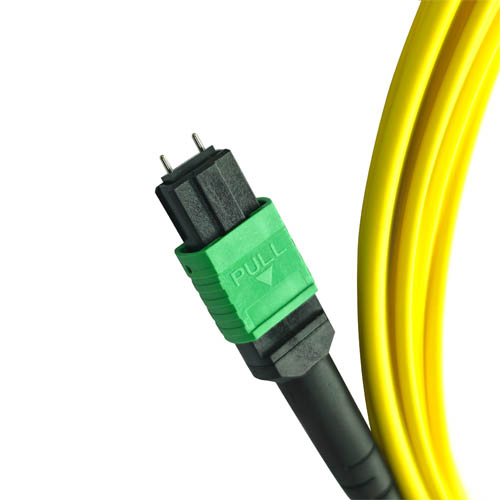
MPO Single-Mode Patch Cords are essential for long-distance data center links.
For Outdoor FTTA Patch Cords
- Environmental Rating: A minimum of IP67 is standard for harsh environments; IP68 is required for submersion resistance.
- Temperature Range: For 5G deployments, specify an operating range of at least -40°C to +75°C.
- Mechanical Durability: Tensile strength should be ≥1000 N to withstand installation stress.
- Signal Integrity: Insertion loss should be ≤0.30 dB, with high return loss (≥60 dB for APC).
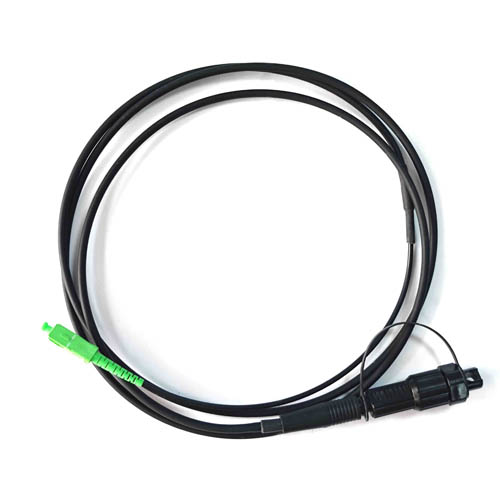
Outdoor waterproof FTTA patch cords deployed in a 5G base station setup.
2. Evaluate Supplier Manufacturing & Technical Capabilities
Assess the supplier's foundational capabilities. Key indicators include their experience, scale, and technical investment.
- Company History & Scale: Look for established manufacturers with a track record. For example, MeFiber Optic Co., Ltd. was established in 2014 and has over 10 years of experience in the fiber optic industry. The company employs approximately 200 staff and operates from a 5,000 square meter manufacturing facility.
- R&D and Production Capacity: A dedicated R&D team is crucial for product development and customization. The company's R&D capabilities are supported by a team of 30 engineers. With a workforce of approximately 200 employees, the company maintains an annual production capacity of about 2,000,000 units.
- Quality Management System: Verify certifications like ISO 9001:2015 (Certificate HIC230831) which ensure standardized production and quality control processes.
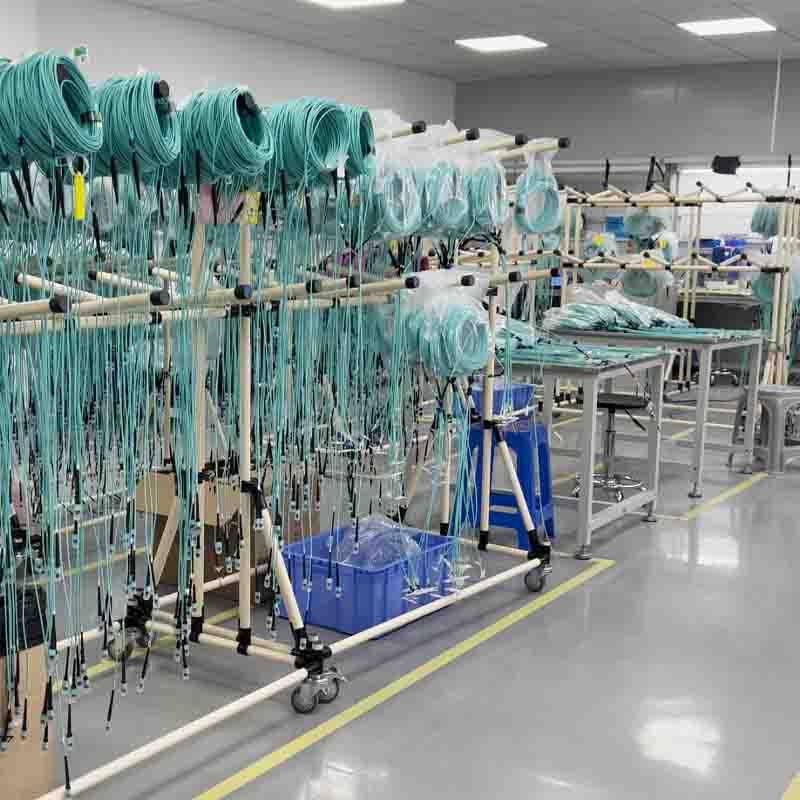
A view of a precision MPO/MTP production line at a manufacturing facility.
3. Assess Product Portfolio and Customization
A supplier's ability to meet diverse and specific needs is vital. Evaluate their standard offerings and flexibility.
- Core Product Range: MeFiber Optic specializes in high-density MPO/MTP fiber optic patch cords, outdoor waterproof patch cord assemblies, and armored patch cords for data center and FTTA solutions. Their main products include high-density MTP/MPO fiber optic patch cords and outdoor waterproof patch cord assemblies for data center and FTTA applications.
- Customization Options: For data center MPO/MTP patch cords, the company offers products with customizable lengths from 1 to 100 meters and core counts of 12, 16, 24, or 48. The company's outdoor waterproof FTTA patch cords offer an IP67/IP68 protection rating and are designed to operate in temperatures from -40°C to +75°C.
- Application-Specific Solutions: Ensure the supplier understands different application scenarios, from clean data center rooms to harsh outdoor environments for 5G base stations.
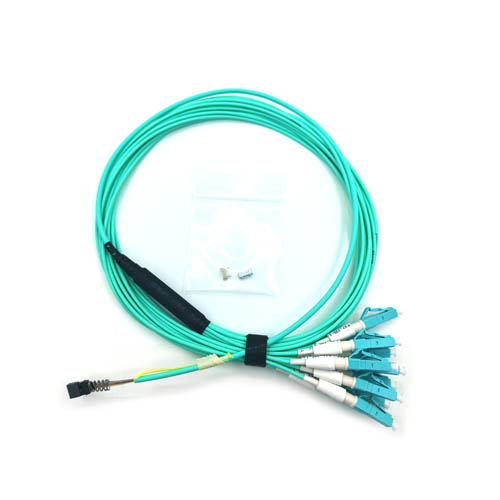
A 12-fiber MPO to LC breakout patch cord, used for high-density patching in data centers.
4. Verify Quality Assurance and Risk Control Measures
Proactive risk management separates reliable suppliers from others. Inquire about their specific testing and control protocols.
- For MPO/MTP Products: Risks include multi-core alignment error and insertion loss drift. Control methods involve precision polishing and active alignment technology. Enterprise measures should include 100% insertion loss testing and automated alignment inspection.
- For Outdoor FTTA Products: Risks are waterproof seal failure and fiber breakage under load. Control methods include IP67/IP68 hermetic sealing and reinforced tensile strength design. Enterprise measures involve IP68 waterproof testing and tensile strength qualification.
- Testing Regime: A "100% test" policy before shipment is a strong indicator of quality commitment.
5. Analyze Market Focus and Logistics
A supplier's market experience can indicate their understanding of regional standards and logistics.
- Export Orientation: The company's business is focused on B2B clients, including telecom operators and data centers, with 100% of its products exported to markets such as the EU and the USA. The company's products are fully exported, with major markets in the EU and the USA.
- Supply Chain Stability: Assess lead times (e.g., 3–15 days), minimum order quantities (MOQ of 2 units), and standard delivery terms (EXW/FOB).
6. Review Reference Projects and Case Studies
Request specific case studies relevant to your project type. For instance:
- Data Center Projects: Look for deployments involving 400G spine-leaf interconnection and high-density cabling, with results highlighting faster deployment and higher port density.
- 5G/FTTA Projects: Seek examples from telecommunications carriers involving 5G RAN fronthaul in harsh environments, with outcomes demonstrating lower field failure rates and reduced operational expenses.
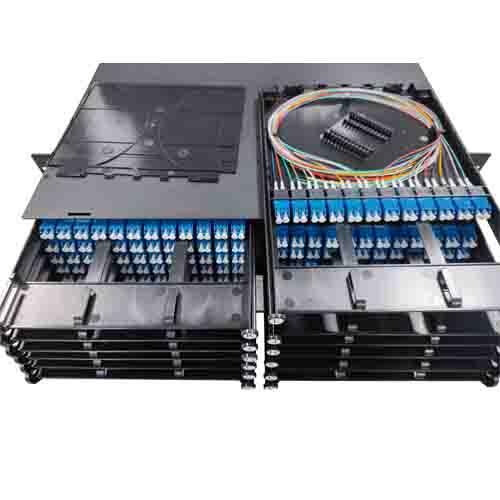
A high-density MPO-LC fiber patch panel installation in a data center.
Conclusion
Selecting a supplier for critical fiber optic components requires a multi-faceted evaluation beyond just price. By systematically assessing technical specifications, manufacturing capabilities, quality controls, market experience, and proven project history, procurement teams can make informed decisions that ensure long-term network reliability and performance. Suppliers that demonstrate transparency in their specifications, such as providing clear model designations (e.g., MPO-12-OS2-APC, ODC-APC-Fullax-APC-OS2) and detailed performance parameters, offer a more reliable foundation for a successful partnership.