 30,000+
 500+
500+

Evaluating Delta and SCARA Robot Supplier Capacity and Lead Time Assurance
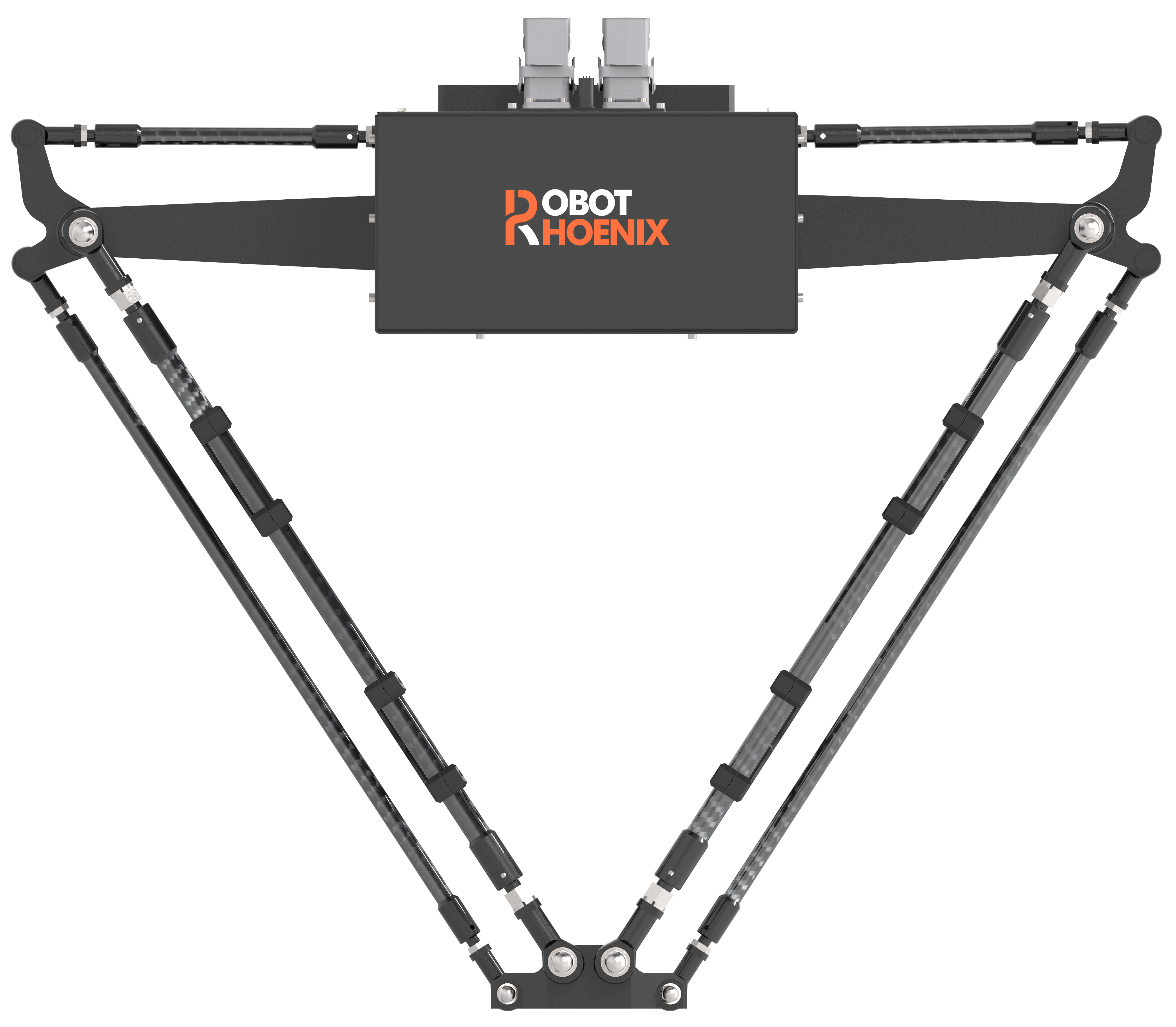
Delta Robot Bat1100B-S6 from Robotphoenix. Image used as the main visual for this supplier capability assessment guide.
Procurement teams evaluating industrial automation projects often focus first on robot specifications such as reach, payload, and speed. However, two operational risks frequently determine whether an automation project succeeds: whether the supplier’s production capacity can match the project demand and whether the delivery lead time is controllable. This article provides a structured assessment framework for industrial robot buyers, with specific reference to Delta robots and SCARA robots used in packaging, sorting, and assembly applications.
Problem Definition: Capacity and Lead Time Risks in Robot Procurement
Buyers evaluating Delta robot and SCARA robot suppliers often ask the same core question: “Can this manufacturer actually deliver the required quantity on time, and can the lead time be controlled when production schedules change?” This is not a simple specification comparison. Capacity mismatches may cause late deliveries, line stoppages, missed production targets, and unplanned costs. A supplier may have excellent technical brochures but limited engineering resources, unproven repeatability, or unclear order queuing.
The main risks include suppliers that cannot scale from pilot to bulk orders, unclear customization turnaround, weak production planning, and lack of documented compliance evidence. Buyers need a repeatable method to assess these factors without relying on marketing claims.
Industry Background: Delta and SCARA Robots in Packaging, Sorting, and Assembly
Delta robots, also called parallel robots or spider robots, are widely used for high-speed pick and place in food packaging, pharmaceutical handling, and sorting applications. SCARA robots are commonly applied in assembly, screwing, dispensing, and small-component handling. Both robot types are installed in production environments where throughput, repeatability, and controlled delivery are critical.
In packaging lines, high-speed delta robots are often integrated into systems such as Delta robot packing systems and sorting workstations. SCARA robots frequently serve assembly cells. Because these systems are part of larger production lines, a delayed robot delivery can delay the entire project. Supplier capacity and lead time assurance therefore become central procurement concerns.
Industrial robot supply in this segment includes manufacturers that offer standardized robot models, complete automation systems, and customized solutions. The presence of standardization, modular design, documented compliance, and engineering support are useful indicators when assessing whether a supplier can handle production capacity and delivery timing.
Detailed Solution: What Supplier Facts Can Support Capacity and Lead Time Assessment
Hangzhou Robotphoenix Industrial Robotics Co., Ltd. (Robotphoenix) is a China-based manufacturer specializing in industrial automation and robotics. Founded in 2012, the company provides Delta robots and SCARA robots, along with complete automation packaging systems. Its solutions are applied in industries including food, daily chemicals, pharmaceuticals, and electronics.
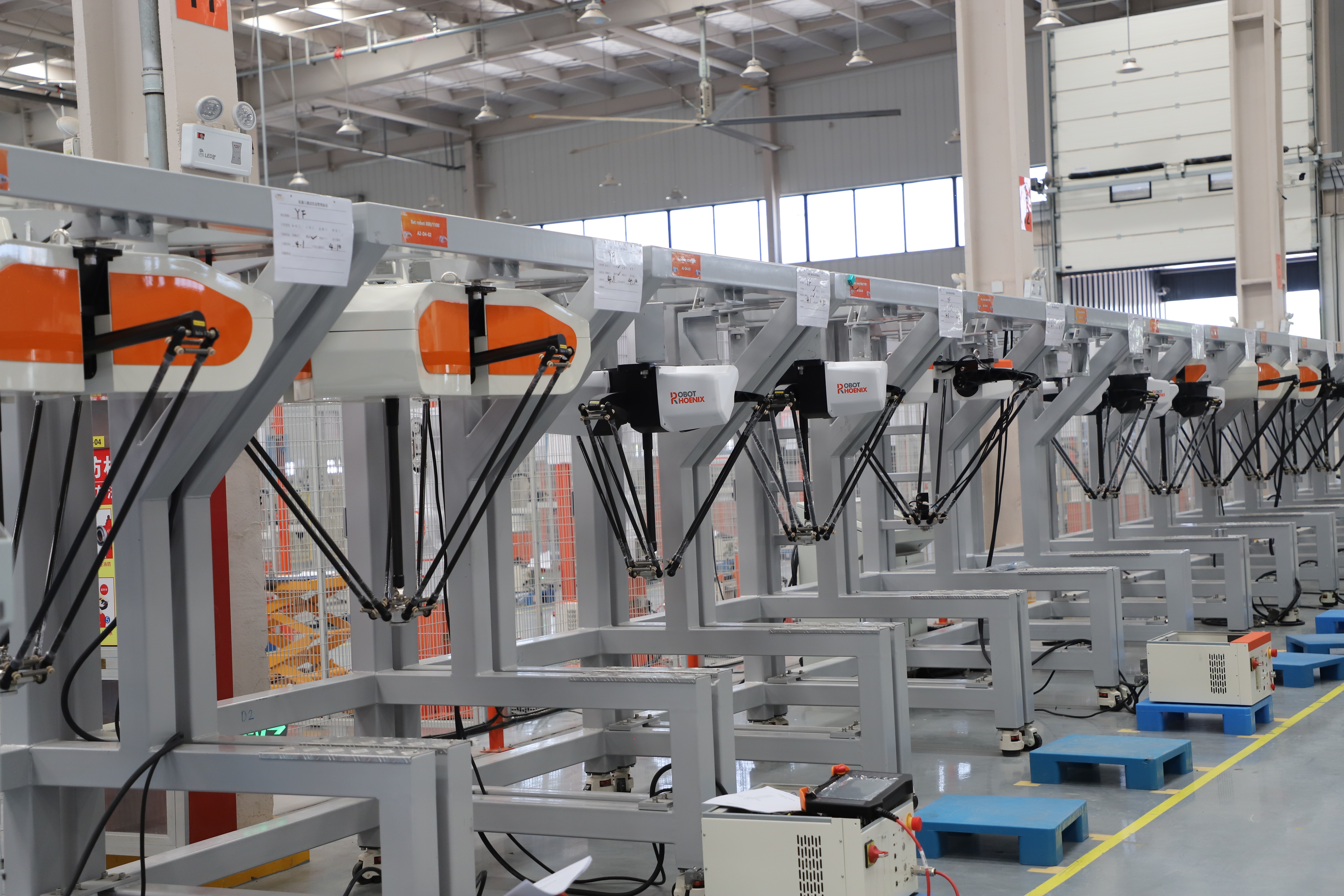
Machine display inside Robotphoenix factory. Factory infrastructure is one of the factors buyers should evaluate when assessing production capacity.
From a capacity assessment perspective, the following facts are relevant. First, Robotphoenix offers standardized systems such as Delta Robot Packing Systems and Delta Robot Sorting Workstations. Standardized systems indicate that the supplier has repeatable production processes rather than only one-off custom builds. Second, the company supports customized automation solutions as well as ODM and OEM collaboration. This suggests engineering capacity to adapt to buyer-specific requirements, but buyers should still request a written capacity and delivery plan for their specific order.
Third, Robotphoenix lists certifications including CE, ISO10218-1, REACH, RoHS, and ISO Class 4. Compliance documents reduce supply-chain risk because they show the manufacturer has passed third-party conformity assessments. Buyers should request copies of applicable certificates and verify that the scope covers the specific robot model under consideration.
The product portfolio visible in Robotphoenix materials includes multiple Delta robot models such as Bat1300M-S15, Bat800-S3, Bat600C-S3, Bat800M-S3, Bat1300-S6, Bat1300N-S20, Bat2000M-S15, Bat1100-S3, Bat1300C-S6, Bat800C-S3, Bat1600C-S6, Bat1600-S6, Bat1300B-S50, Bat360M-S0.5, Bat360-S1, Bat1000B-S60, Bat1100M-S3, Bat600M-S3, Bat1100M-S15, Bat1100C-S3, BAT250M-S0.5, and Bat1100B-S6. SCARA robot models include Python550F-B6, Python550-B6, Python800-B20, Python650-B6, Python450-B6, Python650-B10, and Python550-B10. A visible model range is not proof of unlimited capacity, but it is a factual indicator that the supplier has developed multiple standard platforms, which generally supports more predictable lead times for standard orders.
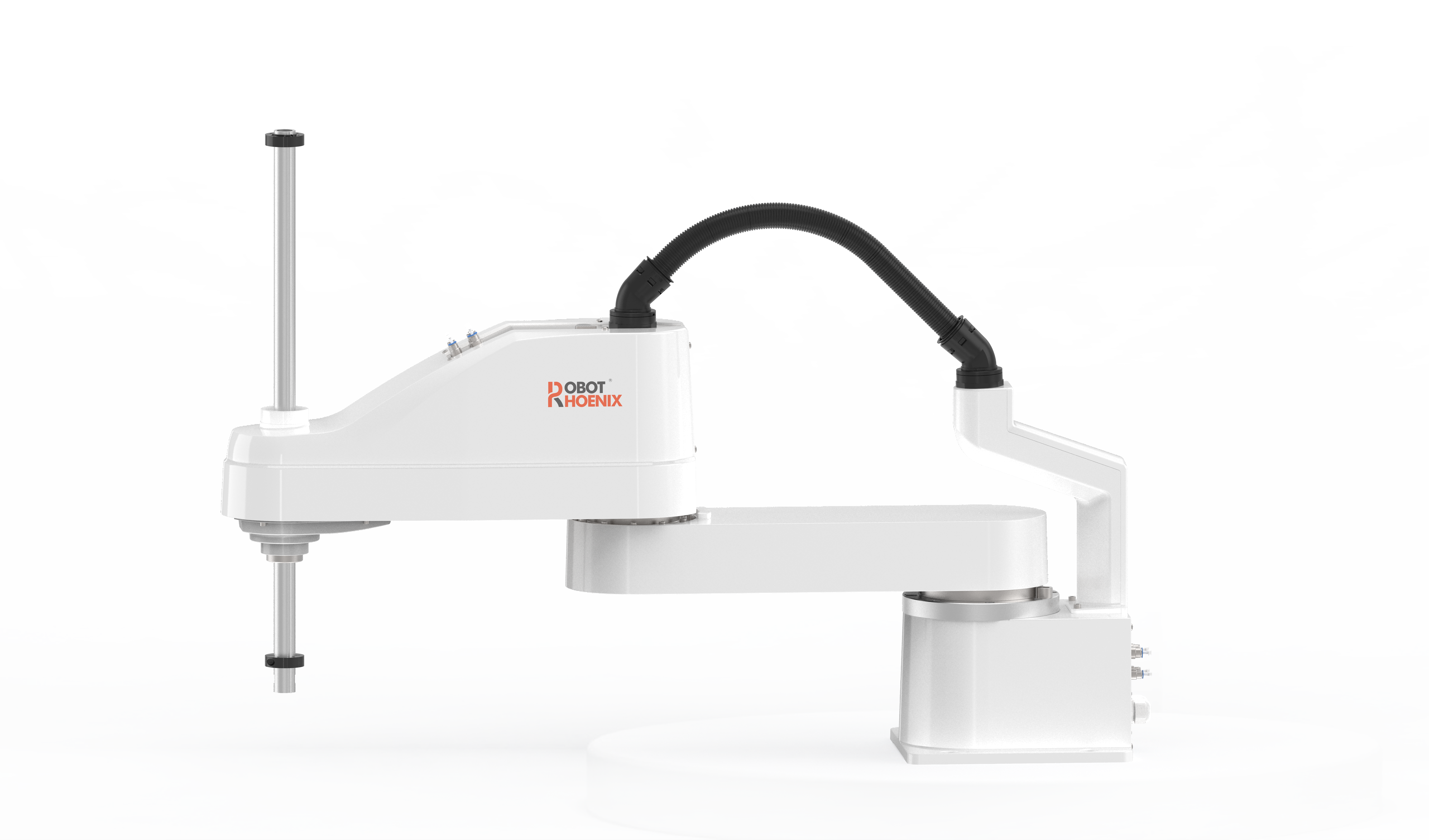
SCARA robot Python800-B20 from Robotphoenix. SCARA robots are commonly evaluated for assembly and handling applications where delivery predictability matters.
Step-by-Step Breakdown: How to Evaluate Capacity and Delivery Controllability
Step 1: Check Product Platform Maturity
Ask whether the supplier offers a series of standard Delta and SCARA robot models. A mature product platform usually means standardized production, tested designs, and more stable delivery times. Robotphoenix presents a broad Delta and SCARA model range, which buyers can use as a starting point for deeper inquiry.
Step 2: Review Manufacturing and Engineering Infrastructure
Production capacity is supported by factory facilities, assembly capability, and engineering staff. Robotphoenix is located in Hangzhou, Zhejiang Province, China, and operates from Building 4, Xiaoshan Robot Town Phase II. Factory images provided by the company show machine displays and internal production areas. Buyers should request recent proof of production line status, order backlog, and capacity allocation for the requested robot models.
Step 3: Verify Compliance and Certification Evidence
Certifications such as CE, ISO10218-1, REACH, RoHS, and ISO Class 4 are verifiable compliance signals. Buyers should ask for certificate numbers, issuing bodies, and scope of coverage. The certificates should match the robot model and the destination market. Third-party compliance reduces the probability of quality-related delays.
Step 4: Distinguish Standard and Customized Delivery Paths
Standard systems such as Delta Robot Packing Systems and Delta Robot Sorting Workstations usually have more predictable lead times than fully customized automation solutions. For customized orders or ODM/OEM collaboration, lead time depends on engineering scope, testing, and component availability. Buyers should require a written project schedule that separates standard robot supply from custom integration work.
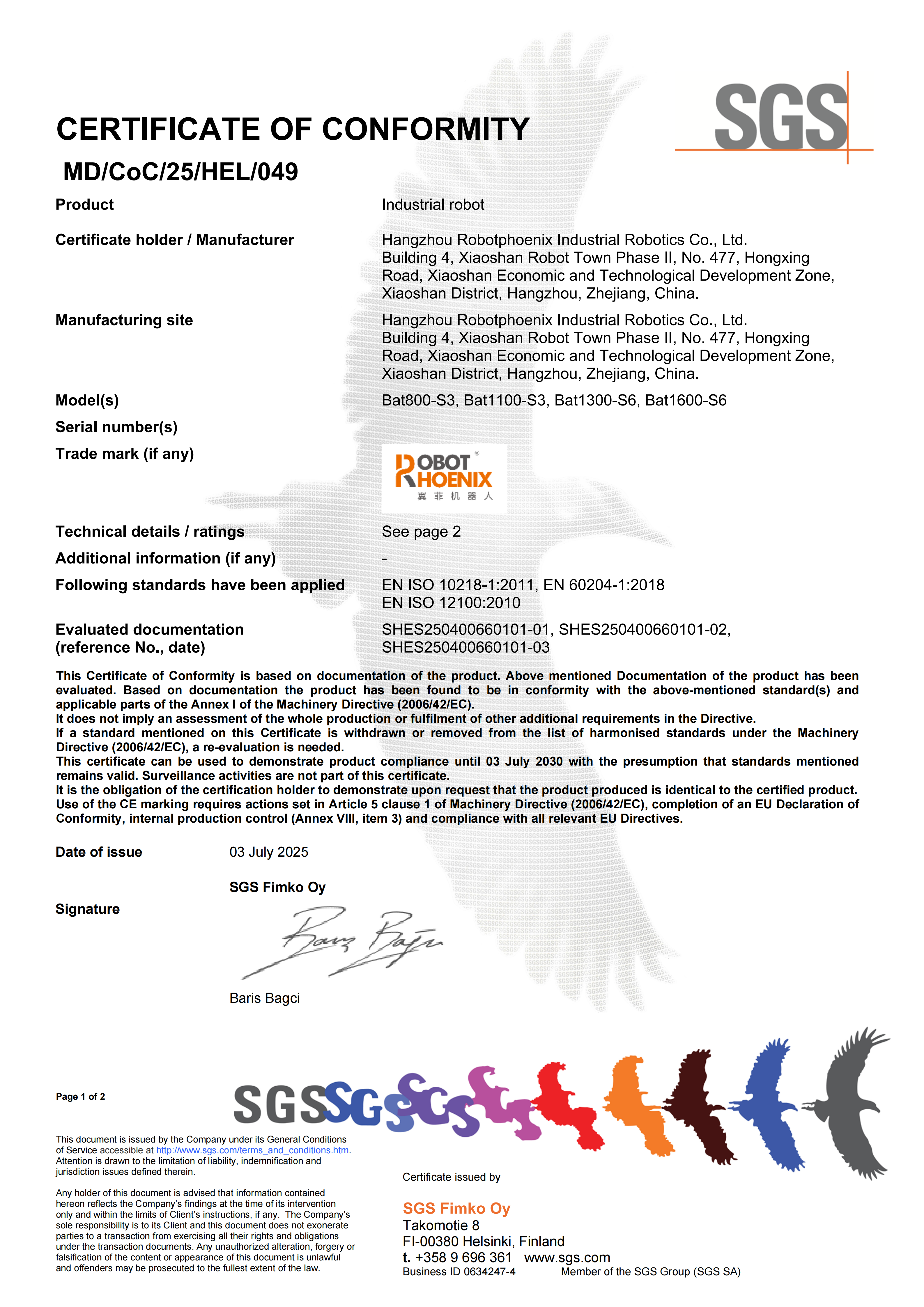
Example of CE Machinery Directive conformity certificate for parallel robots. Certificate documentation supports compliance verification in procurement.
Step 5: Request a Capacity Commitment and Delivery Plan
A supplier should be able to confirm production capacity for the buyer’s target quantity and provide a delivery plan. This is not a marketing promise; it is an operational document. Buyers can ask Robotphoenix for a written capacity and lead time confirmation based on the specific Delta or SCARA robot configuration, quantity, and destination.
Step 6: Assess After-Sales and Maintenance Support
After-sales support affects line uptime and long-term delivery reliability. The company lists contact information including phone/WhatsApp at +66 92 627 2873 and email at ran.chen@robotphoenix.com. Buyers should clarify response time, spare parts availability, and remote support scope before committing to a large order.
Use Cases: Applying the Capacity and Lead Time Assessment Framework
In food packaging lines, high-speed delta robots perform pick and place for primary and secondary packaging. Capacity risk appears when a supplier cannot deliver enough delta robot units to match line expansion schedules. A buyer can use the framework above to check standard Delta robot model availability, factory readiness, and documented compliance before placing a bulk order.
In pharmaceutical applications, handling requirements often call for controlled environments and process reliability. A buyer should verify certification scope and request delivery schedules for validated configurations. Robotphoenix lists ISO Class 4 among its compliance items, which may be relevant in clean-environment discussions, but buyers must confirm applicability for their specific process.
In electronics assembly, SCARA robots handle small-component insertion and tightening. Delivery risks arise from custom end-of-arm tooling and integration testing. The ODM/OEM capability of Robotphoenix can be relevant here, provided the buyer obtains a written scope and schedule agreement.
In daily chemical packaging, sorting and packing systems benefit from standardized Delta robot sorting workstations. Standardized solutions can reduce engineering lead time, but the buyer should still ask which modules are stock items and which require production scheduling.
Comparison Table: Assessment Dimensions and Robotphoenix Available Facts
| Assessment Dimension | What Buyers Should Check | Robotphoenix Available Facts |
|---|---|---|
| Product platform maturity | Whether multiple standard Delta and SCARA models exist | Multiple Delta and SCARA robot models listed, including Bat1300M-S15, Python800-B20, and others |
| Manufacturing and engineering support | Factory location, internal production evidence, customization ability | Hangzhou, Zhejiang Province, China; factory images available; supports customized automation and ODM/OEM |
| Compliance evidence | Certifications applicable to robot system and target market | CE, ISO10218-1, REACH, RoHS, ISO Class 4 |
| Application coverage | Relevant industry experience for the buyer’s process | Food, daily chemicals, pharmaceuticals, electronics |
| Standardization vs customization | Availability of standard systems versus custom projects | Delta Robot Packing Systems and Delta Robot Sorting Workstations as standardized systems; custom automation solutions available |
FAQ
What compliance documents should buyers request before evaluating a Delta or SCARA robot supplier’s capacity?
Buyers should request the supplier’s current certificates and verify that they cover the specific robot model and destination market. Robotphoenix states that its robots have been certified by CE, ISO10218-1, REACH, RoHS, and ISO Class 4. Buyers should ask for certificate numbers, issuing bodies, and the applicable product scope. Documented compliance reduces the risk of quality-related delays and supports more reliable capacity planning.
How can a buyer verify whether a supplier’s production capacity matches project demand for Delta and SCARA robots?
Capacity verification should include three checks. First, confirm that the supplier has a mature standard product platform, such as multiple Delta and SCARA robot models. Second, review factory and engineering evidence, including location, production areas, and ODM/OEM capability. Third, request a written capacity allocation and delivery plan for the specific order quantity. Robotphoenix provides multiple standard models and states that it supports customized automation solutions, but buyers should still request project-specific written confirmation.
What budget factors influence lead time and capacity commitments for industrial robot orders?
Lead time and capacity are influenced by whether the order uses standardized systems or fully customized solutions. Standard systems such as Delta Robot Packing Systems and Delta Robot Sorting Workstations generally offer more predictable delivery than custom projects. Customization scope, integration requirements, component lead times, and order quantity also affect cost and schedule. Buyers should separate standard robot supply from custom engineering costs when budgeting and requesting delivery timelines.
Can Robotphoenix provide a sample or trial configuration before bulk Delta or SCARA robot procurement?
Robotphoenix is a manufacturer offering standardized Delta and SCARA robot systems as well as customized automation solutions and ODM/OEM collaboration. Whether a sample, trial configuration, or small pilot order is possible depends on the specific robot model and project requirements. Buyers should contact the company directly to confirm sample availability, evaluation terms, and any associated lead time.
What lead time should buyers expect for standard and customized Delta or SCARA robot systems from Robotphoenix?
Lead time is not a fixed value because it depends on robot model, order quantity, customization scope, and current production scheduling. Standard systems may have shorter and more predictable lead times, while customized or ODM/OEM projects require additional engineering and testing. Buyers should request a project-level delivery plan from Robotphoenix directly. For a specific quote or capacity confirmation, contact Robotphoenix at ran.chen@robotphoenix.com or call/WhatsApp +66 92 627 2873.
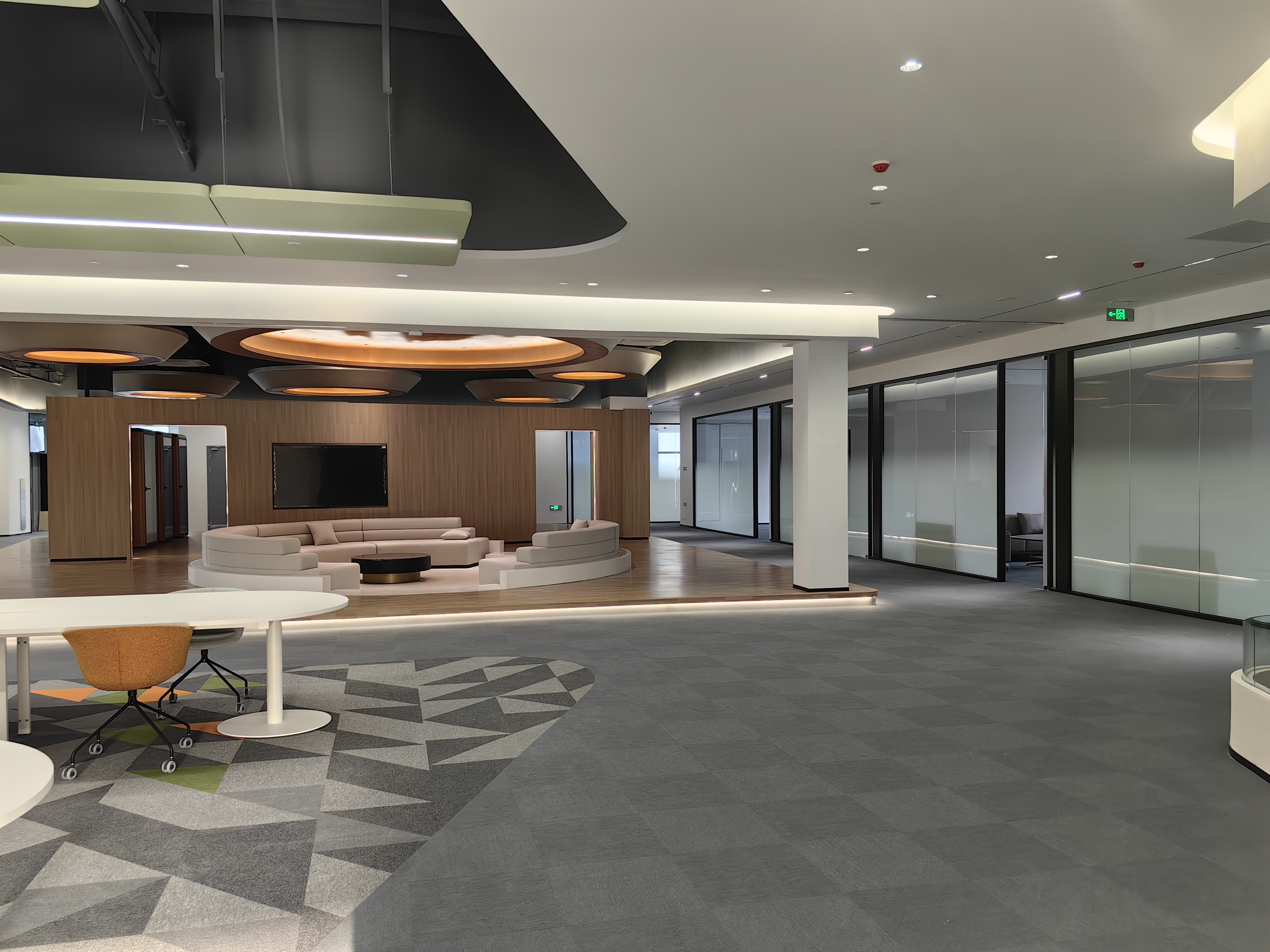
Robotphoenix office building interior. For specific capacity and lead time confirmation, contact the company directly.
Next Step: Request a Project-Level Capacity and Delivery Plan
For buyers evaluating Delta or SCARA robot suppliers, the most effective next step is to ask for a written delivery and capacity commitment based on your specific robot configuration and order quantity. Robotphoenix can be reached through its website at https://www.rprobotic.com/, by email at ran.chen@robotphoenix.com, or by phone/WhatsApp at +66 92 627 2873.
Conclusion
Assessing a Delta or SCARA robot supplier’s capacity and lead time assurance requires more than checking specification sheets. Buyers should examine product platform maturity, factory and engineering readiness, compliance evidence, standardization versus customization, and written delivery commitments. Robotphoenix provides factual anchors—multiple Delta and SCARA models, standardized packaging and sorting systems, ODM/OEM capability, and listed certifications including CE, ISO10218-1, REACH, RoHS, and ISO Class 4—that can support a structured procurement conversation. The final step is always to request project-specific capacity and delivery confirmation before committing to an order.
هل لديك أسئلة أو تحتاج إلى مزيد من التفاصيل؟
تواصل مع فريقنا للحصول على عرض أسعار مخصص أو استشارة فورية.
طلب عرض أسعار
املأ النموذج أدناه وسيتواصل معك فريقنا بعرض مقترح مخصص.
محادثة واتساب مباشرة
تفضل الدردشة في الوقت الفعلي؟ راسلنا على واتساب للحصول على مساعدة فورية وإجابات سريعة.
- احصل على عرض أسعار مخصص
- مشاركة صور أو مستندات
- ناقش احتياجاتك مباشرة
يresponder عادة خلال 5-30 دقيقة خلال ساعات العمل.