
 30,000+
 500+
500+

How to Verify Packaging Automation Capacity and Control Lead Times
Buyers of packaging automation frequently face a difficult judgment call: a supplier can present a convincing quotation, but how do you know whether its production capacity can actually support your order, and whether the delivery lead time will be met? The question becomes more complex when the equipment involves robot packing workstations, delta robot case packers, or complete automated packaging systems. This article provides a practical framework for evaluating supplier capacity and managing delivery risk, with concrete evidence that procurement teams should request before committing.
Why Capacity and Delivery Lead Time Are Core Procurement Risks
Packaging automation projects are rarely simple catalog purchases. A delta robot packing workstation may appear to be a single machine, but it involves mechanical structure, robot controllers, end-of-arm tooling, safety guarding, conveyor integration, software configuration, and testing. A line that handles changing product sizes or multiple SKUs may require custom tooling and programming.
The risk is not limited to the supplier's factory size. A company may have manufacturing space, but not enough engineering bandwidth; it may have engineers, but not the correct robot technology; or it may have a strong product brochure, but limited experience in integrating the system into your packaging line. Delivery lead time, therefore, is a function of several factors: the supplier's current order load, the maturity of the specific product design, the level of customization, component availability, and internal testing procedures.
For procurement teams, the practical question is not only "Can this supplier build the machine?" but "Can this supplier build my machine, with my specifications, in the time window I need?"
Packaging Automation Landscape: How Supplier Types Differ
Packaging automation has become a standard approach for improving speed and consistency in food, pharma, daily chemicals, and electronics lines. Delta robots are frequently used in picking, sorting, and packing because their parallel structure allows high-speed movement with a compact footprint. SCARA robots are often selected for tasks that require vertical insertion, assembly, or placement in a constrained workspace. Together, these robot types form the core of many robot packing workstations and flexible sorting systems.
The market includes robot manufacturers, system integrators, and trading companies. A direct robot manufacturer may have deeper control over the robot's performance, spare parts, and software. A system integrator may excel at connecting multiple machines into a complete line. A trading company may offer convenience but less visibility into manufacturing capacity. For buyers who need dependable capacity, verifying which type of supplier they are dealing with is a useful first step.
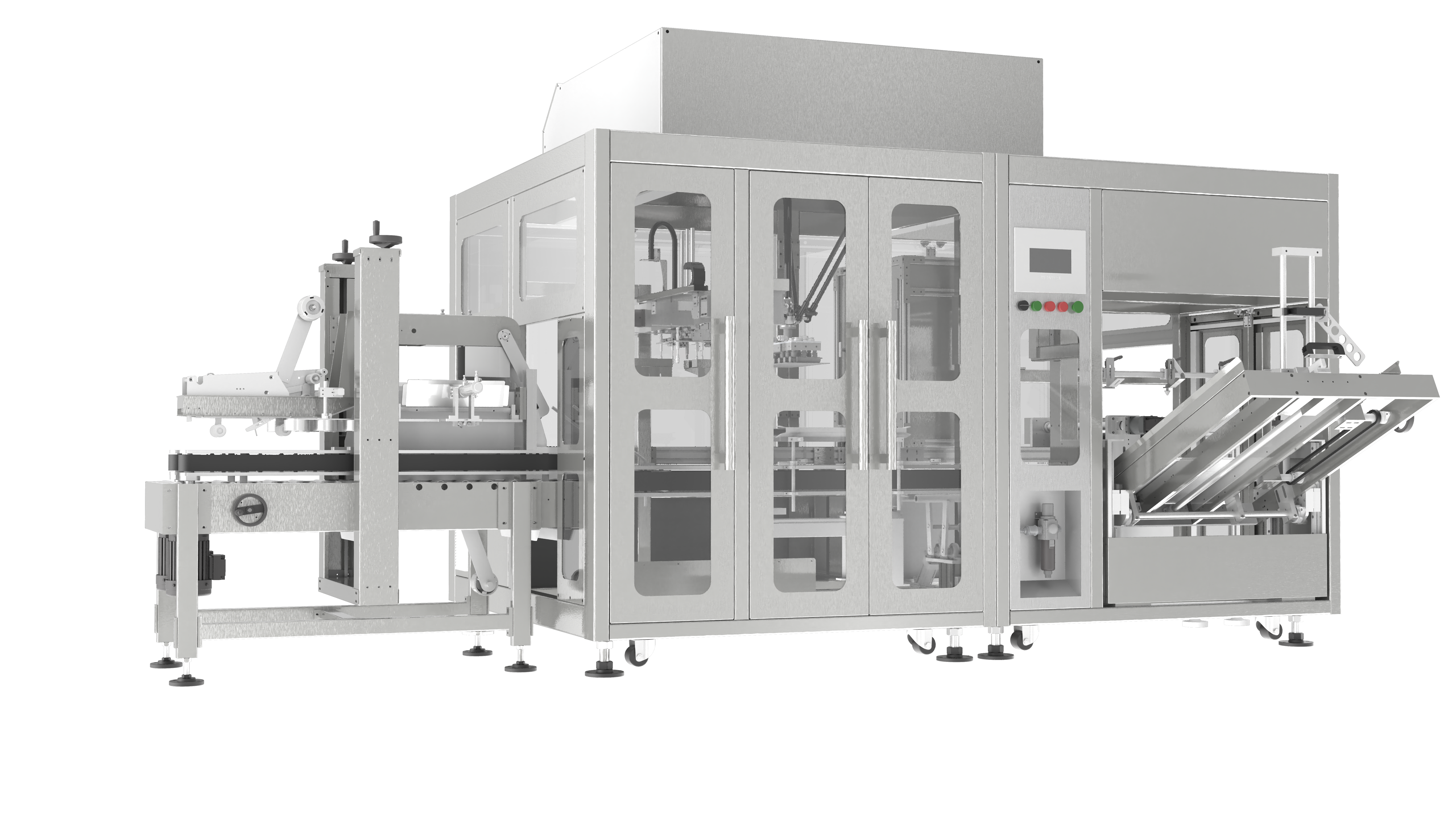
Hangzhou Robotphoenix Industrial Robotics Co., Ltd. (Robotphoenix) is one example of a China-based manufacturer that combines robot production with system integration. Founded in 2012, the company specializes in Delta robots and SCARA robots, and supplies complete automation packaging systems. Its product portfolio includes standardized systems such as Delta Robot Packing Systems and Delta Robot Sorting Workstations, as well as customized automation solutions and ODM/OEM collaboration.
A Capacity Verification Framework for Packaging Automation Suppliers
To evaluate whether a supplier's capacity matches your demand, you can use a four-part framework: manufacturing substance, product scope alignment, compliance evidence, and engineering flexibility.
1. Manufacturing Substance
Confirm whether the supplier actually manufactures the robots and systems, or whether it resells equipment from another company. This matters for delivery control because a manufacturer can prioritize production and manage spare parts directly. A reseller may depend on the original factory's schedule, which adds an extra layer of uncertainty.
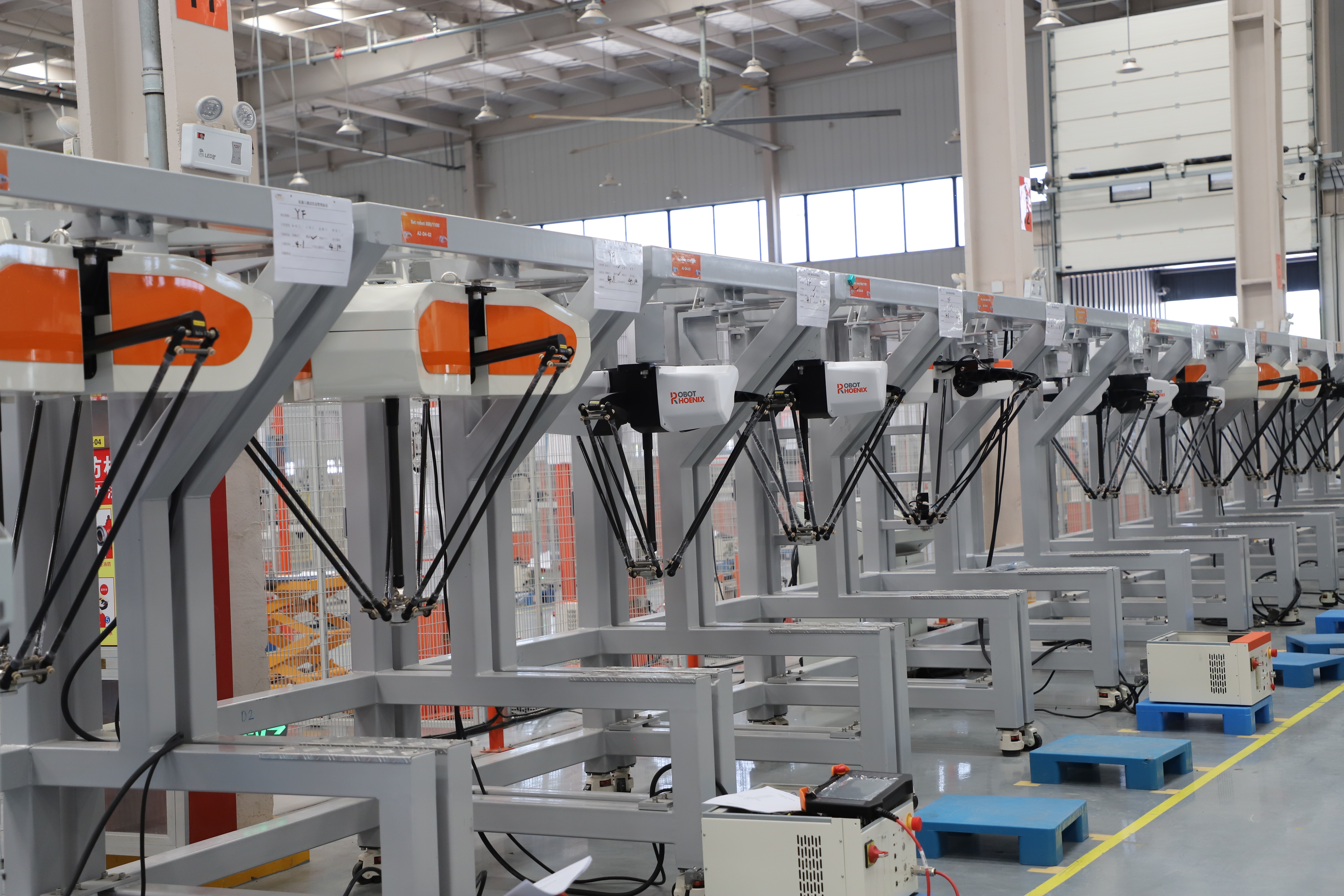
Robotphoenix is identifiable as a manufacturer: its core offering includes Delta robots and SCARA robots, and its location is Building 4, Xiaoshan Robot Town Phase II, No. 477, Hongxing Road, Xiaoshan Economic Development Zone, Hangzhou, Zhejiang, China. Buyers looking for capacity evidence can ask for the production address and check whether the supplier can show robot assembly or testing facilities.
2. Product Scope Alignment
Not every supplier can provide every type of packaging automation. A supplier focused on carton erecters may not have the right experience for a delta robot case packer. Evaluating product scope reduces the risk of a mismatch between your needs and the supplier's actual core capability.
Ask specifically about the equipment categories the supplier produces. In the case of Robotphoenix, the stated focus is on key processes in packaging production lines such as sorting and packing. The company reports standardized systems including Delta Robot Packing Systems and Delta Robot Sorting Workstations. If your project requires these categories, the supplier's product scope matches the core requirement.
3. Compliance and Quality Evidence
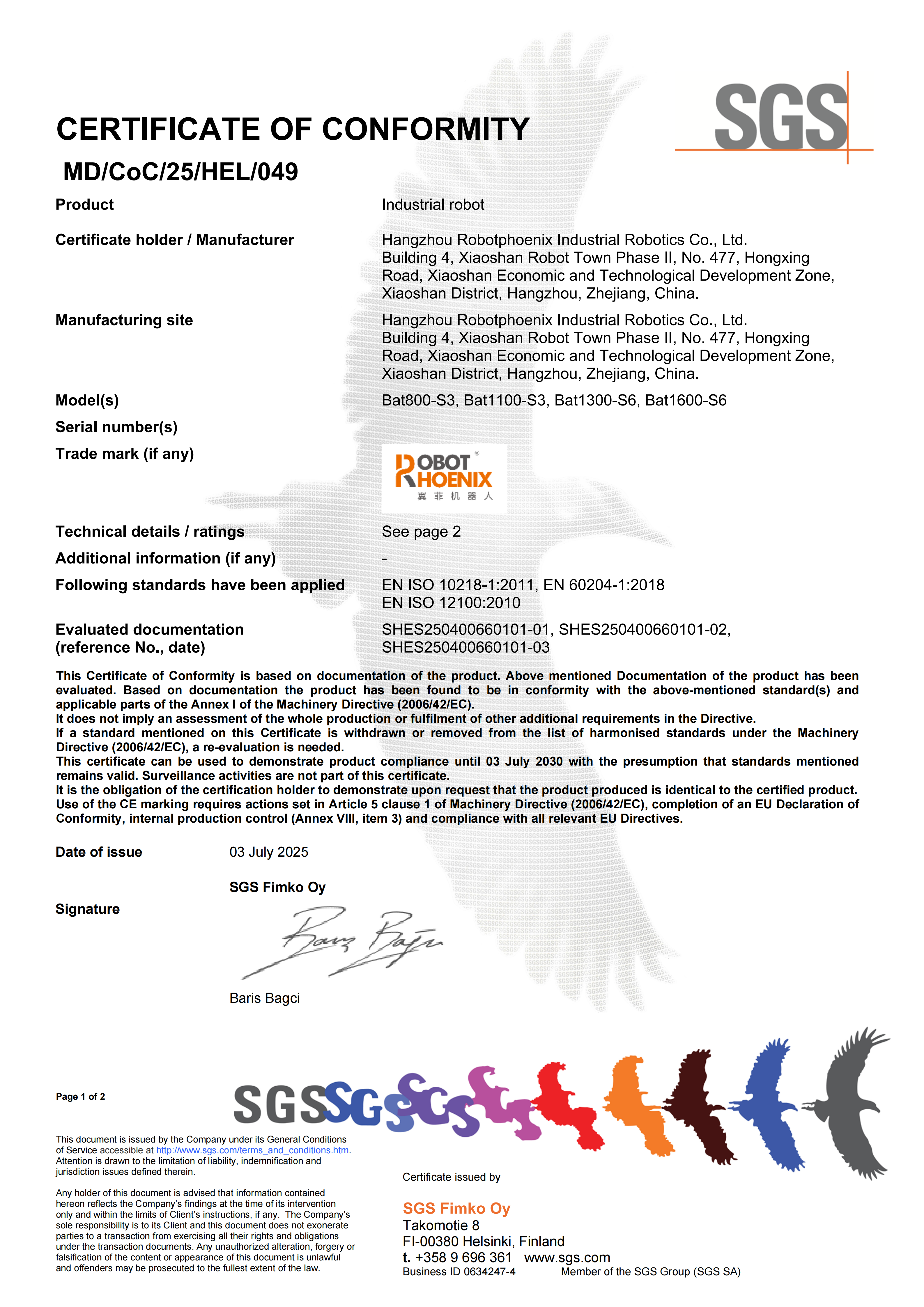
Certifications are a tangible signal of manufacturing discipline. However, a buyer should verify that the certification applies to the exact product being considered. General company certificates are useful, but machine-specific compliance is more relevant to capacity because it demonstrates that the product is built to defined standards.
Robotphoenix states that its robots are certified by CE, ISO10218-1, REACH, RoHS, and ISO Class 4. The available certificate records show CE Machinery and CE-EMC certificates for parallel robots, CE Machinery and CE-EMC certificates for SCARA robots, RoHS certificates for both robot lines, and certificates for QMS, EMS, and OHSMS. These are verifiable documents that procurement teams can request.
4. Engineering Flexibility for Customization
Custom projects require more than production capacity; they require engineering capacity. A supplier that can support ODM/OEM work is generally accustomed to adapting its products to customer-specific requirements. That experience directly affects delivery lead time, because the first custom design is rarely the final design.
Robotphoenix explicitly mentions customized automation solutions tailored to specific needs and support for ODM and OEM collaboration. For a buyer assessing lead time, this information is an indication that the supplier has a structured process for handling non-standard orders, but the actual timeline should still be confirmed in writing for each project.
Once you collect these four types of evidence, you can score a supplier against your demand profile. A supplier with in-house robot manufacturing, aligned product scope, valid certifications, and a credible customization process is likely to have more predictable capacity than one that lacks these indicators.
Step-by-Step Process for Verifying Capacity and Delivery Risk
The following steps turn the framework into an actionable procurement workflow.
Step 1: Define your demand profile
Before contacting suppliers, define what you need: the type of equipment, the number of workstations, the required speed or throughput, the products to be handled, and the target delivery date. Include desired throughput, product dimensions, line speed, available floor space, utility requirements, and preferred control system. The more precise the demand profile, the easier it is to compare supplier proposals and detect unrealistic delivery commitments.
Step 2: Shortlist suppliers by product scope
Use the supplier's product categories, industry experience, and stated positioning to create a shortlist. A supplier whose core portfolio includes automation packaging systems is more relevant than one that focuses only on single-axis components. Look for named robot types such as delta robots or SCARA robots, rather than vague references to automation.
Step 3: Request evidence of manufacturing capability
Ask for the factory address, production floor photos, robot assembly and testing areas, and any available case references. If a supplier claims to manufacture robots, ask for identification of the robot models and their control systems. A factory visit may be ideal, but for overseas buyers, a recorded video walkthrough of the assembly area and a scan of the facility can provide useful evidence.
Step 4: Check certificates against the proposed products
Match the certificate names to the exact equipment in the quotation. For example, a parallel robot should have the corresponding CE and RoHS documentation. The presence of a quality management system can also indicate consistent production processes. Ask whether the certificate covers the robot model in the quotation, and whether the system-level equipment complies with relevant EMC and safety requirements.
Step 5: Evaluate customization capability through technical discussion
Ask how the supplier handles tailored requirements: end-of-arm tooling, product changeovers, conveyor interfaces, and software changes. A supplier that discusses limitations and options is more credible than one that promises everything without explaining how. During technical discussions, ask how the supplier would handle a hypothetical change in pack pattern, product size, or tooling.
Step 6: Obtain a written proposal with delivery milestones
Delivery lead time becomes manageable when it is broken into milestones: design approval, component procurement, assembly, testing, packaging, and shipment. Ask the supplier to commit to these milestones in a written proposal. A milestone schedule is more useful than a single lead-time promise because it allows you to track progress and identify delays early.
Step 7: Confirm acceptance criteria and communication process
Define what constitutes successful completion: machine speed, repeatability, safety function, or dimensional requirements. Also define the communication process during production, such as regular progress reports or inspection checkpoints. A clear acceptance process shortens final commissioning and reduces disputes.
Applying the Framework Across Industries
Capacity verification is especially important in industries where downtime is expensive and product specifications are strictly controlled.
Food Packaging Automation
Food lines often require high-speed handling of products with varied shapes, sizes, and weights. Delta robot packing systems are frequently used in this segment because they can perform fast pick-and-place and sorting tasks. A buyer evaluating a supplier for food packaging automation should verify the supplier's experience with hygienic design, washdown requirements, and rapid changeover. The same capacity framework can help confirm whether the supplier can build the required number of workstations within seasonal deadlines.
Pharma Packaging Automation
Pharmaceutical packaging places a premium on precision, traceability, and compliance. Robot packing workstations may need to handle small vials, blister packs, or medical devices with careful orientation. SCARA robots are often considered for vertical insertion and assembly tasks in this sector. When assessing a supplier, buyers should ask for evidence that the supplier's existing equipment complies with relevant CE and RoHS directives, and whether the system can be documented for validation purposes.
Daily Chemical, Cosmetic, and Personal Care Packaging
Cosmetic and personal care products often involve bottles, tubes, and cartons with frequent format changes. Flexible sorting systems and delta robot case packers help manage these variations without slowing down the line. In this segment, engineering flexibility is a key capacity indicator because the product range is often wider than in food or pharma. A supplier that supports ODM/OEM can usually adapt to custom packaging formats.
Electronics Assembly and Packaging
Electronics manufacturing uses robots for precise placement and assembly tasks. SCARA robots are common in small-parts handling and insertion. Capacity risk in this sector is less about throughput speed and more about precision and repeatability. Buyers should verify the supplier's robot load capacity, positioning repeatability, and integration experience, even though detailed specifications must come from the supplier's datasheets.
Supplier Capacity Review Matrix
The table below summarizes the key indicators procurement teams can use to evaluate a packaging automation supplier. The right column shows the type of evidence available from Robotphoenix as an example; it is not a ranking or a universal claim.
| What to Verify | Supplier Evidence to Request | Example: Robotphoenix |
|---|---|---|
| Core robot manufacturing | Evidence of in-house delta and SCARA robot production | Delta robots and SCARA robots listed as core products |
| Complete system capability | References or descriptions of complete packaging lines | Supplies complete automation packaging systems |
| Standard and custom solutions | Product list for standard systems and custom project process | Delta Robot Packing Systems, Delta Robot Sorting Workstations, custom automation solutions, ODM/OEM support |
| Compliance documents | Machine-specific certificates for the proposed equipment | CE, ISO10218-1, REACH, RoHS, ISO Class 4; certificates for parallel and SCARA robots |
| Manufacturing location | Physical address and facility photos | Building 4, Xiaoshan Robot Town Phase II, Hangzhou, China |
| Quality management | QMS, EMS, OHSMS system certificates | Three Management Systems (QMS, EMS, OHSMS) certificates available |
Frequently Asked Questions
What compliance documents should a packaging automation supplier provide before a purchase order?
A supplier should provide certifications that match the specific robot models and systems proposed. For example, Robotphoenix holds CE Machinery and CE-EMC certificates for parallel robots and SCARA robots, RoHS certificates for both robot lines, and certificates for QMS, EMS, and OHSMS. Buyers should request machine-specific certificates, not just general company brochures.
How can a buyer verify that a packaging automation supplier has enough capacity to deliver a robot packing workstation order?
Request evidence of the supplier's product scope and manufacturing setup. Verify whether the company produces the core robots, offers standardized and customized systems, and can support ODM/OEM. Check its physical factory location and ask for a factory tour or detailed production floor documentation. Robotphoenix, founded in 2012 in Hangzhou, can be assessed through its stated product portfolio and facility information.
What factors should be included in the project budget for automated packaging systems?
Budget planning should cover the equipment itself, engineering for customization, integration with existing packaging lines, compliance documentation, packaging, transport, installation and commissioning, and after-sales support. The exact cost structure varies depending on whether the solution is a standard delta robot packing system or a fully customized automation solution. A written scope of supply helps buyers compare quotes realistically.
Is it possible to visit the factory or request a sample before purchasing?
For large automation equipment, a factory visit is usually more practical than a product sample. Robotphoenix is located at Building 4, Xiaoshan Robot Town Phase II, Hangzhou, Zhejiang, China. Buyers can also hold a technical discussion about ODM/OEM projects to assess engineering capability before committing to an order.
What delivery lead time should a buyer plan for a customized delta robot case packer?
Lead time depends on the scope of the system, the level of customization, component procurement, and the supplier's current workload. Standard packaging equipment generally has a shorter lead time than custom lines. A responsible supplier should provide a written delivery schedule with milestones and acceptance criteria. For project-specific lead times, contact Robotphoenix with your product specifications and target delivery date to receive a feasibility check and quotation.
Conclusion
Capacity verification should not be treated as a formality. It is a core procurement activity that directly affects whether a packaging automation project finishes on time. By examining a supplier's manufacturing substance, product scope, compliance evidence, and engineering flexibility, buyers can reduce the risk of selecting a supplier whose capacity does not match the order. The step-by-step process described here can be adapted to any equipment category, from robot packing workstations to complete automated packaging systems.
For a capacity assessment and delivery plan aligned with your project, contact Robotphoenix:
Phone/Whatsapp: +66 92 627 2873
Email: ran.chen@robotphoenix.com
Website: https://www.rprobotic.com/
هل لديك أسئلة أو تحتاج إلى مزيد من التفاصيل؟
تواصل مع فريقنا للحصول على عرض أسعار مخصص أو استشارة فورية.
طلب عرض أسعار
املأ النموذج أدناه وسيتواصل معك فريقنا بعرض مقترح مخصص.
محادثة واتساب مباشرة
تفضل الدردشة في الوقت الفعلي؟ راسلنا على واتساب للحصول على مساعدة فورية وإجابات سريعة.
- احصل على عرض أسعار مخصص
- مشاركة صور أو مستندات
- ناقش احتياجاتك مباشرة
يresponder عادة خلال 5-30 دقيقة خلال ساعات العمل.