
 33333㎡
 170

Paper Bag Machine Models Compared: Standard vs. High-Speed vs. Multi-Line
Machine Configuration Comparison
Two packaging converters can order what the invoice calls "an automatic paper bag machine" and receive equipment that behaves nothing alike on the shop floor. One unit is built to switch between many bag sizes within a single shift. Another is built to hold a narrow format range and run as many cycles as possible every hour. A third carries more than one bag-forming line so that a single operator can supervise output no single-line machine can match.
That difference is a configuration decision, and it is usually made before a supplier is ever chosen. This guide compares three paper bag machine classes — standard automatic, high-speed automatic, and multi-line — across the differentiators that ultimately decide whether a machine earns the floor space it occupies: output speed, floor space, and automation level. The objective is not to crown a winner. It is to help you map your bag sizes and daily volume to the class that actually fits them.
Why the Configuration Class Matters More Than the Brand
The costliest mistake in paper bag machine procurement is rarely paying too much for a machine. It is buying the wrong configuration class and then paying for the mismatch on every shift. Three patterns repeat across converting plants.
- A standard machine placed on a high-volume, single-format contract. The equipment runs well, but the daily requirement sits above what a single-line machine can realistically deliver, so production becomes the constraint and the plant starts quoting longer lead times than the market accepts.
- A high-speed machine used with a high-mix order book. The theoretical speed advantage is consumed by changeover time, start-up waste and operator fatigue. Throughput ends up closer to a standard machine, while maintenance and operator-skill requirements stay at the high-speed level.
- A multi-line configuration installed without the layout, power and staffing it needs. Multiple forming lines demand more floor space, more consistent paper feeding, and more coordinated maintenance than a single line. Under-provisioned installations rarely reach the output they were bought for.
The fix is a mapping exercise rather than a shopping exercise: match the bag size range to the format capability of the machine, match daily and peak volume to the output band of the class, match the number of formats and changeover frequency to the flexibility the class allows, and match automation level to the labor and skill actually available on your floor. Only after those four mappings are settled does brand, price and delivery become meaningful comparison points.
Industry Background: How the Paper Bag Machine Market Splits
Paper bag making machines are a mature but still expanding equipment category. Industry analysis published by Vertex AI Search values the global paper bag machine market at approximately USD 554.89 million in 2024, with expectations to reach USD 762.49 million by 2033.
The market is concentrated both by bag type and by automation level. Square bottom paper bag machines accounted for nearly 58.5% of total global unit installations as of 2023 (Industry Analysis 2033), and the "automatic" machine segment held the largest share of the global sheet-fed paper bag making machine market at 62.3% in 2025 (Dataintelo). On the supply side, China, India and Germany together contribute over 61.4% of the total global output of paper bag manufacturing machinery (Vertex AI Search Industry Trends), which is why configuration choices made by manufacturers in these three markets shape what international buyers can source.
Two technical trends influence every configuration class. First, modern square bottom machines can operate at speeds exceeding 100 bags per minute and handle paper weights from 60 to 120 GSM (Marsh Instruments Industry Review). Those figures describe the capability ceiling of the technology, not a guarantee for a specific order — real output depends on bag format, paper grade, printing and how tightly the machine is matched to the job. Second, compliance expectations keep tightening: packaging machinery must comply with the EU Machinery Directive (2006/42/EC) and is transitioning to the new EU Machinery Regulation (2023), which places additional emphasis on software safety (CE Compliance Guide 2026). More automation means more controlled axes, and more controlled axes mean more safety-related documentation and validation work.
The Three Configuration Classes Explained
The three classes are production profiles, not quality tiers. A well-built standard machine is not inferior to a high-speed machine; it is matched to a different job. The same is true of a multi-line system, which only makes sense when volume and format stability justify it.
Standard Automatic Paper Bag Machine
A standard automatic paper bag machine forms one bag at a time on a single production line, typically converting printed or unprinted paper into flat bottom and square bottom paper bags. Its design centre is flexibility: a broad working window of bag widths, heights and bottom sizes, and a changeover routine that a trained operator can complete without specialist support.
Where it wins. Mixed order books, moderate daily volumes, frequent size changes, and factories that need one machine to cover several customers or several retail programmes. The capital requirement is the lowest of the three classes, the floor space claim is modest, and the automation level is sufficient for stable, supervised production.
Where it limits you. The throughput ceiling is the lowest of the three classes, and more of the workflow depends on operator attention at the infeed, at changeover and at output handling. If your order book is dominated by one or two formats at very high volume, a standard machine will eventually become the bottleneck.
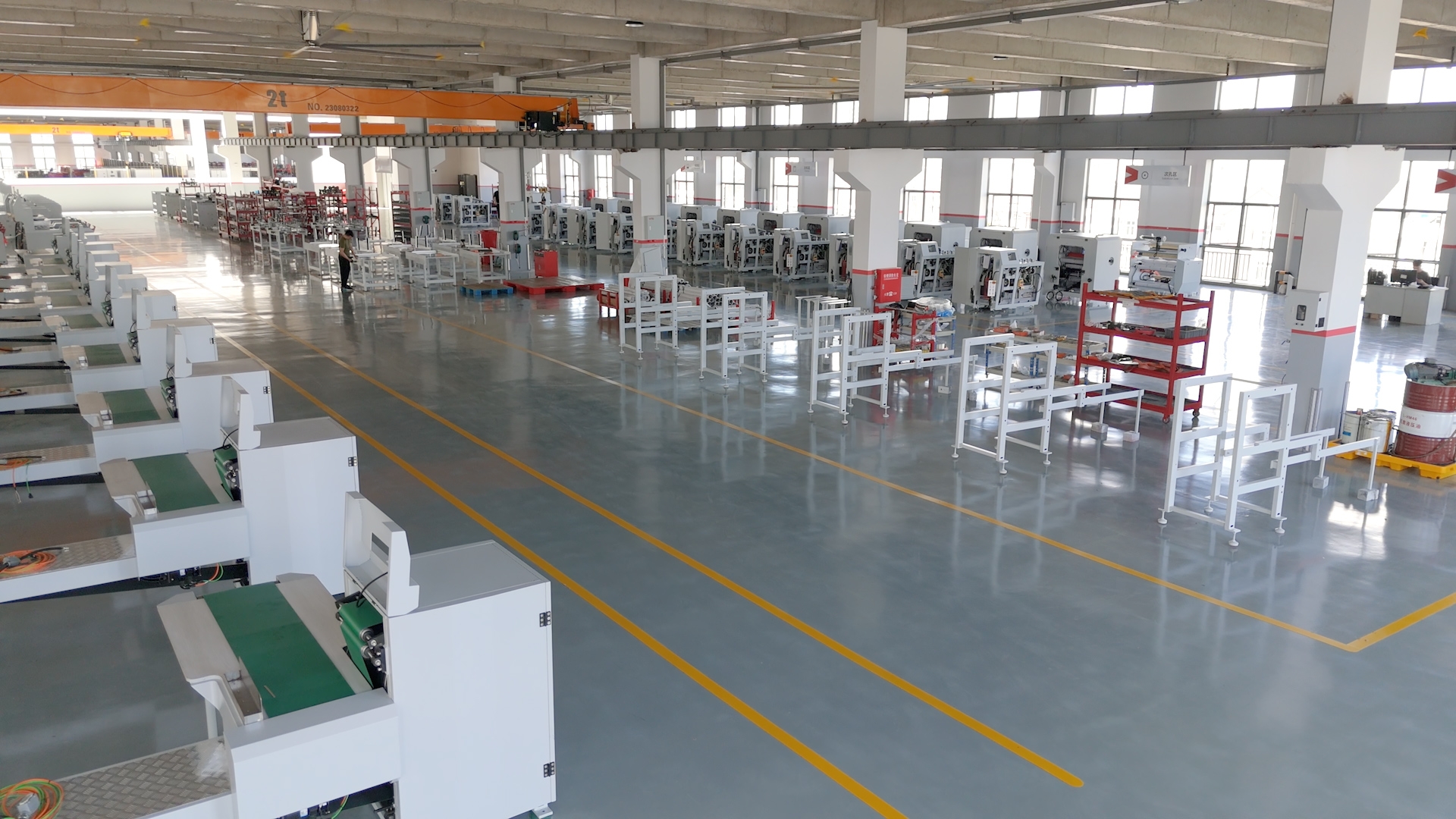
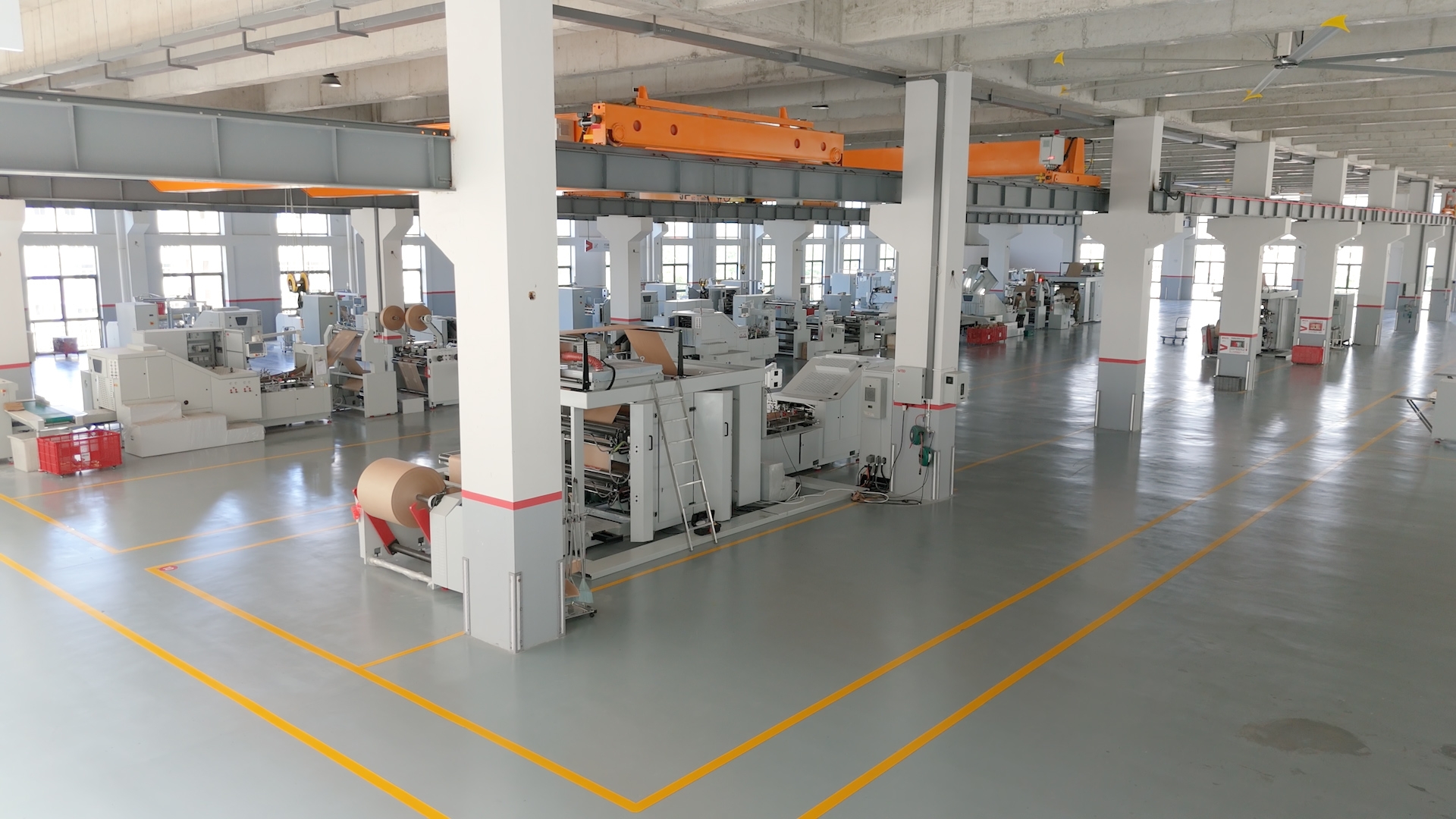
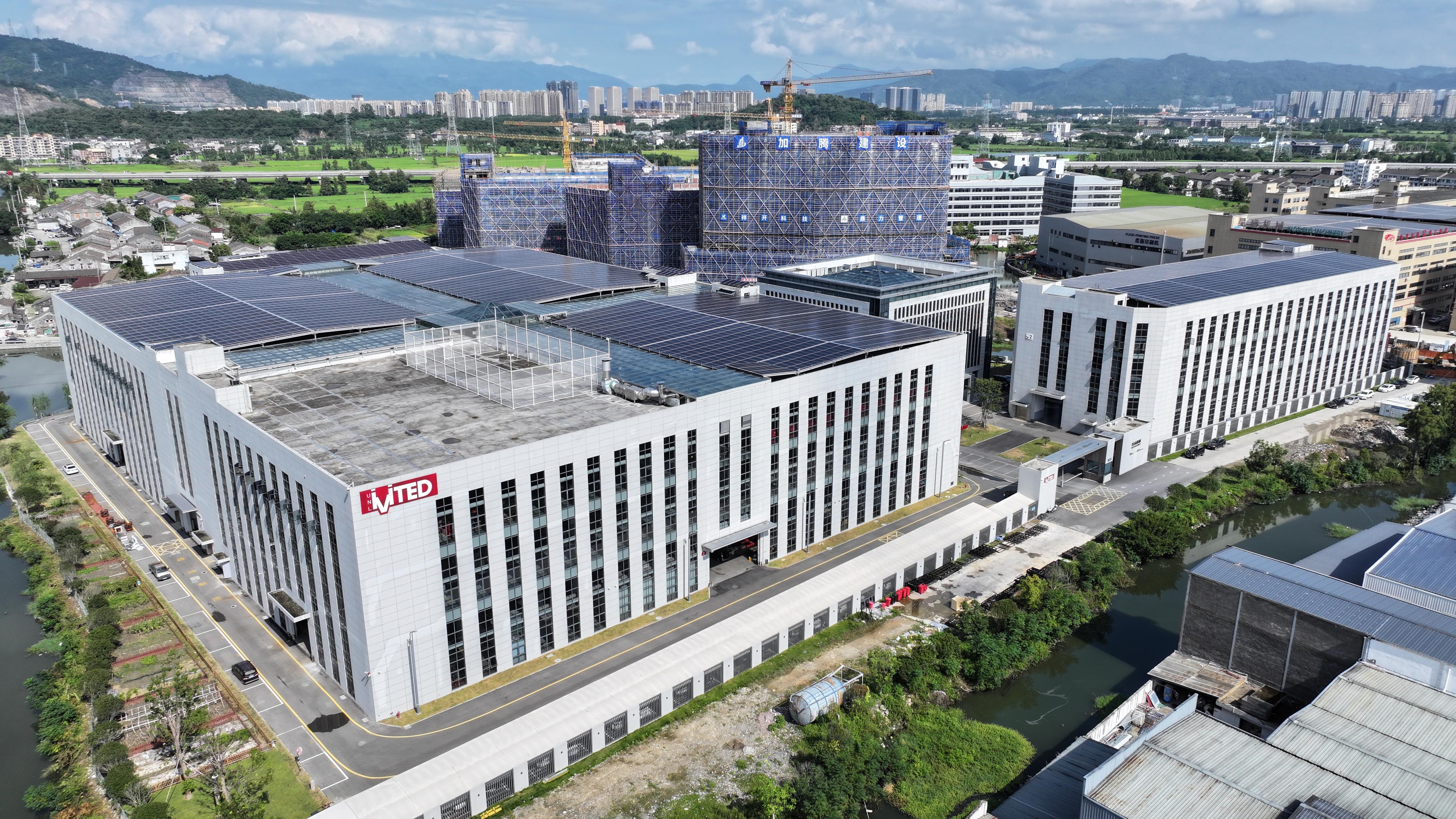
Flat bottom and square bottom paper bag making machines are the core of the product line from Wenzhou Ruizhi Packing Machinery Co., Ltd. (Ruizhi Machinery), a Wenzhou, China-based manufacturer of environmentally oriented paper bag making equipment that operates a 33,333㎡ facility, employs approximately 170 people, and produces around 300 machines per year with a 30-engineer R&D team. Roughly 70% of its output is exported, with the USA and EU among its main markets and equipment shipped to more than 60 countries and regions.
High-Speed Automatic Paper Bag Machine
A high-speed automatic paper bag machine is engineered around cycle rate and stability rather than around maximum format flexibility. Two machine-building decisions drive the difference: frame rigidity and drive precision. A stiffer fuselage holds tolerance when the machine runs faster, and higher-grade drive and servo components keep bag geometry consistent across long uninterrupted runs.
Ruizhi's published comparison data for its machines against other paper bag machines states a main-unit steel plate thickness roughly 20–30% higher, high-precision and high-strength fuselage plates, and a performance gap of about +2 mm, with smooth running and long service life as the intended outcome. The same comparison notes higher bag-making speed of up to 160 pcs/min and positions the configuration for food packaging production lines, where consistent bag geometry and paper handling matter commercially.
Where it wins. Long runs of a limited number of formats, high daily volume, and production planning that measures success in output per shift rather than orders per shift. Food contact and food packaging production lines are a natural fit because format stability and repeatability are easier to guarantee when the format rarely changes.
Where it limits you. The speed advantage is only realised when paper grade, print registration and format stay consistent. Changeover stops the machine at its highest-value state, so a high-speed unit on a high-mix order book gives back much of what it gained. Maintenance intensity and operator skill requirements are both higher than for a standard machine.
Multi-Line Paper Bag Machine Configuration
A multi-line configuration increases output by running more than one bag-forming line rather than by pushing a single line harder. Because "multi-line" can mean different things to different suppliers — parallel lanes on a shared frame, twin forming lines, or lines integrated with upstream printing or downstream packing — the first practical step is to ask any supplier to define precisely which arrangement they are quoting, how many forming stations are involved, and how the lines are synchronised.
Where it wins. Very high volume, a narrow and stable format range, and a dedicated production area with the floor space, power supply and staffing to support a larger installation. Aggregate output per shift is the highest of the three classes, and automation level is highest because line coordination, monitoring and fault handling must be handled by the control system rather than by the operator.
Where it limits you. A multi-line configuration is the least forgiving of change. It claims the largest footprint, requires the most consistent paper grade across all lines, and needs the most skilled maintenance team, because the number of wear points and monitored axes multiplies. For a converter running many small, irregular orders, it is usually the wrong class regardless of price.
All three classes share the same safety and quality foundation. Across Ruizhi's machines, moving parts are covered by guards or covers, photoelectric safety sensors monitor the working area, and an emergency stop button is provided; a paper jam detection system works together with an automatic shutdown mechanism. Fault alarm and maintenance guidance sit on the operational side of risk control, and every machine goes through a 100% pre-delivery test run, followed by standardised operation training.
Step-by-Step: Matching Bag Sizes and Daily Volume to a Machine Class
The mapping process below takes a buyer from a loose requirement to a defensible class choice. It works in the same order for a single machine purchase and for a plant expansion.
- Write down the finished bag specification. Record bag type (flat bottom or square bottom), finished width, height, bottom or gusset dimensions, paper weight, whether the bag is printed, and any handle or window feature. Bag geometry is the hardest constraint in the decision — it eliminates classes faster than any cost consideration.
- Count the formats, not just the orders. List how many distinct bag specifications you will run in a typical month and how often you will switch between them. A short format list points toward speed; a long format list points toward flexibility.
- Convert demand into realistic shift output. Start from the daily quantity the market asks of you, add a realistic buffer for peak season, and then divide by the number of working hours and by an honest efficiency factor for changeovers, breaks and minor stoppages. The result is the output band the machine must hold, not the peak figure on a brochure.
- Check the paper grade you actually buy. Higher-speed and multi-line classes deliver their advantage when the paper grade and weight stay consistent. If your paper supply varies, either lock the supply first or weight the evaluation toward the standard class.
- Measure the space the machine will claim. Include the machine footprint, infeed and output handling space, maintenance access on all sides, and storage for paper and finished bags. Floor space per unit of output — not absolute footprint — is the measure that separates the classes fairly.
- Match automation level to the people you have. More automation reduces manual intervention but raises the skill required to run, change over and maintain the machine. If trained technicians are scarce, a class whose automation you can actually support will outperform a more advanced class you cannot.
Use Cases: Which Configuration Fits Which Production Profile
Regional converter with a mixed order book. A converter supplying bakeries, boutiques and local retail brands runs dozens of bag sizes per month at moderate volumes. Flexibility dominates: format range, changeover speed and a compact footprint matter more than cycle rate. The standard automatic class is the natural fit, and the capital saved can be redirected into printing capability or a second shift.
Retail brand with a narrow, high-volume programme. A grocery or fashion retail programme runs one or two bag formats continuously, often for food contact use, and measures performance in output per shift. Format stability and repeatable geometry are the priorities, which makes the high-speed automatic class the better match — provided the paper grade is locked and changeovers are planned rather than reactive.
Integrated packaging plant with dedicated floor area. A plant that already runs multiple converting lines and can dedicate space, power and a maintenance team to a single stable format family gains the most from a multi-line configuration. Here the economics come from aggregate output and from labour being spread across more bags per hour, not from the price of the machine.
New entrant testing a market. A first-time buyer with an unproven order book should treat the class decision as reversible. Starting on the standard class and proving demand before committing to a higher class keeps the risk proportionate, particularly where the buyer also needs to build operator skill and service routines from scratch.
Comparison Table: Standard vs. High-Speed vs. Multi-Line
The table below compares the three classes on the dimensions that decide fit. Entries are relative, because absolute values depend on bag format, paper grade and how the machine is configured and commissioned.
| Comparison Dimension | Standard Automatic | High-Speed Automatic | Multi-Line |
|---|---|---|---|
| Output speed band (relative) | Baseline — single forming line | Elevated cycle rate per line | Highest aggregate output — parallel lines |
| Floor space claimed | Most compact of the three | Moderate; larger, stiffer frame | Largest; needs planned layout and access |
| Floor space efficiency (output per area) | Moderate | High when runs are long | Highest when formats stay stable |
| Automation level | Automatic with operator attention at changeover and infeed | Higher — more servo-driven axes and tighter control | Highest — coordinated, monitored multi-line control |
| Bag format range | Broadest: flat bottom and square bottom, mixed sizes | Optimised for a narrower format window at speed | Standardised formats within a defined size range |
| Changeover & SKU flexibility | Fast, frequent changeovers supported | Moderate; changeover stops high-value running time | Lowest; best for long uninterrupted runs |
| Paper grade tolerance | More forgiving of grade variation | Requires consistent grade and weight | Requires consistency across all lines |
| Operator skill required | Moderate | Higher | Highest |
| Safety & monitoring | Shared foundation: guards or covers for moving parts, photoelectric safety sensors, emergency stop button, paper jam detection and automatic shutdown mechanism | ||
| Maintenance intensity | Moderate | Higher duty cycle, more scheduled attention | Highest — multiple lines, more wear points |
| Capital cost direction | Lowest entry point | Mid to high | Highest |
| Best-fit production profile | Mixed orders, moderate volume, many bag sizes | Few formats, high daily volume, consistent paper | Very high volume, stable formats, dedicated floor area |
Two footnotes matter when reading this table. First, rated performance is a function of bag format and paper grade as much as of the machine class; industry reviews of modern square bottom machines, for example, describe speeds exceeding 100 bags per minute across a 60–120 GSM paper range (Marsh Instruments Industry Review), which is a technology-level range rather than an order-specific promise. Second, the transition from a standard to a high-speed class is usually justified by production planning, while the transition to multi-line is justified by layout and labour economics — which is why multi-line decisions should be taken with the plant layout on the table.
Frequently Asked Questions
Do standard, high-speed and multi-line paper bag machines face different compliance requirements?
The legal requirement depends on the destination market rather than on the class, but the engineering burden rises with automation. Packaging machinery must comply with the EU Machinery Directive (2006/42/EC) and is transitioning to the new EU Machinery Regulation (2023), which places additional emphasis on software safety (CE Compliance Guide 2026). A machine with more controlled axes and more control software therefore involves more safety-function documentation and validation. Ruizhi machines are manufactured under ISO9001 quality system standards and carry CE safety certification, and they include guards or covers for moving parts, photoelectric safety sensors, an emergency stop button, a paper jam detection system and an automatic shutdown mechanism. Whichever class you buy, request the certificate, the declared standards and the safety function list — not only the CE mark.
What bag types and paper weights can each configuration class handle?
All three classes address the same bag families — flat bottom and square bottom paper bags — which are also the focus of Ruizhi's machine line. Square bottom machines dominate installed capacity, accounting for nearly 58.5% of total global unit installations as of 2023 (Industry Analysis 2033). Modern square bottom machines handle paper weights from 60 to 120 GSM and can operate at speeds exceeding 100 bags per minute, according to third-party industry review (Marsh Instruments Industry Review), but achievable output depends on bag format, paper grade, printing and machine setup. Standard machines are generally more tolerant of mixed formats; high-speed and multi-line machines deliver their advantage when format and paper grade stay consistent across the run.
Why does the automatic paper bag machine price rise as you move from standard to high-speed to multi-line?
Price tracks engineering content, not the class label. Moving up a class typically adds servo-driven axes and control hardware, a stiffer and heavier frame, more safety and monitoring devices, and a wider commissioning scope. Ruizhi's published comparison against other paper bag machines cites a main-unit steel plate thickness roughly 20–30% higher, high-precision and high-strength fuselage plates, and a performance gap of about +2 mm, with smooth running and long service life as the intended result. Buyers comparing an automatic paper bag machine price should compare total cost of ownership as well: spare parts availability, scheduled maintenance, operator training and expected uptime usually outweigh the difference on the machine price line itself.
How can a buyer validate a machine class before placing an order?
Validate with your own material and your own bag. Supply the actual paper grade and artwork, request a test run on the target format, and ask what pre-delivery testing is included. Ruizhi, for example, applies a 100% pre-delivery test run plus standardised operation training, supported by fault alarm and maintenance guidance as part of its operational risk control. For high-speed and multi-line configurations, also confirm how the machine will be installed and commissioned on site, since technical consultation, installation and commissioning and operator training form part of the delivered scope. A test run on a real format is the single most useful piece of evidence a buyer can obtain before signing.
Chinese vs European manufacturers: which companies are better for sourcing paper bag machines?
Neither region is universally better; the better source is the one that matches the configuration class you actually need and can support it for the life of the machine. European suppliers hold deep positions in high-end automatic equipment — Windmoeller & Hoelscher held the highest market share in 2023 and delivered over 1,900 advanced automatic paper bag machines globally (Paper Bag Machines Market Trends). Chinese manufacturers, which together with India and Germany account for over 61.4% of global output of paper bag manufacturing machinery (Vertex AI Search Industry Trends), compete strongly on automation-to-cost ratio; Wenzhou Ruizhi Packaging Machinery has been identified as a key player capturing substantial market share in the sheet-fed paper bag making machine sector (Dataintelo Market Research) and exports to more than 60 countries and regions. The practical decision rule is to fix the class first, then compare suppliers on compliance documentation, sample validation, spare parts and service response rather than on country of origin alone. Buyers who want to move from class selection to a concrete proposal can download the Ruizhi paper bag machine catalog (PDF) and send their bag specification for a class recommendation.
Turning the Comparison Into a Purchasing Decision
Standard, high-speed and multi-line paper bag machines are not competitors for the same order. Each is the correct answer to a different production profile, and the buyer's job is to identify which profile matches the plant. The three questions that resolve most cases are: how wide is the bag format range I must cover, how much output must the machine hold in a normal shift, and how much space, power and skilled labour can I genuinely commit.
If the format range is wide and volume moderate, the standard class protects flexibility and keeps capital and maintenance within reach. If the format range is narrow and volume high, the high-speed class converts consistency into output. If both volume and format stability are at their peak and dedicated floor area is available, a multi-line configuration is the only class that can scale output without stretching a single line beyond its design intent. In every case, verify the class against a test run on your own paper and bag format before the decision becomes a purchase order.
Next Step: Map Your Bag Specification to a Machine Class
Send Ruizhi Machinery your bag type (flat bottom or square bottom), finished size, paper weight, number of formats and target daily volume. The team will confirm which configuration class fits and prepare a specification-based quotation.
Website: www.wzruizhi.com
Email: sales@wzruizhi.com
Tel / WhatsApp: +86 152-5879-7960
Address: No. 889 Xinggong Road, Wanquan Town, Pingyang County, Wenzhou, Zhejiang Province, China
Download the Ruizhi paper bag machine catalog (PDF) or message us on WhatsApp with your bag specification.
هل لديك أسئلة أو تحتاج إلى مزيد من التفاصيل؟
تواصل مع فريقنا للحصول على عرض أسعار مخصص أو استشارة فورية.
طلب عرض أسعار
املأ النموذج أدناه وسيتواصل معك فريقنا بعرض مقترح مخصص.
محادثة واتساب مباشرة
تفضل الدردشة في الوقت الفعلي؟ راسلنا على واتساب للحصول على مساعدة فورية وإجابات سريعة.
- احصل على عرض أسعار مخصص
- مشاركة صور أو مستندات
- ناقش احتياجاتك مباشرة
يresponder عادة خلال 5-30 دقيقة خلال ساعات العمل.