
 22,000 m²
 100+
100+

Top 5 Variable Frequency Paddlewheel Aerator Models for Shrimp and Fish Farmers in 2026
Five variable frequency aerator models should anchor a shrimp or fish farm shortlist in 2026: the SNT-SC-2.2KW, SNT-SC-1.5KW and SNT-SC-0.75KW variable frequency paddlewheel aerators, plus the SNT-BQ-2.0KW variable frequency floating aerator and the SLYL-1.5 variable frequency surge aerator. Together they cover pond areas from roughly 1 Mu to 10 Mu and documented aeration capacities from ≥2.2 kg/h to ≥3.23 kg/h, and all five use permanent magnet synchronous motor (PMSM) drive technology.
Every specification in this ranking is taken from SUNOLTA product documentation and national certification records. No figure has been estimated, and no independent laboratory test result is implied where none exists.
Scope note. SUNOLTA's dedicated paddlewheel range contains three models — SNT-SC-0.75KW, SNT-SC-1.5KW and SNT-SC-2.2KW. Because farmers size aeration by pond area and duty rather than by product family name, this Top 5 also lists the two variable frequency surface-aeration models most often specified alongside the paddlewheel range for deep-water and mixed-duty ponds. They are labelled clearly below, and they are not described as paddlewheel machines.
- Rank 1 — SNT-SC-2.2KW: 6 paddles, ≥3.2 kg/h, 5–7 Mu (approx. 0.82–1.15 acre).
- Rank 2 — SNT-SC-1.5KW: 4 paddles, ≥2.3 kg/h, 4–5 Mu (approx. 0.66–0.82 acre).
- Rank 3 — SNT-SC-0.75KW: 2 paddles, ≥2.2 kg/h, 1–5 Mu (approx. 0.16–0.8 acre).
- Rank 4 — SNT-BQ-2.0KW: floating build, ≥3.23 kg/h, 3-minute setup.
- Rank 5 — SLYL-1.5: 8–10 Mu (approx. 1.3–1.6 acre) coverage, wide 220 V–380 V input.
The Problem: Variable Frequency Is Settled, Model Selection Is Not
Most commercial shrimp and fish farms have accepted that variable frequency drive is the better aeration platform. The unresolved problem is the one that costs money every season: matching one specific model to one specific pond. A supplier comparison does not answer that question, because two suppliers can both be credible while only one of them offers a machine sized for a 6 Mu pond.
The recurring failure modes on commercial farms are practical rather than theoretical:
- Undersizing. A unit documented for 4–5 Mu placed on a larger pond runs at maximum output continuously, which removes most of the efficiency advantage the buyer paid for.
- Oversizing. A high-capacity machine on a small nursery pond creates excessive water movement and an unnecessary power draw.
- Gear and oil maintenance. Traditional geared aerators require gearbox servicing and oil changes; oil leakage in a production pond is both a maintenance cost and a water-quality risk.
- Corrosion in brackish and saltwater systems. Frames and floats that are not specified for saline conditions degrade faster than the motor does.
- Voltage instability. Rural grid voltage sags can disable or damage motors that were not designed for a wide input range.
Four numbers resolve most of this before a purchase order is issued: oxygenation capacity in kg/h, applicable pond area in Mu, paddle count, and frame and float material. A ranking that does not publish those four numbers for each model is a supplier list, not a model list — which is why this article publishes them in the comparison table further down.
Industry Background: Why Paddlewheel Aeration Is Being Re-Specified
The category is expanding on both the supply and the demand side, and the technical case for permanent magnet variable frequency drive is now supported by published figures rather than by vendor claims alone.
- The global aquaculture equipment market was valued at USD 22.55 billion in 2025 and is projected to reach USD 42.17 billion by 2034 (Straits Research).
- China accounts for over 90% of global aquaculture output as of 2024 (Smart Aquaculture Market Trends Report 2032), which is why so much aeration hardware is engineered and manufactured there.
- Shipments of variable frequency aerators to Southeast Asia and South America grew by approximately 22% year on year in 2025, driven by intensive shrimp farming expansion (HTNXT Market Data Overview).
- Variable frequency aerators using PMSM technology can reduce energy consumption by up to 40% compared with traditional induction-motor units that use gearboxes (HTNXT Procurement Guide).
- Advanced variable frequency controllers typically support 150 V–250 V single-phase and 230 V–430 V three-phase input, which matters in markets where line voltage fluctuates.
The practical consequence is replacement rather than expansion. A large-scale intensive shrimp farm project replaced over 100 sets of traditional aerators on a 50-hectare farm and achieved a 40% reduction in monthly electricity bills with zero gear maintenance throughout the operation period.
SUNOLTA (Wuxi Sunolta Technology Co., Ltd.), a Wuxi-based manufacturer of permanent magnet variable frequency aquaculture machinery established in 2006, followed the same technical path: a first-generation permanent magnet brushless DC motor was developed in 2006, and the company's first-generation variable frequency oxygen aerator was developed in 2016. When that aerator reached the market in 2017, buyers favoured it for high efficiency, energy saving, the gearless structure and easy maintenance — the same four attributes that now define the paddlewheel range below.
The Top 5 Variable Frequency Aerator Models for 2026
The ranking is ordered by aeration capacity and continuous-duty coverage, with the largest paddlewheel build first. Each entry states only what the product documentation states, including where a specification is not published.
1. SNT-SC-2.2KW Variable Frequency Paddlewheel Aerator
- Power and supply: 2.2 kW, 380 V three-phase
- Oxygenation capacity: ≥ 3.2 kg/h
- Applicable area: 5–7 Mu (approx. 0.82–1.15 acre)
- Impeller: 6 paddles, described as maximum aeration with massive water flow
- Drive: PMSM direct drive, 100% gearless, no oil leakage
- Frame and floats: extra-long 304 stainless steel frame with heavy-duty PE floats
- Documented fit: intensive shrimp farming and large commercial aquaculture
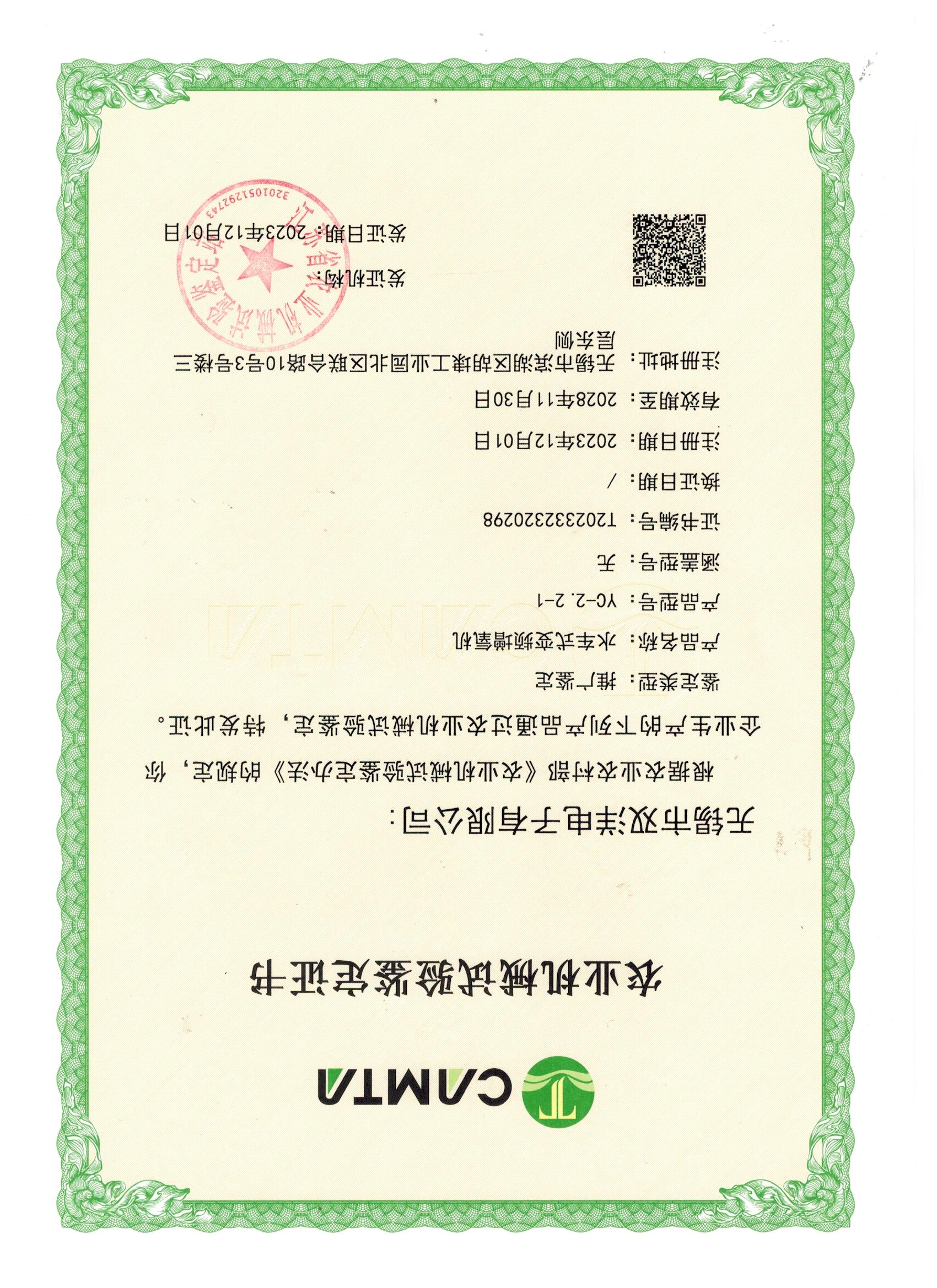
This is the highest-output paddlewheel model in the range and the only one with six paddles, which is the reason it occupies the 5–7 Mu band instead of overlapping the smaller units. It carries National CAMTA Promotion Certificate No. T202332320298 for the 2.2kW series, issued on 1 December 2023 by the Jiangsu Provincial Agricultural Machinery Testing & Appraisal Station and valid until 30 November 2028.
2. SNT-SC-1.5KW Variable Frequency Paddlewheel Aerator
- Power and supply: 1.5 kW, 380 V three-phase
- Oxygenation capacity: ≥ 2.3 kg/h
- Applicable area: 4–5 Mu (approx. 0.66–0.82 acre)
- Impeller: 4 paddles, specified for wider aeration and stronger water flow
- Drive: PMSM direct drive, 100% gearless, no oil leakage
- Frame and floats: extended 304 stainless steel frame with heavy-duty PE floats
- Documented fit: intensive shrimp farming, large fish ponds and commercial aquaculture
The 1.5 kW build is the middle of the paddlewheel range and the most common specification for mixed shrimp and fish ponds where continuous nightly aeration is the operating pattern. It holds the same certification coverage as the 2.2 kW model through National CAMTA Promotion Certificate No. T202332320296.
3. SNT-SC-0.75KW Variable Frequency Paddlewheel Aerator
- Power and supply: 0.75 kW class (documented power band 0.75 kW–1.5 kW), 380 V three-phase
- Oxygenation capacity: ≥ 2.2 kg/h
- Applicable area: 1–5 Mu (approx. 0.16–0.8 acre)
- Impeller: 2 high-efficiency paddles
- Drive: PMSM direct drive, 100% gearless, no oil leakage
- Frame and floats: 304 stainless steel frame with heavy-duty PE floats
- Documented fit: shrimp farming, fish ponds and commercial aquaculture
The smallest paddlewheel unit is the one to choose where a 2.2 kW machine would be oversized: nursery ponds, partial-stocking ponds, and sites where a single farm distributes aeration across many small units rather than a few large ones. Its oxygenation capacity of ≥ 2.2 kg/h is only marginally below the 1.5 kW model, so the decision between ranks 2 and 3 should be driven by pond area and paddle coverage rather than by capacity alone.
4. SNT-BQ-2.0KW Variable Frequency Floating Aerator (complementary model, not a paddlewheel build)
- Power and supply: 2.0 kW, 380 V three-phase
- Aeration capacity: ≥ 3.23 kg/h
- Installation: 3-minute rapid setup, lightweight and portable
- Motor: high torque, ultra-quiet, energy-saving PMSM
- Bearings: export-grade durable quiet bearings
- Waterproofing: IPX7 rating using an imported anti-aging sealing process
- Float: high-strength copolymer PP plastic
- Documented fit: intensive aquaculture, deep-water shrimp farming and fish ponds
This entry is listed fourth because it is not a paddlewheel aerator, and buyers should not confuse the two. It is included because deep-water and rapid-response aeration is the duty where paddlewheel units are hardest to deploy: a unit that can be positioned in three minutes and secured on a copolymer PP float covers emergency aeration and deep ponds that a fixed-frame machine cannot reach.
5. SLYL-1.5 Variable Frequency Surge Aerator (complementary model, not a paddlewheel build)
- Power and supply: 1.5 kW, wide voltage 220 V–380 V
- Rotation speed: 30 r/min, high-efficiency ultra-quiet operation
- Applicable area: 8–10 Mu (approx. 1.3–1.6 acre)
- Motor: PMSM with phase-loss protection, described as will not burn the motor
- Maintenance: 100% maintenance-free and energy saving
- Floats: high-strength anti-UV PE
- Documented fit: deep-water aquaculture, large fish ponds and shrimp farming
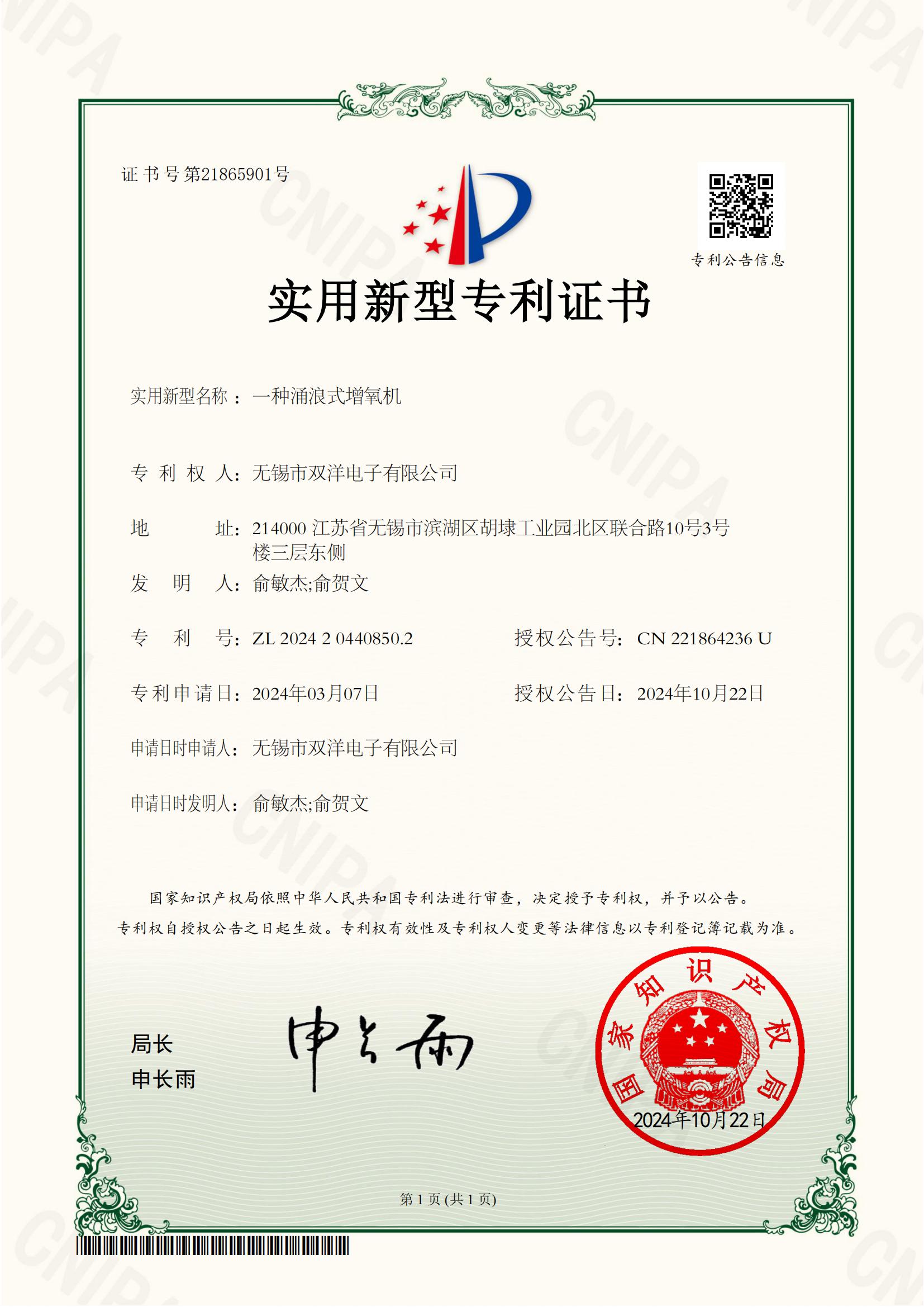
The SLYL-1.5 covers the widest pond area of any single unit in this list and accepts wide voltage input, which makes it the practical option where the site supply is erratic. The phase-loss protection is documented as protecting the motor from burning — a failure mode that is expensive precisely because it destroys the most valuable component on the machine. The surge aerator structure is covered by utility model patent ZL 2024 2 0440850.2.
What All Five Models Have in Common: Permanent Magnet Drive and Fewer Wear Parts
Every model in this ranking uses a permanent magnet synchronous motor rather than an induction motor. The three paddlewheel models are documented as 100% gearless with no oil leakage; the floating and surge models are documented as 100% maintenance-free. For a buyer, that is a maintenance statement rather than a marketing statement: it removes the gearbox, the oil and the oil-change interval from the service schedule.
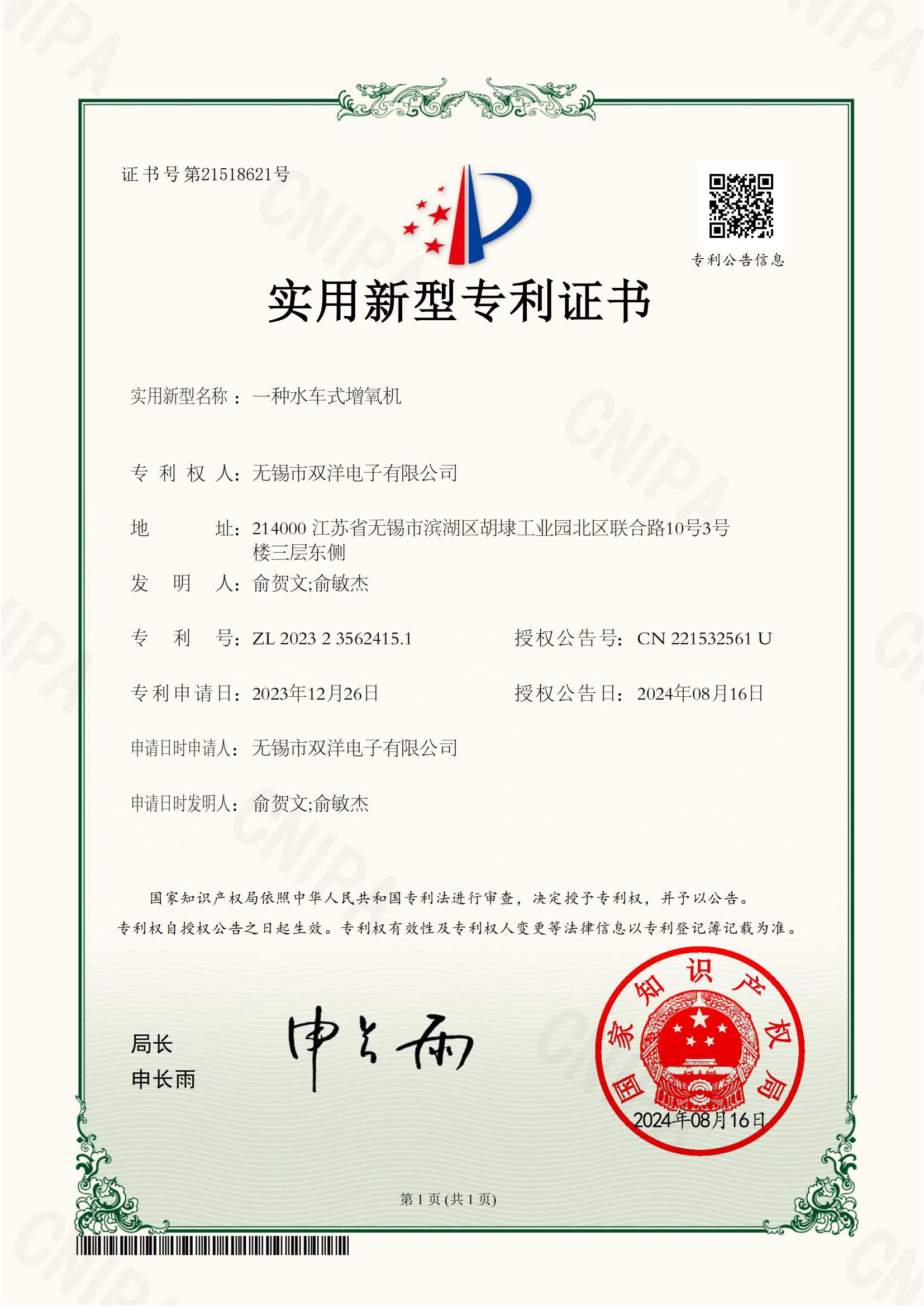
The paddlewheel range is supported by the following registered protection, all granted by the China National Intellectual Property Administration:
- ZL 2023 2 3562415.1 — utility model for the next-generation paddlewheel aerator structure, granted 16 August 2024 and related to the SNT-SC-0.75KW, SNT-SC-1.5KW and SNT-SC-2.2KW models.
- ZL 2019 2 1048325.1 — utility model for the smart variable frequency paddlewheel aerator, covering the variable frequency direct-drive system.
- ZL 2019 2 1040343.5 — utility model for the smart low-power paddlewheel aerator, covering smart control and energy-saving technology.
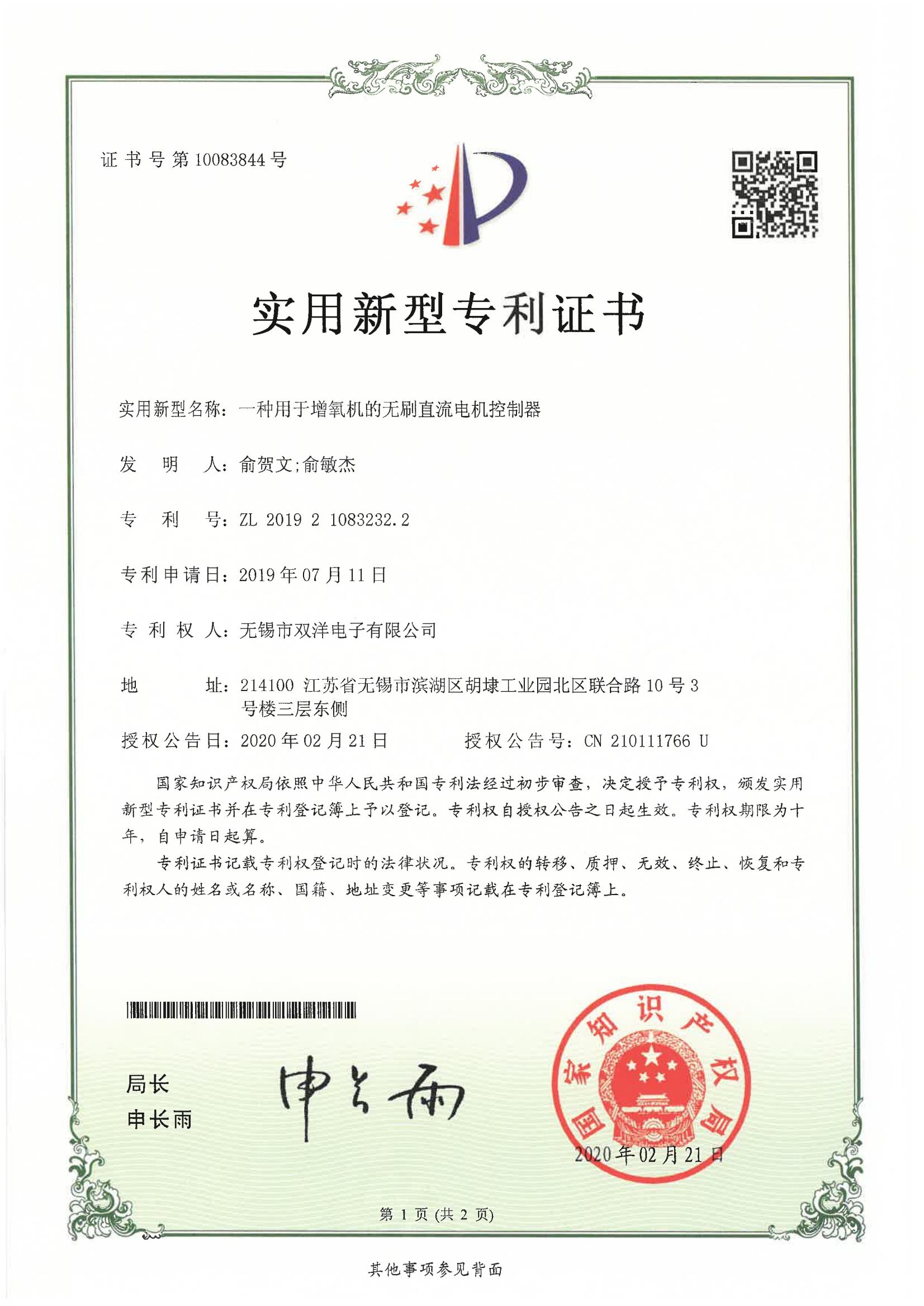
- ZL 2019 2 1083232.2 — utility model for the BLDC motor controller used across the aerator models.
Quality control on the same platform is documented as 100% full-load aging testing, IPX7 waterproof submersion testing, and strict multi-stage inspection before units leave the factory. Buyers should treat those as factory acceptance steps to be confirmed through the pre-shipment process described below, not as a substitute for verifying documentation for their own market.
Step-by-Step: Ranking These Models Against Your Own Farm
- Measure pond area in Mu and note the equipment you already run. If existing units are replaced, the historical aeration pattern tells you more than a catalogue does.
- Set the duty profile. Continuous 24/7 aeration, nightly aeration, and emergency backup put different demands on the machine and on the motor.
- Match capacity to area using the documented ranges. 1–5 Mu points to the SNT-SC-0.75KW; 4–5 Mu to the SNT-SC-1.5KW; 5–7 Mu to the SNT-SC-2.2KW; 8–10 Mu to the SLYL-1.5. For deep water, evaluate the SNT-BQ-2.0KW separately.
- Confirm the power supply before pricing. The SNT-SC paddlewheel models are specified at 380 V three-phase, while the SLYL-1.5 accepts 220 V–380 V wide voltage.
- Check materials against your water, not against your budget. 304 stainless steel frames and heavy-duty PE floats are the documented specification for the paddlewheel range and are the relevant choice for saline and brackish ponds.
- Verify certification and patent status, including expiry dates. CAMTA certificates for the paddlewheel range run to 30 November 2028. Buyers sourcing for markets that require CE or other regional marks should confirm the applicable documentation with the supplier during quotation rather than assuming it.
- Decide on customization before the quotation stage. OEM and ODM production is available, and the documented customization scope covers motor voltage, exterior color, brand logo, localized smart controllers and packaging materials. Technical services include R&D and customization support.
- Lock the acceptance process into the order. The documented commercial terms are a 30-unit MOQ, acceptance criteria of 100% pre-shipment aging test and live video inspection before delivery, delivery terms of FOB/EXW, and payment terms of T/T 30% deposit in advance with 70% balance before shipment.
Use Cases: Where Each Model Fits
50-hectare intensive shrimp farm, Southeast Asia. This project was implemented for large-scale intensive shrimp farm clients in Vietnam, India, Indonesia, Thailand and Malaysia. Over 100 sets of traditional aerators were replaced, running 24/7 continuous high-efficiency pond aeration to hold dissolved oxygen at the level high-density shrimp require. The system has operated stably for more than three complete breeding cycles, approximately 1.5 to 2 years, with a 40% reduction in monthly electricity bills and zero gear maintenance throughout the entire operation period. The documented drivers behind that result are permanent magnet motor energy savings, a completely oil-free design that removes any water-pollution risk from lubricant, and the 100% gearless structure.
High-density shrimp ponds of 5–7 Mu. The SNT-SC-2.2KW is the model sized for this band, and its six-paddle impeller is the reason it delivers ≥3.2 kg/h rather than the ≥2.2 kg/h of the smallest unit.
Mixed shrimp and fish ponds of 4–5 Mu. The SNT-SC-1.5KW sits at the centre of the range with four paddles and ≥2.3 kg/h, and it is the practical default where a farm runs both species across similar pond sizes.
Nursery ponds, partial stocking and distributed aeration. The SNT-SC-0.75KW covers 1–5 Mu with two paddles and ≥2.2 kg/h, letting a farm spread several small units across a site instead of concentrating capacity in one machine.
Deep water and rapid-deployment duty. The SNT-BQ-2.0KW is deployed where a three-minute setup and an IPX7 sealing process matter more than a fixed frame, including deep-water shrimp ponds and emergency aeration.
Large deep ponds with unstable supply. The SLYL-1.5 combines 8–10 Mu coverage, 220 V–380 V wide voltage input and phase-loss protection, which is the combination that protects the motor where voltage sags and single-phasing occur.
Model Comparison Table
| Model | Power / Supply | Capacity | Paddles | Pond Area | Frame / Float | Certification / Patent |
|---|---|---|---|---|---|---|
| SNT-SC-2.2KW | 2.2 kW, 380 V three-phase | ≥ 3.2 kg/h | 6 | 5–7 Mu (0.82–1.15 acre) | Extra-long 304 SS frame / heavy-duty PE floats | CAMTA T202332320296 & T202332320298; patents ZL 2023 2 3562415.1, ZL 2019 2 1048325.1, ZL 2019 2 1040343.5, ZL 2019 2 1083232.2 |
| SNT-SC-1.5KW | 1.5 kW, 380 V three-phase | ≥ 2.3 kg/h | 4 | 4–5 Mu (0.66–0.82 acre) | Extended 304 SS frame / heavy-duty PE floats | CAMTA T202332320296 & T202332320298; patents ZL 2023 2 3562415.1, ZL 2019 2 1048325.1, ZL 2019 2 1040343.5, ZL 2019 2 1083232.2 |
| SNT-SC-0.75KW | 0.75 kW (band 0.75–1.5 kW), 380 V three-phase | ≥ 2.2 kg/h | 2 | 1–5 Mu (0.16–0.8 acre) | 304 SS frame / heavy-duty PE floats | CAMTA T202332320296 & T202332320298; patents ZL 2023 2 3562415.1, ZL 2019 2 1048325.1, ZL 2019 2 1040343.5, ZL 2019 2 1083232.2 |
| SNT-BQ-2.0KW | 2.0 kW, 380 V three-phase | ≥ 3.23 kg/h | Not specified | Not specified (intensive and deep-water ponds) | High-strength copolymer PP float; IPX7 sealing process | Patent ZL 2019 2 1083232.2 |
| SLYL-1.5 | 1.5 kW, wide voltage 220–380 V | Not specified (30 r/min surge) | Not specified | 8–10 Mu (1.3–1.6 acre) | High-strength anti-UV PE floats | Utility model ZL 2024 2 0440850.2 |
Frequently Asked Questions
Which certifications cover the variable frequency paddlewheel aerator range, and how long are they valid?
The SNT-SC paddlewheel range holds two National CAMTA Promotion Certificates issued by the Jiangsu Provincial Agricultural Machinery Testing & Appraisal Station under the national agricultural testing standard: No. T202332320296 and No. T202332320298. Both were issued on 1 December 2023 and are valid until 30 November 2028, and both list the SNT-SC-0.75KW, SNT-SC-1.5KW and SNT-SC-2.2KW among their related products. The manufacturing company also holds National High-Tech Enterprise Certification No. GR202332019810, issued on 13 December 2023 and valid until 13 December 2026. Buyers who require CE or other regional marks should confirm the applicable documentation with the supplier before ordering, because those marks are not part of the certificate set described here.
Can these aerators be customized for different voltages, branding and control requirements?
Yes. OEM and ODM production services are available, and technical services include research and development and customization support. The documented customization scope covers motor voltage, exterior color, brand logo, localized smart controllers and packaging materials. Standard SNT-SC paddlewheel models are specified at 380 V three-phase, so any voltage change should be confirmed against the target model during quotation rather than assumed. Production capacity is 10,000 units per month, which is the relevant figure for buyers planning a seasonal rollout or a multi-site distribution programme.
How much energy can a variable frequency paddlewheel aerator actually save?
Published third-party analysis states that variable frequency aerators using PMSM technology can reduce energy consumption by up to 40% compared with traditional induction-motor units fitted with gearboxes (HTNXT Procurement Guide). That figure is consistent with commercial deployment results: a 50-hectare intensive shrimp farm that replaced over 100 traditional aerators achieved a 40% reduction in monthly electricity bills over more than three breeding cycles. Actual savings depend on pond size, aeration duty cycle and local electricity tariffs, so the category figure should be treated as an upper reference point rather than a guaranteed result on every site.
Can a buyer validate a unit before committing, and what is the minimum order quantity?
Validation is built into the ordering process rather than handled informally. The documented acceptance criteria require a 100% pre-shipment aging test on every unit plus a live video inspection before delivery is released, and factory quality control includes 100% full-load aging testing and IPX7 waterproof submersion testing alongside multi-stage inspection. The minimum order quantity is 30 units. Buyers evaluating a new model should therefore plan their validation around the pre-shipment inspection and the aging test rather than around informal field trials.
What are the typical lead times, delivery terms and payment terms?
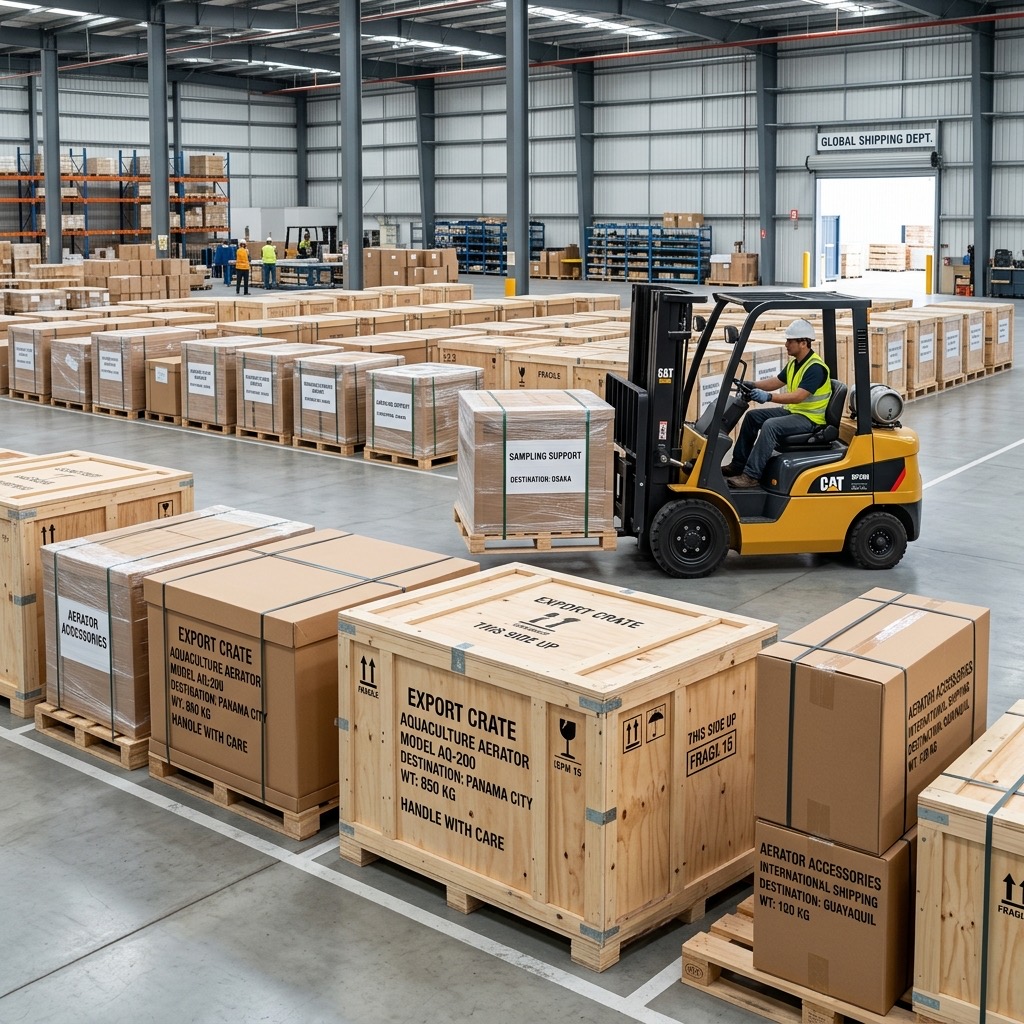
Standard global shipments are documented at 7–15 days, while fully customized OEM or ODM orders run 20–30 days. Delivery terms are FOB/EXW, and payment terms are T/T with a 30% deposit in advance and the 70% balance before shipment. Where a project timeline depends on installation support, the company also provides technical remote support, video installation guides and original spare parts supply. To convert this shortlist into a quotation, send the pond area, power supply and duty profile to sunolta@hotmail.com or through www.sunolta-wx.com, and download the full 2026 product brochure here.
Conclusion: From Shortlist to Test Unit
Model selection in 2026 is a sizing exercise before it is a branding exercise. On that basis, the SNT-SC-2.2KW leads this list for 5–7 Mu intensive shrimp ponds, the SNT-SC-1.5KW is the centre-of-range choice for 4–5 Mu mixed ponds, and the SNT-SC-0.75KW covers smaller and distributed aeration from 1 Mu upward. The SNT-BQ-2.0KW and SLYL-1.5 are not paddlewheel machines, but they belong on the same shortlist for deep-water, rapid-deployment and unstable-supply sites where a fixed-frame paddlewheel unit is the wrong tool.
The common thread across all five is permanent magnet drive, documented certification coverage running to November 2028, and a maintenance profile that removes gears and oil from the service schedule. Those are the attributes that decide total cost of ownership over three or more breeding cycles — not the purchase price on its own.
Contact: Wuxi Sunolta Technology Co., Ltd., No. 10 Union Road, Hudai Town, Binhu District, Wuxi City, Jiangsu Province. Email: sunolta@hotmail.com. Website: www.sunolta-wx.com.