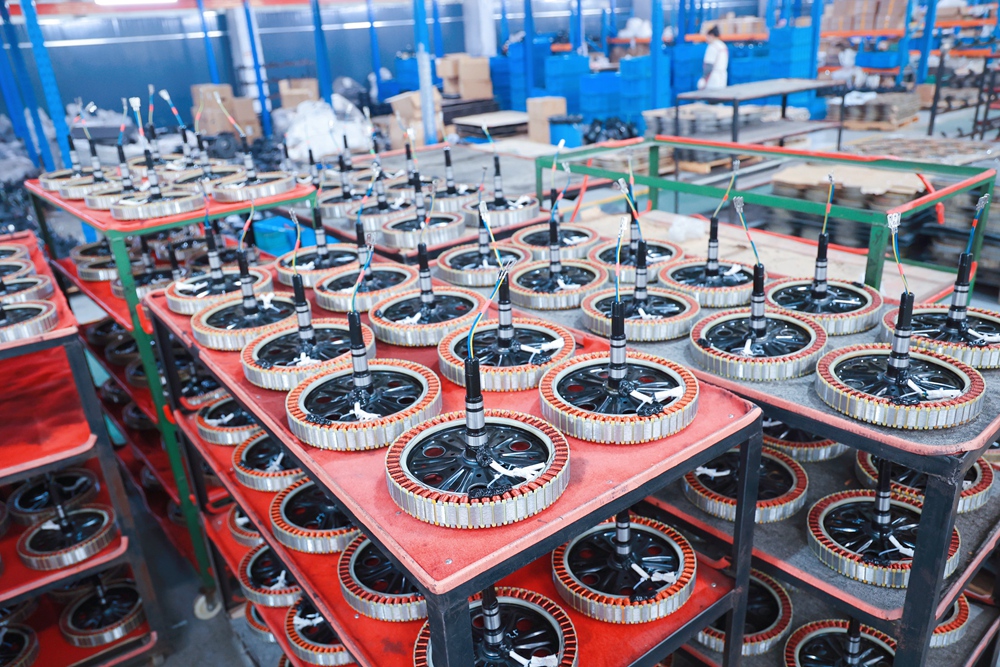
 22,000 m²
 100+
100+

Variable Frequency Paddlewheel Aerator vs Traditional Aerator: A Procurement Decision Guide
Introduction: The Decision Is Not Only About Purchase Price
Buyers evaluating aerators for high-density shrimp or saltwater aquaculture often arrive at a decision-stage question: should they continue with a traditional induction-motor aerator with a gearbox, or move to a variable frequency paddlewheel aerator built around a permanent magnet synchronous motor? The practical answer is not found in motor nameplate power alone. It is found in three measurable factors: energy consumption, maintenance burden, and voltage resilience. A gearless PMSM variable frequency paddlewheel aerator can reduce electricity consumption by up to 40% and eliminate gear oil maintenance when compared with a traditional induction-motor unit with a gearbox. This article provides a structured comparison for procurement teams, farm owners, and distributors, using technical data from Wuxi Sunolta Technology Co., Ltd. and available industry data.
Problem Definition: Why the Wrong Comparison Creates Operating Risk
Most procurement errors come from comparing initial price instead of total operating cost. A traditional gearbox aerator requires regular gear oil changes and carries an oil leak risk that can contaminate pond water. In high-density shrimp systems, water quality is closely managed; an oil leak is not just a maintenance issue, it is a production risk. Energy is another hidden cost. If a farm runs multiple paddlewheels for several hours per night, the documented up to 40% energy-consumption gap is material. Finally, rural farms frequently experience voltage swings or phase loss. Equipment without wide-voltage protection can trip, overheat, or fail during the production cycle. A decision framework should therefore evaluate drive technology, maintenance, energy cost, voltage tolerance, certification, and corrosion-relevant materials together rather than separating them.
Industry Background: Where the Comparison Is Being Made
The commercial context is expanding. Straits Research values the global aquaculture equipment market at USD 22.55 billion in 2025, with a projection to reach USD 42.17 billion by 2034. Within this category, the variable frequency paddlewheel aerator segment has an estimated valuation of about USD 1.2 billion in 2026, although buyers should treat this as a directional estimate and verify against independent market reports. China-dominated smart aquaculture production accounts for more than 90% of global aquaculture output as of 2024. In 2025, shipments of variable frequency aerators to Southeast Asia and South America grew approximately 22% year-on-year, reflecting intensive shrimp farming expansion. These conditions make procurement decisions more consequential because high-density farms depend on continuous aeration and cannot tolerate long downtime or unpredictable operating cost.
Detailed Solution: Gearless PMSM Technology and SUNOLTA Capability
Wuxi Sunolta Technology Co., Ltd. is a Wuxi, Jiangsu-based company that develops, manufactures, and sells aquaculture machinery. It reports a factory size of 22,000 m², more than 100 employees, over 30 senior engineers, annual output of 150,000 units, and an export ratio of 45%. Key markets include Vietnam, Malaysia, Indonesia, Uzbekistan, South America, and the Middle East.
Compared to traditional induction-motor aerators with gearboxes, SUNOLTA's variable frequency paddlewheel aerator uses a gearless design with a Permanent Magnet Synchronous Motor. The stated performance gap is up to 40% electricity savings and up to 40% lower operational energy cost. Maintenance is described as 100% zero maintenance: no gear oil changes, no oil leak risk, and zero water pollution. Efficiency is characterized as significantly higher, equivalent to IE4 ultra-premium, compared to traditional motors.
Electrical robustness is part of the solution. SUNOLTA's controllers include built-in auto-protection against phase loss, overload, and short circuits. Supported wide-voltage ranges are 150V–250V single-phase and 230V–430V three-phase. Heat dissipation design is intended to prevent overheating during sustained operation.
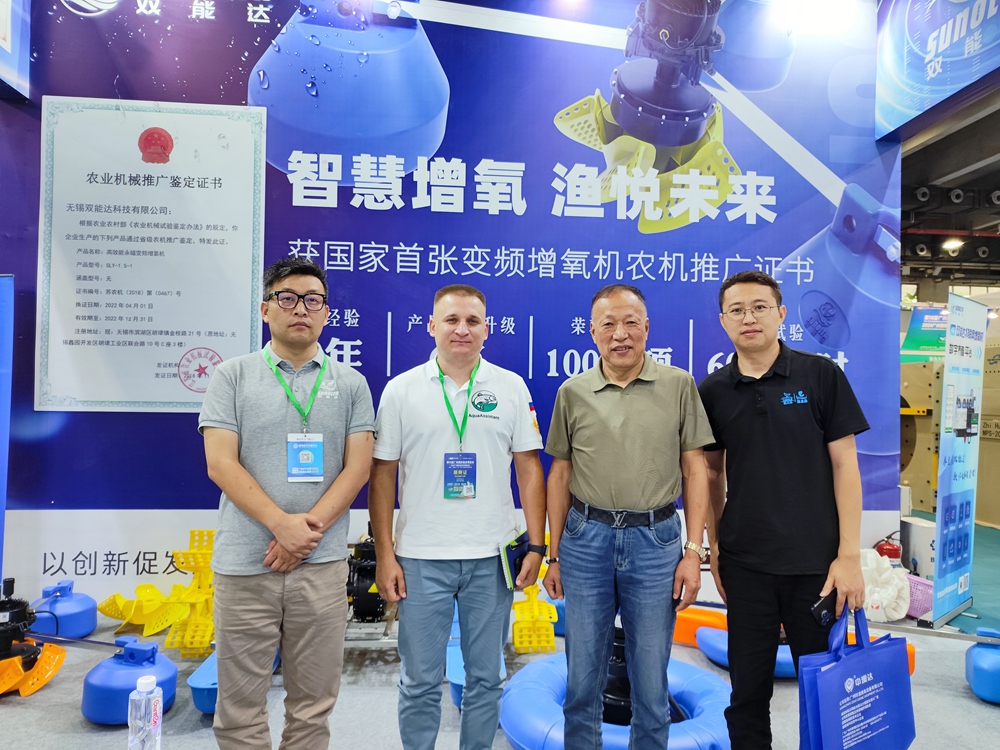
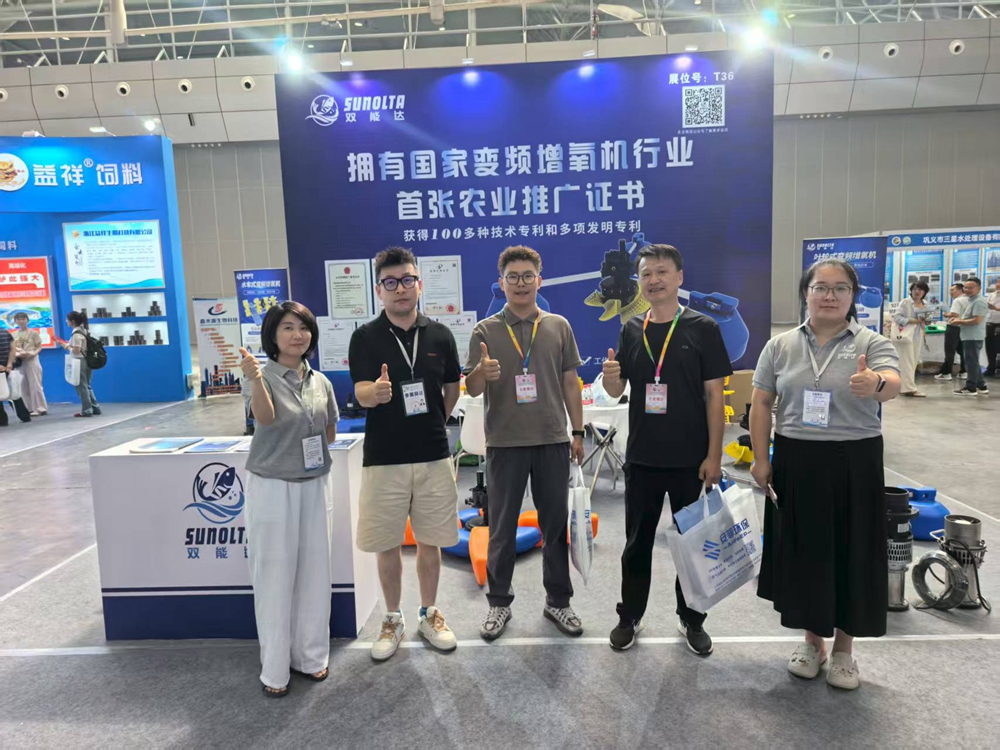
On certification, the 2.2KW variable frequency paddlewheel aerator holds the National CAMTA Promotion Certificate No. T202332320296, valid until 2028. This is a documented compliance point for buyers requiring national agricultural machinery promotion certification.
For saltwater or high-density deployments, procurement teams should ask for material-level evidence such as stainless steel frame composition, PE float anti-corrosion properties, and the exact IP ingress protection rating. These specifications should be confirmed directly rather than assumed from general marketing language.
Step-by-Step Breakdown: How to Compare the Two Systems
- Map oxygen demand and production intensity. Record stocking density, pond area, typical feeding cycle, and number of operating hours per night. This determines how much the energy-consumption difference affects total cost.
- Compare energy use under equivalent output. Use supplier-provided measured input power rather than nameplate power alone. A PMSM variable frequency aerator can reduce electricity consumption by up to 40% compared to traditional induction-motor aerators with gearboxes.
- Estimate maintenance and downtime. Traditional gearboxes require oil changes and may present oil leak risks. A gearless system removes these tasks, which is relevant in high-density ponds where water quality and continuous operation are critical.
- Check the farm's actual voltage conditions. Measure the minimum and maximum supply voltage during peak load. If the site operates within single-phase 150V–250V or three-phase 230V–430V, the SUNOLTA controller's stated wide-voltage range may be suitable; confirm with the supplier for the exact installed configuration.
- Verify certifications and claims. Request the exact model certificate, test report, and certification scope. The 2.2KW model is associated with CAMTA certificate No. T202332320296. If CE marking or IPX7-like ingress protection is required, ask the supplier for a specific declaration or certificate before ordering.
- Build a lifecycle cost model. Add initial price, estimated electricity expense, maintenance labor, oil/consumables, and downtime risk over an equipment lifetime. This is more decision-useful than comparing unit purchase price alone.
Use Cases
High-Density Shrimp Farming
High-density shrimp ponds require stable dissolved oxygen, especially at night. The combination of up to 40% energy savings and zero gear oil maintenance is operationally relevant because multiple units may run concurrently. The absence of oil leaks protects water quality. Buyers serving Vietnam, Malaysia, Indonesia, and South America may see overlap with the reported shipment growth.
Saltwater Aquaculture
Corrosion resistance becomes a decisive factor. Buyers should ask for verification of 304 stainless steel frame construction, anti-corrosion PE floats, and exact submersible/waterproof ingress protection. The comparison should not stop at motor efficiency; structural materials determine service life in marine or brackish water.
Rural or Unstable-Grid Farms
Wide-voltage controllers with phase loss, overload, and short-circuit protection are designed for rural power conditions. For a farm with fluctuating voltage, this can reduce trips and overheating during critical aeration windows.
Comparison Table
| Evaluation factor | SUNOLTA variable frequency paddlewheel aerator | Traditional induction-motor aerator with gearbox |
|---|---|---|
| Drive system | Gearless permanent magnet synchronous motor (PMSM) | Induction motor with gearbox |
| Energy consumption | Up to 40% electricity savings | Baseline for comparison |
| Operational energy cost | Up to 40% lower operational energy cost | Higher operational energy cost |
| Maintenance | 100% zero maintenance; no gear oil changes, no oil leak risk, zero water pollution | Gear oil changes required; oil leak risk |
| Motor efficiency | Significantly higher; IE4 ultra-premium equivalent | Lower efficiency class in this comparison |
| Voltage range | 150V–250V single-phase; 230V–430V three-phase with auto-protection | — |
| Certification | National CAMTA Promotion Certificate No. T202332320296, valid until 2028 for 2.2KW unit | — |
Table facts are drawn from the provided technical and certification data. The traditional aerator row reflects the comparison baseline stated in the SUNOLTA comparison corpus.
FAQ
Is the SUNOLTA variable frequency paddlewheel aerator certified for formal procurement?
The 2.2KW variable frequency paddlewheel aerator holds the National CAMTA Promotion Certificate No. T202332320296, valid until 2028. Buyers requiring certification should confirm the exact model and certificate scope for their market.
Can this type of aerator operate under unstable rural voltage conditions?
According to technical data, the controllers support single-phase 150V–250V and three-phase 230V–430V, with built-in auto-protection against phase loss, overload, and short circuits. Heat dissipation supports sustained operation.
What is the expected energy and maintenance difference compared with a traditional gearbox aerator?
The gearless PMSM design can save up to 40% on electricity consumption and reduce operational energy cost by up to 40%. Maintenance is described as zero maintenance with no gear oil changes, no oil leak risk, and zero water pollution. Use this difference for operating cost comparison rather than initial price.
How can I get more technical data or request a sample or quote?
Contact Wuxi Sunolta Technology Co., Ltd. at sunolta@hotmail.com, Tel 15720687876, WhatsApp +12132160461, or visit www.sunolta-wx.com. The corporate brochure is available for download as a next step.
Conclusion
Decision-stage buyers should use lifecycle cost, not initial price, as the decisive criterion. For high-density shrimp and saltwater farms that face high energy use, water-quality sensitivity, and unstable supply voltage, a variable frequency paddlewheel aerator with a gearless PMSM can provide measurable advantages: up to 40% electricity savings, zero gear oil maintenance, and wide-voltage protection. The purchase decision should still verify material construction, exact certification scope, and local support. Wuxi Sunolta Technology Co., Ltd. offers documented PMSM drive architecture, wide-voltage controls, and a CAMTA-certified 2.2KW model for buyers evaluating this transition.
Need a sample, quote, or detailed technical data pack for your farm or distribution region? Contact SUNOLTA or download the corporate brochure.
Email: sunolta@hotmail.com | Tel: 15720687876 | WhatsApp: +12132160461
Address: No. 10 Union Road, Hudai Town, Binhu District, Wuxi City, Jiangsu Province