دليل المشتري لقلب الألومنيوم: معايير الاختيار وأفكار التطبيق لعام 2026
Introduction: The Role of Aluminum Formwork in Modern Construction
Aluminum formwork has become a cornerstone of efficient construction, particularly for repetitive structures like residential apartments, hotels, and commercial buildings. Its lightweight nature, high reusability, and ability to produce high-quality concrete finishes make it a preferred choice for projects aiming for speed, cost-effectiveness, and superior surface quality. This guide provides a structured framework for procurement professionals to evaluate and select aluminum formwork systems, focusing on technical specifications, application suitability, and supplier capabilities.
1. Core Technical Specifications and Performance Parameters
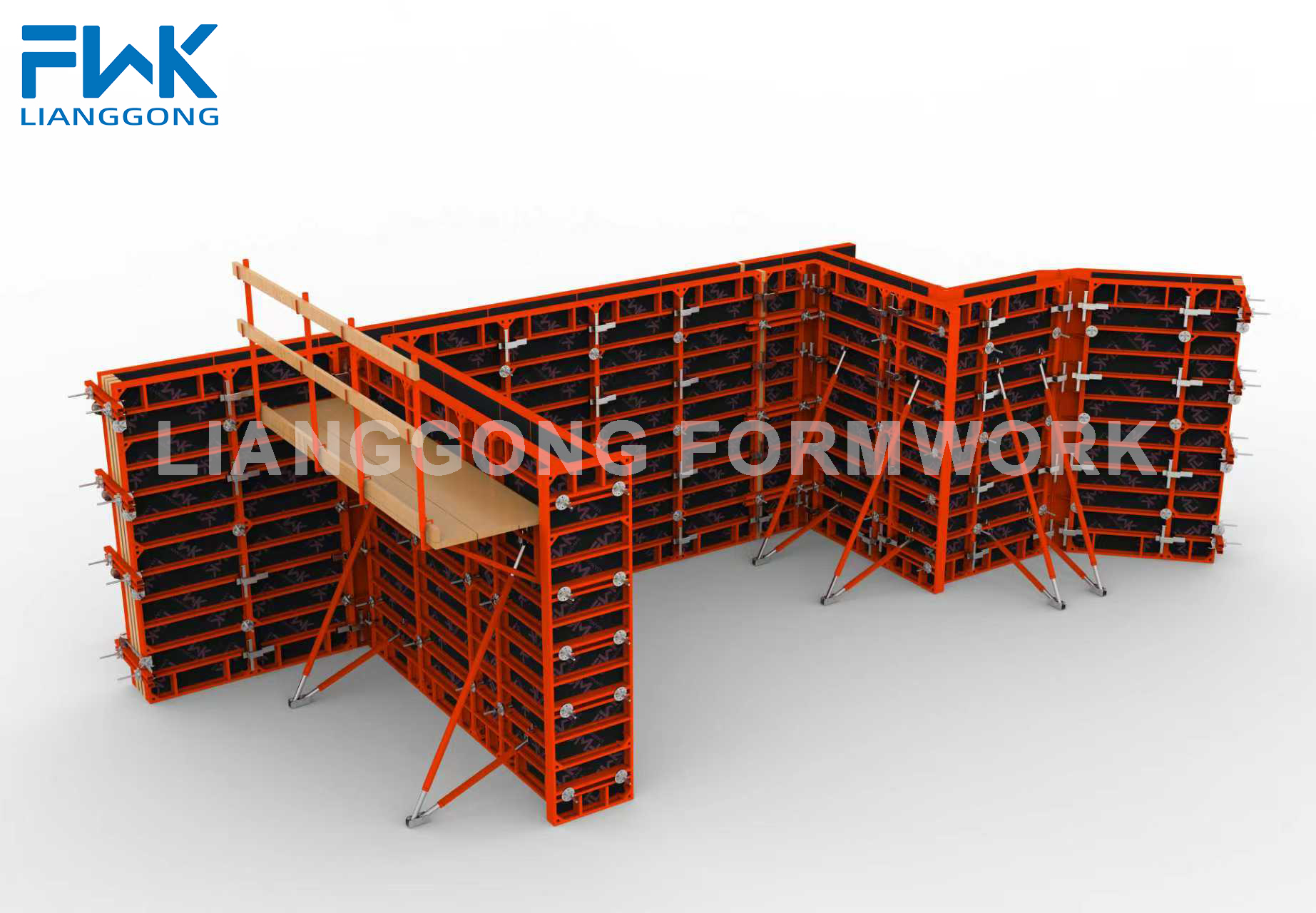
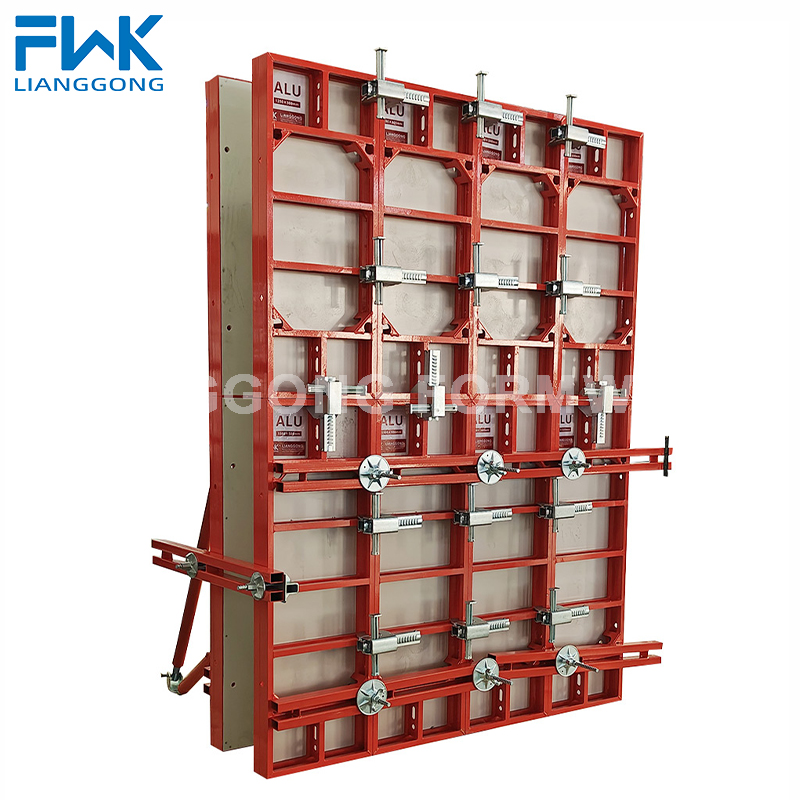
When evaluating aluminum formwork, key technical parameters must be assessed to ensure they align with project requirements. The following table outlines critical specifications based on industry-standard systems, such as the FWK-FAF 117 model.
| Parameter | Typical Specification (e.g., FWK-FAF 117) | Procurement Consideration |
|---|---|---|
| Panel Weight | 25 kg/m² | Impacts manual handling speed, labor requirements, and crane usage. Lighter panels improve ergonomics and cycle times. |
| Maximum Panel Size | 3.0 m x 1.0 m | Determines modularity and the number of joints. Larger panels can speed up erection but may require more crane lifts. |
| Panel Thickness / Depth | 117 mm | Directly relates to stiffness and resistance to concrete pressure. Must be matched to pour height and rate. |
| Maximum One-Time Casting Height | 6 m | Critical for wall and column applications. Verify against your project's maximum single lift height. |
| Maximum Permissible Lateral Pressure | 60 kN/m² | A key safety and performance metric. Must exceed the calculated fresh concrete pressure for your specific pour. |
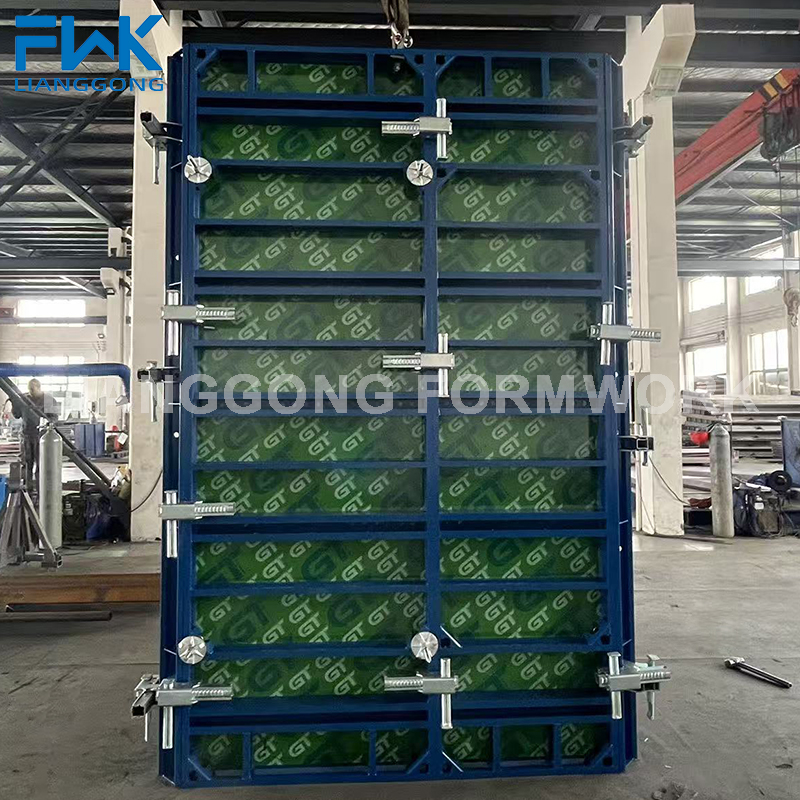
| Primary Material | Aluminum Alloy 6061-T6 + 15 mm Plywood | Alloy grade dictates strength and durability. Plywood type (e.g., film-faced) affects finish quality and reuse cycles. |
2. Application Suitability and Environmental Considerations
Aluminum formwork excels in specific environments but may require adaptations for others. A thorough site and project condition analysis is essential.
Ideal Application Scenarios:
- Repetitive Floor Plans: Mass housing, hotel towers, and apartment buildings where the same layout is repeated across multiple floors.
- Projects Demanding High-Quality Finishes: Where a smooth, 'mirror-like' concrete surface is required, minimizing post-construction plastering.
- Fast-Track Projects: The system's quick stripping and re-erection capability supports rapid construction cycles, potentially achieving a floor cycle of 4-7 days.
Environmental & Climatic Adaptations:
Aluminum formwork has been deployed in diverse climates, but procurement must account for local factors:
- High-Temperature, High-Humidity Regions (e.g., Indonesia, UAE): Systems used in coastal projects in Indonesia, with average temperatures of 25–34°C, heavy rainfall, and high humidity, require specific considerations. Components such as tie rods should be stainless steel or hot-dip galvanized to resist salt corrosion. Reliable joint sealing is crucial to prevent grout leakage in humid conditions.
- Windy Coastal Areas: Design must account for wind load stability during assembly and prior to concrete pouring.
Procurement Tip: Request Climate-Specific Case Studies
Ask potential suppliers for documented projects in environments similar to yours. For instance, review how aluminum formwork was applied in the Indonesia Swimming Pool Project, which involved high humidity and a coastal setting. This provides tangible evidence of a system's adaptability.
3. Comparative Analysis: Aluminum Formwork vs. Alternative Systems
Selecting the right formwork type involves a comparative analysis. The table below contrasts aluminum formwork with two other common systems.
| Criteria | Aluminum Formwork (e.g., FWK-FAF 117) | Steel Frame Formwork (e.g., FWK-SNF 65) | H20 Timber Beam Formwork |
|---|---|---|---|
| Primary Weight | Lightest (~25 kg/m²) | Heavier (~39 kg/m²) | Heaviest (~65 kg/m²) |
| Typical Reuse Cycles | 200+ (for aluminum frame) | 100+ (for steel frame) | 26-40 (for timber beam) |
| Initial Investment | Highest | Medium | Lowest |
| Long-Term Cost (High-Reuse) | Most Economical | Economical | Higher (frequent replacement) |
| Best For | Large-scale, repetitive residential/commercial projects. | High-rise cores, shear walls, projects with higher concrete pressure. | Low to mid-rise, irregular structures, bridges, dams. |
| Key Risk / Maintenance | Denting from impact; requires careful handling. | Rust prevention; requires painting/maintenance. | Moisture deformation; fire risk; regular inspection needed. |
4. Supplier Evaluation Checklist
Beyond the product, the supplier's capability is critical for successful project execution. Use this checklist during your evaluation.
A. Manufacturing & Technical Capability:
- In-House Engineering & Design: Does the supplier provide detailed shop drawings and erection plans? For example, Yancheng Lianggong Formwork Co.,Ltd. maintains a technical department of 45 personnel to collaborate on custom solutions.
- Production Capacity & Lead Time: Inquire about monthly capacity and standard lead times. A supplier like Lianggong, with a 12,870 m² factory and an annual output of 12,000 tons, indicates scale. Typical lead times can range from 30-35 days.
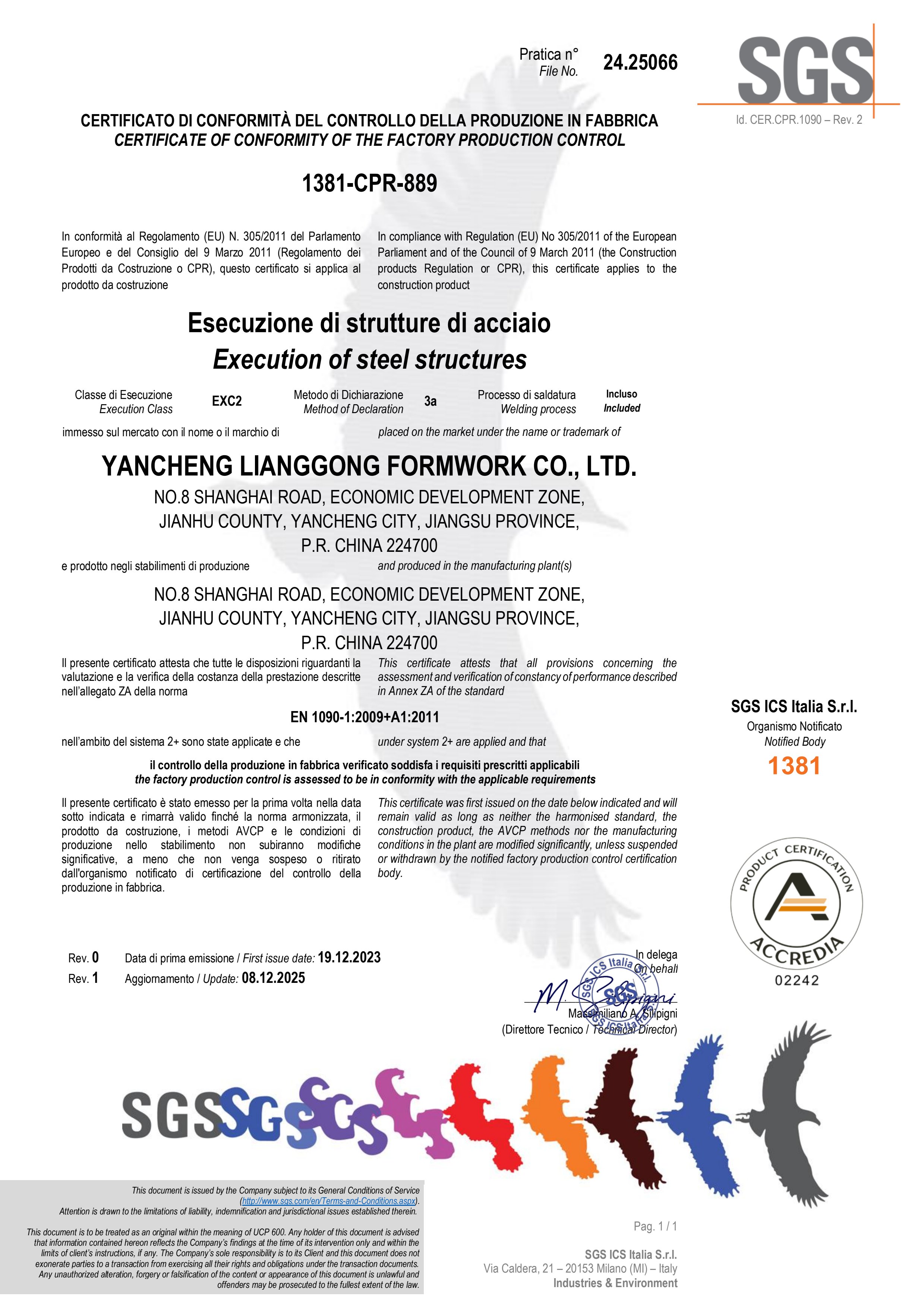
- Quality Control & Certifications: Verify international certifications relevant to your market. Key certifications include:
- Factory Production Control (FPC) Certificate per EN 1090 for the EU (e.g., Certificate 1381-CPR-889 issued by SGS).
- Welding Quality Management System Certificate per EN ISO 3834-2.
- ISO 9001:2015 Quality Management System certification.
B. Commercial & Logistics Terms:
- Minimum Order Quantity (MOQ): Often 1 container (20GP). Confirm if this aligns with your project's phased requirements.
- Delivery Terms: Standard terms are FOB or CIF. Understand the responsibilities and costs up to your site.
- Payment Terms: A common structure is a 50% advance and 50% before shipment.
- After-Sales Support: Does the supplier offer on-site technical guidance for the first erection? Remote support? Clarify the scope and duration.
5. Risk Mitigation and Best Practices for Aluminum Formwork
Proactive risk management is vital. Based on industry practices, consider these controls for aluminum formwork:
- Deformation Control: Implement careful handling protocols. Use rubber mallets, not metal tools, for adjustments. If panel gaps appear due to minor deformation, use double-sided tape or sealing strips for repair.
- Support Stability: Ensure support rod spacing does not exceed 1.2 meters. Always use steel base plates at the bottom of props to distribute load.
- Lifting Safety: Verify the integrity of welded lifting lugs. Use only certified lifting equipment and ensure stable, collision-free lifts.
- Supplier Quality Gates: Prefer suppliers who enforce a "Three Inspections and One Review" protocol: In-process inspection, final quality inspection, pre-shipment factory inspection, and a final review.
Conclusion and Next Steps
Selecting the optimal aluminum formwork system is a multi-faceted decision balancing technical specs, project conditions, total cost of ownership, and supplier reliability. By applying the structured criteria in this guide—from analyzing the FWK-FAF 117's 25 kg/m² panel weight to verifying a supplier's EN 1090 certification—procurement teams can make informed, risk-aware decisions that contribute to project success in 2026 and beyond.
Download Comprehensive Technical Information
For detailed specifications, company profiles, and full product lines, you can download the official brochure from Yancheng Lianggong Formwork Co.,Ltd.: Download Company Brochure (PDF).