
دليل الشراء الاستراتيجي: تقييم موردي المضخات المغناطيسية للتطبيقات الصناعية في عام 2026
A Strategic Procurement Guide: Evaluating Magnetic Pump Suppliers for Industrial Applications in 2026
For industrial buyers and procurement specialists, selecting the right magnetic pump supplier is a critical decision that impacts operational efficiency, maintenance costs, and process reliability. This guide outlines a structured framework for evaluating potential suppliers, focusing on key technical, operational, and commercial criteria.
1. Core Technical Capabilities and Product Range
Begin your evaluation by assessing the supplier's core technical competencies. A capable manufacturer should offer a diversified product portfolio to address different application needs. For instance, suppliers like YUAN SHIN PUMP produce both regenerative turbine and centrifugal magnetic pump designs. Their product lines, such as the MAP-1100 and CAP-100 models, are engineered to handle a wide fluid temperature range from -196°C to +400°C, with power ratings spanning from 0.18 kW to 11 kW. This range indicates an ability to serve applications from low-temperature semiconductor cooling to high-temperature thermal oil transfer.
Key technical parameters to verify include maximum head (e.g., up to 100 m for some models), flow capacity, and the construction materials, typically stainless steel for corrosion resistance.
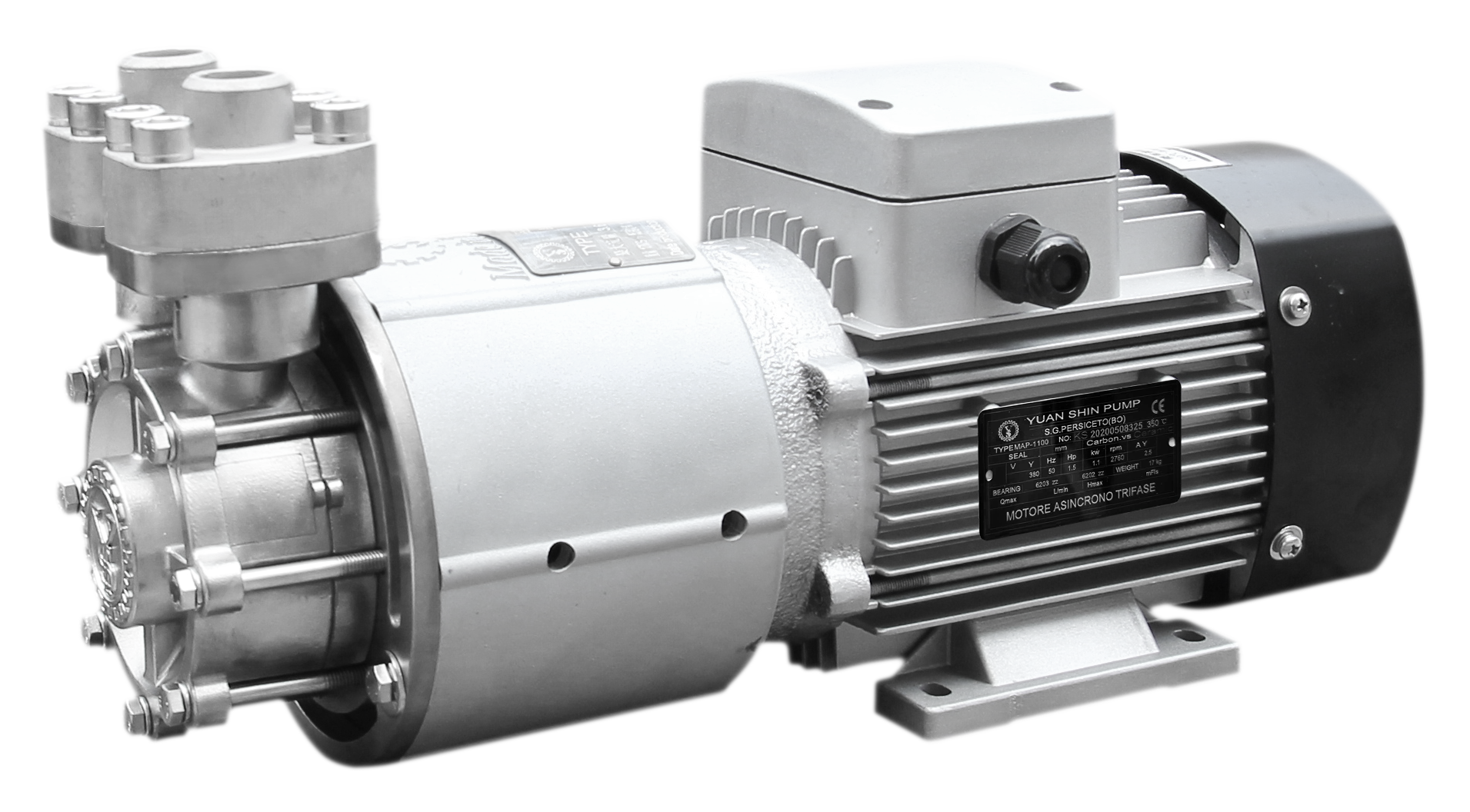
Figure: Example of a regenerative turbine magnetic pump design.
2. Manufacturing Scale, Quality Systems, and Certifications
A supplier's manufacturing infrastructure and quality management systems are strong indicators of product consistency and reliability. Investigate factory size, annual output, and in-house R&D capabilities. For example, a supplier with a 2160 m² facility, an annual output of 25,000 units, and a dedicated engineering team demonstrates significant production capacity.
Certifications provide objective, third-party validation of a supplier's processes. Essential certifications to look for include:
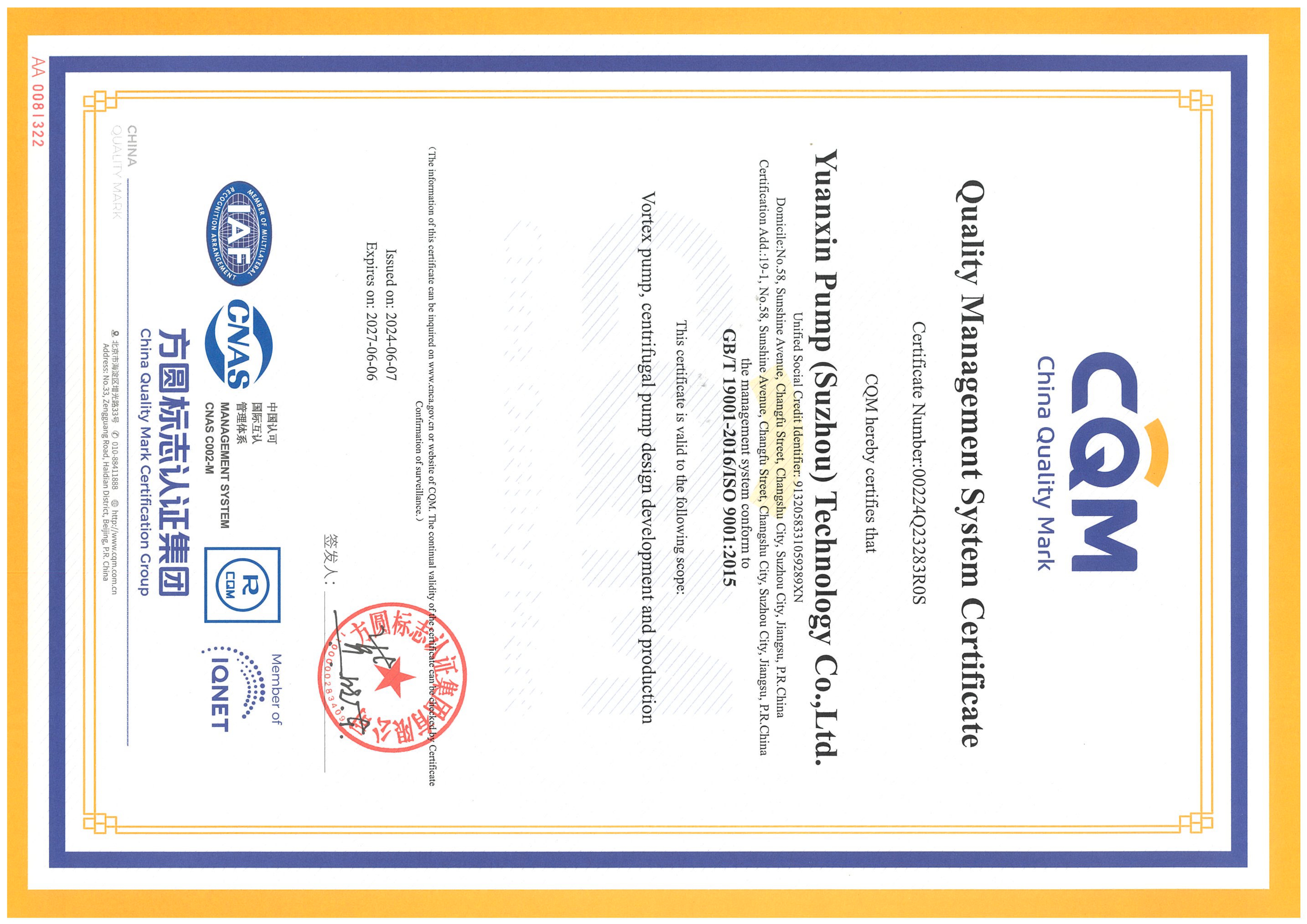
- ISO 9001:2015 for Quality Management Systems (e.g., Certificate CN-00224Q23283R0S).
- ISO 14001:2015 for Environmental Management Systems.
- CE Marking for the European market, covering standards like EN 809 and EN ISO 12100.
- UL Recognition for components in the US (UL 1004-1) and Canada (CSA C22.2 NO.100).
These documents, issued by authorities like China Quality Mark Certification Group (CQM) and UL LLC, confirm adherence to international standards.
3. Customization, Flexibility, and Supply Chain Support
Industrial applications often require tailored solutions. A supplier's flexibility is measured by its customization options and order policies. Key aspects to confirm are:
- ODM/Service Availability: The ability to provide Original Design Manufacturing services.
- Customization Scope: Options for voltage/frequency, single/three-phase motors, specific materials like Stainless Steel 316L, and EX-rated motors for hazardous areas.
- Order Policy: A low minimum order quantity (MOQ), such as 1 unit, allows for prototyping and small-batch procurement.
- Lead Time: Standard lead times, which can range from 3 to 40 days depending on customization.
- Global Reach: Export capabilities to key industrial regions, including the Middle East, Southeast Asia, Europe, North America, South America, and Russia.
- Injection Molding (Brazil): A case involving 10 units for chiller cooling water circulation reported a resolution of seal wear issues and extended maintenance intervals by more than two times compared to mechanical seal pumps.
- New Energy Testing (China): An application in liquid-cooled chillers, involving 300 units annually, demonstrated a 25% increase in testing efficiency, attributed to precise temperature control via variable frequency drives.
- Laboratories (United Kingdom): A precision temperature control system installation highlighted low-noise operation and compatibility with single-phase power supplies.
- Product Quality: 100% pre-shipment testing on in-house rigs for parameters like flow, head, and leakage.
- Supply Chain Stability: Managed supplier lists and incoming inspections for core components (bushings, magnets).
- Delivery Reliability: Use of production planning systems and safety stock to mitigate delivery delays.
4. Application-Specific Validation and Case Studies
Request detailed case studies relevant to your industry to validate performance claims. Documented applications provide evidence of real-world reliability. For example:
These cases, located in Brazil, China, and the United Kingdom, illustrate the pump's performance across diverse operational environments and requirements.
5. Risk Mitigation and Quality Assurance Practices
Probe the supplier's internal risk control measures. A robust supplier will have clear protocols for:
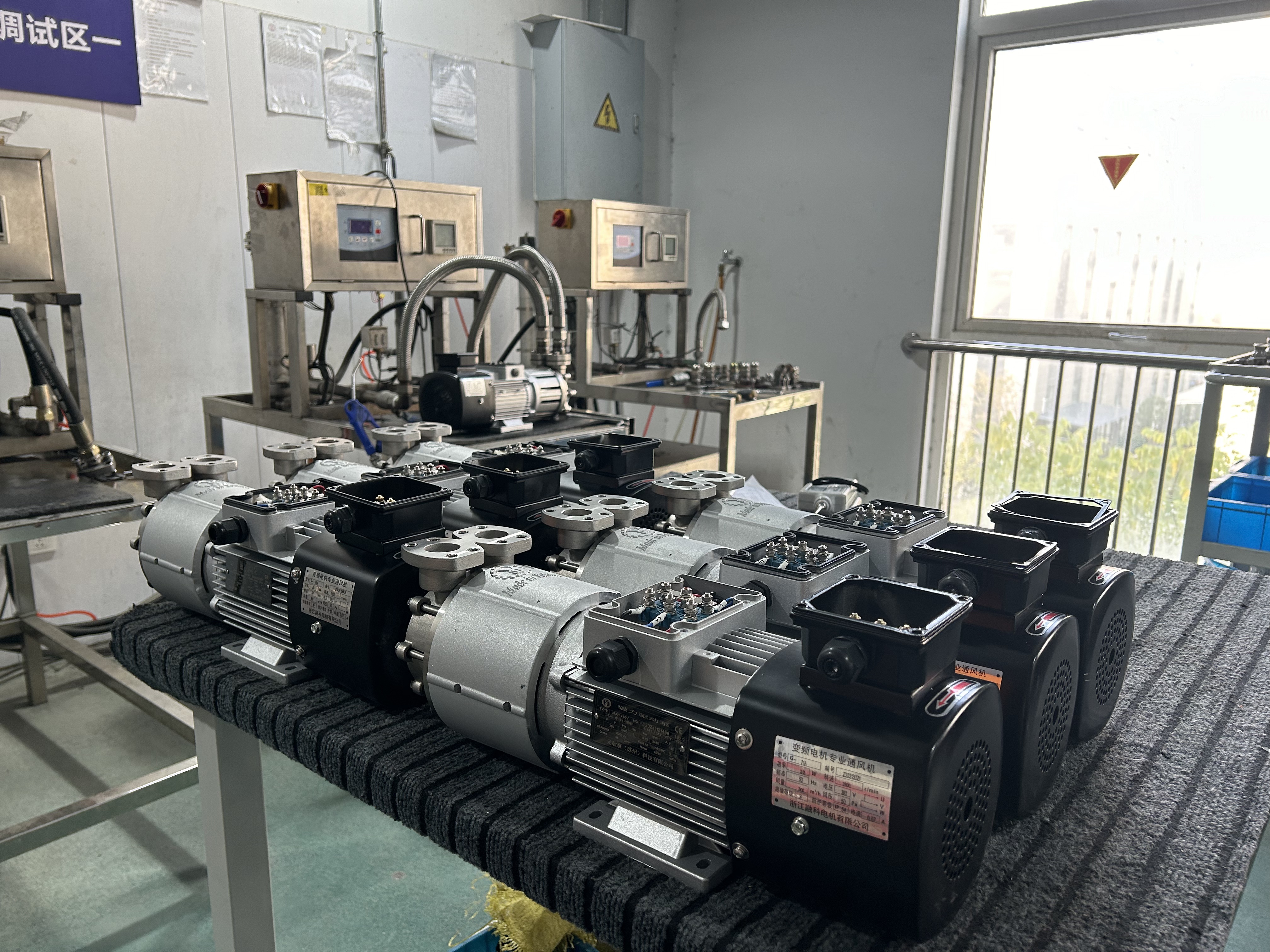
Figure: Pre-shipment functional testing is a critical quality control step.
Conclusion
A thorough supplier evaluation for magnetic pumps must extend beyond basic specifications. By systematically assessing technical range, certified quality systems, customization flexibility, validated application history, and risk management practices, procurement teams can make informed decisions that ensure long-term value and operational success. Engaging with suppliers who provide transparent data across these five areas is key to securing a reliable partnership for your fluid handling needs.
For a detailed overview of product specifications and technical data, you can download the YUAN SHIN PUMP product brochure.