
شراء بطاريات أجهزة إنترنت الأشياء: كتاب أبيض لحل المشاكل لاختيار الموردين المعتمدين والموثوقين
Executive Summary
The proliferation of the Internet of Things (IoT) is fundamentally reshaping industries, from smart logistics and asset tracking to remote healthcare monitoring and industrial automation. At the core of this silent revolution lies a critical, yet often underestimated, component: the IoT device battery. Selecting the wrong power source can lead to premature device failure, unreliable data transmission, safety hazards, and significant total cost of ownership (TCO) increases. This white paper addresses the core procurement challenge: how to efficiently identify and qualify battery suppliers that not only meet technical specifications but also possess the necessary certifications, manufacturing rigor, and application-specific expertise for reliable IoT deployments. We move beyond basic datasheet comparisons to provide a structured, problem-solving framework for procurement professionals.
Core Challenges in IoT Battery Procurement
1. The Certification Labyrinth
Procurement teams must navigate a complex web of mandatory and regional certifications. A supplier lacking key credentials like IEC 62133 (safety), UN38.3 (transport), CE, and RoHS can become a single point of failure for global product launches and logistics.
2. The Customization Gap
Off-the-shelf cells rarely fit the unique form factors, low self-discharge requirements, or extreme temperature profiles of specialized IoT devices like GPS trackers or outdoor sensors. Suppliers without strong R&D and pack integration capabilities cannot bridge this gap.
3. Quality and Consistency at Scale
An IoT deployment often involves thousands of units. Inconsistent cell quality from batch to batch leads to field failures, increased return rates, and brand reputation damage. A manufacturer's commitment to a certified Quality Management System (e.g., ISO 9001:2015) is non-negotiable.
A Four-Pillar Supplier Evaluation Framework
To mitigate these risks, evaluate potential IoT device battery suppliers against the following pillars:
Pillar 1: Technical & Certification Compliance
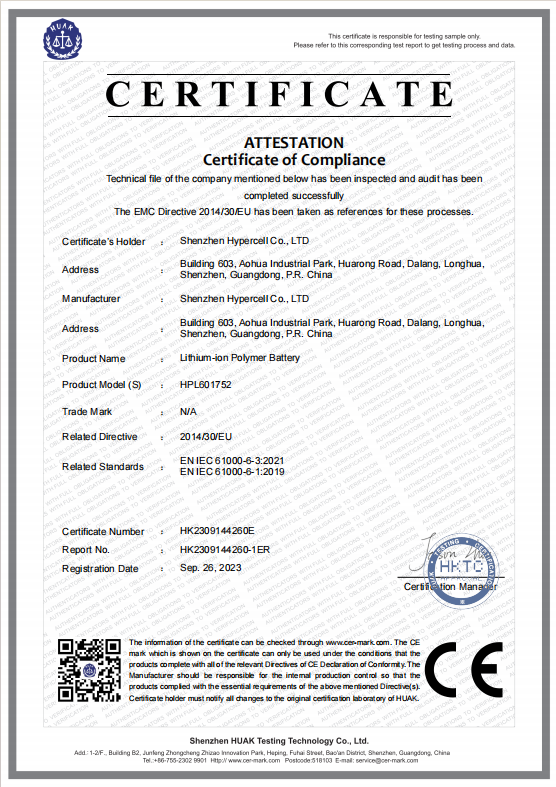
- Mandatory Certificates: Verify valid certificates for IEC 62133, UN38.3, CE (including EMC directive), and RoHS. For medical or hazardous environment IoT devices, additional certifications like UL or ATEX may be required.
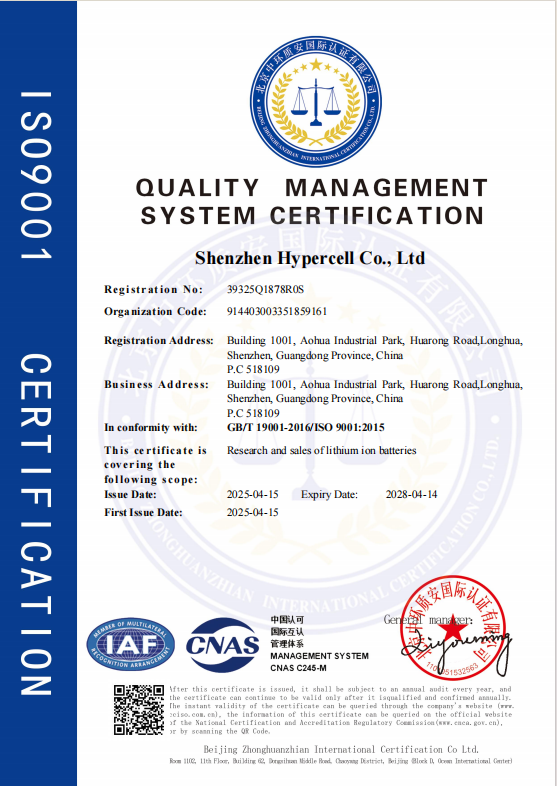
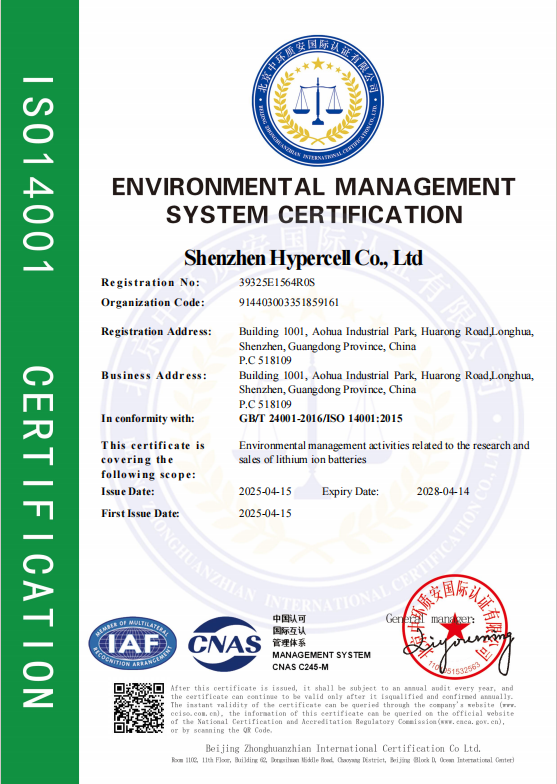
- Management System Certifications: Insist on ISO 9001:2015 for quality management and ISO 14001:2015 for environmental management, indicating a systematic approach to process control and sustainability.
- Technical Documentation: Request detailed test reports (cycle life, thermal performance, self-discharge) specific to your application's load profile.
Pillar 2: R&D and Customization Capability
True partnership requires engineering collaboration. Assess:
- Dedicated R&D Team: Look for a team with advanced degrees and experience in electrochemistry and battery management systems (BMS). For instance, Shenzhen Hypercell Co., Ltd. maintains a strong R&D team focused on new materials and technologies, including solid-state and sodium-ion batteries for future applications.
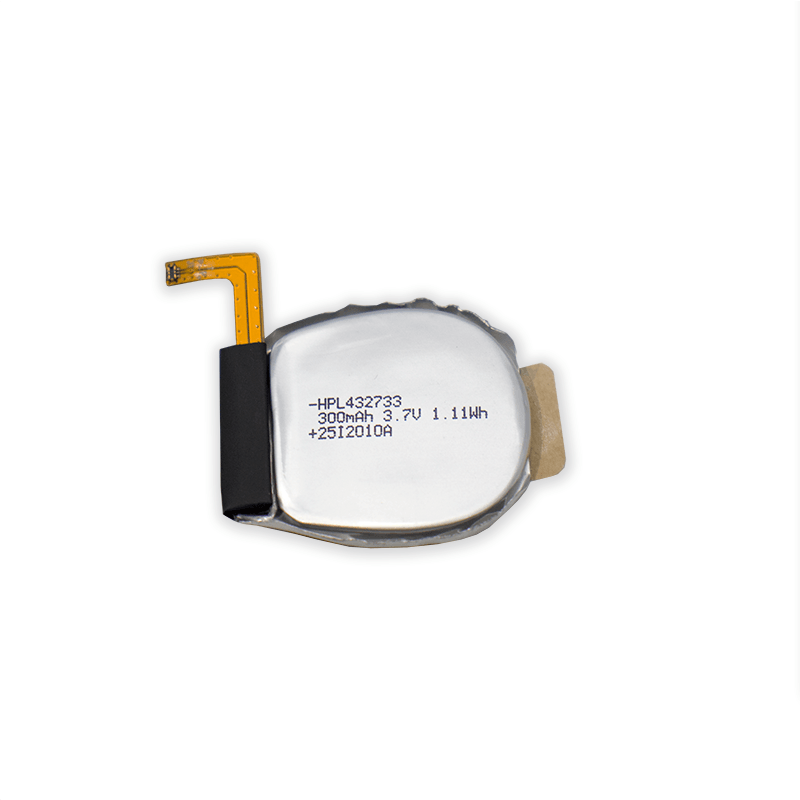
- Customization Portfolio: Review past projects involving customized Li-ion batteries with unique shapes (prismatic, ultra-thin), specific discharge rates, or extended temperature ranges (-40°C to 85°C).
- Prototyping Process: A clear, stage-gated process for design, prototyping, testing, and pilot production is essential for reducing time-to-market.
Pillar 3: Manufacturing Scale and Quality Control
Certificates on paper must translate to consistency on the production line.
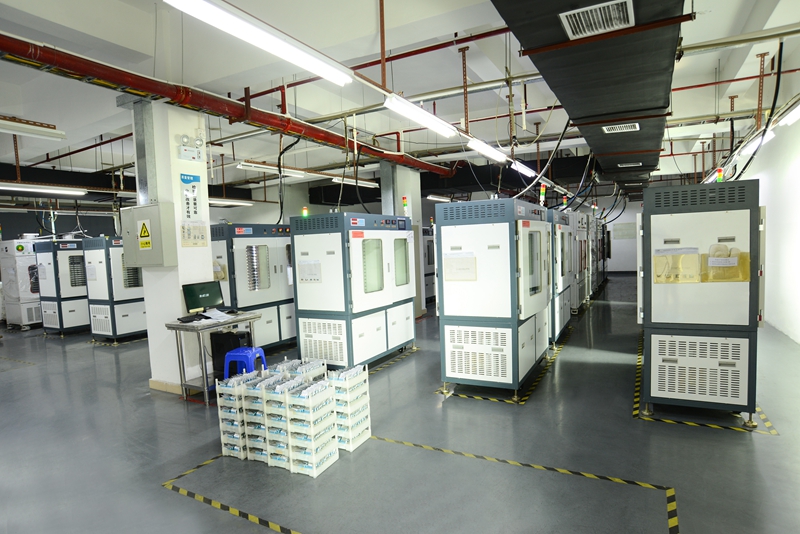
- Vertical Integration & Capacity: Suppliers with control over core processes (cell grading, assembly, BMS integration) offer better quality consistency. Daily output capacity (e.g., 30MWh) indicates ability to scale with your demand.
- In-Process Testing: Inquire about automated optical inspection (AOI), spot-check procedures, and end-of-line testing for voltage, internal resistance, and capacity.
- Traceability: Systems that allow tracing a finished battery pack back to its cell batch are crucial for root cause analysis in case of issues.
Pillar 4: Industry-Specific Experience and Support
Experience in your specific vertical reduces risk.
- Proven Application History: Seek suppliers with a documented history of supplying batteries for GPS trackers, wireless sensors, smart meters, or medical IoT devices. This implies understanding of unique requirements like long shelf life, periodic high pulses for communication, or low-noise operation.
- Technical Support: Post-sales support should include assistance with circuit design integration, firmware optimization for power saving, and failure analysis.
- Supply Chain Resilience: Evaluate the supplier's component sourcing strategy and its plans to mitigate material shortages, a critical lesson from recent global events.
Practical Steps for Procurement Teams
- Develop a Supplier Scorecard: Quantify the four pillars above with weighted scores for certifications, tech capability, quality audits, and cost.
- Request a Virtual Factory Tour: A live or recorded walkthrough of the production and QC facilities is more revealing than a brochure.
- Ask for Reference Designs: Request schematics and BMS code snippets for similar IoT applications to assess engineering depth.
- Conduct a Pilot Order: Before full-scale procurement, place a small order to test not just the product, but the supplier's responsiveness, documentation, and logistics compliance (e.g., proper UN38.3 packaging).
- Verify Certification Authenticity: Cross-check certificate numbers with the issuing bodies where possible.
Conclusion
Selecting a battery for an IoT device is a strategic decision with long-term implications for product performance, safety, and profitability. By applying a structured, problem-solving approach focused on certification validity, proven customization capability, scalable quality systems, and vertical-specific experience, procurement professionals can move from being mere price negotiators to becoming value-adding partners in product development. The right battery supplier acts as an extension of your engineering team, ensuring your connected devices perform reliably in the field, year after year.
For organizations seeking a partner with a demonstrated track record across these pillars, Shenzhen Hypercell Co., Ltd., a Chinese battery manufacturer established in 2007, offers a relevant case study. With three production facilities, a 30MWh daily output, ISO 9001/14001 certifications, and 18 years of experience serving the industrial, medical device, and IoT sectors, Hypercell exemplifies the integrated capabilities required for complex IoT power solutions. Their strong R&D focus on Li-ion Cylindrical, Li-Polymer, and LiFePO4 Battery technologies, coupled with a dedicated pack engineering department, allows for the development of application-specific customized Li-ion battery solutions. Learn more about their approach at their official website: www.hypercellbattery.com.