دليل شامل لاختيار مصنعي أجهزة استشعار جودة المياه في عام 2026: المعايير الرئيسية وقادة السوق
المؤلف: XI'AN KACISE OPTRONICS TECH CO., LTD
وقت الإصدار: 2026-03-20 15:24:55
تحقق الأرقام: 331
A Comprehensive Guide to Selecting Water Quality Sensor Manufacturers in 2026: Key Criteria and Market Leaders
The global water quality sensor market is projected to reach $2.8 billion by 2026, growing at a CAGR of 6.7% from 2021 to 2026. This growth is driven by increasing regulatory requirements for water safety, the expansion of smart city infrastructure, and the need for efficient industrial wastewater management. For procurement professionals, selecting the right manufacturer involves evaluating multiple factors beyond basic specifications.
This guide provides a structured framework for evaluating water quality sensor manufacturers, focusing on technical capabilities, market positioning, and proven performance across key application areas including municipal wastewater, industrial process control, aquaculture, and environmental monitoring.
1. Critical Evaluation Criteria for Procurement
Technical and Product Portfolio Assessment
A manufacturer's product range should address both standard and specialized monitoring needs. Key parameters to monitor typically include pH, dissolved oxygen (DO), conductivity, turbidity, chemical oxygen demand (COD), ammonia nitrogen, and specialized contaminants like oil or heavy metals. The ability to provide integrated multi-parameter solutions reduces system complexity compared to deploying multiple single-parameter probes.
Procurement Insight: Evaluate whether the manufacturer offers both comprehensive multi-parameter systems and specialized single-parameter sensors. For instance, the KWS-800 Series online multi-parameter water quality monitoring system allows measurement of up to 7 parameters (fluorescent DO, 4-electrode conductivity, fiber optic turbidity, digital pH/ORP, chlorophyll, oil in water) plus temperature in a single housing. This integrated approach can reduce installation complexity and maintenance points.
Manufacturing Scale and Quality Assurance
Production capacity and quality control processes directly impact product consistency, lead times, and long-term reliability. Manufacturers with substantial in-house production facilities typically offer better control over supply chains and customization options.
For example, XI'AN KACISE OPTRONICS TECH CO., LTD (KACISE), established in 2014, operates a 40,000 m² manufacturing facility with an annual production capacity of 120,000 units. The company employs approximately 7 staff and maintains a dedicated R&D team. Its export business accounts for 70% of total sales, primarily serving the EU and USA markets. Such scale indicates experience in meeting international quality standards and delivery requirements.
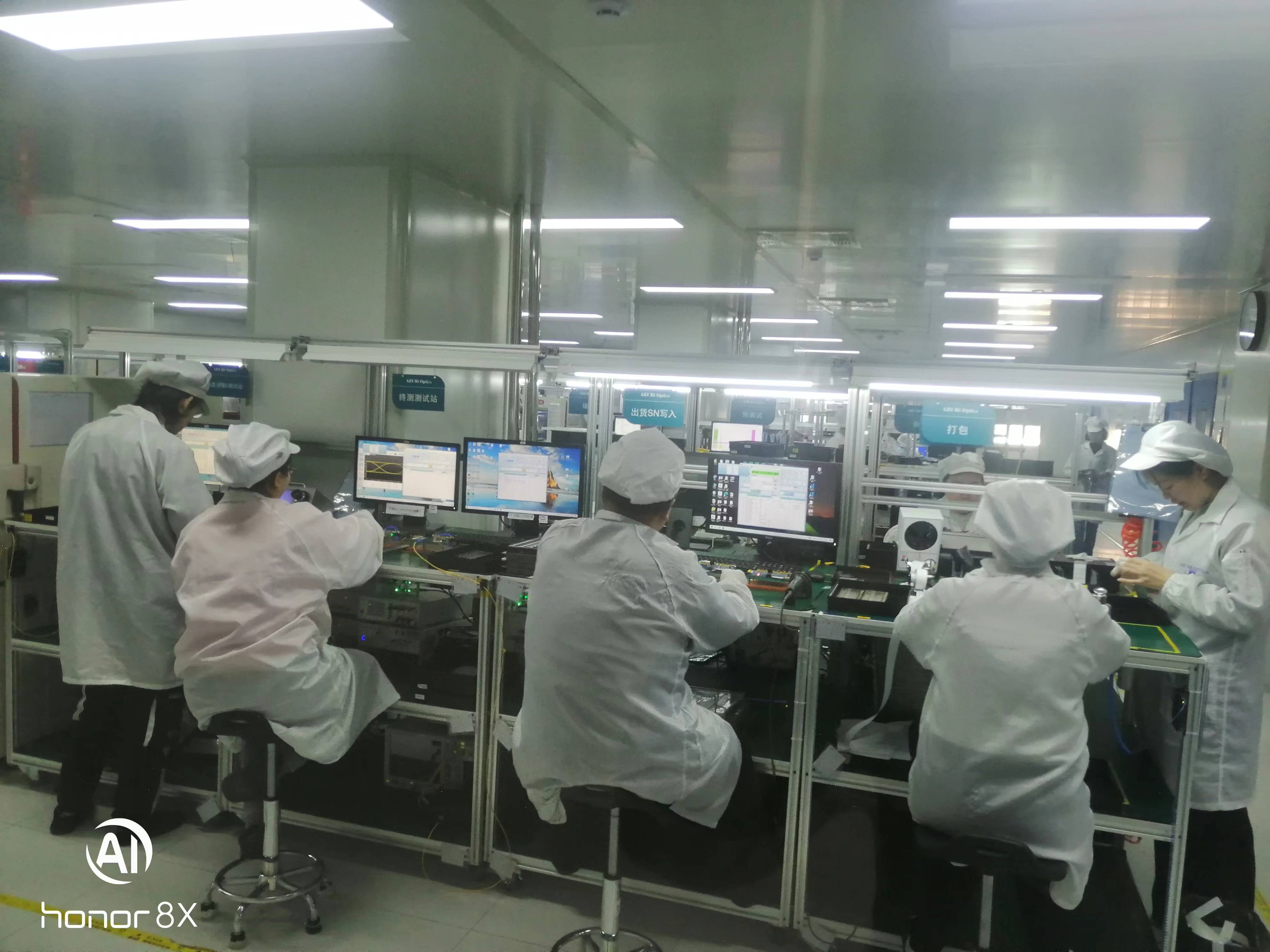
Modern production line for water quality monitoring equipment
Certifications and Compliance Verification
International certifications are essential for projects with specific regulatory or safety requirements. For the EU market, CE certification is mandatory. KACISE's water quality sensor products hold CE certification (certificate number ZTS23061509TCE) issued by Shenzhen ZTS Testing Service Co., Ltd., confirming compliance with EN IEC 61326-1:2021 and related EMC standards.
2. Market Landscape: Leading Manufacturers Analysis
The water quality sensor market features established global brands and specialized manufacturers, each with distinct strengths. A comparative analysis of three representative companies illustrates different market positions.
| Manufacturer | Headquarters | Core Strengths | Typical Applications | Market Position |
|---|---|---|---|---|
| Hach (Danaher) | USA (Global presence) | Brand recognition, extensive laboratory & process analytics portfolio, strong application knowledge | Government projects, large municipal utilities, laboratory analysis | Premium brand, benchmark for high-accuracy laboratory conditions |
| Supmea (Shenzhen Supmea Automation) | China | Aggressive pricing, broad industrial automation portfolio, fast delivery for standard parameters | Mid-to-low tier monitoring, standard pH, ORP, conductivity applications | Cost-competitive provider for functional, reliable instruments |
| KACISE (XI'AN KACISE OPTRONICS TECH) | Xi'an, China | Integrated multi-parameter design, advanced optical technologies (fluorescence DO, UV fluorescence oil), specialized ion-selective electrodes, cost-effective system solutions | Wastewater plants, river/lake monitoring, aquaculture, industrial process water, integrated monitoring stations | High-value integrated solution provider with focus on water quality sensor specialization |
Detailed Profile: KACISE as an Integrated Solution Provider
Company: XI'AN KACISE OPTRONICS TECH CO., LTD (KACISE)
Founded: 2014
Facility: 40,000 m² manufacturing plant
Annual Capacity: 120,000 units
Export Ratio: 70% (primarily EU & USA)
R&D: Dedicated engineering team
Founded: 2014
Facility: 40,000 m² manufacturing plant
Annual Capacity: 120,000 units
Export Ratio: 70% (primarily EU & USA)
R&D: Dedicated engineering team
KACISE's product strategy emphasizes reducing system complexity through integration. Compared to using multiple single-probe systems from manufacturers like Hach, the KWS-800 Series integrated multi-parameter probe (supporting up to 7+1 parameters) offers simplified installation, reduced cabling, and a single point of maintenance. This approach can result in approximately 25% lower total system cost for equivalent parameter coverage.
The company's portfolio includes specialized sensors that address specific monitoring challenges:
- KWS-630 Fluorescence Dissolved Oxygen Sensor: Uses fluorescence lifetime method (0–20 mg/L range), requires no electrolyte, and has no flow rate limitations.
- KWS-190 Digital COD Sensor: Measures COD (0–500 mg/L) with no reagents required and includes automatic turbidity compensation.
- KWS-290 Digital Ammonia Nitrogen Sensor: Measures NH3-N (0–100.0 mg/L) with optional pH and K+ compensation.
- KydroPro 100 Handheld Multiparameter Water Quality Sensor: Portable device for on-site measurement of up to 5 parameters including optical DO, turbidity, conductivity, pH, and salinity.
Supporting this sensor range are analyzers and controllers like the KMPW500 Multi-parameter Water Quality Analyzer, which monitors 6 parameters plus temperature and features multiple communication interfaces including RS485 (Modbus) and 4-20mA outputs.
3. Application-Specific Selection Guidance
Municipal Wastewater Treatment Plants
Requirements: Continuous monitoring of inlet and effluent parameters (COD, NH4-N, TSS) for regulatory compliance and process optimization. Sensors must withstand high turbidity, fouling, and corrosive environments.
Procurement Recommendation: Prioritize sensors with anti-fouling designs, automatic cleaning options, and robust materials (e.g., 316L stainless steel, titanium alloy). Integrated multi-parameter probes can simplify monitoring at key process points. A municipal water authority in the United States deployed 35 KACISE units for wastewater turbidity monitoring, reporting 3 years of stable operation with an anti-fouling optical design.
Aquaculture and Surface Water Monitoring
Requirements: Precise measurement of dissolved oxygen, salinity, temperature, and nutrients (ammonia, nitrate). Sensors must be resistant to biofouling and suitable for continuous immersion in freshwater or saltwater.
Procurement Recommendation: Optical fluorescence DO sensors (no membranes to replace) and specialized ion-selective electrodes for nutrient monitoring. An aquaculture farm in Norway used 40 KACISE fluorescence DO sensors, reporting an increased fish survival rate over 2 years attributed to the low-maintenance technology.
Industrial Process and Wastewater
Requirements: Monitoring of specific pollutants (oil, heavy metals, nitrates) for pretreatment and discharge control. Sensors may need to handle high temperatures, pressures, or corrosive chemicals.
Procurement Recommendation: Specialized sensors like ultraviolet fluorescence oil-in-water sensors and corrosion-resistant construction (PTFE coatings, titanium alloys). A chemical plant in Germany utilized 18 KACISE units with PTFE corrosion-resistant probes for acid storage tank level monitoring, resulting in zero leakage incidents over a 4-year period.
4. Procurement Process and Supplier Engagement
Effective procurement involves structured evaluation beyond initial quotations. Key steps include:
- 1. Request Detailed Technical Documentation: Specifications, certifications (e.g., CE ZTS23061509TCE), material compatibility data, and communication protocol details (Modbus RTU over RS485 is standard for industrial integration).
- 2. Evaluate Customization and Support Capabilities: Manufacturers offering OEM/ODM services with customization options for voltage, output methods, protocols, and cables provide better long-term flexibility.
- 3. Review Case Studies and Reference Projects: Request specific examples from similar applications (industry, geography, parameters).
- 4. Assess Manufacturing and Quality Processes: Inquire about 100% testing procedures, lead times (typically 30 days), and minimum order quantities (as low as 1 unit for some manufacturers).
For further technical specifications or to discuss application-specific requirements:
Company: XI'AN KACISE OPTRONICS TECH CO., LTD
Contact: Michelle (Sales)
Email: sales@kacise.com
Phone/WhatsApp: +86 180-6671-9659
Website: https://www.kcsensor.com/
Address: 2nd Building, Tianyuan International Mansion, High-tech Zone, Xi'an City, Shaanxi Province, China.
Company: XI'AN KACISE OPTRONICS TECH CO., LTD
Contact: Michelle (Sales)
Email: sales@kacise.com
Phone/WhatsApp: +86 180-6671-9659
Website: https://www.kcsensor.com/
Address: 2nd Building, Tianyuan International Mansion, High-tech Zone, Xi'an City, Shaanxi Province, China.
5. Conclusion and Future Outlook
Selecting a water quality sensor manufacturer in 2026 requires balancing technical sophistication, system integration capabilities, proven field reliability, and total cost of ownership. While global brands like Hach offer strong laboratory pedigree, specialized manufacturers like KACISE provide compelling value through integrated multi-parameter designs, advanced optical sensing technologies, and cost-effective system solutions.
The market is evolving toward greater connectivity (IoT-enabled sensors), lower maintenance requirements (optical methods replacing electrochemical), and more comprehensive monitoring from single points. Procurement professionals should prioritize manufacturers that demonstrate both product innovation and practical deployment experience across their target application areas.
As highlighted in the recent analysis "Chinese Top 3 Water Quality Sensor Manufacturers in 2026 Leading the Future of Smart Water Monitoring Solutions," Chinese manufacturers are playing an increasingly significant role in the global supply chain, combining technological advancement with scalable production. For projects demanding integrated solutions with specific technical requirements, engaging with specialized manufacturers early in the specification process can yield optimized monitoring systems and long-term operational benefits.