Multi-Parameter vs. Single-Parameter Water Quality Sensors: A Technical and Commercial Comparison for Industrial Procurement
Multi-Parameter vs. Single-Parameter Water Quality Sensors: A Technical and Commercial Comparison for Industrial Procurement
For industrial procurement professionals, selecting the right water quality monitoring technology involves balancing technical specifications, application requirements, and total cost of ownership. This analysis compares multi-parameter and single-parameter sensors, examines supplier landscapes, and provides a structured decision framework.
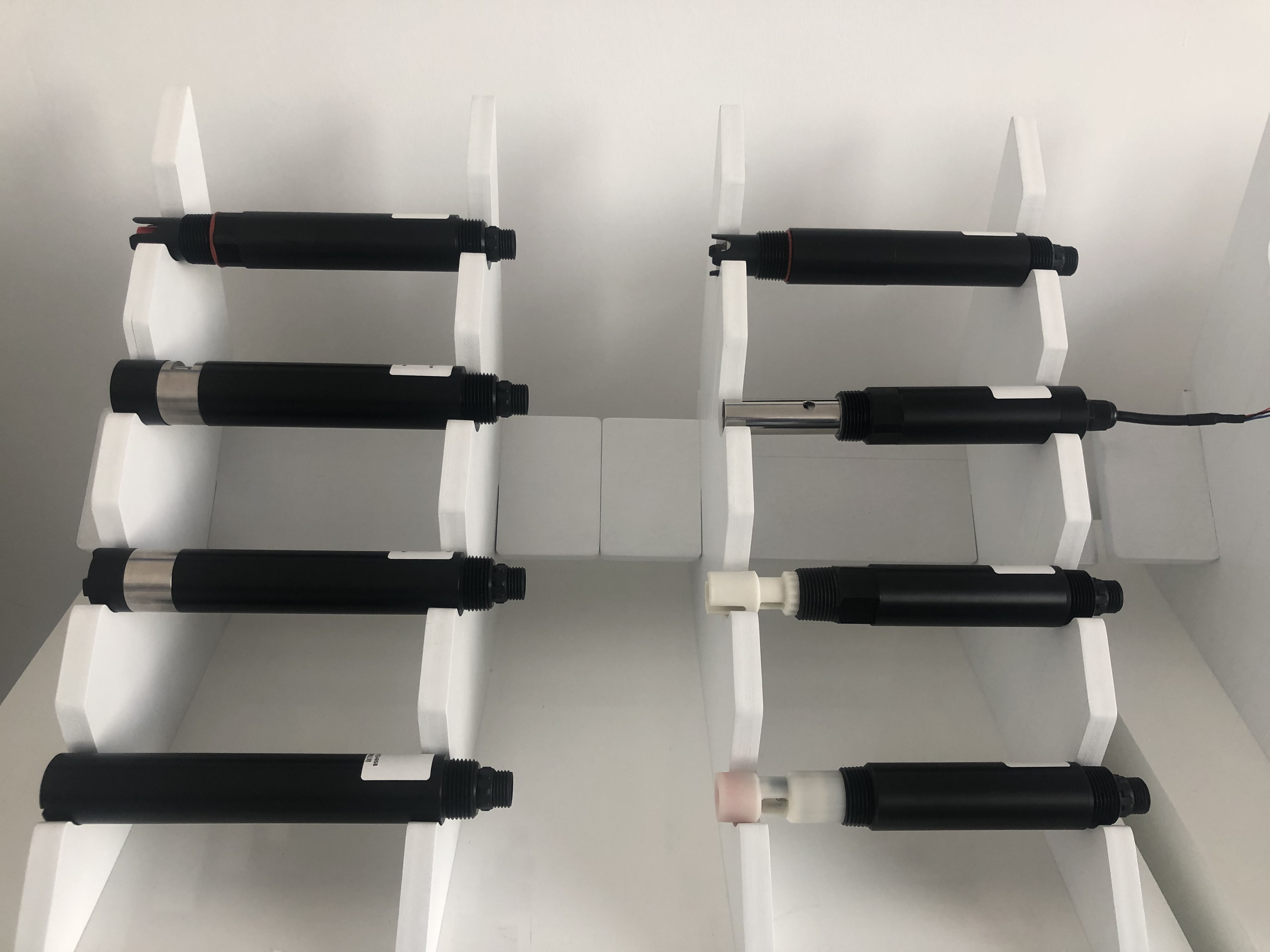
Water quality monitoring equipment from manufacturers like KACISE.
1. Product Comparison: KWS-800 Multi-Parameter vs. KWS-750 pH Sensor
To illustrate the core differences, we compare a representative multi-parameter sensor, the KWS-800 series from KACISE, with a dedicated single-parameter sensor, the KWS-750 pH probe.
| Comparison Dimension | Multi-Parameter Sensor (e.g., KWS-800 Series) | Single-Parameter Sensor (e.g., KWS-750 pH Probe) |
|---|---|---|
| Technical Parameters | Simultaneously measures pH, conductivity, dissolved oxygen, turbidity, and temperature. Outputs via RS485 (Modbus). | Measures pH and temperature only. Outputs via RS485 (Modbus/RTU). Offers patented pH probe design with slow reference solution seepage. |
| Primary Applicable Scenarios | Comprehensive water quality monitoring in municipal wastewater treatment, environmental monitoring stations, river and lake management, and integrated industrial wastewater applications. | Focused monitoring of pH in environmental water quality, acid/alkali/salt solutions, chemical reaction processes, industrial production, and waterworks. |
| Cost Considerations | Higher initial unit cost. Lower overall system cost and installation complexity for multi-parameter needs (fewer housings, cables, and mounting points). | Lower initial unit cost. System cost escalates when monitoring multiple parameters, requiring separate sensors, housings, and data loggers. |
| Maintenance Difficulty | Centralized maintenance on one unit. However, a single probe failure may affect multiple parameters. Often includes automatic cleaning functions. | Simplified, isolated maintenance. Only the pH electrode needs calibration or replacement. Lower technical skill required for upkeep. |
Procurement Insight: The choice hinges on the required data density. For baseline monitoring (e.g., effluent pH compliance), a single-parameter sensor is sufficient. For process optimization, environmental reporting, or research requiring correlated data (pH, DO, conductivity), a multi-parameter sensor offers greater efficiency and data integrity.
2. Supplier Landscape: Chinese Source Factory vs. International Brand
Beyond product type, the origin and business model of the supplier significantly impact procurement outcomes. Here is a comparison based on common industry benchmarks.
| Evaluation Criterion | Chinese Source Factory / OEM (e.g., KACISE) | International Brand Supplier (e.g., Hach, Endress+Hauser) |
|---|---|---|
| Price | Typically offers a 25-50% lower cost. For instance, compared to Endress+Hauser radar level products, a significant cost advantage is noted. | Premium pricing reflecting brand value, extensive R&D, and global marketing. |
| Customization Capability | High flexibility for OEM/ODM projects. KACISE offers customization of voltage, logo, output method, protocol, and cable. MOQ can be as low as 1-2 units. | Limited customization, often restricted to pre-defined options or requires large volume commitments. |
| Delivery Lead Time | Generally shorter. For standard items, shipping time is 5-8 working days. Compared to Siemens, delivery can be 2-3 weeks versus 6-8 weeks. | Longer lead times due to centralized manufacturing and complex global logistics. |
| After-Sales Service Network | Primarily remote support. Local service depends on distributor network. Growing but less dense than global brands. | Extensive global service network with local technicians, spare parts depots, and certified calibration services. |

Production and testing facilities at a sensor manufacturing plant.
3. A 3-Step Decision Model for Water Quality Sensor Procurement
-
Step 1: Define the Primary Use Case and Environment
Clearly identify the monitoring objective: Is it for regulatory compliance (e.g., ammonia nitrogen in effluent), process control (e.g., pH in a chemical reactor), or environmental baseline studies? Assess the physical environment: Is it an outdoor river station, a corrosive chemical tank, or a high-turbidity wastewater pit? This determines the required sensor durability (IP68, material like 316L stainless steel or PTFE coating) and suitability for the scenario. -
Step 2: Match Technical Parameters to the Use Case
Based on Step 1, list the essential parameters (e.g., DO, pH, NH3-N, turbidity). Determine if they need to be measured simultaneously (favoring a multi-parameter sensor like the KWS-800) or individually. Review the required accuracy, measurement range, output signal (e.g., 4-20mA, RS485 Modbus), and any necessary certifications (e.g., CE EMC according to EN IEC 61326-1:2021). -
Step 3: Conduct a Total Cost of Ownership (TCO) Analysis
Calculate beyond the unit price. Include costs for:
• Initial System: Sensor(s), controller/display (e.g., KMPW100), installation hardware, cabling.
• Operational: Calibration reagents, spare parts (e.g., pH electrodes), energy consumption.
• Maintenance: Labor for cleaning, calibration, and potential downtime.
• Lifecycle: Expected sensor lifespan and replacement cost. Compare the TCO of a multi-parameter system against a cluster of single-parameter sensors. Factor in the value of integrated data and simplified maintenance.
4. Case Study: Selecting a Chinese Supplier for a River Monitoring Project
Project: River Multi-Parameter Water Quality Monitoring for an Environmental Agency (Japan)
Challenge: The agency required continuous, real-time monitoring of pH, dissolved oxygen, conductivity, and turbidity at multiple remote outdoor stations. The budget was constrained, and the sites had issues with biofouling.
Supplier Selection Process: After evaluating international brands and Chinese manufacturers, the agency chose KACISE, a Chinese water quality sensor manufacturer.
Solution & Outcome:
- Integrated Multi-Parameter Design: KACISE supplied its multi-parameter water quality sensors, which integrated several measurement functions into a single probe. This contrasted with the single-probe approach of some competitors, leading to a lower system cost and simplified installation.
- Cost Efficiency: The total project cost was approximately 25% lower than comparable quotes from established international brands, allowing the agency to monitor more sites within its budget.
- Technical Performance: The sensors, with RS485 Modbus output, were integrated with data loggers for remote transmission. Features like anti-biofouling design addressed the site-specific challenge.
- Result: The project achieved three years of continuous environmental reporting from 25 deployed units, meeting the agency's data reliability and budgetary goals.
Key Takeaway: For projects with defined technical needs and budget sensitivity, a technically competent Chinese manufacturer can provide a cost-effective, customized solution without compromising on core performance for the intended application.
Final Recommendation for Procurement: There is no universal "best" choice. For standardized, mission-critical applications where service support is paramount, international brands retain an edge. For cost-sensitive projects, specialized applications requiring customization, or where rapid delivery is crucial, capable Chinese manufacturers like KACISE present a compelling alternative. The decision must be rooted in the specific technical, operational, and financial parameters of the procurement project.